
 By admin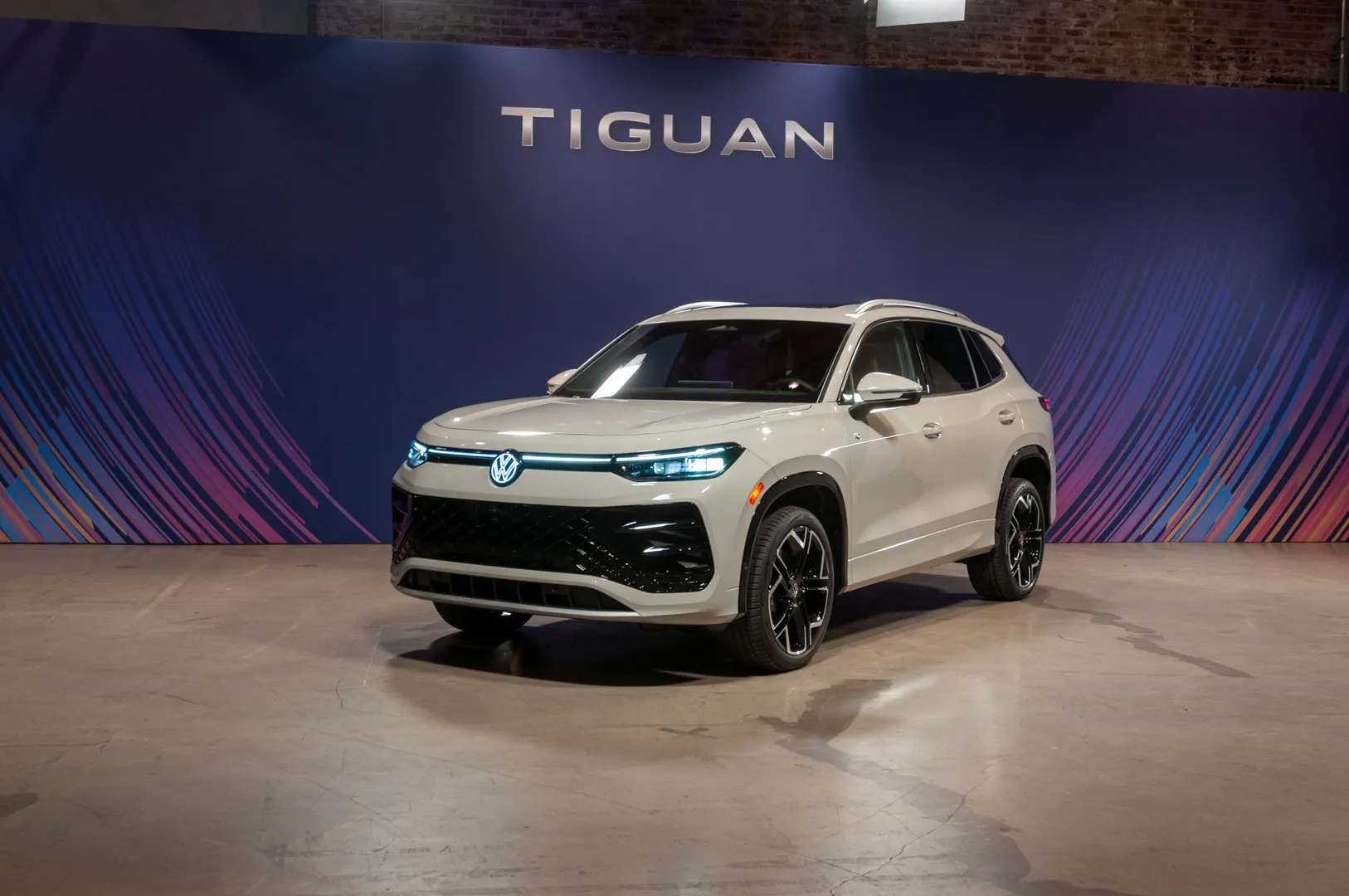
The base Tiguan S grade, equipped with front-wheel drive, will carry a starting manufacturer’s suggested retail price (MSRP) of $30,920, a figure that includes a standard $1,425 destination charge. This represents a modest increase of $615 over the outgoing model, a premium that industry analysts suggest is well-justified given the extensive upgrades in technology, performance, and overall refinement. Volkswagen has consistently aimed to offer a European driving experience blended with practical American market needs, and this new Tiguan appears to double down on that philosophy, albeit with a refined focus.
The decision to eliminate the third-row seat, a feature that set the North American Tiguan apart from its European counterpart (which has always been a two-row vehicle), is perhaps the most significant structural change. For years, the extended wheelbase Tiguan sold in the U.S. attempted to bridge the gap between compact and mid-size SUVs, offering a compact footprint with occasional seven-passenger capability. However, this often came with compromises, primarily a cramped third row best suited for small children on short trips. Volkswagen’s larger, dedicated three-row Atlas and Atlas Cross Sport models now comfortably serve the multi-passenger family segment, allowing the Tiguan to embrace its identity as a truly competitive two-row compact crossover. This move simplifies the Tiguan’s mission: to excel as a spacious, refined, and technologically advanced five-seater, directly challenging segment stalwarts like the Honda CR-V, Mazda CX-5, and Hyundai Tucson, which predominantly offer two-row configurations. The strategy aims to sharpen the Tiguan’s focus, improving its primary two-row cargo capacity and passenger comfort without the design and engineering compromises required to accommodate an infrequently used third row.
Beneath its refreshed exterior, the 2025 Tiguan is underpinned by Volkswagen’s latest evolutionary modular transverse matrix (MQB Evo) platform, shared with other modern VW Group vehicles like the Golf Mk8 and Audi A3. This platform contributes to the vehicle’s claimed 170-pound weight reduction, enhancing agility and fuel efficiency. Powering all models is an updated 2.0-liter turbocharged four-cylinder engine, part of VW’s venerable EA888 engine family. This powerplant now delivers 201 horsepower, an increase of 17 hp over the previous generation, and is mated to a smooth and responsive 8-speed automatic transmission. This combination promises improved acceleration and more confident passing maneuvers, further solidifying the Tiguan’s reputation for a refined and engaging driving experience among its peers. While specific EPA fuel economy figures are pending, the weight reduction and engine optimizations are expected to yield competitive efficiency numbers.
Technological advancement is a cornerstone of the 2025 Tiguan’s redesign, particularly within its cabin. The entry-level Tiguan S comes generously equipped, featuring 17-inch alloy wheels, a crisp 10.2-inch digital instrument cluster (Volkswagen’s Digital Cockpit), and a prominent 12.9-inch touchscreen infotainment system. This system boasts wireless Apple CarPlay and Android Auto compatibility, ensuring seamless smartphone integration, along with standard cloth upholstery that is both durable and comfortable.
Stepping up to the Tiguan SE, priced from $34,420 with destination, buyers gain a host of desirable upgrades. These include larger 19-inch wheels, remote start functionality for convenience, a power tailgate, sophisticated ambient interior lighting, an auto-dimming rearview mirror, a power-adjustable driver’s seat for enhanced comfort, and premium leatherette upholstery that offers a more upscale feel. This trim level is often considered the "sweet spot" for many buyers, balancing a rich feature set with a sensible price point.

For those seeking a more dynamic aesthetic and additional features, Volkswagen offers two R-Line grades. The SEL R-Line Black, starting at $36,880, introduces a sporty body kit, distinctive 20-inch wheels, and a carefully curated mix of dark and chrome exterior and interior trim elements that create a more aggressive and modern look. A standard panoramic sunroof adds to the cabin’s airy feel. The pinnacle of the lineup is the SEL R-Line, priced at $41,180. This top-tier trim incorporates similar visual enhancements while elevating the interior experience with a truly expansive 15.0-inch touchscreen infotainment system – one of the largest in the segment. Audiophiles will appreciate the 12-speaker Harman Kardon premium audio system, while comfort is prioritized with three-zone climate control, front seats featuring memory and massage functions, power adjustment for the passenger seat, and luxurious leather upholstery. These features position the SEL R-Line as a near-premium offering, blurring the lines with entry-level luxury crossovers.
All-wheel drive (4Motion) remains a critical option for many Tiguan buyers, particularly in regions with inclement weather. It is available as a $1,500 option on the S and SEL R-Line Black grades, with late availability noted for the latter. On the SE grade, the 4Motion system is a $980 option, while it comes standard on the top-tier SEL R-Line, reinforcing its premium positioning and all-weather capability. Volkswagen’s 4Motion system is renowned for its proactive engagement, distributing power efficiently between the axles to optimize traction and stability, providing confidence on diverse road surfaces.
Beyond the listed features, Volkswagen’s commitment to safety is expected to be evident through its IQ.DRIVE suite of advanced driver-assistance systems. While not explicitly detailed in the initial release, it is standard practice for new VW models to include features such as adaptive cruise control, lane-keeping assist, blind-spot monitoring, rear cross-traffic alert, and forward collision warning with automatic emergency braking. These systems are crucial for achieving top safety ratings from organizations like the Insurance Institute for Highway Safety (IIHS) and the National Highway Traffic Safety Administration (NHTSA), which are increasingly important to consumers.
The compact SUV segment is arguably the most competitive in the automotive market, populated by formidable rivals. The 2025 Tiguan will directly contend with perennial best-sellers like the Toyota RAV4 and Honda CR-V, known for their reliability and resale value. Other strong competitors include the Subaru Forester, lauded for its standard all-wheel drive and outdoor-oriented appeal; the Mazda CX-5 and CX-50, praised for their premium interiors and engaging driving dynamics; and the Hyundai Tucson and Kia Sportage, which offer bold styling and extensive warranty coverage. The Tiguan’s unique proposition lies in its distinct European driving character, high-tech cabin, and now, its unequivocal focus on providing a superior two-row experience. This differentiation, coupled with its refreshed design and enhanced performance, will be key to its success.
Volkswagen’s broader strategy in North America has increasingly leaned into SUVs, recognizing consumer demand. The Tiguan serves as a crucial bridge between the smaller Taos and the larger Atlas family, providing a compelling gasoline-powered option alongside the brand’s growing electric vehicle lineup, such as the ID.4. The success of the 2025 Tiguan is vital for maintaining Volkswagen’s market share in a segment that continues to grow and evolve. With sales slated to commence early this summer, the automotive world will be watching to see if the new Tiguan, with its refined focus and enhanced offerings, can carve out an even stronger position for itself in this crowded and fiercely contested landscape. Its blend of modern technology, improved performance, and a clear vision for its role as a sophisticated two-row compact crossover positions it as a significant contender ready to make a substantial impact.