
 By admin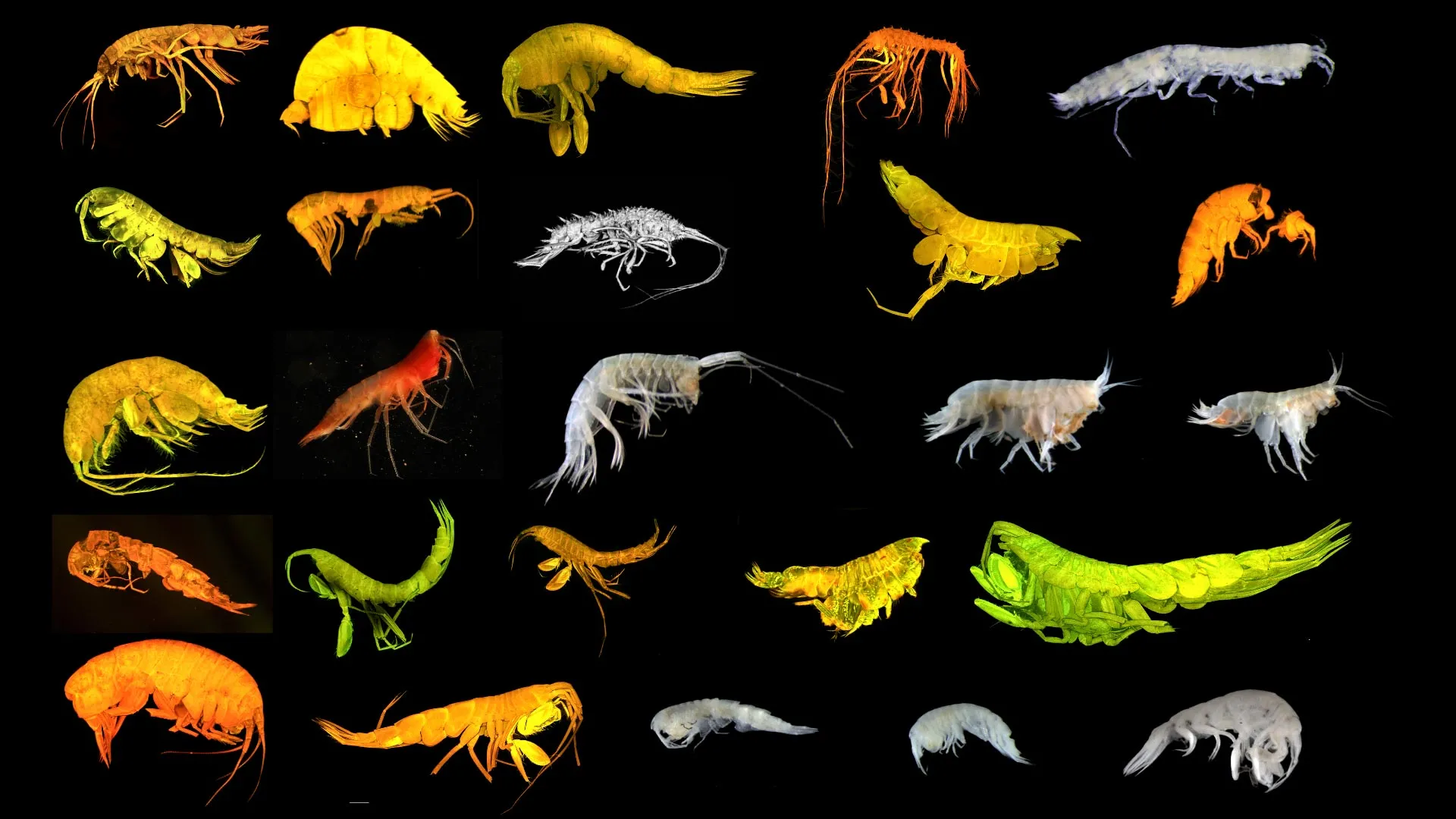
The ambitious project was spearheaded by Dr. Anna Jażdżewska of the University of Lodz (UL) in Poland and Tammy Horton of the National Oceanography Centre (NOC) in the UK. Their leadership brought together a diverse team of 16 specialists and early-career researchers for an intensive week-long taxonomy workshop held in 2024 at UL’s esteemed Department of Invertebrate Zoology and Hydrobiology. The workshop provided a collaborative hub where scientists meticulously analyzed and described the myriad amphipod species retrieved from the CCZ, a process critical for understanding deep-sea ecosystems before potential human impacts.
This groundbreaking work is a significant contribution to the International Seabed Authority’s (ISA) Sustainable Seabed Knowledge Initiative (SSKI) and its ambitious ‘One Thousand Reasons’ project. This global endeavor aims to formally describe an astounding 1,000 new deep-sea species by the close of the current decade, a testament to the urgency of understanding these environments in the face of burgeoning interest in deep-sea resource extraction.
The Clarion-Clipperton Zone: A Deep-Sea Frontier
The Clarion-Clipperton Zone is not merely a vast expanse of water; it is a unique geological and biological province characterized by abyssal plains typically lying at depths between 3,500 and 6,000 meters. This colossal region, larger than the entire European Union, is globally recognized for its abundant polymetallic nodules – potato-sized concretions rich in valuable minerals like manganese, nickel, copper, and cobalt. These mineral deposits have made the CCZ a focal point for potential deep-sea mining, an industry still in its nascent stages but with profound implications for the delicate ecosystems it targets.
Despite its immense size and potential economic significance, the CCZ remains one of the least explored environments on the planet. The extreme pressures, perpetual darkness, near-freezing temperatures, and logistical challenges of deep-sea research mean that much of its biodiversity remains a mystery. Scientists estimate that over 90% of the species inhabiting the CCZ are still unknown to science, highlighting the critical need for baseline ecological studies before large-scale industrial activities commence. Documenting this biodiversity is not just an academic exercise; it’s a race against time to understand what we stand to lose or impact.
Amphipods: Tiny Crustaceans, Grand Ecological Significance
Amphipods are small, shrimp-like crustaceans that form a crucial component of marine ecosystems, particularly in the deep sea. They are incredibly diverse, with thousands of known species exhibiting a wide range of adaptations and ecological roles. In the CCZ, amphipods occupy various niches, acting as scavengers, predators, and detritivores, playing vital roles in nutrient cycling and energy transfer within the abyssal food web. Their abundance and diversity make them excellent indicator species for environmental health and change.
The discovery of 24 new species across 10 different amphipod families – encompassing both predatory and scavenging forms – underscores the incredible adaptability and specialization of life in this extreme environment. These new species contribute significantly to the known biodiversity of the region and offer fresh insights into the evolutionary pathways that have enabled life to thrive in perpetual darkness and under immense pressure.
Rare Evolutionary Discoveries and a New Superfamily
Among the most astonishing revelations of the study was the identification of an entirely new amphipod superfamily. In the hierarchical system of biological classification, a superfamily represents a higher taxonomic rank, grouping together multiple families that share a common evolutionary ancestor. The discovery of a new superfamily is exceedingly rare in modern taxonomy, signifying a major evolutionary divergence and hinting at a long, distinct evolutionary history previously unknown to science.
Dr. Tammy Horton, a co-lead of the project, articulated the profound excitement surrounding this find: "To find a new superfamily is incredibly exciting, and very rarely happens, so this is a discovery we will all remember. With more than 90% of species in the CCZ still unnamed, each species described is a vital step towards improving our understanding of this fascinating ecosystem. Describing the species encountered during these studies is a critical step in documenting the rich biodiversity of the CCZ, enabling us to communicate effectively about the fauna." This sentiment encapsulates the blend of scientific rigor and sheer wonder that drives deep-sea exploration. The new superfamily will undoubtedly provide new avenues for research into deep-sea evolution and biogeography.
Global Collaboration Advances Deep-Sea Biodiversity Research
The success of this project is a powerful testament to the efficacy of international collaboration in scientific research. Taxonomy, the careful classification and naming of organisms, is the foundational science for understanding biodiversity. It provides the essential framework for identifying species, mapping their distribution, and deciphering their ecological roles within an environment as complex and delicate as the CCZ.
Researchers from the National Oceanography Centre were instrumental, describing eight of the new species. Their efforts were synergized by contributions from a global network of institutions, including the University of Lodz, the Natural History Museum in London, the Canadian Museum of Nature, Earth Sciences New Zealand (NIWA), the University of Hamburg, Senckenberg – Leibniz Institution for Biodiversity and Earth System Research (SGN), and the University Museum of Bergen. This diverse assembly of expertise ensured a comprehensive and robust analysis of the collected specimens.
The workshop model itself proved to be a critical innovation. By bringing together specialists from various fields and career stages, the team achieved a speed and depth of analysis that would be impossible for individual researchers working in isolation. Dr. Anna Jażdżewska emphasized this point: "This was a truly collaborative process that allowed us to achieve the ambitious goal of describing more than 20 species new to science within a year – something that would not have been possible if each of us worked independently. The team’s findings provide information that is crucial for future conservation and policy decisions, and it highlights how important it is for this work to continue."
This accelerated pace of discovery is vital. At the current rate of roughly 25 new amphipod species described annually, scientists project that the amphipod fauna in the eastern CCZ could be nearly fully cataloged within the next decade. This projection, while optimistic, underscores the critical need for sustained funding and international cooperation to complete the baseline biodiversity assessments required to make informed decisions about deep-sea resource management.
The Race Against Time: Conservation and Deep-Sea Mining
The ongoing discoveries in the CCZ are directly relevant to the contentious issue of deep-sea mining. The ISA is tasked with organizing and controlling mineral-related activities in the international seabed area, including the CCZ, for the benefit of humankind. A central tenet of the ISA’s mandate is the effective protection of the marine environment from harmful effects that may arise from such activities. However, without a comprehensive understanding of the biodiversity present, it is impossible to accurately assess environmental impacts, identify vulnerable ecosystems, or establish effective conservation measures.
The ‘One Thousand Reasons’ project, to which this research contributes, aims to fill these critical knowledge gaps. By formally describing a large number of new species, scientists are building the foundational data needed for environmental impact assessments (EIAs), spatial planning for protected areas, and developing robust monitoring strategies. These descriptions are not just scientific curiosities; they are essential tools for policymakers and regulators to ensure that any future deep-sea activities are conducted responsibly and sustainably, minimizing irreversible damage to these unique and fragile ecosystems. The unique adaptations found in deep-sea species also hold potential for biotechnological advancements, further emphasizing the intrinsic value of preserving their habitats.
How New Deep-Sea Species Get Their Names
Beyond the scientific rigor, the naming of newly discovered species offers a fascinating glimpse into the human element of scientific exploration. Each new species must be assigned a unique scientific name, typically a Latin binomial, which follows strict rules of nomenclature. However, the choice of these names often reflects personal connections, moments of inspiration, or even popular culture, adding a layer of narrative to the scientific record.
In this project, many of the 24 new species received names infused with personal meaning. Both co-leads were deservedly honored: Dr. Tammy Horton had Byblis hortonae and Thrombasia ania named after her, while Dr. Anna Jażdżewska received the distinction of Byblisoides jazdzewskae. Dr. Horton further personalized the naming process by christening a species within the new superfamily, Mirabestia maisie, after her daughter, who had patiently awaited her own species namesake after her siblings had received theirs.
The team also paid homage to vital scientific resources, naming Eperopeus vermiculatus in honor of the World Register of Marine Species (WoRMS), acknowledging it as a "wonderful resource for all marine taxonomists." This gesture highlights the collaborative and interconnected nature of modern scientific endeavor.
Early-career scientists, including students, were actively involved in the naming process, often drawing creative links between the mysterious deep-sea environment and their own experiences. One particularly evocative name, Lepidepecreum myla, was inspired by a video game character, with the author noting the shared struggle of both the character and the "little arthropods trying to survive in total darkness." Such connections make science more relatable and accessible, bridging the gap between specialized research and broader public interest.
Another species, Pseudolepechinella apricity, was chosen to reflect the warmth and camaraderie that blossomed during the workshop. Dr. Horton explained the poetic significance: "Apricity means the feeling of the warmth of the winter sun, and it is one of my favorite words. It was very apt to use during the workshop as we discussed our findings in the warmth of the February sun amid the snow of the Polish winter in Lodz. It was certainly fitting to also use it for one of our amphipod discoveries. We came together as research colleagues, but the spirit of collaboration and shared experience shone through, so it was important to recognize that in our work."
These names are more than mere labels; they are embedded with stories, memories, and acknowledgments that underscore the human journey of discovery and the collective spirit of scientific inquiry.
The Future of Deep-Sea Exploration
The identification of 24 new amphipod species, including a groundbreaking new superfamily, in the Clarion-Clipperton Zone represents a monumental achievement in deep-sea biology. It not only expands our understanding of marine biodiversity but also provides crucial data for the ongoing global discourse on deep-sea resource management and conservation. The collaborative workshop model employed in this research offers a compelling blueprint for accelerating species discovery in other underexplored environments. As humanity continues to cast its gaze deeper into the oceans, the work of taxonomists like those involved in this project will remain indispensable, ensuring that we explore and interact with these profound frontiers with knowledge, respect, and a commitment to stewardship. The vastness of the unknown still beckons, promising countless more wonders waiting to be unveiled.