
 By admin
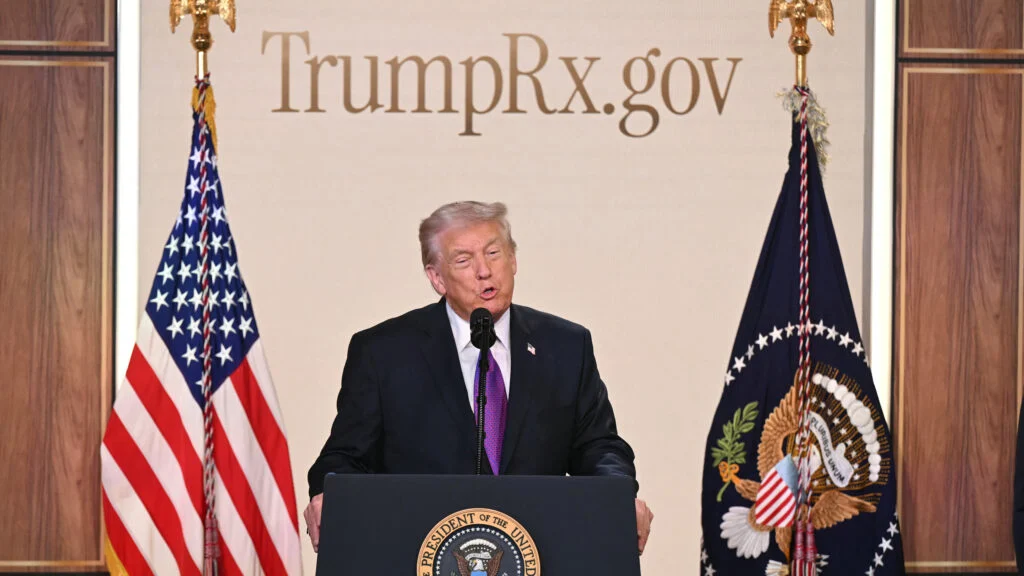
In a direct challenge to the White House’s claims regarding prescription drug affordability, Representative Frank Pallone (D-N.J.), the ranking member of the House Committee on Energy and Commerce, has formally requested that the Government Accountability Office (GAO) launch a comprehensive review of the "TrumpRx" platform. The request, detailed in a letter sent on October 27, 2026, questions the fundamental efficacy of the administration’s flagship pharmaceutical initiative and seeks to determine whether the platform has delivered any tangible financial relief to American consumers since its high-profile launch in February of this year.
The TrumpRx platform was introduced by the administration as a revolutionary "one-stop shop" for drug discounts, designed to bypass traditional bureaucratic hurdles and provide direct access to lower prices. However, unlike traditional pharmacies or digital health providers, TrumpRx does not function as a dispenser or a direct seller of medications. Instead, it serves as a digital clearinghouse, redirecting users to various manufacturer coupons, third-party discount cards, and external links. Since its inception, the White House has been vocal about the platform’s success, recently issuing fact sheets asserting that the initiative has saved Americans upwards of $700 million.
Representative Pallone, a veteran legislator who has long focused on healthcare costs and pharmaceutical industry oversight, argues that these "sweeping statements" are unsupported by publicly available data. In his letter to the GAO, Pallone emphasized that the administration has consistently failed to disclose the methodology used to calculate these savings, nor has it provided evidence that the platform offers benefits beyond what consumers could already find through existing private-sector tools like GoodRx or Mark Cuban’s Cost Plus Drugs.
“The American people deserve to know if TrumpRx is a substantive policy achievement or merely a sophisticated marketing tool for the pharmaceutical industry,” Pallone wrote. He further noted that the lack of transparency surrounding the platform’s operations makes it impossible for Congress or the public to evaluate whether the initiative provides "any meaningful financial benefit" to those struggling with the rising costs of life-saving medications.
The Mystery of the Most-Favored Nation Agreements
Central to Pallone’s inquiry is the status of "most-favored nation" (MFN) agreements that the White House claims to have brokered with more than two dozen pharmaceutical manufacturers. The administration has frequently touted these deals as a cornerstone of its strategy to lower domestic drug prices to match the lower rates paid by other developed nations. According to White House press releases, these agreements involve nine major pharmaceutical companies—and potentially up to twenty-five in total—who have supposedly committed to offering discounts that reflect international benchmarks.
However, the specific terms of these agreements remain shrouded in secrecy. Pallone’s letter highlights that the administration has not released the text of these deals, the list of specific drugs covered, or the criteria used to define "most-favored nation" pricing in this context. Critics of the administration suggest that without a formal regulatory framework or legislative mandate, these "agreements" may be little more than non-binding memorandums of understanding that allow manufacturers to offer selective discounts on older products while maintaining high prices on newer, patent-protected therapies.

The MFN concept has a contentious history in U.S. health policy. Previous attempts to implement such pricing models through executive order have faced significant legal challenges from the pharmaceutical lobby, which argues that tying U.S. prices to foreign markets stifles innovation and violates trade agreements. By framing these new deals as "voluntary partnerships" hosted through the TrumpRx platform, the administration has attempted to sidestep the litigation that plagued earlier MFN efforts. Pallone’s request to the GAO seeks to uncover whether these voluntary deals are actually being enforced and what, if any, concessions were made to the drugmakers in exchange for their participation.
Analyzing the $700 Million Savings Claim
The $700 million figure cited by the White House has become a focal point of the political debate over healthcare. To a casual observer, the number suggests a massive win for consumers. However, in the context of the broader U.S. pharmaceutical market—where annual spending exceeds $600 billion—$700 million represents a fraction of a percent of total expenditure.
Healthcare economists have raised questions about the "gross vs. net" nature of these savings. If the $700 million represents the difference between the "sticker price" (the Wholesale Acquisition Cost) and the discounted price found through TrumpRx, the figure may be misleading. Most insured patients already pay a fraction of the sticker price through their insurance co-pays. Furthermore, many of the coupons featured on TrumpRx are manufacturer-sponsored programs that have existed for years. If the platform is simply aggregating existing discounts rather than creating new ones, the "savings" attributed to the platform may actually be a rebranding of existing market dynamics.
Pallone’s letter asks the GAO to investigate the source of these savings. Specifically, the GAO is tasked with determining how much of the $700 million is "new" savings directly attributable to the administration’s negotiations versus savings that would have occurred regardless of the platform’s existence. There is also the concern that manufacturer coupons can actually drive up long-term healthcare costs by steering patients toward expensive brand-name drugs when cheaper generics are available, eventually leading to higher insurance premiums for everyone.
The Role of the GAO as a Watchdog
The Government Accountability Office, often referred to as the "congressional watchdog," is an independent, non-partisan agency that investigates how the federal government spends taxpayer money. A GAO review of TrumpRx would involve auditing the Department of Health and Human Services (HHS) and the White House Office of American Innovation, which were instrumental in the platform’s development.
The GAO’s investigation is expected to look into:
- Data Integrity: Validating the metrics used to track user engagement and cost reductions.
- Contractual Oversight: Reviewing the legal nature of the agreements with the 24+ drugmakers.
- Operational Costs: Assessing how much federal funding was used to build and maintain the platform.
- Privacy Concerns: Evaluating how patient data is handled when users are redirected to third-party manufacturer sites.
Political and Legislative Context
The timing of Pallone’s request is significant. As the 2026 midterm elections approach, drug pricing remains a top-tier issue for voters. The Democratic minority in the House is keen to contrast the administration’s "platform-based" approach with their own legislative priorities, which include expanding the government’s power to negotiate prices directly through Medicare—a provision of the Inflation Reduction Act that the current administration has sought to modify or replace.

By invoking the GAO, Pallone is signaling that the era of accepting White House fact sheets at face value is over. "We cannot manage what we cannot measure," a senior Democratic aide said on background. "If the administration has truly found a way to save $700 million through a website, they should be eager to show their work. The fact that they haven’t suggests there is less there than meets the eye."
Expert Perspectives on Digital Discount Platforms
Policy analysts suggest that TrumpRx represents a shift toward a "market-curation" model of governance, where the executive branch uses its platform to highlight specific private-sector actors. While this can increase consumer awareness, it also raises questions about favoritism and the "pay-to-play" nature of pharmaceutical access.
"The danger of a government-run discount aggregator is that it might prioritize manufacturers who are ‘friendly’ to the administration while ignoring smaller generic firms that actually provide the best value," said Dr. Aris Angelis, a health economist. "If TrumpRx is essentially a curated list of manufacturer coupons, it doesn’t solve the underlying problem of high launch prices for new drugs. It’s a band-aid, not a cure."
Furthermore, the pharmaceutical industry’s reaction to TrumpRx has been uncharacteristically quiet, leading some to believe the platform is a favorable alternative to more aggressive price-setting legislation. By participating in the platform, companies may be attempting to stave off more restrictive price controls while gaining a direct digital pipeline to consumers.
Conclusion and Next Steps
The GAO typically takes several months to complete such a comprehensive review. In the meantime, the debate over TrumpRx is likely to intensify. Representative Pallone’s letter has set the stage for a rigorous examination of the administration’s healthcare claims, shifting the focus from flashy headlines to the granular details of pharmaceutical policy.
As the GAO begins its work, the pharmaceutical industry, consumer advocacy groups, and taxpayers alike will be watching closely. If the investigation reveals that the $700 million in savings is substantiated and the MFN deals are robust, it could validate a new model of public-private partnership in healthcare. However, if the findings suggest that the platform is an empty shell with no real impact on the "out-of-pocket" crisis, it will provide significant ammunition for those calling for a total overhaul of the American drug pricing system.
For now, the White House maintains that TrumpRx is a success. "The numbers speak for themselves," a spokesperson for the administration stated briefly following the release of Pallone’s letter. But with the GAO now involved, those numbers will finally be put to the test.
