
 By admin
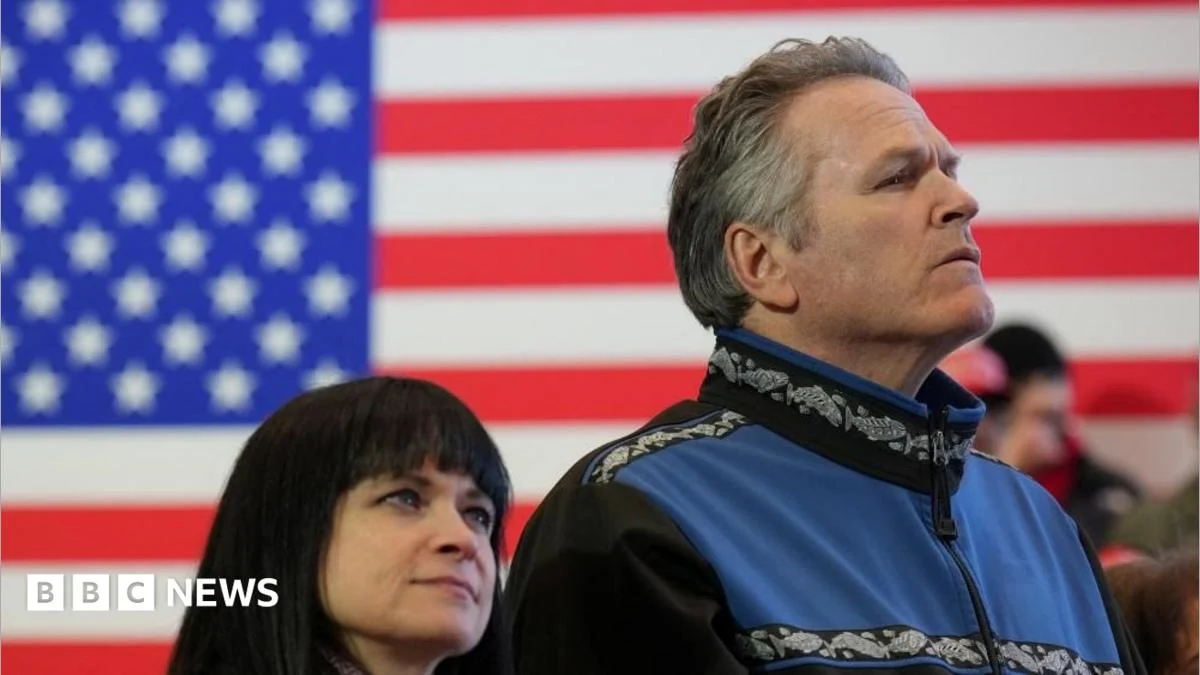
Alaska Governor Mike Dunleavy has officially launched an investigation into allegations of a deliberate "scheme" aimed at confusing voters in the state’s closely watched US Senate race by fielding multiple candidates named Dan Sullivan. The governor’s directive comes in response to a bombshell report by The New York Times, which detailed claims that individuals connected to the campaign of Democratic Senate candidate Mary Peltola allegedly worked to recruit a second, lesser-known Dan Sullivan to run against the incumbent Republican Senator Dan S. Sullivan.
Governor Dunleavy, a Republican, stated on the social media platform X that his administration would meticulously examine "whether this scheme violated Alaska’s laws." While the governor did not explicitly identify which specific statutes he believed might have been transgressed, his announcement signals a significant escalation in the political and legal battle surrounding the unprecedented situation. The incumbent Senator Dan S. Sullivan and his allies have vehemently accused Democrats of orchestrating a tactic to disenfranchise voters and dilute his support, while the Peltola campaign has consistently denied any involvement or wrongdoing.
The crux of the controversy revolves around the presence of two men with identical names on the ballot for Alaska’s sole US Senate seat: the incumbent, Senator Dan S. Sullivan, and a retired teacher named Daniel J. Sullivan Jr., who resides in a remote fishing village. The New York Times report, which has not been independently verified by the BBC, alleges that operatives working on behalf of Mary Peltola’s campaign, alongside senior officials from the Democratic Senatorial Campaign Committee (DSCC), actively sought out and encouraged Daniel J. Sullivan to enter the race. This effort, according to the Times, was part of a broader strategy to introduce "spoiler" candidates who could siphon votes away from the Republican incumbent.
The Times’ reporting is based on interviews with twelve individuals who claimed to have knowledge of the plan, as well as access to text messages and other communications. The newspaper detailed how these individuals attempted to persuade Daniel J. Sullivan to run, promising him financial support and political backing. The ballot itself will present a challenge for voters, listing the incumbent as "Dan S Sullivan (Incumbent Republican)" and the challenger as "Daniel J Sullivan Jr."
Senator Dan S. Sullivan has been a vocal critic of the alleged scheme, calling it a "scandal of the highest order" and urging Mary Peltola to "come clean" during an interview with Fox News. His Republican colleague in the Senate, Lisa Murkowski, has also condemned what she described as a "pattern of lies" by the Democratic campaign. Former President Donald Trump has gone even further, calling for Peltola to be barred from the ballot, while simultaneously re-endorsing Senator Sullivan, praising him as a "GREAT man" who has "ALWAYS delivered for Alaska."
This political firestorm has also drawn the attention of the federal government. The Trump administration, through the Department of Justice, has filed a federal lawsuit challenging the presence of both Sullivans on the ballot, arguing that it could lead to voter confusion and potentially impact the outcome of the election. Last week, the DOJ amended its lawsuit to specifically incorporate the New York Times reporting and Governor Dunleavy’s announcement, citing significant portions of the story as evidence of a potentially illegal manipulation of the electoral process. However, election law experts have expressed considerable skepticism about the merits of this lawsuit.
Justin Levitt, an election law expert at Loyola Law School and a former Department of Justice official, stated that "convincing somebody to run for office is not a crime, even if their name happens to be the same as an incumbent." Similarly, Ruth Greenwood, an election expert at Harvard Law School, emphasized that the non-incumbent Sullivan possesses a constitutional right to run and have his name appear on the ballot. This sentiment is echoed by Alaska election officials, who have formally requested a federal court to dismiss the DOJ’s lawsuit, asserting that the complaint "has no legal basis."
Despite the legal hurdles and expert opinions, Attorney General Todd Blanche, speaking on Fox News, declared that "they are cheating, let’s call it what it is," reinforcing the administration’s commitment to pursuing action. The DOJ has vowed to continue its efforts in the wake of the New York Times’ revelations.
The situation is further complicated by Alaska’s unique ranked-choice voting system. Under this system, voters can rank candidates in order of preference. This means that if voters are uncertain about which Dan Sullivan they wish to support, they can technically cast a vote for both, ranking one above the other. This element of the voting process adds another layer of complexity to the legal challenges and the potential for widespread confusion.
The incumbent Senator Dan S. Sullivan has been a fixture in Alaska politics since his election in 2014. A former Marine Corps officer and Alaskan Attorney General, he has consistently been a reliable Republican vote in the Senate, often aligning with the party’s conservative base while also advocating for Alaska’s specific interests, particularly regarding resource development and military presence. His re-election campaign has been focused on his record and his commitment to representing the state.
Mary Peltola, the Democratic challenger, is a former member of the House of Representatives. She gained national attention in 2022 when she became the first Alaska Native woman elected to Congress. Her campaign has emphasized issues such as lowering the cost of living, protecting Alaska’s natural resources, and advocating for working families. Her team has consistently maintained that they have no involvement with either Sullivan campaign and are focused solely on their own platform and engaging directly with Alaskan voters.
The Democratic Senatorial Campaign Committee (DSCC), a national organization dedicated to electing Democrats to the Senate, has also issued a statement denying any involvement with Daniel J. Sullivan, the non-incumbent candidate. Monica Robinson, a spokesperson for the DSCC, stated, "The DSCC is not involved with Dan J. Sullivan." This unified denial from the Peltola campaign and the DSCC stands in stark contrast to the allegations made in The New York Times report.
It is important to note that previous attempts by Republicans to remove Daniel J. Sullivan from the ballot were unsuccessful. The Alaska Supreme Court had already ruled that no state laws were violated by his candidacy, affirming his right to appear on the ballot. Election law experts largely agree that even if a scheme is proven, it is unlikely to result in the removal of the second Dan Sullivan from the ballot at this late stage, especially given the prior court rulings.
The timing of this controversy is critical, as Americans are heading to the polls on Tuesday for the midterm elections, which will determine which party controls Congress. The Alaska Senate race is widely considered to be one of the most competitive contests nationwide, and its outcome could have significant implications for the balance of power in Washington. The ongoing legal battles and investigations could potentially delay the final certification of election results, further adding to the national uncertainty surrounding the midterm outcomes. The ultimate control of Congress will have a profound impact on the remaining two years of President Trump’s term, shaping legislative agendas and policy decisions across the country.
The New York Times report, while not independently verified, has injected a significant amount of drama and controversy into what was already a high-stakes election. The allegations of a deliberate attempt to manipulate the electoral process by creating voter confusion through name duplication strike at the heart of democratic integrity. Governor Dunleavy’s decision to order a state-level investigation underscores the seriousness with which the allegations are being taken by Alaska’s top elected official.
The legal experts’ consensus that convincing someone to run for office is not inherently illegal, even with an identical name to an incumbent, suggests that any potential violations would likely hinge on proving a more direct and malicious intent to defraud or deceive voters, or a breach of specific campaign finance or election laws. The Department of Justice’s lawsuit, by attempting to invoke broader voting law principles, appears to be casting a wide net in hopes of finding a legal basis to intervene. However, the skepticism surrounding its legal standing, particularly in light of previous court decisions, indicates a challenging path ahead for the federal government’s intervention.
In conclusion, the Alaska Senate race has become a focal point of national attention, not only for its competitive nature but also for the unprecedented allegations of a "scheme" to exploit voter confusion through the presence of two candidates named Dan Sullivan. While investigations are underway and legal battles are being waged, the fundamental question of whether any laws have been broken remains to be definitively answered. The outcome of these inquiries and legal challenges could have lasting implications for election integrity and the public’s trust in the electoral process.
