
 By admin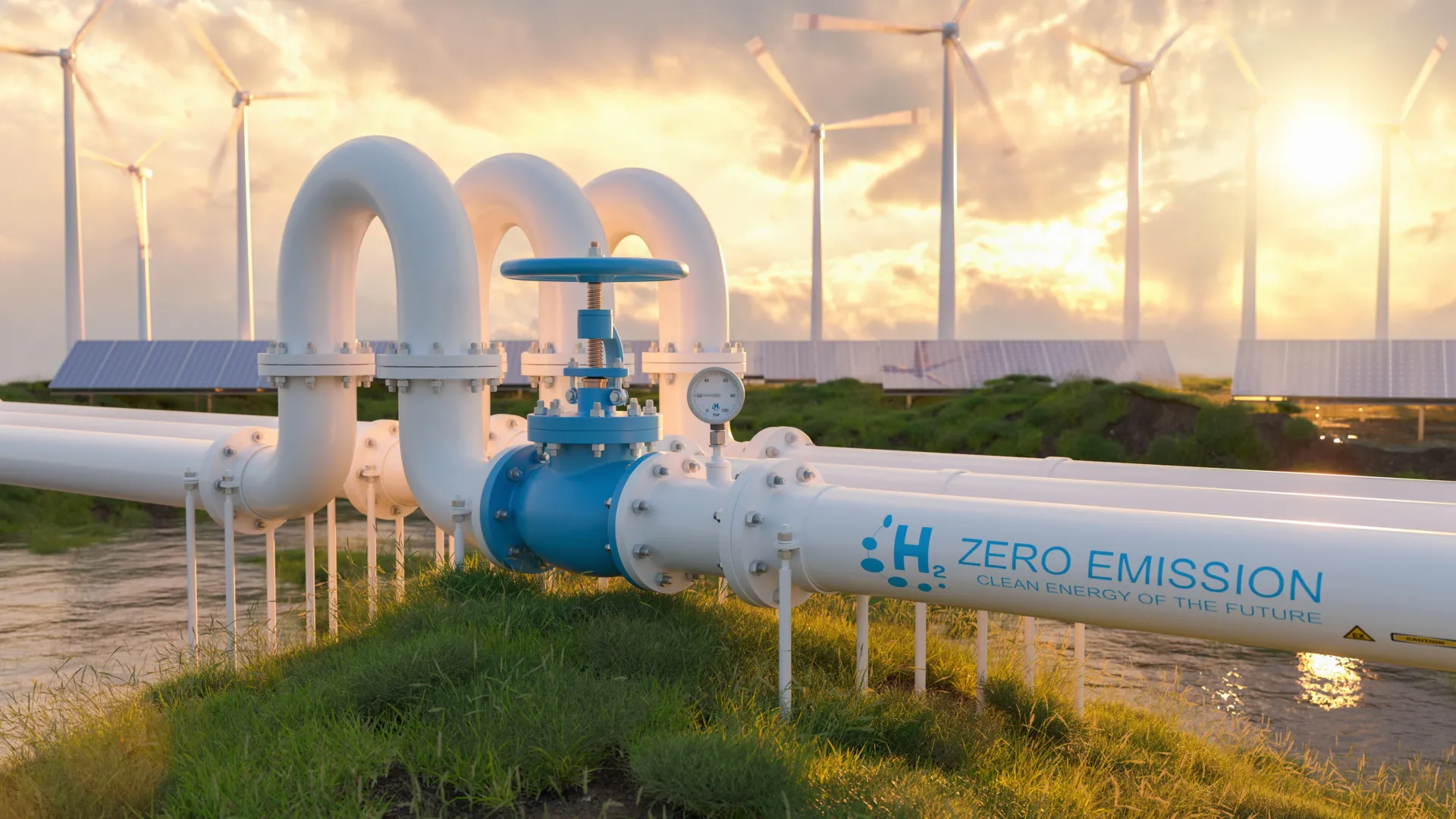
One of the most promising production methods for green hydrogen is Proton Exchange Membrane (PEM) electrolysis. This technology utilizes an electrical current to split water into hydrogen and oxygen, with the "green" designation stemming from the use of renewable electricity. PEM electrolysers are particularly well-suited for integration with variable renewable energy sources, such as wind farms and solar arrays, due to their rapid response times, high power density, and ability to operate efficiently under fluctuating load conditions. This agility allows them to ramp up and down quickly, maximizing the capture of otherwise curtailed renewable electricity. Despite these advantages, PEM electrolysis faces two critical challenges: its high capital and operational costs, which render green hydrogen significantly more expensive than hydrogen produced from fossil fuels (often referred to as grey or blue hydrogen), and pressing environmental concerns related to the materials currently employed in its construction.
The Shadow of ‘Forever Chemicals’ and Critical Raw Materials
The environmental footprint of current PEM systems is a growing point of contention. A major issue is their reliance on per- and polyfluoroalkyl substances, commonly known as PFAS, or "forever chemicals." These synthetic compounds are prized for their exceptional chemical stability, heat resistance, and non-stick properties, making them ideal for the membranes and electrode binders within existing PEM electrolysers. However, their very stability makes them extremely persistent in the environment, where they can accumulate in soil, water, and living organisms, including humans. Mounting scientific evidence links PFAS exposure to a range of serious health risks, including certain cancers, thyroid disease, immune system dysfunction, and developmental problems. Recognizing these pervasive dangers, the European Union has taken decisive action, proposing a comprehensive ban on PFAS substances, signaling a clear shift towards more sustainable chemical alternatives across all industries. This regulatory pressure adds urgency to the quest for PFAS-free electrolysis technologies.
Beyond PFAS, the high cost of PEM electrolysis is exacerbated by its dependence on critical raw materials. Specifically, iridium, a rare and expensive platinum group metal, is a vital catalyst in the oxygen evolution reaction (OER) at the anode of a PEM electrolyser. Iridium’s scarcity, volatile market price, and concentrated supply chains (primarily from South Africa) pose significant economic and geopolitical risks to the large-scale deployment of green hydrogen infrastructure. The average cost of green hydrogen today can range from $3 to $8 per kilogram, starkly contrasting with grey hydrogen, which typically costs $1 to $2 per kilogram. Bridging this economic gap is paramount for green hydrogen to become a competitive and mainstream energy solution.
SUPREME: A European Initiative for Sustainable Hydrogen
Addressing both the prohibitive costs and the environmental ramifications of current PEM technology is the ambitious goal of the EU-funded SUPREME project. Over the next three years, a consortium of leading research institutions and industrial partners, spearheaded by the University of Southern Denmark, in collaboration with Graz University of Technology (TU Graz) and others, will embark on developing a groundbreaking PFAS-free electrolysis system. This innovative system aims to not only eliminate harmful "forever chemicals" but also to drastically improve efficiency and minimize the use of critical raw materials like iridium. The ultimate objective is to make green hydrogen significantly more affordable, environmentally benign, and scalable, thereby accelerating Europe’s journey towards a carbon-neutral future.
Merit Bodner, an expert from the Institute of Chemical Engineering and Environmental Technology at TU Graz, underscores the critical importance of this endeavor. "Hydrogen is used as a raw material in very large quantities, and this will continue to increase in the future. These include the production of ammonia, methanol production and the steel industry," she explains. Indeed, hydrogen is a foundational component in numerous industrial processes that are currently major emitters of greenhouse gases. The production of ammonia, vital for fertilizers, consumes vast amounts of hydrogen, as does the synthesis of methanol, a key building block for countless chemicals and a potential future fuel. In the steel industry, hydrogen offers a pathway to "green steel" through direct reduced iron (DRI) processes, replacing coal as a reducing agent and drastically cutting carbon emissions. Decarbonizing these hard-to-abate sectors is impossible without a clean, affordable hydrogen supply.
Bodner further emphasizes the transformative potential: "If we succeed in avoiding the use of harmful substances in the production of green hydrogen and we can also bring it to a similar price level as fossil hydrogen in economic terms, we will have taken an important step towards the green transition. This also makes it more attractive for other applications, such as storing surplus energy from renewables." Her statement highlights a dual imperative: environmental responsibility and economic competitiveness. Achieving price parity with fossil-derived hydrogen is not merely a financial goal but a strategic one, designed to incentivize widespread adoption across industries and accelerate the energy transition. Moreover, the ability to produce clean, cheap hydrogen opens doors for its expanded role in grid stabilization, converting excess renewable electricity into a storable chemical fuel that can be reconverted to electricity or used directly when demand outstrips immediate supply. This power-to-X concept is vital for a resilient and fully decarbonized energy system.
Innovating with PFAS-Free Materials and Advanced Membranes
A cornerstone of the SUPREME project involves pioneering the use of safer, PFAS-free materials. TU Graz plays a pivotal role in this crucial aspect, leading the rigorous evaluation of commercially available PFAS-free alternatives. Bodner’s team is meticulously comparing the performance characteristics of these novel materials against the established benchmarks set by current, PFAS-laden industry standards. This involves assessing key parameters such as proton conductivity, chemical stability, mechanical strength, and overall durability under the harsh operating conditions of an electrolyser. The central question guiding their research is whether these more sustainable materials can reliably deliver the robustness, longevity, and efficiency demanded for continuous, high-throughput industrial operations, without compromising safety or performance. Developing robust alternatives is a complex materials science challenge, requiring innovative polymers or composite structures that can withstand highly acidic environments and high electrical loads for thousands of hours of operation.
In parallel, the Turkish Science and Technology Council (TÜBİTAK) is focusing its expertise on the cutting edge of membrane development. Their research group is dedicated to engineering a new generation of microporous PFAS-free membranes. These membranes are the heart of the PEM electrolyser, serving as a selective barrier that allows protons to pass through while preventing the mixing of hydrogen and oxygen gases. The innovation lies in designing materials that offer high proton conductivity, crucial for efficient operation, while maintaining exceptional mechanical and chemical stability without the use of environmentally harmful PFAS. This involves exploring novel polymer chemistries, advanced fabrication techniques, and perhaps even inorganic or hybrid membrane architectures to achieve the desired balance of properties. Success in this area is fundamental to the entire project’s objective of creating a truly sustainable PEM technology.
Reducing Reliance on Iridium: A Quest for Efficiency and Circularity
Another major thrust of the SUPREME project is tackling the issue of iridium, a critical raw material whose scarcity and cost present a significant bottleneck for large-scale green hydrogen production. Currently, PEM electrolysers typically use iridium loadings of around 0.5 to 2 milligrams per square centimeter of electrode area, which, while small, accumulates rapidly given the vast areas required for gigawatt-scale electrolysis. The University of Southern Denmark, in collaboration with the British metal and catalyst company Ceimig, is at the forefront of this effort. Their research focuses on dual strategies: reducing the amount of iridium needed and establishing robust recycling pathways.
The first approach involves exploring innovative catalyst designs and electrode architectures aimed at cutting iridium use by an impressive margin, potentially up to 75 percent. This could involve developing highly dispersed iridium nanoparticles on novel support materials to maximize catalytic surface area, creating thin-film iridium catalysts, or even researching entirely new, non-iridium OER catalysts that can perform effectively in acidic environments. Lowering iridium content per unit of hydrogen produced would significantly reduce the capital cost of electrolysers and mitigate supply chain risks. Complementing this, the partners are developing advanced recycling methods designed to recover approximately 90 percent of the iridium that is still required. Establishing a closed-loop system for such a valuable and critical material is essential for long-term sustainability and economic viability, transforming the linear "take-make-dispose" model into a circular economy approach. Recycling processes for platinum group metals are complex, requiring sophisticated chemical and metallurgical techniques to separate and purify the metals from spent catalysts and components.
Collaborative Innovation Across Europe
The SUPREME project is a testament to the power of pan-European collaboration, drawing on specialized expertise from various partners. Fraunhofer ISE in Germany, a globally renowned institute for solar energy systems, is responsible for manufacturing the crucial membrane electrode units (MEUs). The MEU is the core component of a PEM electrolyser cell, comprising the proton exchange membrane sandwiched between the anode and cathode electrodes, each coated with its respective catalyst. Fraunhofer ISE’s role is critical in integrating the newly developed PFAS-free membranes and low-iridium catalysts into high-performance MEUs, ensuring their manufacturability and scaling potential.
Adding another layer of innovation, the Norwegian hydrogen company Element One Energy AS (EoneE) is designing a novel rotating electrolyser. This concept represents a potentially transformative departure from conventional static electrolyser designs. A rotating system could offer several advantages, such as improved mass transport of reactants and products, more efficient gas bubble removal from electrode surfaces, and potentially enhanced heat management. These factors can collectively lead to higher current densities, increased efficiency, and possibly even further reductions in critical material loading by optimizing the catalytic environment. This innovative design could unlock new performance benchmarks for green hydrogen production.
The SUPREME project is funded through CETPartnership, the Clean Energy Transition Partnership, under its 2024 joint call for research proposals. This pan-European initiative facilitates collaborative research and innovation projects that align with the EU’s strategic energy goals. The project is also co-funded by the European Commission (GA N°101069750), underscoring its alignment with the broader objectives of the European Green Deal and the REPowerEU plan, which aim to make Europe independent from Russian fossil fuels and accelerate the green transition. By tackling the twin challenges of cost and environmental impact, SUPREME is poised to play a pivotal role in making green hydrogen a truly sustainable and economically competitive cornerstone of the global energy landscape, driving decarbonization across critical industrial sectors and bolstering energy security for Europe and beyond.
