
 By admin
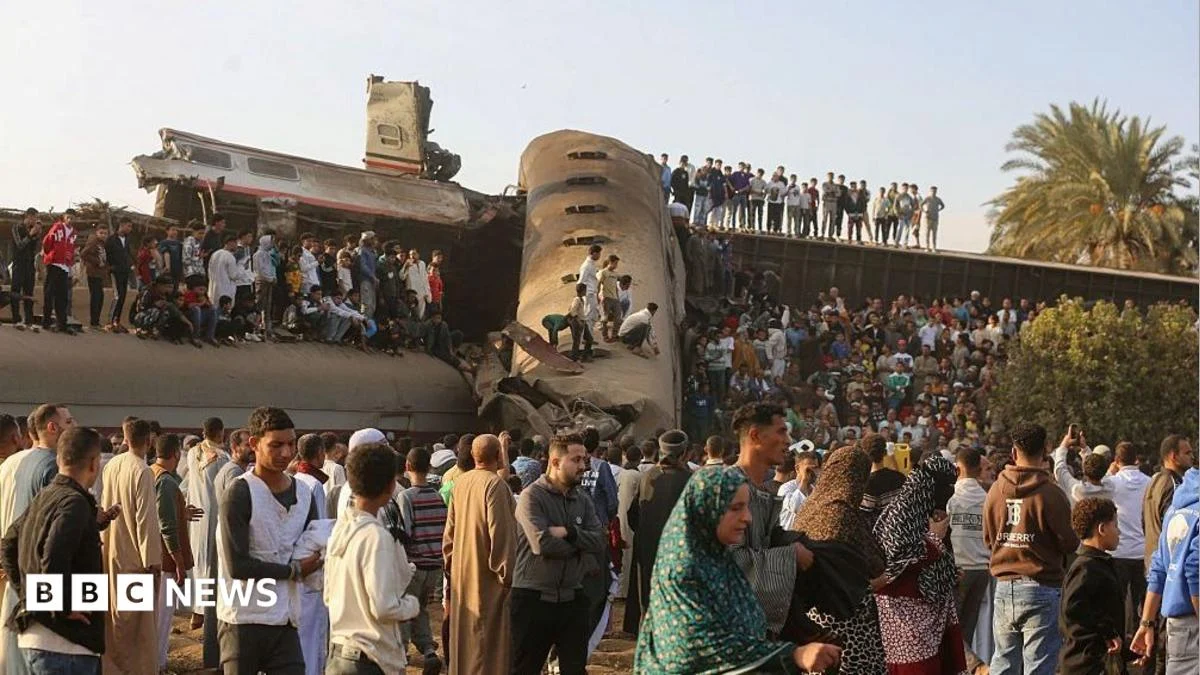
A catastrophic collision between two passenger trains south of Cairo has left a trail of devastation, claiming at least seven lives and injuring over 100 people. The incident, which occurred near the historic city of Giza, has once again cast a grim spotlight on the safety of Egypt’s railway network, a system that has been plagued by a series of high-profile accidents in recent years.
The Egyptian railway authority confirmed that the tragedy unfolded when two trains, one traveling south from Giza and the other from Cairo, collided. The impact was so severe that several carriages derailed, tumbling down an embankment and leaving a scene of chaos and destruction. Eyewitness accounts and images captured at the scene paint a harrowing picture: overturned carriages, debris scattered across the tracks, and individuals desperately searching through the wreckage for survivors. A massive emergency response was immediately launched, with ambulances and rescue workers converging on the site to attend to the injured and recover the deceased.
In the wake of the disaster, Egyptian President Abdul Fattah al-Sisi swiftly intervened, ordering state authorities to conduct a thorough investigation into the circumstances surrounding the accident. He emphasized the need to identify and hold accountable any individuals found to have been negligent, signaling a zero-tolerance approach to safety breaches within the railway system. The public prosecutor’s office has issued a stark warning that the death toll could still rise as rescue and recovery efforts continue, underscoring the severity of the impact and the potential for further casualties.
The government quickly mobilized its resources to manage the influx of injured individuals. Hospitals in the surrounding Giza and Cairo areas were placed on heightened alert, preparing for a significant number of patients requiring immediate medical attention. Dr. Khaled Abdel Ghaffar, Egypt’s Minister of Health, reported that many of the injured were suffering from severe injuries, including broken bones and head trauma, necessitating extensive medical care. The Egyptian Red Crescent was also on the ground, providing crucial aid, including medical assistance and psychological support, to both the victims and their distraught families. Tragically, the Ministry of Health confirmed that the driver of one of the trains was among those who lost their lives in the collision, a testament to the force of the impact.

Further details emerged about the sequence of events leading to the crash. The first train involved was en route from Giza to Fayoum, a journey south of Cairo. It collided with the rear of another service that was stationary on the tracks, having departed from Cairo and heading towards Aswan in Upper Egypt. The sheer force of the collision caused some carriages to overturn completely, with at least one carriage appearing to have been torn in half by the impact, a visual indicator of the extreme violence of the crash.
In response to the disaster, train services between Giza and the Upper Egypt region were immediately suspended. Cranes were dispatched to the scene to begin the arduous task of removing the mangled wreckage, a process expected to take a considerable amount of time. The railway authority has not yet provided an estimated timeline for the resumption of services, indicating the scale of the disruption and the complexity of the recovery operation.
The location of this latest tragedy is particularly poignant, as it occurred in the Al-Ayyat district, an area between Kafr Ammar and Al-Raqqa stations. This region holds a grim distinction in Egypt’s railway history, being the site of the country’s deadliest train disaster in February 2002. In that horrific incident, a fire engulfed a passenger train traveling from Cairo to Luxor, resulting in the official death toll of over 370 people, though unofficial estimates placed the number significantly higher. The proximity of the current accident to this site of past devastation serves as a chilling reminder of the persistent dangers associated with Egypt’s rail infrastructure. Furthermore, the area has seen two other significant crashes in 2009, which collectively claimed dozens of lives, highlighting a recurring pattern of serious accidents.
The latest fatal crash has ignited public outrage and renewed calls for accountability. On Sunday, there were widespread demands for the resignation of the Minister of Transport, reflecting a deep-seated frustration with the perceived inadequacy of safety measures and oversight within the ministry. This sentiment is echoed by a public that has witnessed a series of preventable tragedies on the nation’s railways.
The international community has also responded to the disaster. Foreign leaders and dignitaries have extended their condolences and expressed solidarity with Egypt during this difficult time. The Saudi Arabian Ministry of Foreign Affairs conveyed its "solidarity" with Egypt and offered wishes for a swift recovery to those injured. Similarly, the Turkish ambassador to Egypt took to X (formerly Twitter) to express "heartfelt condolences and sincere sympathy" to the victims, their families, and the Egyptian people. These messages of support underscore the global concern over the human cost of such accidents.

The persistent nature of train accidents in Egypt raises critical questions about the underlying causes. Factors often cited include aging infrastructure, inadequate maintenance, insufficient signaling systems, and human error. Egypt has been investing in modernizing its railway network, with ongoing projects aimed at improving safety and efficiency. However, these efforts have evidently not yet been sufficient to prevent catastrophic events. The frequency of these accidents suggests a systemic issue that requires a multifaceted approach, encompassing not only technological upgrades but also rigorous safety protocols, enhanced training for railway personnel, and robust regulatory oversight.
The economic and social impact of these disasters is also significant. Beyond the tragic loss of life and the immense suffering of the injured and their families, train accidents disrupt transportation networks, impacting the movement of goods and people. They also impose a heavy burden on the healthcare system and require substantial resources for accident investigation and recovery. For a country that relies heavily on its railway system for intercity travel and freight transport, ensuring its safety is paramount for national development and public well-being.
Experts in transportation safety have long pointed to the need for a comprehensive overhaul of Egypt’s railway management. This includes implementing advanced train control systems, improving track maintenance schedules, and ensuring that all personnel receive regular and thorough training on safety procedures. The role of independent safety regulators is also crucial, ensuring that standards are met and that any breaches are promptly addressed. The government’s commitment to investigating and holding negligent parties accountable is a positive step, but sustained action and transparency will be key to rebuilding public trust and preventing future tragedies.
The ongoing modernization efforts, while promising, must be accompanied by an unwavering focus on immediate safety improvements. The current incident serves as a stark reminder that the human cost of railway accidents is unacceptably high, and that every effort must be made to ensure the safety of passengers and railway workers alike. The eyes of the nation, and indeed the world, will be on the findings of the investigation and the subsequent actions taken to address the systemic issues that continue to plague Egypt’s railway system. The memory of the lives lost near Giza should serve as a powerful impetus for fundamental and lasting change.
