
 By admin
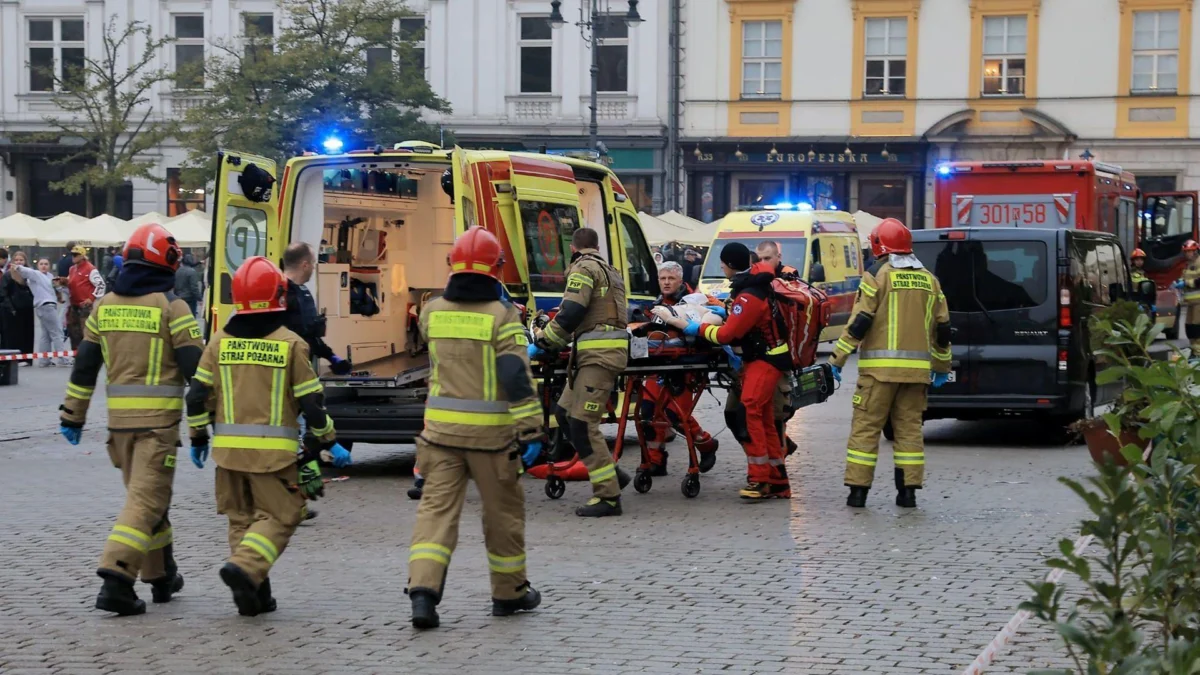
In a harrowing display of courage and medical expertise amidst unspeakable violence, two surgeons who were enjoying a meal near Krakow’s historic Main Market Square found themselves thrust into the role of first responders following a brutal mass shooting on Saturday. One of the surgeons, Professor Michal Pędziwiatr, stated that his colleague, Dr. Mateusz Wierdak, "undoubtedly" saved the life of a critically injured police officer through his immediate and decisive actions. The attack, which unfolded in broad daylight, claimed the lives of six individuals and left 15 others wounded, sending shockwaves through the picturesque Polish city.
The horrific incident began when a 24-year-old Polish assailant, armed with a military-grade weapon and clad in tactical gear, unleashed a torrent of bullets upon unsuspecting civilians and law enforcement officers. Professor Pędziwiatr and Dr. Wierdak, along with their families, were dining in close proximity to the Main Market Square when the first gunshots echoed through the usually bustling area. "We saw the shooting attack," Professor Pędziwiatr recounted to the BBC, his voice tinged with the gravity of the experience. "And what a surgeon can do in a situation like this?… We decided to help the victims as soon as possible."
Without hesitation, the two highly skilled medical professionals abandoned their meals and rushed towards the scene of the unfolding chaos. They arrived to find a grim tableau: injured individuals scattered, and a palpable sense of panic and confusion. Critically, there was a severe lack of immediate medical assistance. "There were no ambulances available, there were no professionals around," Professor Pędziwiatr explained, highlighting the dire need for their intervention.
Among the severely injured was a police officer who had been shot while attempting to subdue the gunman. This officer, identified later as senior constable Artur Morański, was in a life-threatening condition, with significant bleeding. It was in this critical moment that Dr. Wierdak demonstrated remarkable composure and skill. Professor Pędziwiatr detailed how his colleague "used his hand to stem the bleeding from the most injured policeman," a swift and vital action that likely prevented further blood loss and bought precious time until emergency services could arrive and transport the officer to a hospital.
The doctors also treated the attacker himself, who sustained critical injuries during his apprehension. Professor Pędziwiatr emphasized the unwavering ethical principles that guided their actions. "As a doctor… it doesn’t matter to me if it’s a victim or a suspect," he stated firmly. "It’s not our task to decide what to do with this guy… for us, it was another heavily injured victim, that’s all." This professional detachment underscores the fundamental duty of medical personnel to provide care to all in need, regardless of their alleged actions.
The bravery and swift response of these surgeons were not isolated acts of heroism. The two police officers, senior constables Jakub Kulik and Artur Morański, who were instrumental in apprehending the shooter and preventing further casualties, have been hailed as "true heroes" by Poland’s Prime Minister. By emerging from their comas on Sunday, they offered a glimmer of hope amidst the tragedy, underscoring the critical role they played in mitigating the disaster.
The investigation into the attack has been launched by prosecutors, with a terror unit taking the lead, suggesting that the incident is being viewed as an act of extremism. Preliminary findings indicate that the 24-year-old attacker, who remains in critical condition, was deeply influenced by "far-right ideologies." This aspect of the investigation is crucial in understanding the motivations behind such a violent act and in preventing future occurrences. The discovery of the bodies of the attacker’s parents and sister at his residence following the shooting adds another layer of grim complexity to the unfolding tragedy.

The victims of the attack represent a diverse group, including a British national and an Austrian woman, alongside four Polish citizens. This international dimension highlights the tragic reach of such violence, affecting individuals from various backgrounds and nationalities. The loss of life and the profound injuries sustained serve as a stark reminder of the fragility of peace and security.
Dr. Mateusz Wierdak, as reported by local media, is a recognized and respected surgeon in Krakow. Professor Michal Pędziwiatr holds the prominent position of Head of General, Oncological, Metabolic and Emergency Surgery at the University Hospital in Krakow. Their presence and immediate intervention at the scene, far from their professional duties, underscore the profound impact ordinary citizens, especially those with specialized skills, can have in extraordinary circumstances.
Further details have emerged regarding the international response to the crisis. Six volunteers from Dublin’s Civil Defence also provided crucial assistance in the aftermath of the shooting. James McConnell, an officer with the group, shared with RTE News that his team was on a city break in Krakow and found themselves near the Main Market Square when the shooting began. Trained in providing immediate medical care, these volunteers "provided CPR and haemorrhage control," offering vital support to the injured before professional medical teams could fully establish their presence. Their presence and willingness to help demonstrate a global spirit of solidarity in the face of tragedy.
Witness accounts paint a vivid picture of the terror and confusion that gripped the city center. Ruby Catherine Warren, a tourist from London, described hearing the gunfire and immediately yelling for her friends to run. "We all sprinted for our lives," she recounted, emphasizing the instinctual reaction to flee from an unseen, immediate threat. The uncertainty about the gunman’s location and the possibility of multiple assailants fueled their desperate flight, eventually leading them to seek refuge in a hotel.
Tom Brook, visiting from West Yorkshire, was inside a McDonald’s near the square when the "multiple gunshots" erupted, prompting people to scramble for safety. His subsequent walk into the square revealed the immediate aftermath: paramedics attending to an injured individual and a deceased person covered with foil blankets just meters away. This visceral description underscores the sudden and devastating impact of the attack on the vibrant urban landscape.
The assailant’s preparedness and weaponry were also significant factors in the scale of the tragedy. He was equipped with full military tactical gear and a military-grade weapon, suggesting a level of premeditation. However, the government has confirmed he was not a member of the Polish armed forces, pointing towards an individual acting independently, albeit with potentially extremist motivations. Poland’s Interior Minister Marcin Kierwiński stated that "everything suggests" the suspect was "fascinated by far-right ideologies" and held ultra-nationalist views. This aligns with the broader concerns about the rise of extremist movements in various parts of the world.
The attack commenced shortly before 15:00 local time on Saturday, disrupting the historic heart of Krakow. Disturbing footage captured the attacker’s vehicle speeding through the city center, with terrified civilians fleeing as the sound of gunfire filled the air. The impact of the bullets was evident in the shattered glass fronts of shops and even a tram that was struck during the brief but intense three-minute rampage.
In recognition of the bravery displayed by the officers who brought the attack to an end, the mayor of Krakow has submitted an urgent request to award them titles of honorary citizens. This gesture signifies the deep gratitude and admiration of the city for their courageous actions. Main Market Square, the epicenter of the tragedy, reopened to the public on Sunday evening after a security cordon was lifted, a somber testament to the city’s resilience and determination to reclaim its public spaces.

The assailant, whose identity has not yet been officially released by authorities, now faces a thorough investigation. The discovery of his parents and sister’s bodies at his home adds a deeply disturbing dimension to the case, raising questions about his personal life and potential family dynamics that may have contributed to his radicalization. The National Public Prosecutor’s Office in Poland’s decision to involve a unit specializing in "terrorist offenses" underscores the gravity with which the incident is being treated. This specialized unit will be tasked with piecing together the events leading up to the attack, identifying any potential accomplices or networks, and understanding the full scope of the extremist ideology that may have fueled this act of violence.
The international dimension of the tragedy extends beyond the victims. Reports have also highlighted the actions of six Dublin Civil Defence volunteers who were in Krakow on a city break and selflessly assisted in the immediate aftermath of the shooting. James McConnell, an officer within this group, shared with RTE News that they were in close proximity to the Main Market Square when the gunfire erupted. Possessing training in providing medical care, these volunteers wasted no time in offering their skills, administering "CPR and haemorrhage control" to those in desperate need. Their willingness to step forward in a foreign land, offering comfort and critical aid, speaks volumes about their dedication and the shared humanity that transcends borders in times of crisis.
The harrowing accounts of witnesses provide a stark reminder of the chaos and terror experienced by those present. Ruby Catherine Warren, from London, vividly described the moment she heard the gunfire, her immediate reaction being to "yell at my friends to run and we all sprinted for our lives." The fear of the unknown, the uncertainty of the gunman’s location, and the potential for more than one assailant propelled them into a desperate flight for safety. They eventually found refuge in a hotel, a temporary sanctuary from the unfolding horror.
Similarly, Tom Brook, who was visiting from West Yorkshire, recounted his experience from inside a McDonald’s near the square. He heard "multiple gunshots and saw people running for cover." Upon venturing into the square, he witnessed paramedics attending to someone and, disturbingly, a "dead body covered in foil blankets 20 meters away." These firsthand testimonies offer a powerful and visceral glimpse into the immediate impact of the shooting on ordinary individuals caught in the crossfire.
The assailant’s choice of attire and weaponry also raised significant concerns. He was reportedly wearing "full military tactical gear" and wielded a "military-grade weapon," suggesting a level of preparation and intent beyond that of a spontaneous act. However, government officials have clarified that he was not a member of the Polish armed forces, indicating that his access to such equipment and his motivations likely stemmed from external influences. Poland’s Interior Minister, Marcin Kierwiński, articulated the prevailing assessment, stating that "everything suggests" the suspect was "fascinated by far-right ideologies" and harbored "ultra-nationalist views." This statement aligns with growing global concerns about the proliferation of extremist ideologies and their potential to incite violence.
The shooting commenced shortly before 15:00 local time on Saturday, disrupting the normal rhythm of life in Krakow’s historic center. Eyewitness footage captured the assailant’s vehicle speeding through the city streets, accompanied by the chilling sound of gunfire and the panicked flight of pedestrians. The destructive force of the attack was evident in the shattered glass fronts of shops and the damage inflicted upon a tram, highlighting the indiscriminate nature of the violence. The entire incident, police reported, lasted for approximately three minutes, a terrifyingly short period that inflicted immense devastation.
In a gesture of profound gratitude and recognition for the officers who bravely confronted the shooter and neutralized the threat, the mayor of Krakow announced plans to submit an urgent request to award them titles of honorary citizens. This honor signifies the city’s deep appreciation for their selflessness and their pivotal role in preventing further loss of life. Main Market Square, the scene of the tragedy, was reopened to the public on Sunday evening after a security cordon was lifted. This reopening, while a step towards normalcy, undoubtedly carries the weight of remembrance and the indelible mark left by the events of Saturday.
