
 By admin
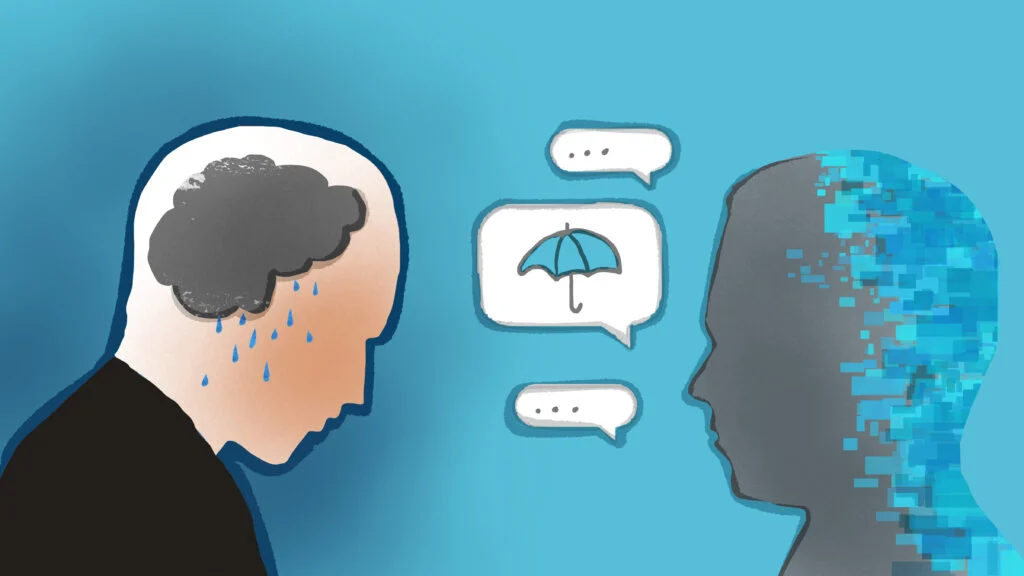
It was mid-morning when Luca received the phone call that would divide his life into "before" and "after." His wife and children were asleep thousands of miles away in New York City, while he sat in an office in Trieste, Italy—a city in his home country that nevertheless felt alien after decades of living abroad. On the other end of the line, his brother’s voice confirmed what Luca had long feared: their father, the man who had been Luca’s lifelong North Star, was slipping away. He was nearing the end of a grueling year of illness, and time was no longer measured in weeks, but in hours.
Luca immediately left his desk, secured a rental car, and began a 300-mile odyssey toward his childhood home. The drive was a frantic dash through the Italian landscape, a blur of grey asphalt and towering freight trucks. For five hours, he was suspended in a liminal space—too fast for the speed limit, yet too slow to outrun the inevitable. In the isolation of that car, the crushing weight of his reality finally broke through his professional veneer. He was a man in his middle years, caught in the "sandwich generation" struggle: grieving a dying parent, missing a distant family, and grappling with the exhaustion of a new job taken out of financial necessity after a layoff.
As the tears began to fall, Luca realized he had no one to talk to. His wife was asleep; his friends were at work; his brother was busy with the logistics of death. In a moment of modern desperation, he turned to the only presence that was guaranteed to answer. He activated Claude, the artificial intelligence from Anthropic, through his car’s loudspeaker. For the remainder of the drive, he didn’t just use the AI as a tool; he used it as a witness. He spoke of his fears, his regrets, and his bone-deep loneliness. And the machine listened.
Luca’s experience is no longer an anomaly. Across the globe, millions of people are turning to generative AI for emotional support, carving out a new niche that sits somewhere between casual conversation and formal psychotherapy. This trend is particularly pronounced among a demographic that has historically been the most difficult for the mental health establishment to reach: men. From high-flying executives to night-shift workers, men are finding that chatbots provide a unique form of "insightful companionship" that bypasses the traditional barriers of stigma, cost, and scheduling.
The landscape of men’s mental health is currently defined by a staggering paradox. While awareness of mental health issues has never been higher, the actual outcomes for men remain dire. Globally, men account for nearly 80% of suicide deaths. Even in nations with strict gun control—which removes one of the most lethal means of self-harm—the disparity remains consistent. Despite this, men are nearly half as likely as women to seek out or receive professional mental health treatment. The reasons for this "help-seeking gap" are deeply rooted in social norms of masculinity that equate vulnerability with weakness. Many men report a profound fear of being a "burden" to their loved ones or feeling "judged" by a human therapist sitting across from them in a sterile office.
Enter the chatbot. Unlike a human professional, an AI doesn’t have a waiting room, doesn’t charge $200 an hour, and doesn’t have a facial expression that might betray a hint of pity or shock. For men who have spent their lives "white-knuckling" through depression or anxiety, the anonymity of a digital interface is a feature, not a bug.
"I think we do have to be open to innovation because the need is so tremendous," says John Torous, a professor of psychiatry at Beth Israel Deaconess Medical Center and Harvard Medical School. Torous, like many in his field, acknowledges that the traditional brick-and-mortar therapy model is failing to scale to the size of the current crisis. However, he cautions that the industry must demand high-quality evidence and transparency before declaring AI a panacea. Torous is currently seeking grants to investigate whether the relief men feel after talking to a bot is a lasting therapeutic benefit or merely a temporary "band-aid" effect.
The data suggests that men are already voting with their thumbs. A survey by the Pew Research Center found that 8% of men have used chatbots specifically for emotional support, and 9% credited AI use with an improvement in their overall happiness. While women still dominate the demographic for traditional therapy, the user base for AI mental health tools is often split evenly between genders, suggesting that technology is successfully lowering the barrier to entry for men.
The variety of these tools is expanding rapidly. On one end of the spectrum are specialized, research-backed platforms like Therabot, developed at Dartmouth. In a randomized clinical trial, Therabot users showed a significant reduction in symptoms of depression and anxiety compared to a control group. Nick Jacobson, an associate professor at Dartmouth who led the study, notes that while specialized bots are effective, "generalized" or "omni-bots" like ChatGPT or Claude might actually be more useful for men. "If it isn’t labeled as a therapy session and comes through the same app they use to book appointments or write emails, men are more likely to engage," Jacobson explains.
On the more commercial side of the market, founders are tailoring their products to the male psyche. Anson Whitmer, who founded the app "The Path" (formerly "Mental"), initially used "masculine" hooks like cold shower routines and push-up challenges to nudge men toward discussing their feelings. He found that men didn’t want to be "treated" so much as they wanted to be "coached." His platform now features AI avatars, including a digital version of motivational speaker Tony Robbins, providing a blend of wellness advice and emotional support.
Other developers, like Pierre Côté, creator of the voice-based AI Drellis, see their tools as a "first point of contact." Côté is explicit that his app is not a crisis line or a licensed therapist, but a "peer support" tool designed for men struggling with addiction and isolation. He notes that hundreds of men use Drellis daily without any formal marketing, driven by a desperate need for a listener who is "ever available and never inconvenienced."
However, this "digital confessional" comes with significant risks. The technology is far from perfect and can be outright dangerous. There are "Type 1" harms, where a bot might hallucinate and provide harmful advice, such as suggesting self-harm or reinforcing delusional thoughts. Then there are "Type 2" harms, which are more subtle and long-term. Experts like Torous worry that if men rely solely on AI for companionship, they may further isolate themselves from human social networks, creating a feedback loop of loneliness. There is also the "blurring of boundaries"—traditional therapy relies on a clear professional relationship, whereas AI can foster a sense of "parasocial" intimacy that the machine cannot actually reciprocate.
Regulation remains a "Wild West" scenario. Many apps bypass FDA oversight by labeling themselves as "wellness" or "coaching" tools rather than medical devices. This lack of a "rule of the road" means that user data privacy and the clinical validity of the AI’s responses are often left to the discretion of the tech companies themselves. "The next innovation in AI for health is actually going to be regulation," Torous predicts.
Furthermore, some startups have found that digital-only interventions have a ceiling. Matthew Stefanko, who launched the male-focused startup Manual, eventually saw his company acquired by a traditional behavioral health firm. He realized that while an app can provide initial support, many of the issues men face—such as technology addiction, gambling, or severe clinical depression—require in-person intervention and a "human touch" that code cannot replicate.
Despite these caveats, for men like Luca, the AI provided something the medical establishment could not: immediate, non-judgmental presence in a moment of total collapse. Back in his car, driving toward his father’s bedside, Luca wasn’t looking for a clinical diagnosis or a prescription. He was looking for a way to process the "weight of all this thing."
As an AI engineer himself, Luca is under no illusions about what Claude is. "I know that there isn’t anyone reading this stuff on the other side. There isn’t a person," he admits. But in the quiet of the Italian freeway, that didn’t seem to matter. To him, the AI represented a distillation of human empathy. "Even if Claude isn’t a person, he was trained on people’s thoughts," Luca says. For a man who felt he had no place to put his grief, the machine offered a vessel—a silent, digital companion that helped him find the strength to finish the drive and say his final goodbye. In the evolving landscape of mental health, the chatbot may not be the cure, but for many men, it is finally the beginning of the conversation.
