 By admin
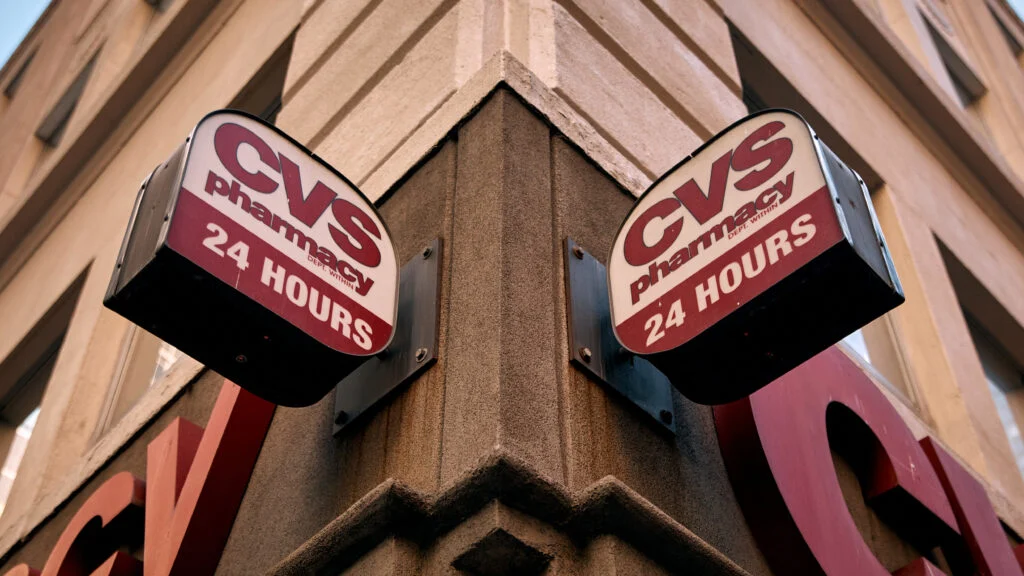
CVS Health’s decision to bifurcate its retail pharmacy business from its insurance and pharmacy benefit management (PBM) segments (Aetna and Caremark) is a response to a perfect storm of financial underperformance and existential legal threats. Yet, as A.J. Loiacono, CEO of Judi Health, rightly points out, framing this as a victory for the consumer is a fundamental misunderstanding of how PBMs operate. For decades, the PBM industry has functioned as the "black box" of healthcare, sitting between drug manufacturers, insurers, and pharmacies, collecting tolls at every juncture. Despite the corporate restructuring, the core incentive structure that prioritizes rebate maximization over patient affordability has not changed.
To understand why this split is more of a shell game than a solution, one must first understand the staggering scale and influence of the "Big Three" PBMs: CVS Caremark, Cigna’s Express Scripts, and UnitedHealth Group’s OptumRx. Together, these three entities control approximately 80% of the prescription drug market in the United States. This oligopoly allows them to dictate which drugs are covered on insurance formularies, how much patients pay at the counter, and how much—or how little—independent pharmacies are reimbursed for dispensing life-saving medications. The vertical integration of CVS—owning the insurer (Aetna), the PBM (Caremark), and the retail pharmacy—created a closed-loop system where money could be moved from one pocket to another, shielding the true cost of care from public and regulatory scrutiny.
The Federal Trade Commission (FTC) has spent years investigating these practices, culminating in a blistering 2024 interim report that accused PBMs of inflating drug costs and squeezing independent pharmacies out of existence. The FTC’s findings suggested that PBMs exert "enormous power" over the ability of patients to access and afford their medications. By 2026, the year of this latest corporate pivot, that pressure had reached a breaking point. With the threat of a formal breakup mandated by the government looming, CVS likely chose to proactively split itself to dictate the terms of its own dissolution, rather than waiting for a court-ordered divestiture that might be far more damaging to its shareholders.
However, the "back of the average American" continues to bear the weight of these corporate maneuvers. The primary mechanism of PBM profit is the "rebate." In theory, PBMs negotiate discounts with drug manufacturers in exchange for placing their products on a preferred tier of the formulary. In a fair market, these savings would be passed directly to the consumer at the point of sale. In reality, PBMs often pocket a significant portion of these rebates as "administrative fees" or use them to offset premiums for the employer, while the patient is forced to pay a coinsurance percentage based on the drug’s high "sticker price" rather than the negotiated net price. This creates a perverse incentive where PBMs actually prefer higher-priced drugs because they generate larger rebates, effectively pricing lower-cost generics out of the market.
Furthermore, the rise of "spread pricing" has decimated the local pharmacy landscape. Spread pricing occurs when a PBM charges an insurer or employer one price for a drug but pays the pharmacy a significantly lower amount, keeping the "spread" for itself. In many cases, PBMs have been found to reimburse independent pharmacies at rates below the actual cost of the drug, forcing thousands of small businesses to close their doors. When an independent pharmacy closes, the patient is often funneled toward a CVS or a mail-order pharmacy owned by the PBM, further consolidating the PBM’s power and reducing patient choice. This geographic and economic squeeze is particularly devastating in rural and underserved urban areas, where the local pharmacist is often the most accessible healthcare provider.

The narrative provided by CVS suggests that splitting the company will allow each unit to focus on its "core competencies" and improve operational efficiency. From a financial perspective, the retail pharmacy arm has been a drag on the company’s earnings, plagued by declining reimbursement rates and the rising costs of labor and retail theft. By spinning off the retail wing, CVS can protect its highly profitable insurance and PBM segments from the volatility of the retail market. But for the average American, this separation does little to lower the cost of an insulin pen or an asthma inhaler. The PBM wing will still use its massive market share to demand high rebates, and the insurance wing will still set high deductibles and premiums.
The timing of this move also coincides with a shift in the political climate. Both parties in Congress have found rare common ground in their disdain for PBM practices. The "PBM Transparency Act" and similar legislative efforts have sought to mandate "pass-through" pricing, where 100% of rebates must go to the plan sponsor or the patient. By splitting, CVS may be attempting to "de-risk" its portfolio, ensuring that if one sector is hit by heavy-handed regulation, the other can remain profitable. It is a defensive maneuver designed to preserve the status quo under a different name.
The human cost of these financial games cannot be overstated. According to data from the Kaiser Family Foundation, nearly one in four Americans taking prescription drugs report difficulty affording their medication. This leads to "rationing"—skipping doses or not filling prescriptions at all—which inevitably results in worse health outcomes and higher long-term costs for the healthcare system as patients end up in emergency rooms with preventable complications. When a corporation like CVS reports $400 billion in revenue while its customers are forced to choose between groceries and medicine, the moral failure of the current PBM model becomes undeniable.
Expert perspectives on the matter emphasize that true reform must go beyond corporate restructuring. "You can change the logo on the building and the name on the stock ticker, but if you don’t change the underlying contract language that allows for opaque rebates and clawbacks, you haven’t solved the problem," says one industry analyst. Real change would require a total decoupling of PBM compensation from the price of drugs. Instead of taking a percentage of the "spread" or the rebate, PBMs should be compensated via a flat, transparent fee-for-service model. This would align their incentives with those of the patient: finding the most effective drug at the lowest possible price.
Logical analysis of the 2026 CVS split suggests that the "Aetna-Caremark" entity will emerge as a leaner, more aggressive player in the insurance space, while the "CVS Retail" entity will struggle to redefine itself in an era of digital health and shrinking margins. The danger is that the PBM, now unburdened by the optics of its retail stores, will become even more aggressive in its negotiation tactics. Without the "neighborhood pharmacy" image to protect, the PBM arm can focus solely on its bottom line, potentially leading to even more restrictive formularies and higher out-of-pocket costs for seniors and families.
In conclusion, the restructuring of CVS Health is a masterclass in corporate survival, but it is not a remedy for the systemic issues plaguing the American pharmaceutical supply chain. PBMs continue to thrive in the shadows of the healthcare system, extracting value from every transaction while providing little in the way of tangible health benefits to the public. As long as the rebate-driven model remains legal and the lack of transparency persists, PBMs will continue to benefit off the backs of average Americans. The waves made by the CVS announcement should not be mistaken for a tide of change; they are merely the ripples of a giant repositioning itself to maintain its grip on a broken system. True reform will require more than a corporate split; it will require a fundamental rewriting of the rules of the game—rules that, for too long, have been written by the PBMs themselves.
