
 By admin
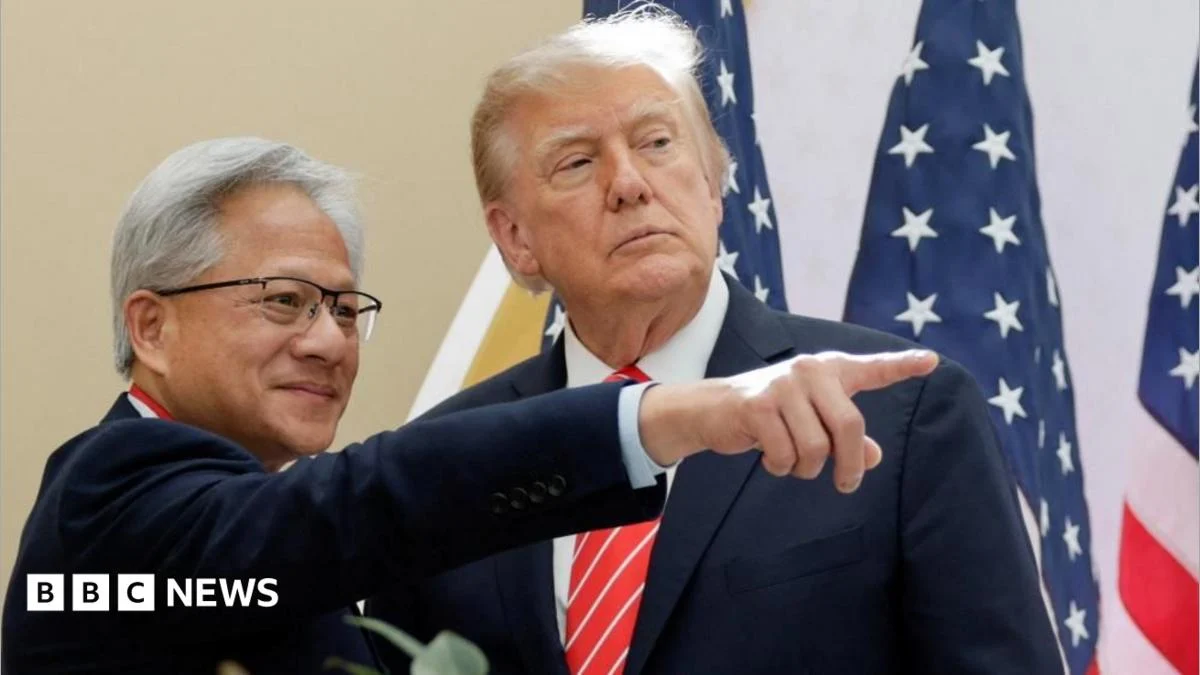
A seismic tremor is rattling the foundations of the artificial intelligence (AI) industry, with allegations of an affair between Nvidia CEO and co-founder Jensen Huang and a Chinese businesswoman, Alice Huang, who is suspected by US intelligence of being a spy for Beijing. The unfolding scandal has triggered a multi-pronged investigation involving US intelligence agencies, the FBI, and Nvidia itself, raising profound questions about national security, geopolitical tensions, and the personal conduct of one of the tech world’s most influential figures.
The New York Times first broke the story, detailing how US intelligence officials had developed a belief that Alice Huang, who maintained a close relationship with Jensen Huang, was an operative for China’s top intelligence agency. This revelation has cast a long shadow over Jensen Huang’s personal life and his professional standing, particularly given Nvidia’s pivotal role in the global AI race and its intricate ties with China.
In a personal statement released on Sunday, Jensen Huang admitted to having been "unfaithful" to his wife, Lori Mills, and offered a heartfelt apology for the pain he has caused her and their children, Madison and Spencer. This public acknowledgment of infidelity has added a layer of personal drama to the unfolding national security concerns.
Nvidia, the US tech giant that has become one of the world’s most valuable companies, has responded by launching an independent internal investigation into the matter. While the company has asserted that it does not believe US national security has been compromised, it has also stated that Jensen Huang remains committed to leading the firm. This dual approach underscores the delicate balancing act Nvidia is attempting to navigate: addressing the serious allegations while maintaining confidence in its leadership.
The gravity of the situation was further underscored by President Donald Trump’s announcement on Monday that the FBI is also actively investigating the affair. Trump, who has a known rapport with Huang, revealed that he had personally questioned the Nvidia CEO about his knowledge of Alice Huang’s alleged espionage activities. "I asked him that question, ‘Did you have any idea she was a spy?’ He said ‘I had no idea she was a spy’ and I really believe him," Trump told reporters, offering a measure of personal defense for the tech mogul. The FBI, however, has declined to comment further on the ongoing investigation, maintaining a tight lid on details.
Alice Huang, who is reportedly not related to Jensen Huang, was a significant figure in the business world, serving as a top executive at the Singapore-based data centre firm Megaspeed between March and November 2023. Prior to her role at Megaspeed, the firm had come under suspicion for allegedly facilitating the diversion of Nvidia chips to China, a concern that Nvidia had previously stated was investigated and debunked. However, the BBC has learned that Megaspeed is currently under investigation by the Singaporean government for alleged circumvention of US sanctions on the export of high-end Nvidia chips. Megaspeed itself has told The New York Times that its current leadership takes these allegations seriously and has initiated an internal investigation with external legal counsel.
The intelligence that brought Alice Huang to the attention of US authorities reportedly stemmed from surveillance that revealed communications between her and an American citizen, subsequently identified as Jensen Huang through a process known as "unmasking." The exact nature and extent of any intelligence Alice Huang may have gathered and passed to Beijing remain unclear. She did not respond to requests for comment from The New York Times. When approached by the BBC, Nvidia stated that the company was unaware of any intelligence concerns and expressed confidence that the US government would have notified them if a genuine threat had been identified.
Beijing has vehemently denied the spying allegations. Chinese Foreign Ministry spokesperson Guo Jiakun dismissed the claims as "entirely groundless, speculative and intended to smear and malign China," reiterating that the allegations were a fabrication.
The New York Times reported in late October that former President Trump had been briefed on intelligence suggesting Alice Huang was spying for China. When questioned on Sunday about whether he regretted not acting on this intelligence, Trump responded that he did not believe so, describing Jensen Huang as "an honourable guy." Meanwhile, US Secretary of State Marco Rubio has refused to comment on the matter. However, The New York Times reported that Rubio had overseen the drafting of a memo last spring that cautioned the Trump administration about Huang’s association with the Chinese businesswoman.
The implications of this scandal are magnified by Nvidia’s central position in the intensifying AI race between the United States and China. Lawmakers on Capitol Hill have voiced significant national security concerns, recognizing that AI dominance could translate into a substantial advantage in military and surveillance capabilities for any nation that gains the upper hand. The US currently holds a significant edge in this arena, largely due to the prowess of companies like Nvidia and their collaboration with semiconductor manufacturers such as Taiwan Semiconductor Manufacturing Company (TSMC), the world’s leading producer of advanced chips.
Since 2022, the US has implemented stringent export controls aimed at restricting China’s access to cutting-edge technology, a strategy designed to preserve America’s competitive edge and safeguard its national security. These controls have largely excluded Nvidia from the lucrative Chinese market, with Jensen Huang himself acknowledging a dramatic reduction in Nvidia’s market share in China. Huang has reportedly engaged in extensive diplomatic efforts between Washington and Beijing, seeking a path to re-enter the Chinese market with US approval and to influence US policy toward China. The recent revelations may offer a clue as to why Huang has struggled to secure a critical concession: the Trump administration’s approval to sell all but its most advanced chips to China.
Jensen Huang’s personal journey is as remarkable as his company’s rise. Born in Taiwan in 1963, he emigrated to the US at the age of nine. He earned degrees in electrical engineering from Oregon State University and Stanford University. Before co-founding Nvidia with Chris Malachowsky and Curtis Priem in 1993, he worked at AMD, another prominent chip firm. Huang, often referred to as "Daddy Huang" in Taiwan and once lauded as the "Taylor Swift of tech," is renowned for his work ethic, perfectionism, and exceptionally high standards. His estimated net worth, according to the Bloomberg Billionaires Index, stands at an astonishing $155 billion. Stephen Witt, author of "Thinking Machine," a biography on Huang, described him as a "tech visionary of the likes of Steve Jobs," crediting him with shaping the landscape of AI hardware as it exists today. Huang’s close relationship with former President Trump was evident at a recent AI summit at the White House, where he stood alongside Elon Musk as one of the few tech executives at the president’s side. Trump, when asked about Huang, stated he had not spoken to him since the investigation emerged but characterized him as a "fine person" who had "done an amazing job for our country."
Nvidia, initially known for its graphics processing units (GPUs) primarily for computer gaming, underwent a strategic pivot that ultimately positioned it at the forefront of the AI revolution. Huang’s leadership was instrumental in rescuing the company from bankruptcy on multiple occasions and in making early, significant bets on AI when the field was still nascent. Witt highlighted this prescience, noting that Nvidia effectively built the foundational infrastructure for AI, even when there were no established customers for its products. He recalled that OpenAI, then a small startup with only 30 employees, was among Nvidia’s first beneficiaries, receiving hardware donations. Today, virtually every major tech company involved in AI development, including Amazon, Meta, Google, and Microsoft, relies on Nvidia’s chips. With a current valuation of $4.5 trillion, Nvidia ranks among the most valuable companies in history.
Despite the scandal, Nvidia’s board has expressed strong confidence in Jensen Huang and his leadership team, indicating no immediate plans for his removal. Sources suggest that his departure is unlikely, given the immense financial stakes involved. At 63, Huang has not publicly outlined a succession plan and has expressed his desire to continue leading Nvidia for decades to come. His leadership style is described as an informal structure rather than a traditional corporate hierarchy, with his children, Spencer and Madison, and son-in-law Nico Caprez holding senior positions within the company.
Jensen Huang’s personal life has been marked by a long-standing marriage to Lori Mills, whom he met at Oregon State University in the early 1980s. The couple, who married in 1985, are parents to Madison and Spencer. In 2007, they established the Jen-Hsun and Lori Huang Foundation, a charitable fund whose assets have grown exponentially with Nvidia’s soaring stock value, now estimated to be worth over $9 billion. The foundation has made significant donations to engineering programs at Oregon State and Stanford University. Witt observed that Huang has actively cultivated an image as a devoted family man, frequently praising his wife and emphasizing the importance of his children. The personal fallout from the alleged affair, therefore, could be particularly damaging to this carefully constructed image.
The unfolding events surrounding Jensen Huang and Nvidia highlight the complex interplay of personal conduct, corporate responsibility, and geopolitical strategy in the critical domain of artificial intelligence. As investigations continue, the tech world and global policymakers will be closely watching to see how these allegations impact Nvidia’s leadership, its business operations, and the broader trajectory of the AI race.
