
 By Rifan Muazin
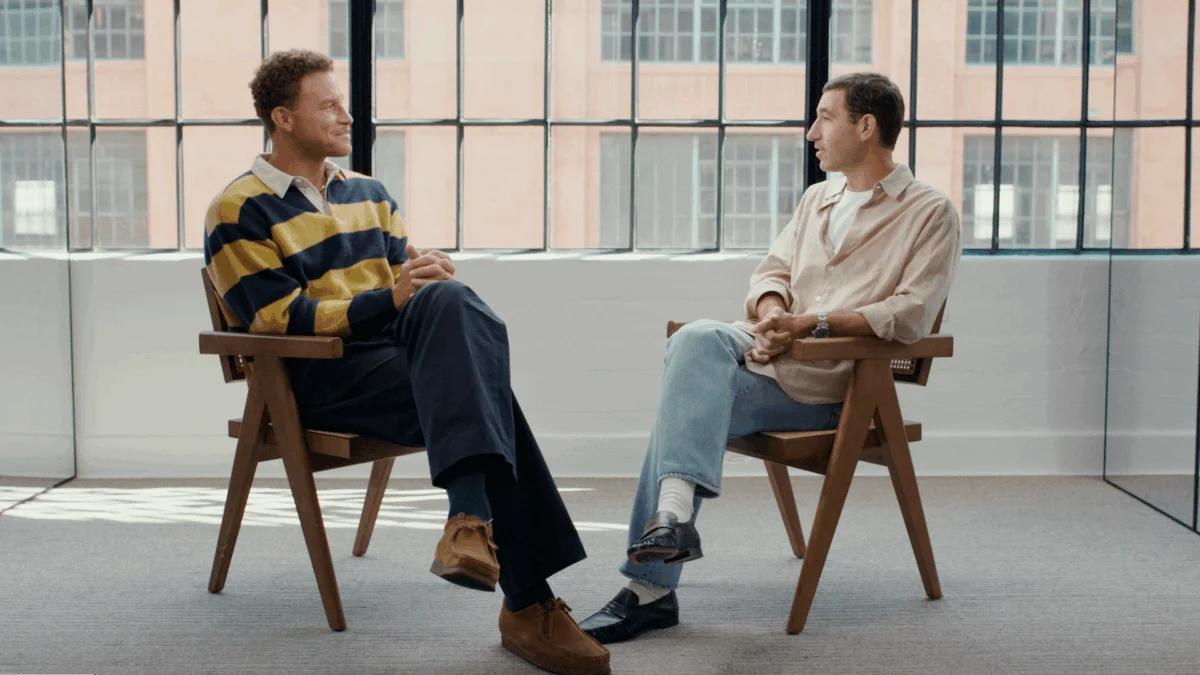
Twelve years ago, in the quiet confidence of his Los Angeles home, a young Blake Griffin made a definitive vow: once his sneakers were hung up for good, he would walk away from the world of professional basketball entirely. At the time, Griffin was the face of a revitalized Los Angeles Clippers franchise, a high-flying phenomenon whose gravity-defying dunks had transformed a perennial league punchline into a global attraction. He envisioned a post-career life defined by distance from the hardwood, perhaps exploring the comedy world or business ventures far removed from the scrutiny of the 24-hour sports cycle. Yet, as he sits today behind a desk in a sharp suit, preparing for his latest broadcast, the six-time All-Star can only offer a self-deprecating grin. “Well, look who’s a liar,” he admits.
Griffin’s retirement in 2024 at the age of 34 marked the end of a 14-year NBA odyssey that saw him evolve from a pure athletic marvel into a sophisticated, playmaking big man. His journey through the league—spanning the Clippers, Detroit Pistons, Brooklyn Nets, and Boston Celtics—was characterized by immense peaks and grueling physical setbacks. However, instead of disappearing into the sunset, Griffin has re-emerged as a pivotal figure in the shifting landscape of sports media. With his new show, The Stepback with Blake Griffin, and a high-profile weekly role on NBA on Prime via Amazon’s burgeoning sports division, Griffin is attempting to bridge the gap between the locker room and the living room.
The transition from player to analyst is a well-trodden path, but Griffin is intentionally steering away from the "hot take" culture that has come to define modern sports television. He expresses a pointed distaste for the relentless negativity often found on morning debate shows. “I always thought that there was a little bit too much negativity when it came to scrutinizing players,” Griffin explains. He notes that in a league of roughly 450 elite athletes, the margin for error is razor-thin, and the physical and mental toll is often invisible to the casual viewer. His mission is not to tell the audience that a player who shot three-for-17 "sucks," but rather to use his decade-plus of experience to explain the "why" behind the struggle. For Griffin, the goal is to provide a "good hang" that is unexpectedly funny and frequently insightful, moving past the surface-level criticism that often embitters former players toward the game they once loved.
To understand Griffin’s current perspective, one must look back at the "Lob City" era of the Los Angeles Clippers, a period that fundamentally changed the trajectory of the franchise. When Griffin was drafted first overall in 2009 out of the University of Oklahoma, the Clippers were languishing under the ownership of Donald Sterling, a man whose tenure was defined by frugality and a lack of competitive ambition. Griffin’s arrival, followed by the blockbuster acquisition of Chris Paul and the emergence of DeAndre Jordan, "vitalized" the team. They were no longer a secondary tenant at Staples Center; they were a championship contender.
However, this era was also marked by the surreal and often uncomfortable realities of the Sterling regime. Griffin recalls being a 19-year-old rookie, fresh from the relatively sheltered environment of Oklahoma, being led by the hand through a "white party" at Sterling’s house. The owner paraded him around for what felt like hours, introducing him to guests as if he were a prized possession rather than a franchise cornerstone. This "Welcome to LA" moment was a jarring introduction to the complexities of professional sports ownership—a saga that eventually culminated in Sterling’s lifetime ban and the forced sale of the team to Steve Ballmer in 2014.
The "Lob City" years were a whirlwind of success and "what ifs." While the team never reached the Western Conference Finals, they remained a top-tier threat for nearly a decade. Griffin looks back on this time with a profound sense of pride, noting that they left the organization better than they found it. He remains a beloved figure among the "loyal bunch" of Clippers fans, even as the franchise prepares to move into its own home, the Intuit Dome, and navigates a new era defined by the aging stars Kawhi Leonard and James Harden.
Griffin’s exit from Los Angeles remains one of the most controversial chapters in recent NBA history. In the summer of 2017, the Clippers convinced Griffin to sign a five-year, $171 million maximum contract extension. The pitch was legendary for its theatricality, involving a "pioneer" theme that featured t-shirts depicting Griffin alongside historical figures like Martin Luther King Jr., Mahatma Gandhi, Abraham Lincoln, and Albert Einstein. The message was clear: Griffin was a transformational figure for the franchise. Yet, just six months later, he was traded to the Detroit Pistons.
The manner of the trade—finding out via a tweet while he was in his car—remains a sore spot, not because of the destination, but because of the lack of communication. “I just feel like in this day and age where information is just about getting it out there first, we’ve sort of maybe lost a little bit of decency,” Griffin says. This experience directly informs his approach to The Stepback. He wants to dissect the business of sports—the trades, the stadium financing, the "insider" culture of journalism—with the skepticism of a man who has been a pawn in those very games.
Physicality was always Griffin’s greatest asset and his most persistent enemy. Over the course of his career, he underwent nine surgeries, a staggering number that reflects the toll his explosive playing style took on his body. He recalls a specific breaking point in 2017 when he tore a ligament in his foot during the playoffs. Despite utilizing every modern recovery tool—from personal chefs to napping in hyperbaric chambers—the injury occurred anyway. "I just broke down, emotionally broke down," he admits. "I just remember thinking, ‘Why me?’"
This grueling cycle of injury and rehab eventually led him to the realization that it was time to step away. By the time he reached his final seasons in Brooklyn and Boston, the "negotiation" with his body had become too lopsided. The joy of the game was being eclipsed by the immense effort required just to prepare for a single practice. Retiring at 34 allowed him to walk away on his own terms, avoiding the "scary" void that many athletes face by immediately pivoting into his creative interests.
The Stepback with Blake Griffin is a testament to this evolution. Inspired by the long-form, research-heavy format of Last Week Tonight with John Oliver, the show tackles "big" topics with a writers’ room and a dedicated research team. Griffin chose the "hard way" of scripted, evergreen content rather than the saturated market of athlete-led podcasts. He addresses issues like the rising costs of youth sports and the decline of local newsrooms with a level of depth rarely seen from a former pro. He isn’t afraid to be critical, either—he has already taken aim at the sensationalism of media figures like Stephen A. Smith, using specific examples of where "debate culture" fails the audience.
Beyond the screen, Griffin has found a new sense of peace in the "little things" of fatherhood. Now a resident of Los Angeles, he is present for school drop-offs and his children’s football games, a luxury that was impossible during the 82-game grind of the NBA season. He credits former teammate JJ Redick—now the head coach of the Los Angeles Lakers—with giving him the perspective that true happiness often only comes after the "obsessive, all-encompassing" nature of a pro career ends.
As the NBA enters a new era of broadcasting with Amazon and NBC joining the fold, Griffin is positioned as a leading voice for a more analytical, less cynical brand of commentary. He remains a bridge between generations: a man who played for the "old" Clippers but understands the "new" NBA of player empowerment and digital media. Whether he is analyzing a complex "chess match" on the court for Amazon or exposing the intricacies of salary-cap circumvention on his own show, Blake Griffin is proving that his second act might be just as impactful as his first. He may have been a "liar" about leaving the world of basketball, but for fans of the game, his continued presence is a welcome development. He has successfully traded the lob for the lens, ensuring that while he may no longer be jumping over Kias, his voice is still reaching new heights.
