
 By Lina Irawan
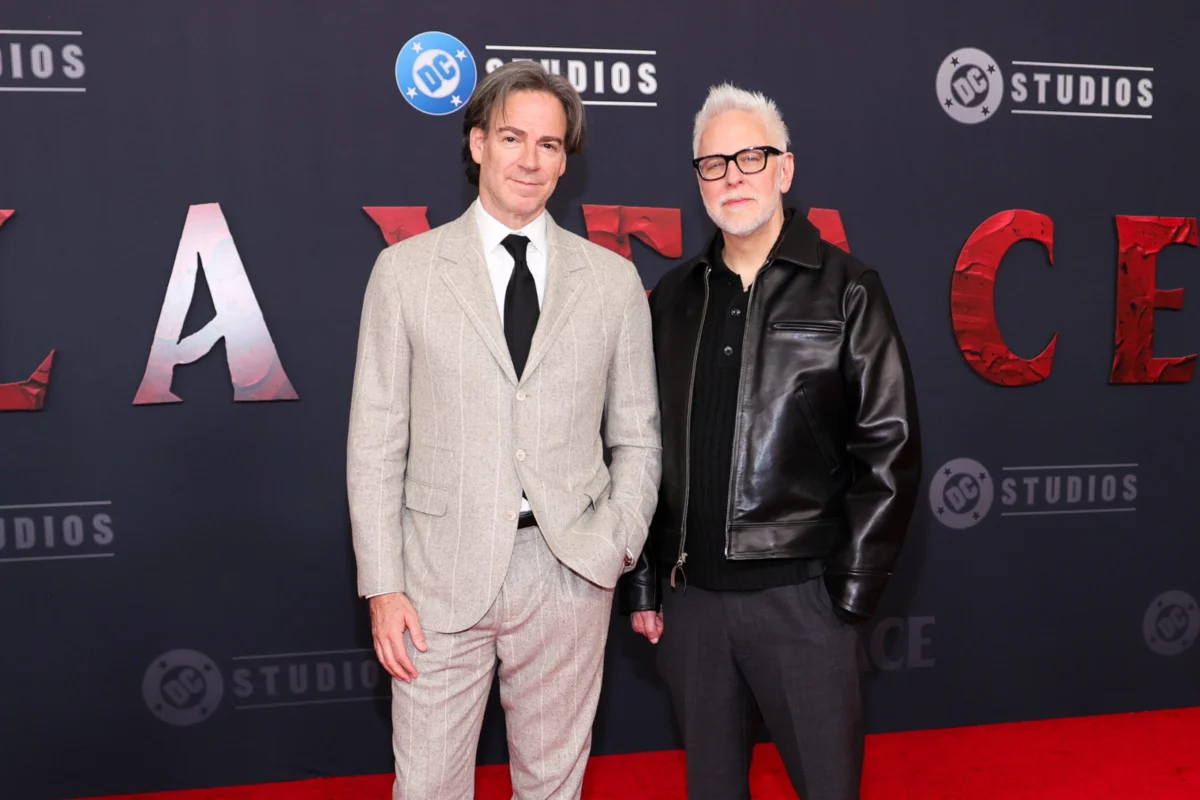
Latcham, whose appointment as president and chief creative officer of DC Studios takes effect December 1, will oversee the entire spectrum of DC’s film, television, and animation slate. His arrival signals a clear strategic pivot by Skydance, bringing in a proven architect of interconnected superhero narratives from its fiercest competitor. This decision places iconic characters like Batman, Superman, and Wonder Woman under new creative control, challenging the foundation of a franchise strategy that Warner Bros. has now attempted to re-establish multiple times over the past 13 years, often with mixed results and frequent executive reshuffles.
A Reprieve That Lasted Just One Month
The saga began to unfold with the completion of Paramount’s monumental takeover of Warner Bros. Discovery on October 6, a deal that reshaped the entertainment landscape and culminated in the launch of the new conglomerate under the Skydance banner. In the immediate aftermath, there was widespread speculation about the fate of key executives within the newly merged entity. Early reports from industry insiders and trade publications suggested that while Warner Bros. film chiefs Michael De Luca and Pamela Abdy were expected to depart, making way for Paramount’s Dana Goldberg and Josh Greenstein, James Gunn and Peter Safran were seemingly secure in their roles at DC Studios. This perceived reprieve was largely attributed to their relatively recent appointment in November 2022 and the initial positive reception to their vision for a unified DC universe.
However, that assurance proved fleeting. The reality of corporate consolidation often involves swift and decisive leadership changes, and Skydance chairman and CEO David Ellison, alongside co-CEO Ynon Kreiz, wasted no time in asserting their new vision. According to a detailed report by The Hollywood Reporter, Ellison and Kreiz personally visited Gunn and Safran’s office on November 6 to deliver the news, a stark indication of the finality and gravity of the decision. This face-to-face meeting underscored the swiftness of Skydance’s strategic shift, effectively ending Gunn and Safran’s ambitious tenure just weeks after the acquisition closed.
Despite their removal from top leadership, Gunn and Safran are not entirely severed from DC. They will reportedly continue to produce select DC projects, a testament to their creative involvement and the ongoing nature of several productions. Crucially, they are in the final stages of post-production for Man of Tomorrow, the highly anticipated Superman sequel slated for a July 2027 release. This arrangement suggests a transitional period, allowing them to complete their immediate commitments while the studio pivots under new leadership. Jeremy Latcham, in his new role, will report directly to Dana Goldberg and Josh Greenstein, who have officially assumed the titles of co-chairs of Skydance Motion Picture Group, firmly establishing the new corporate hierarchy.
Latcham, in a statement released by Skydance Motion Picture Group, expressed his enthusiasm for the challenge ahead: “I’ve had the privilege to help bring some of the most celebrated superhero stories to life on the big screen, and I’m excited and honored for the opportunity to now lead DC Studios into its next era.” His words resonate with a deep understanding of the genre and the immense pressure to deliver a cohesive and compelling narrative that has long eluded DC.
Gunn and Safran’s Tenure: A High-Stakes Reboot
James Gunn and Peter Safran officially took the helm of DC Studios on November 1, 2022, tasked with the monumental responsibility of revitalizing the DC character roster and forging a single, interconnected cinematic universe. Their appointment came amidst a tumultuous period for Warner Bros. Discovery, following the merger of Discovery and WarnerMedia, and a clear mandate from then-CEO David Zaslav to streamline and unify the fragmented DC properties.
Gunn arrived with an impressive pedigree, having successfully written and directed all three critically acclaimed Guardians of the Galaxy films for Marvel, demonstrating a unique ability to blend humor, heart, and action within the superhero genre. His prior experience with DC included his directorial debut with The Suicide Squad in 2021, a film that, while not a massive box office hit, was lauded for its creative vision and distinct tone. Safran, a seasoned producer, had a long history with Warner Bros., producing not only The Suicide Squad but also other DC adaptations in the 2010s and the highly successful Conjuring horror franchise for New Line Cinema. Their combined talents—Gunn’s creative vision and Safran’s production prowess—were seen as the ideal partnership to navigate the complex world of DC.
Their inaugural release under the new DC Studios banner was Gunn’s Superman, which premiered in July 2025. The film, introducing David Corenswet as the new Man of Steel, was a critical and commercial success, opening to a robust $217 million globally and ultimately grossing an impressive $618.7 million worldwide. This strong performance generated significant optimism, signaling a promising start for the new DC Universe and laying the groundwork for a wider array of familiar DC characters. Fans and critics alike praised its fresh take on the iconic hero, suggesting that Gunn and Safran had found the elusive formula for DC’s revival.
However, the momentum proved difficult to sustain. The second major release, Supergirl, proved to be a significant stumble. Costing a reported $170 million to produce, the film garnered weak reviews and became one of DC Studios’ worst opening-weekend flops in the summer of 2026, grossing a disappointing $126 million worldwide. This underperformance highlighted the inherent challenges of launching new characters and sustaining audience interest in an increasingly crowded superhero market, raising questions about the broader appeal of the new universe beyond its central figures.
Yet, their third film offering provided a surprising counterpoint. Clayface, an R-rated body-horror film with a modest reported budget of $44 million, proved to be a critical and commercial success. It opened at No. 1 and had grossed $109 million worldwide as of November 8, demonstrating that a diversified approach, particularly with genre-bending, lower-budget projects, could yield positive returns. This success suggested a willingness to experiment beyond traditional superhero narratives, a strategy that offered both risk and reward.
Beyond the big screen, Gunn and Safran also made significant inroads in television. They delivered a highly anticipated second season of Peacemaker, an animated Creature Commandos series, and HBO’s Lanterns, which debuted to strong viewership in August, becoming a notable hit. These television ventures were crucial for building out the interconnected universe, demonstrating the potential for character development and storytelling across different platforms.
Jeremy Latcham: The Architect of the Marvel Playbook Returns
The appointment of Jeremy Latcham is a bold and unequivocal statement from Skydance: they are seeking to replicate the unparalleled success of the Marvel Cinematic Universe. Latcham was not merely "part of the founding team" at Marvel Studios; he was an integral force alongside Kevin Feige in shaping the MCU’s early, foundational years. His fingerprints are on some of Marvel’s most pivotal films, including the original Iron Man, which launched the entire franchise, the groundbreaking ensemble film The Avengers, and the immensely popular Tom Holland-led Spider-Man films. Crucially, he also collaborated directly with James Gunn on the first Guardians of the Galaxy, giving him an intimate understanding of the creative mind he is now succeeding. This background positions him as a unique candidate, one who understands the intricate process of world-building, character development, and narrative cohesion required for a sprawling superhero universe.
Latcham departed Marvel in 2017 to establish Latcham Pictures, where he broadened his producing experience beyond superheroes. His independent ventures included the critically acclaimed and commercially successful Dungeons & Dragons: Honor Among Thieves and the stylish neo-noir thriller Bad Times at the El Royale. These projects showcase his versatility and ability to oversee complex productions, indicating that he brings more than just superhero-specific expertise to DC Studios. His return to the superhero genre with DC is a high-profile homecoming, fraught with both immense opportunity and formidable challenges.
The Legacy of DC’s Franchise Struggles: A Recurring Nightmare
The task Latcham inherits is one that has repeatedly confounded Warner Bros. The studio’s initial ambitious attempt at a Marvel-style connected universe, the DC Extended Universe (DCEU), officially commenced with Zack Snyder’s Man of Steel in 2013. Intended as the bedrock of a sprawling cinematic narrative, it instead limped to an end a decade later with Aquaman and the Lost Kingdom in 2023, by which point Gunn and Safran had already been brought in to initiate yet another reboot.
The decade of the DCEU was characterized by profoundly uneven results and a distinct lack of narrative cohesion that starkly contrasted with Marvel’s tightly woven tapestry. Films like Batman v Superman: Dawn of Justice (2016) divided audiences and critics, while Suicide Squad (2016) suffered from extensive studio interference. Although Patty Jenkins’ Wonder Woman (2017) was a critical and commercial triumph, it was often seen as an outlier rather than a standard-bearer. Subsequent entries such as Justice League (2017) were plagued by troubled productions, reshoots, and a fractured creative vision, culminating in a fervent fan campaign that led to the eventual release of Zack Snyder’s Justice League in 2021, a rare example of fan pressure directly impacting studio decisions. Later films like The Flash and Black Adam underperformed significantly, underscoring the audience fatigue and brand confusion that had come to define the DCEU. Unlike Marvel, where even spin-offs felt organically linked, the DCEU often presented a fractured narrative, exemplified by the existence of two distinct Suicide Squad films released five years apart with minimal connection.
Adding to the complexity, Warner Bros. consistently pursued DC stories outside the main universe. The highly successful Arrowverse on The CW, encompassing shows like Arrow, The Flash, Supergirl, and Black Lightning, built its own expansive and interconnected television world, separate from the films. On the big screen, critically acclaimed standalone films like Todd Phillips’ Joker (2019) and Matt Reeves’ The Batman (2022) were developed as "Elseworlds" projects, deliberately existing apart from the DCEU. While this approach offered creative freedom, it often diluted the overarching brand identity and confused casual viewers about what constituted the "main" DC universe.
This split strategy, surprisingly, continued under Gunn and Safran. Joker: Folie à Deux arrived in 2024, maintaining its distinct continuity, as did Matt Reeves’ Batman films and HBO’s The Penguin. Yet, in a unique bridging of universes, John Cena’s Peacemaker character successfully carried over from The Suicide Squad (a DCEU film) into the new DC universe, hinting at a selective integration strategy that aimed for both creative freedom and strategic connections.
What Latcham Inherits: A Universe in Flux
Jeremy Latcham steps into an environment where the near-term slate has already been largely determined by his predecessors, but the long-term vision remains tantalizingly ambiguous. Man of Tomorrow, the Superman sequel, is firmly on the calendar for July 2027, representing the most immediate and high-profile project. Similarly, Matt Reeves’ The Batman: Part II is still in active production, a testament to the studio’s commitment to its successful standalone universe. Interestingly, Steven Soderbergh was recently brought in to shoot remaining scenes for The Batman: Part II, a detail that speaks either to unexpected production challenges or a deliberate move to inject diverse directorial talent into the project. The series The People v. Gorilla Grodd is also reportedly in development, further expanding the television offerings.
Beyond these immediate commitments, however, the landscape becomes significantly less clear. It is not yet settled whether David Corenswet’s Superman will continue his journey after Man of Tomorrow, or if Lanterns will be granted a second season. The most pressing "Riddler-worthy mystery" Latcham faces is whether he will attempt to build upon the universe Gunn and Safran meticulously crafted, or if he will opt for a clean slate, potentially subjecting fans and creators to yet another round of franchise whiplash. This decision carries immense weight, as it will determine the continuity of characters, narratives, and creative talent associated with DC for years to come.
Latcham’s mandate is to bring order and unparalleled success to a franchise historically plagued by inconsistency and executive upheaval. He helped construct Hollywood’s most successful cinematic franchise with Iron Man nearly two decades ago. Now, in a superhero landscape that is far more crowded and discerning, he will discover whether that origin story can be repeated, or whether the playbook for a successful superhero universe has fundamentally changed, requiring an entirely new approach for the 21st century. The eyes of Hollywood, and millions of DC fans worldwide, will be watching closely to see if he can finally deliver the cohesive, acclaimed, and profitable universe that has long been DC’s elusive dream.
