
 By admin
The College Football Playoff committee’s latest rankings, released Tuesday night, have ignited a firestorm of criticism from prominent college football analyst Joel Klatt. On his show, "The Joel Klatt Show," Klatt vehemently argued that the committee is actively undermining the significance of the regular season, a trend he believes is exacerbated by an overwhelming "SEC feedback loop." His critique comes on the heels of the official announcement that the playoff field will expand to a 24-team format beginning in 2027, a move that has already sparked debate about the future of college football.
The second set of rankings saw Georgia ascend to the No. 1 spot, followed by Utah at No. 2, Alabama at No. 3, and an undefeated UCLA rounding out the top four. Perhaps the most contentious decision was the drop of Indiana, the defending national champions, five spots to No. 9, despite being on a bye week. This seemingly counterintuitive move, Klatt argues, is a clear indicator of the committee’s skewed priorities.
The Regular Season’s Diminishing Returns: A Klatt Critique
Klatt opened his analysis by directly addressing the widespread fan sentiment that the expansion to 24 teams inherently devalues the regular season. However, he posited that the committee’s current ranking methodology is already guilty of this very offense. "The big outcry that I hear from fans… is about the devaluing of the regular season, right? That’s what most people will talk about when they talk about their animus toward an expansion to 24 teams," Klatt stated. He then pivoted to his core argument: "I would just say – and this is not an argument or a disagreement – but isn’t the committee devaluing the regular season in front of our face? Because it doesn’t matter that Alabama lost two games. UCLA is still behind them, and UCLA is undefeated. So obviously, the regular season is already devalued."
This observation stems from Alabama’s placement at No. 3 despite two losses, while undefeated UCLA sits at No. 4. Klatt’s point is that a team with multiple defeats is being ranked above a team that has navigated its schedule without a blemish. This suggests that past performance, conference affiliation, or perceived strength of schedule, rather than an unblemished record, are carrying undue weight in the committee’s deliberations. The implication is that the "eye test" and historical pedigree are eclipsing the tangible results of the regular season, leaving teams with strong records but perhaps less prominent résumés at a disadvantage.
Indiana’s "Wild" Fall from Grace: A Symptom of Bias?
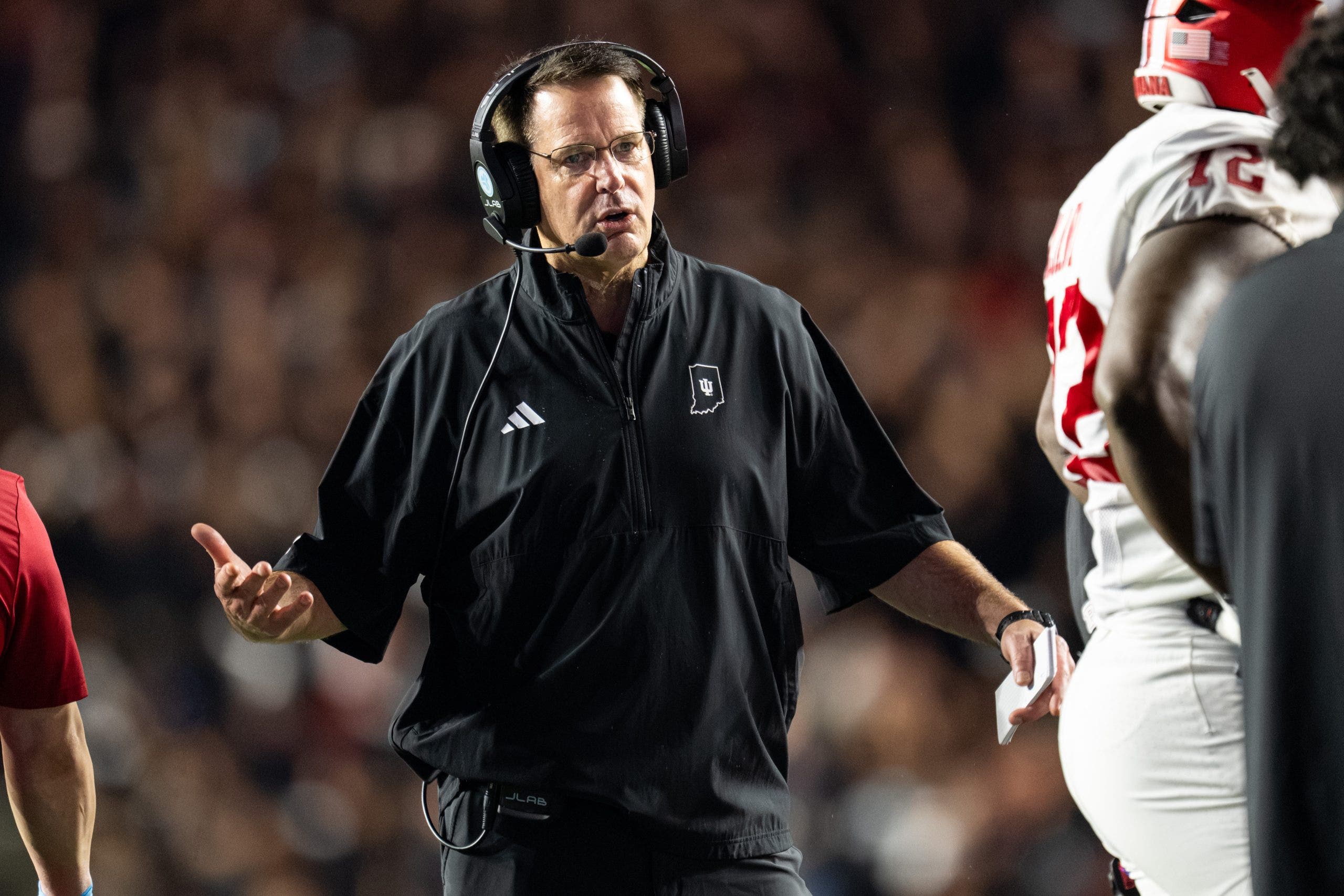
The precipitous drop of Indiana from No. 4 to No. 9, even with a bye week, was a focal point of Klatt’s displeasure. He described the move as "wild" and questioned whether a defending national champion from a more established conference would ever face such a penalty for inactivity. "Indiana is 24-1 in their last 25 games, and they are the defending national champions. And they just got bumped five spots in an off week from their couch. That is wild, guys," Klatt exclaimed.

He acknowledged that Indiana’s strength of schedule might not rival that of teams like Texas, Ohio State, or Alabama, and that they may lack a signature marquee win. However, he drew a stark contrast to how such a situation might be handled within the SEC. "But can you imagine a world where, even in the old days, when the SEC was playing their eight conference games and their four non-conference games and a cupcake week in November, you can imagine an SEC defending national champion being 24-1 in their last 25 games and being knocked down five spots in an off week by the College Football Playoff committee? No, you can’t. You can’t imagine that because it would never happen, and yet it just happened to Indiana," Klatt asserted. This highlights his belief that the committee grants a degree of leniency and benefit of the doubt to teams within the SEC, a privilege not seemingly extended to teams from other conferences, even defending champions. The narrative suggests that the committee’s bias is so ingrained that a bye week for a defending champion from outside the SEC is treated as a significant negative, whereas similar inactivity for an SEC contender might be overlooked or downplayed.
One-Loss Teams Facing an Uphill Battle: The "SEC Feedback Loop" in Action
Klatt identified one-loss teams like Indiana, Texas Tech, and Wake Forest as being particularly vulnerable to the committee’s perceived biases. He characterized their situations as being "up against it" in the rankings. "Obviously, Indiana, Texas Tech, Wake Forest, they’re the ones being hurt by this feedback loop the most. All three of those teams only have one loss, and yet they’re kind of up against it," he explained.
He specifically addressed Indiana’s playoff prospects, suggesting that their path to the playoff might necessitate winning the Big Ten Championship game. "I think Indiana has to get to the Big Ten championship game. If they lose to USC this weekend, there’s a good chance that they’re going to be out of the playoff unless they can somehow get to Indianapolis, and then there’ll be, I would think from the committee some acknowledgement that if you get to the Big Ten championship game, you should be in the College Football Playoff. It is the conference that has won the last three national championships, including Indiana." This statement underscores the idea that even a championship game appearance might not be enough for a team that hasn’t consistently impressed the committee throughout the season, particularly if they hail from a non-SEC conference. The committee’s implicit expectation for teams to consistently demonstrate dominance, even beyond winning their conference, is a heavy burden for those outside the traditional powerhouses.
The Big 12’s Intriguing Scenario: A Potential for Three Playoff Bids?
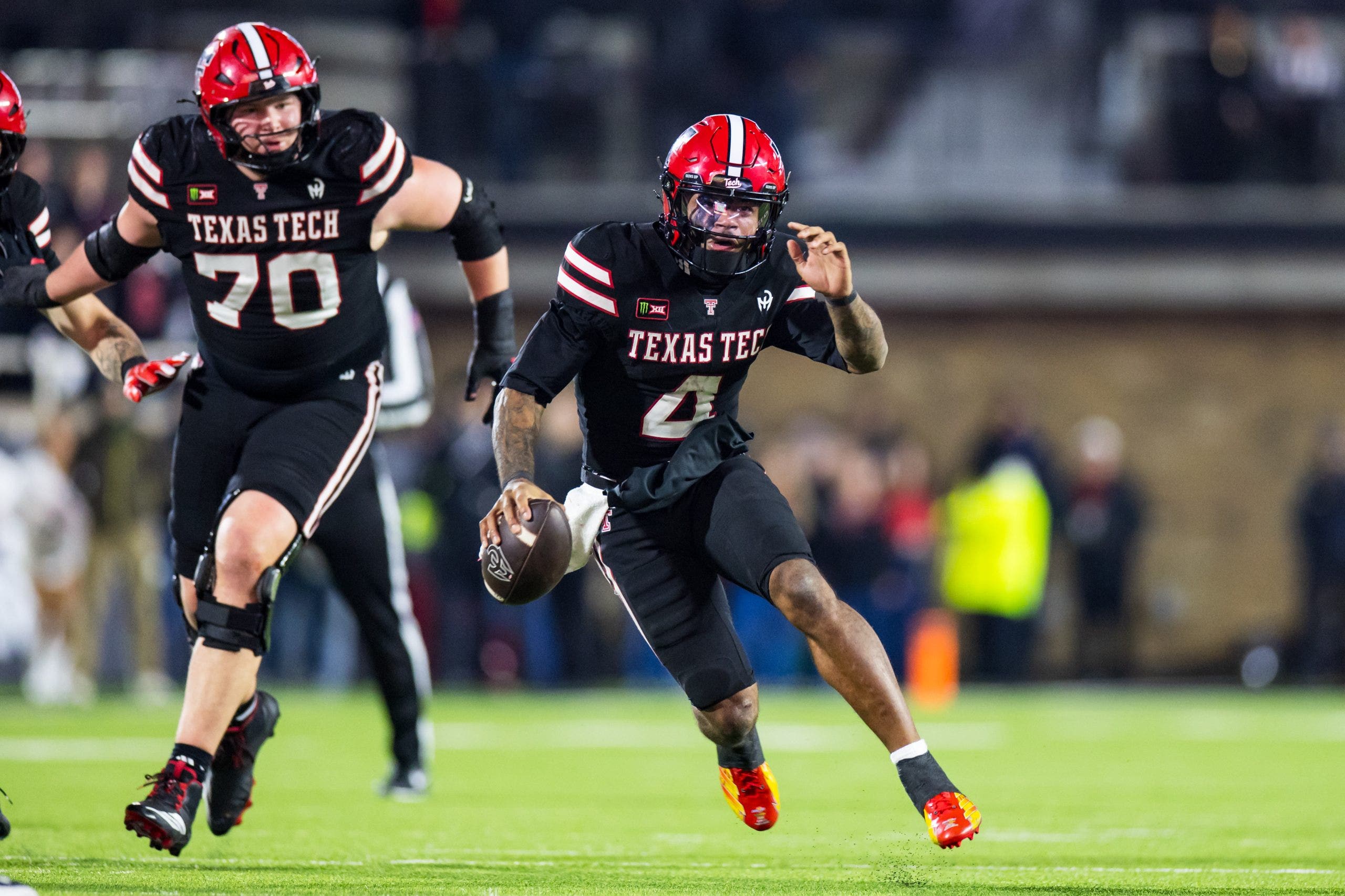
Despite his criticisms, Klatt found the Big 12 conference’s positioning particularly fascinating. He posited that the conference could potentially send three teams to the expanded playoff, a scenario he deemed "pretty cool." "I do think that the Big 12 is fascinating, though, because BYU is holding strong. Remember, big wins, strength of schedule. They beat Notre Dame. Notre Dame’s in the top five. So BYU is still sitting there, and even if they don’t get to the Big 12 championship game – if Texas Tech were to beat Oklahoma State this weekend and get themselves to Dallas and play Utah, there’s a good chance that those two teams will be playing in the championship game, and BYU would be sitting at home, and I think BYU would be in at that point," Klatt elaborated.
He painted a picture where Texas Tech, potentially facing Utah in the Big 12 Championship game, and BYU, despite not reaching the title game, could both find themselves in the playoff. This scenario highlights the potential for a conference to have multiple strong contenders that might otherwise be overlooked by a committee heavily influenced by SEC narratives. Klatt wryly added, "You’re looking at a scenario where maybe the Big 12 could sneak three teams into the College Football Playoff. I think that would be pretty cool. And don’t tell the committee that, though, because they’ll look at that and be like, ‘Hold on, hold on, engage feedback loop. Here we go.’" This final remark underscores his concern that even such a positive development for the Big 12 could be met with resistance from a committee prone to favoring established SEC contenders.
The Pervasive "SEC Feedback Loop": A Systemic Issue
Klatt’s overarching thesis revolves around what he terms the "SEC feedback loop." He believes this phenomenon is actively shaping the committee’s decisions, leading to a disproportionate representation of SEC teams in the playoff. "We’re already going down a trajectory where everybody that has influence, in particular around the SEC, pounded the table for strength of schedule, quality wins, the feedback loop. Here we go, and that’s what we’re getting. But other conferences don’t get the benefit of the doubt at all," he explained.
This "feedback loop" implies a cyclical reinforcement of existing biases. The SEC champions its teams’ strength of schedule and quality wins, and the committee, influenced by this narrative, subsequently ranks SEC teams highly. This, in turn, reinforces the perception of SEC dominance, leading to more highly ranked SEC teams, and so on. Klatt’s frustration stems from the perceived lack of similar advocacy or recognition for the accomplishments of teams from other conferences.
The ramifications of this alleged bias are significant. Klatt warned, "We are in a world where the regular season is already being devalued by the committee actively in this poll. There’s no other way around it. They’re in an SEC feedback loop, and we’re likely headed to five SEC teams in the playoff, maybe even six." This prediction suggests a future where the playoff field becomes heavily skewed towards the SEC, potentially at the expense of deserving teams from other conferences. While Klatt acknowledged that the SEC does produce excellent football, he insisted that the current ranking system is not a pure reflection of merit but rather a product of ingrained bias. "Listen, I think it’s still going to be a great playoff. I’m not suggesting that they don’t have great teams and they’re not playing great football, but that’s what the committee is giving us right now, and we’ll see how it plays out," he concluded, leaving the audience with a sense of unease about the future fairness and competitive balance of the College Football Playoff. The expansion to 24 teams, rather than inherently solving the issue of regular season devaluation, could potentially amplify the problem if the committee’s inherent biases remain unaddressed.
