
 By admin
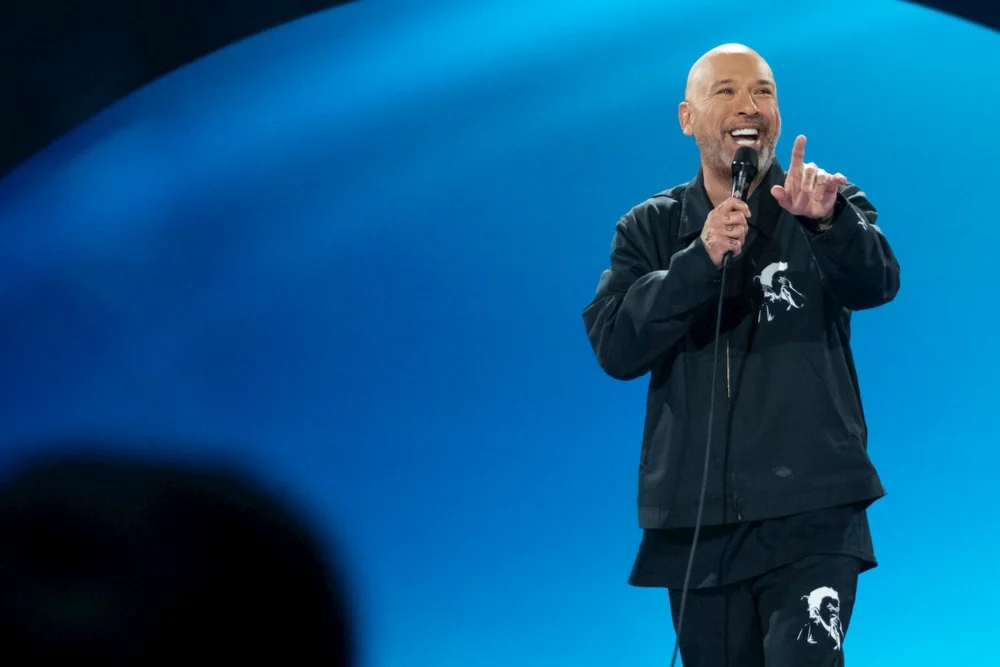
Jo Koy walked onto the stage in Stockton, California, with a speech meticulously prepared. It was his inaugural performance in the Central Valley city, and the plan was to tap into its rich Filipino history for his new Netflix special, "Blue in the Face." This special, which premiered on September 15th, marks the completion of a two-special deal Koy inked with the streaming giant in 2023. Before the taping of two sold-out arena shows that would form the backbone of "Blue in the Face," Koy delved into Stockton’s past. He unearthed a history marked by profound adversity for the Filipino community: discriminatory "No Filipinos Allowed" signs on restaurants, segregated water fountains, and the tragic division of the once-vibrant Little Manila neighborhood by a freeway. "There were a lot of fucked-up things that happened," Koy admitted, offering a brief apology for his language, emphasizing, "It just really sucked." His initial intention was to confront these historical injustices head-on, opening the show with a forceful examination of these painful truths.
However, the moment Koy stepped into the spotlight, the energy of the audience shifted his entire approach. A spontaneous, thunderous standing ovation greeted him. Observing the diverse tapestry of faces in the crowd – a white man high-fiving an Asian man, a Black man and woman standing together, Latinos in one section, and a Filipino in another – Koy experienced an epiphany. "And I was just like, no, man, I’m not gonna do this," he recalled. "What happened in the past is the past, but look where we are now." This spontaneous decision on stage dictated the core message of "Blue in the Face." Koy, who also serves as the editor for his specials, meticulously shaped two performances, each exceeding two hours, into a cohesive 55-minute narrative. He structured the special like a bookend, unified by the central theme of cherishing one’s inner circle and celebrating those who have supported you. The special is currently generating buzz, positioning itself as a contender in the Golden Globes’ Best Performance in Stand-Up Comedy on Television category and poised to enter the Emmy race for Outstanding Variety Special (Pre-Recorded) next year. Koy shared these insights during a conversation following a Variety Screening Series presentation of the special, offering a wealth of compelling anecdotes.
Koy recounted a significant phone call from Voletta Wallace, the mother of The Notorious B.I.G. This conversation followed an incident in his previous special, "Live From Brooklyn," where Koy performed an uncleared Biggie bit, resulting in unexpected financial repercussions. He also detailed a memorable day at Amblin, where the pervasive presence of Indiana Jones memorabilia and enthusiastic staff members repeatedly mentioned that "Steven" loved his special "Comin’ in Hot." Initially, Koy humorously speculated if they were referring to someone in accounting, only to realize they meant the legendary Oscar-winning director Steven Spielberg. This encounter ultimately paved the way for his DreamWorks deal, leading to the film "Easter Sunday."
Central to Koy’s narrative is the enduring influence of his mother. He spoke of her strength as a single mother, recalling an incident in 1984 where she fiercely defended him against a man who mocked her accent at a shoe store. Her dedication to building a Filipino community, often through approaching strangers at church, exemplifies her unwavering spirit. Koy also shed light on the origin of his stage name, a revelation that only dawned on him years later. During a meal at Long John Silver’s, he learned from his Auntie Evelyn that she wasn’t calling him "Jo Koy" but rather "Jo ko," a Tagalog phrase meaning "my Jo."
Even the title of the special, "Blue in the Face," emerged serendipitously. Director Shannon Hartman suggested it, and the teal stage Koy had almost rejected happened to perfectly complement the name. The phenomenon of fans sending photos of their dogs glued to the screen during the special prompted his manager to offer a theory about the color’s appeal, leading Koy to muse, "It’s all coming together." As a playful coda to the interview, Koy humorously declared he owes Variety some lumpia, preferably his mother’s.
In an extended Q&A session, Koy elaborated on his decision to film "Blue in the Face" in Stockton. He explained that while prime markets like the Bay Area, New York, and Los Angeles are typical choices for specials, secondary markets often yield incredibly engaged audiences. "People come out, man. They want to go to a show and be a part of it," he stated. Despite warnings about Stockton, the city’s response was overwhelming, with two sold-out arenas and an electric crowd. His discovery of the deep Filipino history in Stockton – the early immigrants’ struggles with racism, the "No Filipinos Allowed" signs, the segregated water fountains, and the displacement of Little Manila by a freeway – profoundly impacted him. "A lot of fucked-up things happened," he reiterated, apologizing for the language. "I’m sorry to curse. It just really sucked." He felt a responsibility to acknowledge this history and simultaneously highlight the community’s resilience: "I wanted to come to this town and say, ‘I know what happened in the past was really bad, but look how far we’ve come as a people. Through all that adversity, now there’s a Filipino son up there and it’s like, hey, we did it.’"
The decision to pivot from his planned opening on stage, due to the audience’s immediate standing ovation and visible unity, was a powerful testament to his connection with the crowd. "I saw this white guy high-five this Asian guy, and a Black guy was standing and this Black lady over here, Latinos over here and a Filipino right here. And I was just like, no, man, I’m not gonna do this," he explained. "That’s not what this is. What happened in the past is the past, but look where we are now. Let’s take it from here. I made that decision onstage."
Regarding the two-night filming process, Koy confirmed that the second night is consistently superior. "On all my specials, the second night is always the best because I got it out of the way," he said. "Whatever idea I had for the special, I get it out on the first night. The second night is where I have fun and freestyle. There were jokes that night I literally just came up with."

The editing process for his specials is an intensive undertaking. Koy revealed that both shows for "Blue in the Face" were over two hours long, and he meticulously cut them down to 55 minutes. He prioritizes a narrative arc, likening his specials to a bookend structure where the beginning and end are thematically linked. "I want to start here, have everything connect and end here," he explained. The core idea for "Blue in the Face" was "keeping your circle tight. Get the crabs out of your life. Celebrate your wins and the people who celebrated you." This sentiment brought him to tears during the interview, underscoring its personal significance.
Reflecting on his previous special, "Live From Brooklyn," Koy admitted to a near-miss with copyright infringement. He performed an uncleared Biggie Smalls bit, a decision he regretted when faced with the cost of clearing the songs. However, the bit’s immense popularity led to a touching conversation with Mrs. Wallace. "Thank you for keeping my son’s legacy alive," she told him, expressing gratitude for his contribution to Biggie’s enduring presence on Netflix. Koy’s heartfelt response, acknowledging Biggie as a "king" and a "hero," was met with Mrs. Wallace granting him perpetual rights to use his image, specifically the iconic crown-wearing photo. This generosity also led to a partnership where a portion of proceeds from every shirt sold benefits the Wallace Foundation.
Looking ahead, Koy expressed his contentment with Netflix, despite not having signed a new deal yet. He values the creative freedom and respect he receives from the streamer, appreciating their willingness to let him submit his work without excessive interference. "It’s fun to submit something, and they press play."
Koy also discussed his experience with Hollywood’s portrayal of Filipino stories, particularly in the wake of his involvement in "Easter Sunday" and his voice role in "Forgotten Island." He recounted how Steven Spielberg’s viewing of his special "Comin’ in Hot" was the catalyst for the DreamWorks deal. The film’s premise, inspired by the long-standing feud between his mother and aunt, resonated with Spielberg. The production, however, was significantly impacted by the pandemic, requiring creative solutions for filming and a challenging release strategy that placed "Easter Sunday" alongside major blockbuster releases. Despite the hurdles, Koy remained proud of his film’s three-week theatrical run. His experience with "Forgotten Island" was overwhelmingly positive, highlighting the significance of bringing Filipino folklore to a wider audience. "When I was a kid, that’s all I heard – don’t step on the duwende. And now here I am taking my kid to watch something my grandma used to talk about."
His mother remains a central figure in his comedy, and Koy emphasized that his impersonations are not caricatures but accurate reflections of her personality. "She always has one [review]," he said, referring to her take on his latest special. "And she’s big because of it." He elaborated on his mother’s formidable presence, recalling a specific incident at a shoe store in 1984. When a salesman disrespected him, his mother’s fierce defense, culminating in a sharp retort about his limited linguistic abilities compared to her bilingualism, left a lasting impression. "To see my mom, a single mom, do that in the ‘80s, you’re like, oh, fuck. That’s when I got scared of my mom. She never backed away from a fight." He also spoke of her pride and her proactive approach to community building, walking up to strangers at church and exclaiming, "Pilipino ka? Pilipino rin ako" ("Are you Filipino? I am also Filipino"), a simple yet effective method for forging friendships that endure to this day. These gatherings, often held at the Knights of Columbus hall, involved potlucks and performances, fostering a sense of belonging and introducing Filipino cuisine to a broader audience.
When asked to select three stand-up specials for a deserted island scenario, Koy chose iconic performances: Richard Pryor’s "Live in Concert" (the Long Beach special), which he credits with igniting his passion for comedy; Eddie Murphy’s "Delirious," praising Murphy’s youthful confidence and stage presence; and Chris Rock’s "Bring the Pain," which he described as a "cultural moment" that prompted critical reevaluation.
In a segment titled "10 Questions with Jo Koy," he revealed his childhood nickname was "Herbert" at school, contrasting it with his Auntie Evelyn’s affectionate Tagalog term "Jo ko," which he later adopted as "Jo Koy" after realizing the phonetic similarity. He recalled the emotional moment at Long John Silver’s when his aunt clarified that "ko" means "my," solidifying the personal meaning behind his stage name. His go-to karaoke or shower song is Harry Connick Jr.’s "We Are in Love." An alternate title for "Blue in the Face" he considered was "Live From Stockton." Koy also identified his secret talent as editing, describing the painstaking process of piecing together his specials like a complex puzzle, often working for days with minimal sleep. His favorite ice cream flavor is peanut butter from McConnell’s with dark chocolate, a indulgence he pursues despite being lactose intolerant. Tequila is the one item he couldn’t live without. He expressed a desire to have been a cast member in the 1980s breakdancing film "Beat Street." Among fictional characters, he most relates to Bugs Bunny for his timeless wit, though he acknowledges the character’s occasional problematic elements. The best piece of advice he’s given or received is to "Try everything. Whatever’s in your gut, do it. You only live once." He encourages pursuing dreams relentlessly, learning from failures, and not letting the envy of others deter one’s ambitions.
The conversation, as indicated by the ellipsis at the end, was edited and condensed for clarity, allowing Koy’s authentic voice and compelling stories to shine through.
