
 By Lina Irawan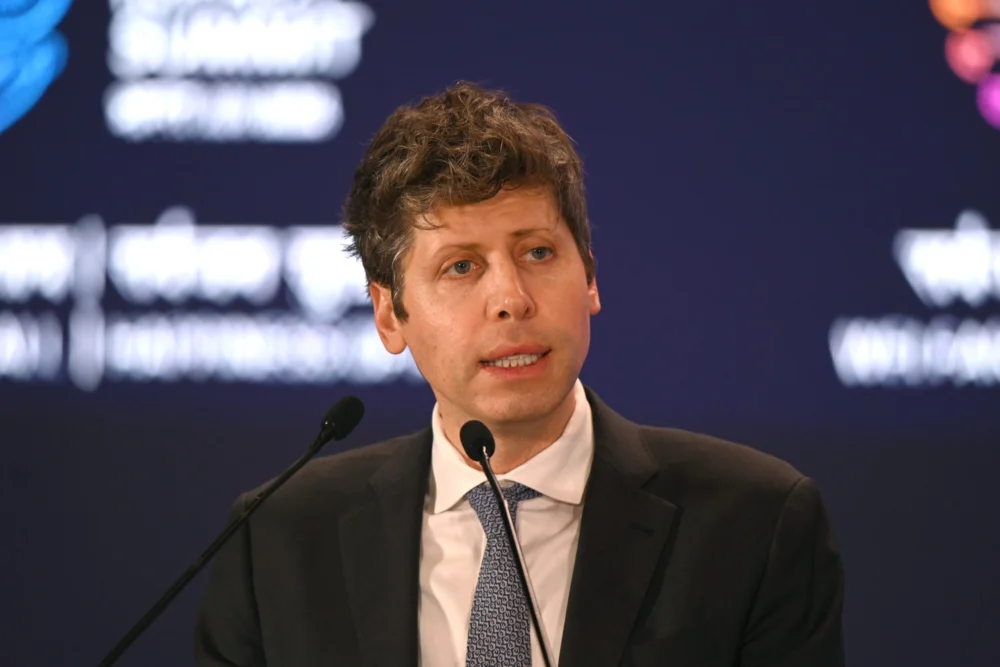
The backdrop to Altman’s announcement was a tumultuous week that saw a high-profile conflict between Secretary of War Pete Hegseth and Anthropic erupt into public acrimony. This dispute ultimately culminated in President Trump’s directive to cease all federal government contracts with Anthropic, effectively ending the company’s engagement with the Pentagon and the broader federal apparatus. The conflict underscored the deep-seated tensions surrounding the ethical deployment of powerful AI models, particularly when applied to sensitive military and intelligence operations.
Anthropic, a company founded by former OpenAI researchers who departed over concerns about AI safety, had previously held a unique position. Its models were the only large commercial AI systems approved for use at the Pentagon, a deployment facilitated through a partnership with data analytics giant Palantir. This exclusivity highlighted the Department of War’s initial trust in Anthropic’s commitment to responsible AI development. However, this trust fractured over Anthropic’s insistence on maintaining stringent "red lines" – self-imposed ethical restrictions on how its Claude model could be used. These limitations specifically targeted applications such as domestic mass surveillance and the powering of fully autonomous weapons systems.
The Pentagon, under the leadership of Secretary Hegseth, had pushed back vehemently against these restrictions, arguing that AI models procured for national defense must be available for "all lawful purposes." This disagreement represented a fundamental clash of philosophies: Anthropic prioritized ethical safeguards and control over potential misuse, while the Department of War emphasized operational flexibility and the imperative to leverage cutting-edge technology without perceived encumbrances. Sources indicate that Anthropic CEO and co-founder Dario Amodei’s public commentary, including blog posts critical of certain governmental approaches to AI, further strained the relationship, with Department of War leadership reportedly taking offense.
The escalating dispute saw the Pentagon warn Anthropic of a potential loss of contracts worth up to $200 million if it failed to comply with demands to remove these safeguards. Despite the financial implications, Anthropic stood firm, unwilling to compromise on its core ethical principles. This deadlock reached a dramatic climax when President Trump, via a post on Truth Social, publicly declared, "I am directing every federal agency in the United States government to immediately cease all use of Anthropic’s technology. We don’t need it, we don’t want it and will not do business with them again!" The directive included a six-month phase-out period for agencies, including the Department of War, to transition away from Anthropic’s Claude models. This decisive move sent shockwaves through the tech and defense industries, serving as a stark warning to AI developers about the potential consequences of clashing with governmental priorities.
Against this tumultuous backdrop, Sam Altman’s announcement at OpenAI’s all-hands meeting presented a strikingly different narrative. Altman informed employees that the Department of War appeared willing to make significant concessions to secure OpenAI’s partnership. Crucially, the government would allow OpenAI to build its own "safety stack"—a comprehensive, layered system encompassing technical, policy, and human controls designed to mediate between a powerful AI model and its real-world applications. This allowance is a major departure from the demands made of Anthropic and reflects a potential shift in the Pentagon’s willingness to accommodate the ethical frameworks of leading AI developers.
Furthermore, Altman stated that if an OpenAI model refused to perform a specific task due to its inherent safeguards, the government would not force the company to override that refusal. This commitment empowers OpenAI to maintain direct control over its AI’s ethical boundaries, a power Anthropic had fought—and ultimately lost—to retain. OpenAI would also retain authority over the implementation of technical safeguards, the selection and deployment of models, and would restrict deployment to secure cloud environments. This last point is particularly significant; it explicitly excludes "edge systems," a category in a military context that includes critical platforms such as aircraft and drones, where autonomous AI could have immediate and potentially catastrophic real-world consequences.
Perhaps the most remarkable concession, according to Altman, was the government’s willingness to incorporate OpenAI’s named "red lines" directly into the contract. These include prohibitions against using AI to power autonomous weapons, engaging in domestic mass surveillance, and deploying AI for critical decision-making without human oversight. These are precisely the same limitations that Anthropic had insisted upon and which led to its federal contract termination. This suggests a nuanced and perhaps pragmatic shift in the Department of War’s strategy, indicating a recognition that securing access to advanced AI technology from a leading developer like OpenAI might necessitate greater flexibility on ethical stipulations.
The implications of these potential concessions are profound. For OpenAI, it represents an opportunity to engage with a powerful governmental client while seemingly preserving its commitment to responsible AI development. For the Department of War, it could provide access to state-of-the-art AI capabilities, potentially enhancing intelligence, logistics, and strategic planning, all while navigating the complex ethical landscape. However, the exact mechanisms for enforcing these "red lines" and the long-term commitment to them remain critical questions. AI ethicists, like Dr. Evelyn Reed of the Institute for Responsible AI Governance, often highlight the challenge of translating high-level principles into enforceable technical and operational guidelines, particularly in dynamic military environments. "The devil is always in the details of implementation," Reed commented in a recent symposium, "and the line between ‘support for critical decision-making’ and ‘critical decision-making’ itself can be alarmingly thin in practice."
The internal discussions at the OpenAI all-hands meeting also shed light on the company’s internal deliberations. Sasha Baker, head of national security policy at OpenAI, and Katrina Mulligan, who leads national security for OpenAI for Government, provided further context. Beyond explaining the perceived reasons for Anthropic’s breakdown with the government, they touched upon the most challenging aspect of the potential deal for OpenAI leadership: concerns about foreign surveillance. The prospect of AI-driven surveillance threatening democratic norms was identified as a major worry.
However, company leaders also acknowledged the practical realities of national security, recognizing arguments that national-security officers "can’t do their jobs" without robust international surveillance capabilities. References were made to threat intelligence reports detailing China’s existing use of AI models to target dissidents overseas, underscoring the perceived necessity for advanced AI tools in a competitive geopolitical landscape. This internal dialogue reflects the ongoing tension within the AI community: the desire to develop beneficial technology responsibly, juxtaposed with the recognition of its dual-use nature and the imperative for national defense in an increasingly AI-powered world.
This emerging agreement between OpenAI and the Department of War comes at a time of escalating global competition in AI development. Nations worldwide, particularly China and Russia, are heavily investing in AI for military applications, including advanced surveillance, autonomous systems, and cyber warfare. The U.S. government views access to leading-edge AI as critical for maintaining its technological advantage and national security. The incident with Anthropic highlights the high stakes involved for both AI companies and government agencies. Companies like OpenAI are navigating a treacherous path between maximizing their technological impact, ensuring ethical deployment, and responding to the strategic needs of national defense.
Analysts suggest that the Department of War’s willingness to concede on OpenAI’s "red lines" could be interpreted in several ways. It might signify a strategic imperative to secure access to OpenAI’s advanced models, perhaps deemed superior or more immediately deployable than alternatives. It could also represent a pragmatic shift in governmental policy, acknowledging that a collaborative approach with leading AI developers, even if it entails certain ethical constraints, is preferable to outright confrontation, which risks alienating top talent and technology providers. Furthermore, the public fallout with Anthropic might have provided a valuable lesson, demonstrating the reputational and operational costs of rigid adherence to a "use for all lawful purposes" stance.
The future of this potential partnership will be closely watched. The successful integration of AI into military operations, while adhering to robust ethical frameworks, could set a precedent for future collaborations between Silicon Valley and the Pentagon. Conversely, any perceived breach of the "red lines" or unforeseen ethical dilemmas could reignite public scrutiny and undermine trust in both OpenAI and the Department of War. The agreement, if finalized, will necessitate continuous dialogue, transparent oversight, and a shared commitment to responsible innovation in a domain where the consequences of failure are extraordinarily high. This evolving landscape underscores the profound challenges and opportunities at the intersection of artificial intelligence, national security, and global ethics.
