
 By admin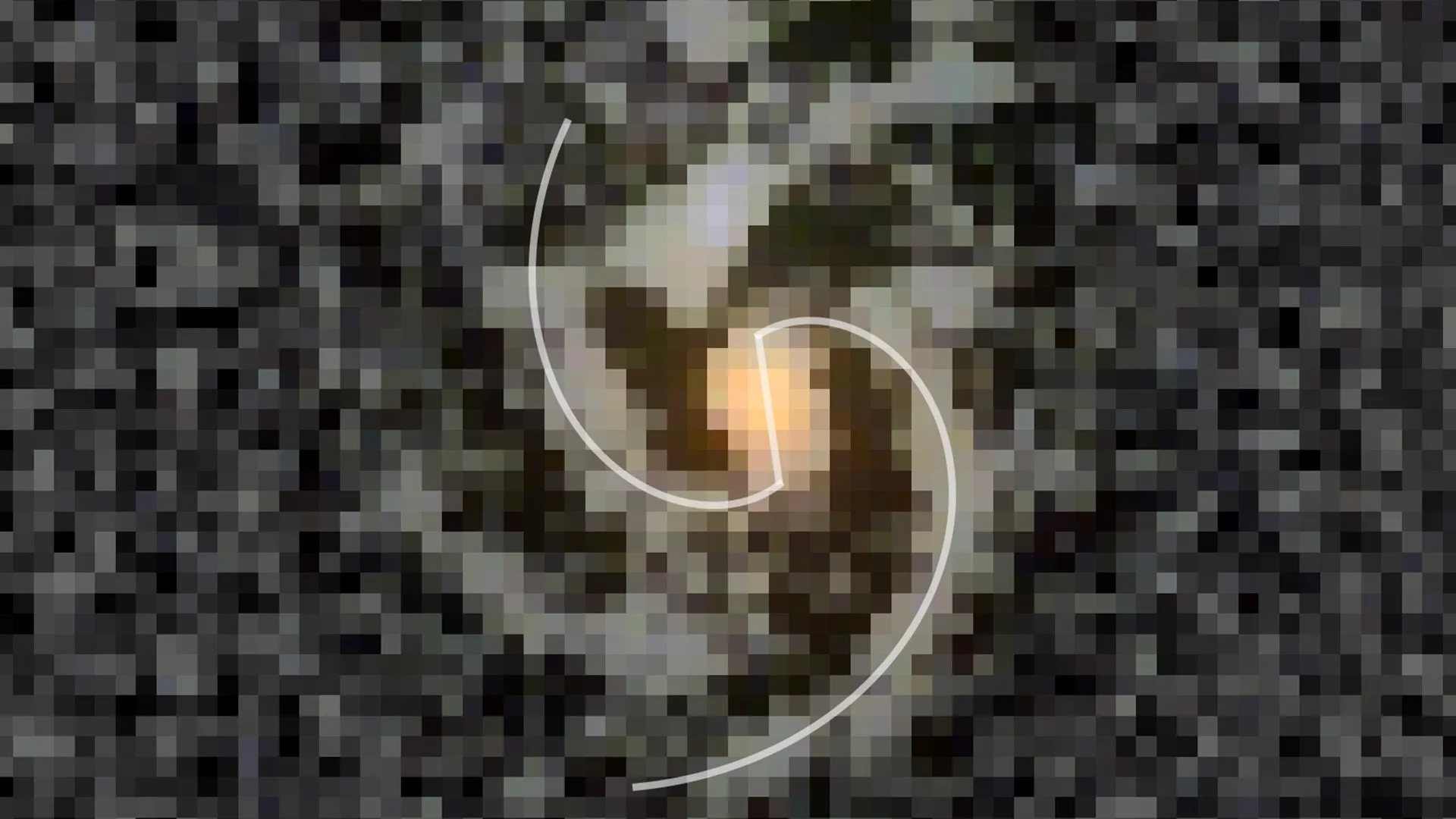
The galaxy at the heart of this revelation, officially designated COSMOS-74706, is a celestial relic, observed as it existed approximately 11.5 billion years ago. This places its existence within a mere 2 billion years after the Big Bang, the cataclysmic event that marked the birth of our universe. By meticulously analyzing the faint light emitted by COSMOS-74706, researchers were able to pinpoint its precise location in the vast tapestry of cosmic history, thereby narrowing down the epoch during which these complex barred structures likely first coalesced. Ivanov succinctly captured the profound implications of this age determination, stating, "This galaxy was developing bars 2 billion years after the birth of the universe. Two billion years after the Big Bang." This early formation suggests that the conditions necessary for bar development – a sufficiently massive and stable galactic disk – were present much earlier than some theoretical models had anticipated. The compelling results of this research were formally presented to the scientific community at the 247th meeting of the American Astronomical Society, sparking considerable interest and discussion among astrophysicists.
Unpacking the Phenomenon of Stellar Bars
To truly appreciate the significance of COSMOS-74706, one must first understand the nature and profound influence of stellar bars. As their nomenclature suggests, a stellar bar manifests as a straight, elongated feature that traverses the central expanse of a spiral galaxy, extending outwards from its core. Ivanov further clarified, "A stellar bar is a linear feature at the center of the galaxy." Crucially, it is not a singular, monolithic object, but rather a dense congregation of billions of stars and vast quantities of gas, gravitationally bound and moving coherently. When observed from a vantage point above or below the galaxy’s sprawling disk, this distinctive alignment creates the striking appearance of a luminous, rod-like structure cutting through the galactic nucleus.
These stellar bars are far more than mere visual embellishments; they are powerful engines of galactic transformation. Their influence extends across multiple facets of a galaxy’s long-term development and internal dynamics. One of their primary roles is to act as colossal cosmic conveyer belts, efficiently channeling gas and dust from the outer reaches of the galactic disk inward towards the central regions. This inward flow of material has several critical consequences. Firstly, it can serve as a vital fuel source for the supermassive black hole that resides at the galaxy’s core, potentially triggering periods of intense activity and growth for the black hole itself, leading to phenomena like active galactic nuclei (AGN). Secondly, this influx of gas can accumulate in the central molecular zone, compressing and igniting new waves of star formation in the galactic bulge, creating a vibrant, starburst region. Conversely, by siphoning gas away from the outer disk, stellar bars can also paradoxically reduce the rate of star formation in the surrounding regions, creating a complex interplay of star birth and suppression across the galaxy. Beyond gas dynamics, bars also dynamically interact with the stellar populations, rearranging orbits and contributing to the overall stability and morphology of the spiral arms. In the local universe, observations indicate that approximately two-thirds of all spiral galaxies, including our Milky Way, possess stellar bars, highlighting their pervasive role in galactic evolution. The formation mechanisms of these bars are thought to involve gravitational instabilities within the galactic disk, often triggered by the sheer mass of stars and gas or by tidal interactions with neighboring galaxies.
Why COSMOS-74706’s Discovery Stands Out in the Cosmic Record
While the quest to identify early barred spiral galaxies is not new, the discovery of COSMOS-74706 represents a significant leap forward in precision and reliability. Previous research efforts have indeed reported potential barred spiral galaxies from even earlier cosmic epochs. However, those findings frequently relied on less precise methods for determining galactic distances and ages, primarily through photometric redshift measurements. Photometric redshift estimates a galaxy’s distance based on its apparent colors across various filters, which can be prone to larger uncertainties and degeneracy, especially for very distant and faint objects.
In stark contrast, the confirmation of COSMOS-74706 leveraged the gold standard of cosmic distance measurement: spectroscopy. Spectroscopy involves splitting a galaxy’s light into its constituent wavelengths, revealing distinct spectral lines that act as unique fingerprints of the elements present. The extent to which these lines are shifted towards the red end of the spectrum (redshift) provides an incredibly accurate measure of the galaxy’s velocity away from us, and thus its precise distance and age. This meticulous spectroscopic analysis provides significantly more reliable data, firming up COSMOS-74706’s place in cosmic history with an unprecedented level of certainty.
Furthermore, another crucial factor distinguishing this discovery is the absence of gravitational lensing. In some earlier cases of distant galaxy observations, the light from the galaxy was distorted and magnified as it passed near a massive foreground object, such as a galaxy cluster. This phenomenon, known as gravitational lensing, can be a powerful tool for observing extremely faint and distant objects, but it can also warp their apparent shape and morphology, making it challenging to definitively identify intrinsic structures like stellar bars without ambiguity. The fact that COSMOS-74706 is "unlensed" means that its observed structure is its true structure, providing an undistorted view of this ancient barred spiral. Ivanov encapsulated these crucial distinctions by stating, "It’s the highest redshift, spectroscopically confirmed, unlensed barred spiral galaxy." Each descriptor in this statement underscores a key aspect of the discovery’s robustness and unprecedented nature.
Although the galaxy dates back to an incredibly early era in the universe, Ivanov expressed that he was not entirely taken aback by the finding. Computer simulations, which model the complex gravitational interactions and gas dynamics within nascent galaxies, have theorized that stellar bars could begin to form at redshifts as high as z=5, corresponding to roughly 12.5 billion years ago. This theoretical prediction provides a plausible framework for the existence of COSMOS-74706. Nevertheless, Ivanov noted that such well-developed barred structures are not expected to be commonplace at such an early stage of cosmic history. He elaborated on this point, stating, "In principle, I think that this is not an epoch in which you expect to find many of these objects. It helps to constrain the timescales of bar formation. And it’s just really interesting." This rarity makes COSMOS-74706 a particularly valuable "Rosetta Stone" for understanding the conditions necessary for bar formation in the early universe, allowing astronomers to refine their models of galaxy assembly and evolution. The presence of a bar so early implies that this galaxy had already accumulated a significant amount of stellar mass and developed a relatively stable, rotating disk capable of supporting such a large-scale gravitational instability.
The Indispensable Role of the James Webb Space Telescope
The remarkable research into COSMOS-74706 was made possible, in part, by the unparalleled observational capabilities of the NASA/ESA/CSA James Webb Space Telescope (JWST). Launched in late 2021, JWST is the premier space observatory of its generation, designed specifically to peer back into the earliest epochs of the universe and observe the formation of the first stars and galaxies. Its superior sensitivity and infrared vision are absolutely critical for such endeavors.
Distant galaxies like COSMOS-74706 are not only incredibly faint but their light is also profoundly redshifted due to the expansion of the universe. Light that was originally emitted in the ultraviolet or visible spectrum from these ancient galaxies stretches into the infrared wavelengths by the time it reaches JWST. Traditional optical telescopes struggle to detect this highly redshifted infrared light. JWST, however, is optimized to observe across a broad range of infrared wavelengths, allowing it to effectively capture the faint, stretched-out light from these cosmic pioneers. Its large primary mirror (6.5 meters in diameter) provides unprecedented light-gathering power, while its advanced instruments, such as the Near-Infrared Camera (NIRCam) for imaging and the Near-Infrared Spectrograph (NIRSpec) for spectroscopy, deliver exquisite angular resolution and spectral detail. This combination allows astronomers to not only detect these distant galaxies but also to resolve their intricate internal structures, such as stellar bars, which would be impossible with previous generations of telescopes. The ability of JWST to penetrate dust, which often enshrouds active star-forming regions in young galaxies, further enhances its capacity to reveal the true morphology of these ancient systems.
The data crucial for this study were obtained through the Space Telescope Science Institute (STScI), which serves as the science operations center for JWST. STScI is operated by the Association of Universities for Research in Astronomy, Inc. (AURA), under NASA contract NAS 5-03127, highlighting the collaborative nature of international space exploration and scientific research. Furthermore, the project received essential financial support from the Brinson Foundation, underscoring the vital role of philanthropic contributions in advancing frontier science.
The discovery of COSMOS-74706 marks a pivotal moment in our understanding of galaxy evolution. It provides concrete observational evidence that complex galactic structures, previously thought to form later, were already established in the universe’s infancy. This finding challenges and refines theoretical models of galaxy formation, offering new constraints on the physical processes that govern the assembly of galaxies in the young cosmos. As JWST continues to unveil the secrets of the early universe, astronomers anticipate many more groundbreaking discoveries that will paint an increasingly detailed picture of how our universe, and the galaxies within it, came to be. This early barred spiral galaxy stands as a testament to the dynamic and rapid evolution that characterized the universe just a short time after its inception, reminding us that even in the cosmic dawn, complexity and order were already taking shape.
