
 By Titik Puspa
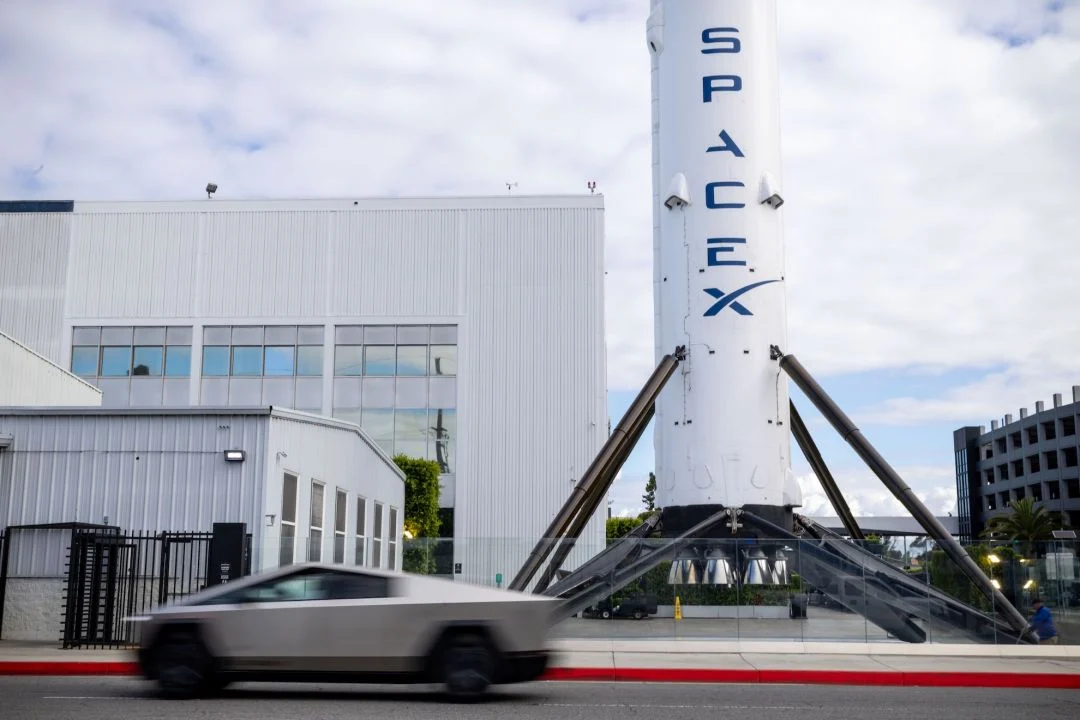
In a significant regulatory development that could reshape the future of computing and underscore Elon Musk’s ambitious vision, SpaceX has been granted conditional approval by the Federal Communications Commission (FCC) to deploy and operate a sprawling constellation of up to one million satellites. This authorization is a pivotal step for the company’s nascent orbital data center business, a venture that aims to leverage the vacuum of space as a new frontier for high-performance computing, particularly for artificial intelligence workloads. The FCC’s decision, however, is far from uncontested, having faced robust opposition from major industry players and scientific bodies who have voiced grave concerns regarding the potential consequences of such a massive satellite deployment.
The FCC’s authorization, issued on Wednesday, arrived despite strenuous objections from a coalition of formidable entities, including Amazon, Viasat, and the American Astronomical Society. These organizations collectively raised alarms about a trifecta of critical issues: the escalating problem of orbital debris and congestion, the potential for disruptive radiofrequency interference, and the broader environmental ramifications of populating Earth’s orbit with an unprecedented number of satellites. Amazon, in particular, a company actively developing its own competing satellite internet service, Starlink, vehemently argued against SpaceX’s proposal. In its official petition to deny the application, Amazon characterized the plan as a "lofty ambition rather than a real plan," asserting that the application was critically lacking in essential details. Despite this perceived deficiency in specificity, Amazon also warned that the proposal "risks real harm," underscoring the gravity of their opposition.
The American Astronomical Society, a leading professional organization for astronomers and astrophysicists, echoed these concerns, focusing on the potential impact on astronomical observations and scientific research. Their petition highlighted the risks of light pollution from a massive constellation and the potential for collisions that could generate even more debris, further jeopardizing sensitive telescopes and ongoing research. Viasat, another major satellite communications provider, also expressed concerns about interference with existing services and the overall stability of the orbital environment.
However, the FCC, in its decision-making process, appears to have largely dismissed some of the more significant concerns articulated by these opponents. Notably, the agency determined that certain potential threats to scientific research, while acknowledged, fell outside the direct scope of its regulatory authority. This suggests a focus on telecommunications and orbital operations rather than the broader scientific and environmental impacts, a point of contention for many critics.
FCC Chair Brendan Carr, a staunch advocate for expanding the nation’s digital infrastructure, hailed the decision as a landmark achievement. In a statement released following the approval, Carr declared that the action "opens a bold new frontier for the computing infrastructure needed to power America’s leadership and growth." He emphasized the potential for space-based computing to drive innovation and maintain a competitive edge in critical technological sectors.
Elon Musk, the visionary behind SpaceX and its ambitious space endeavors, expressed his gratitude to Chair Carr via a post on the social media platform X. He wrote, "Much appreciate. This will be a great asset to America and the world." This public acknowledgment underscores the perceived importance of the FCC’s decision for Musk and his long-term strategic objectives, which increasingly involve the commercialization and utilization of space beyond simple connectivity.
Despite this crucial regulatory milestone, it is imperative to note that the immediate deployment of orbital data centers is not imminent. The FCC’s authorization is a conditional green light, a necessary but not sufficient step. SpaceX still faces a formidable array of technical and economic hurdles that must be overcome before its vision of a space-based computing network can become a reality.
One of the most significant challenges lies in the economics of satellite manufacturing and launch. To deploy a constellation of up to one million satellites, SpaceX will need to dramatically reduce the cost per unit for both production and deployment. This will likely involve further advancements in its Starship program, which is designed for large-scale payload delivery to orbit, and continued innovation in satellite mass production techniques. The current cost of manufacturing and launching satellites, even for a company as vertically integrated as SpaceX, remains a substantial barrier to deploying such a colossal network.
Furthermore, the technical complexities of operating data centers in the harsh environment of space are immense. Dissipating heat generated by high-performance processors in a vacuum presents a significant engineering challenge. Unlike terrestrial data centers, which rely on air and water cooling systems, orbital data centers will require novel thermal management solutions to prevent overheating and ensure the longevity and reliability of the computing hardware. The extreme temperature fluctuations, radiation, and microgravity of space all conspire to stress electronic components.
The procurement of specialized hardware itself is another considerable obstacle. Securing financing for chips and other critical components destined for orbit is a complex proposition. These components must be designed to withstand the rigors of space, a requirement that often translates to higher costs and longer lead times compared to terrestrial electronics. The financial markets may also be hesitant to invest heavily in such a nascent and technologically demanding sector without clear evidence of operational success and profitability.
Beyond these technical and economic considerations, SpaceX must navigate additional regulatory pathways. The FCC has not yet granted approval for SpaceX’s plans to manage orbital debris for satellites that would operate at altitudes exceeding 600 kilometers. This is a critical issue, as the proposed Starmind constellation is intended to operate within a range of 500 to 1,002 kilometers. SpaceX has requested a waiver from existing FCC rules, which mandate that satellites operating below 2,000 kilometers must reenter Earth’s atmosphere within five years of concluding their missions. The company’s proposal includes options to transition retired satellites to different Earth orbits or even to send them on trajectories around the sun, an approach that requires careful consideration and approval to mitigate potential long-term risks to other space activities.
The FCC’s authorization document itself provides some insight into these plans. It details SpaceX’s intention to deploy the Starmind satellites within the specified altitude range. The approval grants SpaceX the authority to utilize radiofrequency communications for maintaining contact and control of its orbital data centers from Earth, particularly as a fallback mechanism should their primary communication systems fail. The primary mode of inter-satellite communication for the Starmind constellation is planned to be laser-based, enabling high-bandwidth connections with other satellites, including those in SpaceX’s existing Starlink network. This integrated approach suggests a potential synergy between SpaceX’s satellite internet and its future data center operations.
Recognizing the extensive development timeline required, the FCC has provided SpaceX with a generous timeframe to address these outstanding issues. Under the terms of the approval, SpaceX has a seven-year window to launch its first operational satellite and a total of 14 years to deploy the entire constellation. This extended timeline acknowledges the complexity and scale of the undertaking and allows for iterative development and testing.
The implications of SpaceX’s orbital data center ambitions extend far beyond the company itself. If successful, this venture could revolutionize computing by offering a distributed, highly resilient, and potentially more energy-efficient platform for data processing. The ability to process data closer to its source, or in a location free from terrestrial terrestrial constraints, could be particularly beneficial for AI applications that require massive computational power and low latency. This could include training complex AI models, running real-time simulations, or enabling advanced autonomous systems.
However, the opposition’s concerns about orbital congestion and debris are not to be underestimated. The International Space Station (ISS) and numerous scientific satellites operate in orbits similar to those proposed for Starmind. An uncontrolled proliferation of satellites, even if designed for deorbiting, could significantly increase the risk of catastrophic collisions, creating cascading debris fields that could render certain orbital regions unusable for decades to come. The Kessler Syndrome, a theoretical scenario where the density of objects in low Earth orbit is high enough that collisions between objects could cause a cascade of further collisions, remains a persistent worry for space safety advocates.
The debate over SpaceX’s orbital data centers highlights a growing tension between rapid technological advancement and the responsible stewardship of Earth’s orbital environment. As more commercial entities seek to utilize space for diverse purposes, robust international regulations and collaborative efforts will be crucial to ensure that the final frontier remains accessible and safe for future generations of space exploration, scientific research, and commercial enterprise. The FCC’s conditional approval is a significant step, but the journey to a fully operational orbital data center network is fraught with technical, economic, and regulatory challenges that will continue to shape the narrative surrounding this ambitious endeavor. The coming years will reveal whether SpaceX can successfully navigate these complexities and usher in a new era of space-based computing, or if the concerns of its detractors will ultimately limit the scale and scope of its orbital ambitions.
