
 By Lina Irawan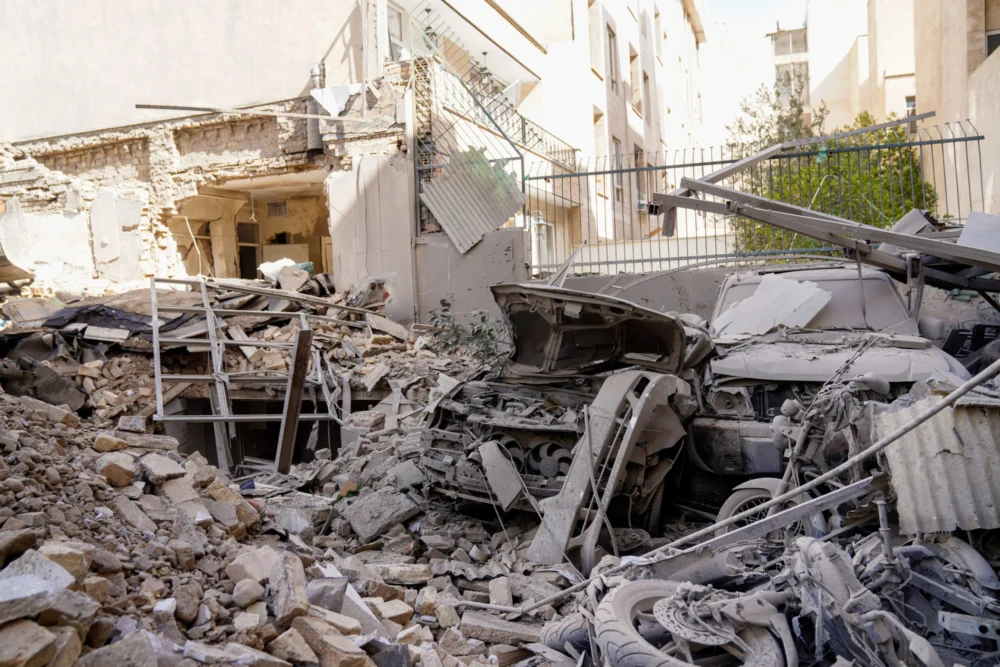
President Trump, in a series of incendiary posts on his social media platform, declared Khamenei’s demise to be "the single greatest chance for the Iranian people to take back their Country." He asserted that Khamenei’s death was the direct result of a meticulously coordinated joint U.S. and Israeli aerial bombardment, which specifically targeted critical Iranian military and governmental sites, including the Supreme Leader’s compound. Trump promised that "heavy and pinpoint bombing" would continue "uninterrupted" for at least a week, if not longer, signaling a sustained military campaign.
In his posts, Trump unequivocally condemned Khamenei as "one of the most evil people in history," a figure whose authoritarian rule and confrontational foreign policy had, in Trump’s view, destabilized the Middle East for decades. The President boasted that Khamenei "was unable to avoid our Intelligence and Highly Sophisticated Tracking Systems and, working closely with Israel, there was not a thing he, or the other leaders that have been killed along with him, could do." This statement underscored the advanced capabilities and intelligence gathering that reportedly underpinned the audacious operation, suggesting a level of penetration and precision previously unseen.
Simultaneously, in a nationally televised address from Jerusalem, Israeli Prime Minister Benjamin Netanyahu provided a somber yet resolute account, stating there were "growing signs" that Khamenei had been killed in the early Saturday strikes on his compound. Shortly after Netanyahu’s address, two Israeli officials, speaking to The Associated Press on condition of anonymity due to the sensitivity of the information and pending a formal announcement, confirmed Khamenei’s death. They offered no further details, but their confirmation solidified the veracity of Trump’s earlier claims and sent shockwaves through diplomatic and financial markets worldwide.
The assassination of Ayatollah Ali Khamenei represents a seismic shift in Iranian politics and regional power dynamics. As the second Supreme Leader of the Islamic Republic, he succeeded Ayatollah Ruhollah Khomeini, the charismatic leader of the 1979 Islamic Revolution. For over three decades, Khamenei wielded ultimate authority, holding the final say on all major domestic and foreign policies. He meticulously presided over Iran’s complex clerical establishment, its powerful paramilitary Revolutionary Guard (IRGC), and the vast network of proxy forces stretching from Lebanon to Yemen. His death leaves an immense power vacuum and casts an unprecedented shadow over the future of the theocratic state, which now faces the prospect of a protracted succession crisis and potentially widespread internal unrest, exacerbated by Trump’s direct call for regime change.
Addressing the Iranian populace directly in a video announcing "major combat operations," Trump urged them to "seize control of your destiny" by rising up against the Islamic leadership. "When we are finished, take over your government. It will be yours to take. This will be probably your only chance for generations," he declared, echoing a long-held U.S. foreign policy aspiration to see a democratic transition in Iran, though never before pursued through such direct military intervention and incitement. This bold appeal carries significant risks, potentially igniting civil strife or, conversely, consolidating nationalist sentiment around the existing regime in the face of external aggression.
Initial reactions from Iran were, predictably, a mix of denial and fury. Iranian Foreign Minister Abbas Araghchi, speaking to NBC News prior to official Israeli confirmation, stated that Khamenei and President Masoud Pezeshkian were alive "as far as I know," dismissing the attack as "unprovoked, illegal and absolutely illegitimate." However, these denials quickly gave way to reports of casualties and widespread retaliation. Iranian state media, citing the Red Crescent, reported a devastating toll: at least 201 people killed and over 700 injured in the initial strikes.
Iran’s response was swift and robust. Missiles and drones were launched toward Israel and U.S. military bases across the region, transforming the shadow war into an overt, multi-front conflict. Exchanges of fire continued intensely into the night. Israel’s military reported that "dozens" of Iranian missiles targeted its territory, with many intercepted by its advanced air defense systems, including the Iron Dome. Magen David Adom, Israel’s emergency medical service, noted 89 "lightly injured" individuals.
The human cost in Iran was particularly stark. Reports emerged of at least 85 people, mostly young girls, killed when a girls’ school in southern Iran was struck, with dozens more wounded, according to the local governor speaking on Iranian state TV. Capt. Tim Hawkins, a U.S. Central Command spokesperson, acknowledged being "aware of reports" of the school strike and stated that U.S. forces were investigating. Iran’s state news agency IRNA further reported 15 deaths in the southwest, detailing hits on a sports hall, two residential areas, and a hall near a school in Lamerd. These civilian casualties are likely to fuel Iranian public anger and solidify support for retaliation, despite Trump’s calls for an uprising.
The U.S. military, approximately 12 hours after the attacks commenced, reported no American casualties and only minimal damage at its regional bases, despite "hundreds of Iranian missile and drone attacks." It detailed that targets within Iran included Revolutionary Guard command facilities, critical air defense capabilities, missile and drone launch sites, and military airfields – a comprehensive assault aimed at crippling Iran’s military infrastructure.
Further Israeli claims, not immediately corroborated by the U.S. or Iran, indicated that the strikes had also decapitated significant portions of Iran’s military and security leadership. Israel asserted that its operations killed the commander of the Iranian Revolutionary Guard Corps and the country’s defense minister. Additionally, the Israeli military claimed the death of the secretary of the Iranian Security Council, a close adviser to Khamenei, during strikes on three locations in Tehran where top Iranian officials were reportedly gathered based on intelligence. These targeted assassinations, if confirmed, would represent an unprecedented blow to the Islamic Republic’s command and control structure.
The military action ignited a firestorm of international condemnation and concern. Democrats in the U.S. Congress immediately decried Trump’s decision to take military action without congressional authorization, raising serious constitutional questions about the War Powers Act. White House spokesperson Karoline Leavitt, however, stated that several Republican and Democratic leaders in Congress had been briefed in advance, attempting to preempt criticisms of unilateralism.
The United Nations Security Council convened an urgent session Saturday afternoon, with diplomatic efforts scrambling to de-escalate the burgeoning conflict. The U.N.’s nuclear watchdog, the International Atomic Energy Agency (IAEA), stated on X (formerly Twitter) that it was closely monitoring developments and had seen "no evidence of radiological impact," providing a glimmer of reassurance amidst fears of potential strikes on nuclear facilities, although Iran itself later requested an urgent IAEA Board of Governors session regarding "these threats to safeguarded nuclear facilities."
Across the Middle East, the immediate impact was palpable. Advocacy group NetBlocks reported a "near-total internet blackout" in Iran, signaling the regime’s attempt to control information flow and suppress potential dissent. Flights across the region were disrupted, and air defense fire thudded over cities like Dubai, the commercial capital of the United Arab Emirates. Shrapnel from an Iranian missile attack on the UAE capital reportedly killed one person. Saudi Arabia confirmed repelling an Iranian attack on its capital and eastern region. Bahrain reported a missile attack targeting the U.S. Navy’s 5th Fleet headquarters, with three buildings damaged in Manama and Muharraq. Kuwait’s main international airport was targeted by a drone, injuring several employees, and three troops were injured by shrapnel at Ali Al-Salem air base. Explosions were also heard in Qatar, and Jordan reported dealing with 49 drones and ballistic missiles.
Oman’s Foreign Minister Badr al-Busaidi, a key mediator in previous nuclear talks between the U.S. and Iran, expressed dismay on X, stating, "Active and serious negotiations have yet again been undermined. Neither the interests of the United States nor the cause of global peace are well served by this." His statement highlighted the profound setback for diplomacy in the wake of the strikes, which occurred during the holy fasting month of Ramadan and just after an unsuccessful round of nuclear talks on Thursday.
The operation, which Israel stated had been planned for months with the United States, targeted "hundreds of targets across Iran," according to Israeli military chief of staff Lt. Gen. Eyal Zamir. These included Iran’s military installations, symbols of government, and intelligence targets, based on an official briefed on the operation.
Trump’s justification for the military action centered on Iran’s alleged continued development of its nuclear program, despite his previous assertion last year that the program had been "obliterated" by an earlier round of strikes. Iran has consistently maintained its right to enrich uranium for peaceful purposes and has denied enriching beyond agreed levels since June, though it has blocked international inspectors from visiting several sites. Satellite photos analyzed by The Associated Press had previously shown new activity at two such sites, suggesting attempts to assess and potentially recover materials.
In a notable departure from his "America First" platform and vows to avoid "forever wars," Trump acknowledged the possibility of American casualties, stating, "that often happens in war." This indicated a significant shift in his administration’s foreign policy calculus, embracing direct military engagement in a volatile region. He also threatened to "annihilate" the Iranian navy and destroy Tehran-backed regional proxies, issuing a stark warning to the paramilitary Iranian Revolutionary Guard: lay down arms for immunity or face "certain death."
The strikes cap months of soaring tensions, intensified by the deployment of American warships to the region. The broader context includes Iran’s struggle with a decimated economy due to crippling U.S. sanctions and global isolation, coupled with growing internal dissent following nationwide protests that began in late 2022. The Human Rights Activists News Agency confirmed over 7,000 deaths in the government’s crackdown on these protests, with thousands more under investigation, while the government acknowledged over 3,000 killed. This internal fragility, combined with the weakening of Iran’s network of proxies across the Middle East in the wake of the region-wide conflict sparked by Hamas’s October 7, 2023, attack on Israel, likely contributed to the perception that Iran was in its weakest position since the 1979 Islamic Revolution.
However, as Kamran Matin, an expert on Iran at the University of Sussex, cautioned, even with top leaders killed, regime change is not guaranteed, and Iranians are likely to be wary of taking to the streets given the Revolutionary Guard’s demonstrated ruthlessness. The prospect of an internal power struggle among hardline factions, potentially leading to further instability or an even more repressive regime, remains a significant concern.
The global economic repercussions are also immediate and severe. Markets are bracing for significant volatility, particularly in oil prices. The Strait of Hormuz, through which a third of worldwide oil exports transported by sea passed in 2025, could become unsafe for commercial traffic, triggering a severe energy crisis.
The assassination of Ayatollah Ali Khamenei marks a perilous new chapter in the U.S.-Iran and Israel-Iran confrontations, one that promises protracted conflict, widespread instability, and profound uncertainty for the entire world.
