
 By admin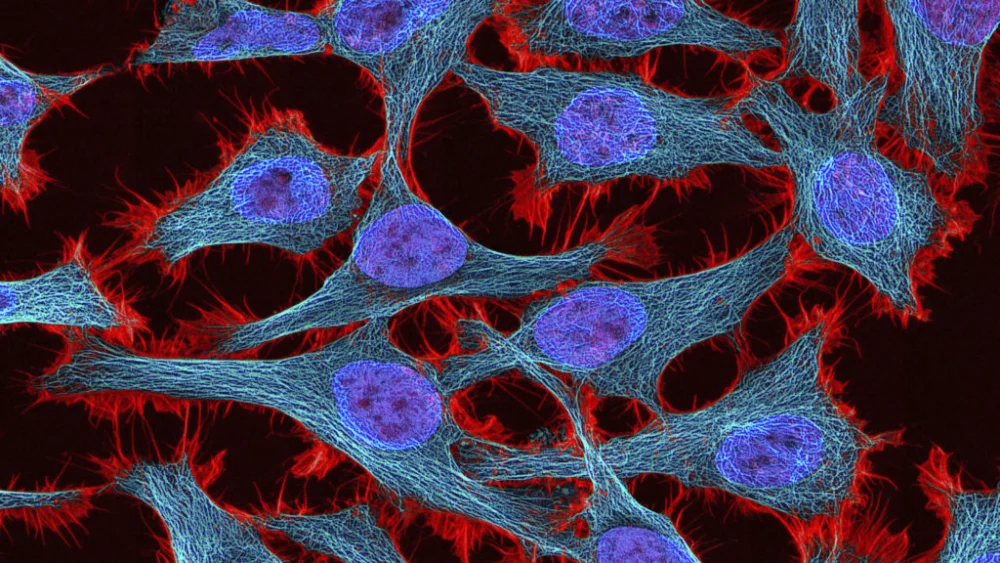
The global pharmaceutical titan Novartis has reached a confidential settlement with the estate of Henrietta Lacks, resolving a high-profile legal battle that accused the Swiss-based company of unjustly profiting from the "stolen" cells of a Black tobacco farmer who died more than seven decades ago. This agreement, finalized in a Maryland federal court this month, marks a significant milestone in a series of legal actions aimed at redressing the historical exploitation of Lacks’ genetic material, which became the foundation for billions of dollars in medical innovation without her consent or her family’s knowledge. While the financial specifics and terms of the settlement remain shielded from the public eye, the resolution signifies a growing movement to hold the multi-billion-dollar biomedical industry accountable for its reliance on biological materials obtained through the systemic racial inequities of the mid-20th century.
In a joint statement, both the Lacks family and Novartis expressed satisfaction with the outcome, noting they were "pleased they were able to find a way to resolve this matter filed by Henrietta Lacks’ Estate outside of court." However, neither party offered further commentary on the negotiations, maintaining a veil of privacy over the restitution provided to the descendants of the woman whose cells changed the course of modern medicine. This settlement is the second major victory for the estate, following a similar undisclosed agreement with the biotechnology giant Thermo Fisher Scientific Inc. in 2023. These legal victories are not merely about financial compensation; they represent a fundamental challenge to the "business as usual" model of the pharmaceutical industry, which has long treated the HeLa cell line as a public domain resource despite its deeply problematic origins.
The saga of Henrietta Lacks began in 1951, when the 31-year-old mother of five sought treatment for a "knot" in her womb at the Johns Hopkins Hospital in Baltimore—one of the few hospitals at the time that provided medical care to Black patients in the segregated South. During a biopsy of her cervical tumor, a sample of her tissue was taken by doctors and passed to Dr. George Gey, a researcher who had been attempting to grow human cells in a laboratory setting for decades. While every other cell sample Gey had collected eventually withered and died, Lacks’ cells did something unprecedented: they doubled every 24 hours and continued to grow indefinitely. These were the first "immortal" human cells ever grown in a lab, and they were given the code name "HeLa," derived from the first two letters of her first and last names.
Henrietta Lacks succumbed to cervical cancer in October 1951 and was buried in an unmarked grave in Lackstown, Virginia. Meanwhile, her cells were being shipped to laboratories around the globe. The HeLa cell line became a scientific workhorse, enabling breakthroughs that have saved millions of lives. They were instrumental in Jonas Salk’s development of the polio vaccine, as they provided a reliable medium for testing the virus. They were used in the development of treatments for Parkinson’s disease, leukemia, and various cancers. HeLa cells even traveled into space on early missions to study the effects of zero gravity on human tissue. More recently, the cell line played a critical role in the rapid development of COVID-19 vaccines and the mapping of the human genome. Yet, for decades, the Lacks family remained entirely unaware that Henrietta’s cells were being bought, sold, and patented by corporations worldwide.
The 2024 lawsuit against Novartis focused on the concept of "unjust enrichment." Attorneys for the estate, led by prominent civil rights lawyer Ben Crump and co-counsel Christopher Seeger, argued that Novartis continued to profit from the HeLa cell line long after the unethical nature of its acquisition became a matter of public record. The complaint characterized the cells as "stolen" and asserted that the company’s commercialization of the cell line was an extension of a "racist medical system" that exploited Black bodies for the advancement of white-led institutions. The legal team sought the full amount of Novartis’s net profits derived from the commercialization of HeLa-related products, arguing that no company should be allowed to retain wealth generated from a non-consensual biological "gift."
The ethical debate surrounding HeLa cells is deeply intertwined with the history of medical racism in the United States. During the Jim Crow era, Black patients were frequently used as "clinical material" for research without their informed consent. The Lacks family’s struggle for recognition and compensation highlights a stark disparity: while the HeLa cell line fueled a multi-billion-dollar industry, many of Lacks’ descendants lived for years without health insurance, unable to afford the very medical advancements her cells helped create. This irony was brought to international attention by Rebecca Skloot’s 2010 bestselling book, The Immortal Life of Henrietta Lacks, and a subsequent HBO film starring Oprah Winfrey. These works transformed Henrietta Lacks from a faceless laboratory tool back into a human being, a mother, and a victim of a system that valued her biology more than her personhood.
Johns Hopkins University has historically maintained that it never sold or profited from the HeLa cell line, asserting that it offered the cells freely for scientific research. However, the lawsuits filed by the Lacks estate target the private corporations that took those cells and built proprietary, profit-generating technologies around them. The Novartis settlement follows the precedent set by the Thermo Fisher case, where the estate successfully argued that a company’s ongoing use of the cells constitutes a continuous act of trespass and unjust enrichment. This legal theory bypasses traditional statutes of limitations by focusing on the current and future profits being made, rather than just the initial 1951 act of taking the cells.
The resolution of the Novartis case does not signal the end of the estate’s legal campaign. Just days after the Thermo Fisher settlement in 2023, the estate filed a lawsuit against Ultragenyx Pharmaceutical, a California-based company that uses HeLa cells in the production of gene therapy products. Litigation also remains active against Viatris, another major pharmaceutical player. Attorneys for the family have made it clear that they intend to pursue any entity that continues to benefit financially from Henrietta Lacks’ genetic legacy without providing restitution to her heirs. These cases are being watched closely by the global scientific community and the legal profession, as they could redefine the boundaries of informed consent and tissue ownership.
Beyond the courtroom, the Henrietta Lacks story has prompted a reevaluation of bioethical standards. In the years since her story became public, the National Institutes of Health (NIH) reached an agreement with the Lacks family to grant them some control over how her genetic sequence is used in research. However, that agreement did not include financial compensation, which has remained the primary focus of the recent litigation against private industry. The shift toward suing pharmaceutical giants represents a tactical evolution in the fight for "medical reparations," moving from requests for acknowledgment to demands for economic equity.
The Novartis settlement serves as a powerful symbol of a changing tide in how society views the intersection of commerce, science, and human rights. For the Lacks family, these legal victories are about reclaiming the dignity of their ancestor and ensuring that her "immortal" contribution to humanity is no longer synonymous with exploitation. As the pharmaceutical industry continues to evolve with advanced gene editing and personalized medicine—technologies that often rely on existing cell lines—the ghost of Henrietta Lacks remains a haunting reminder of the need for transparency and ethics in the pursuit of scientific progress.
While the exact dollar amount Novartis paid to the Lacks estate may never be known, the message sent to the biomedical world is loud and clear: the era of profiting from the unauthorized use of human tissue, particularly from marginalized communities, is facing a reckoning. The settlement closes one chapter for Novartis but leaves the door wide open for further litigation against other companies that have built their empires on the foundation of HeLa cells. As the estate continues its legal march, the legacy of the poor tobacco farmer from Virginia continues to grow, not just in laboratory petri dishes, but in the halls of justice, where her name has become a rallying cry for the protection of patient rights and the correction of historical wrongs.
