
 By Lina Irawan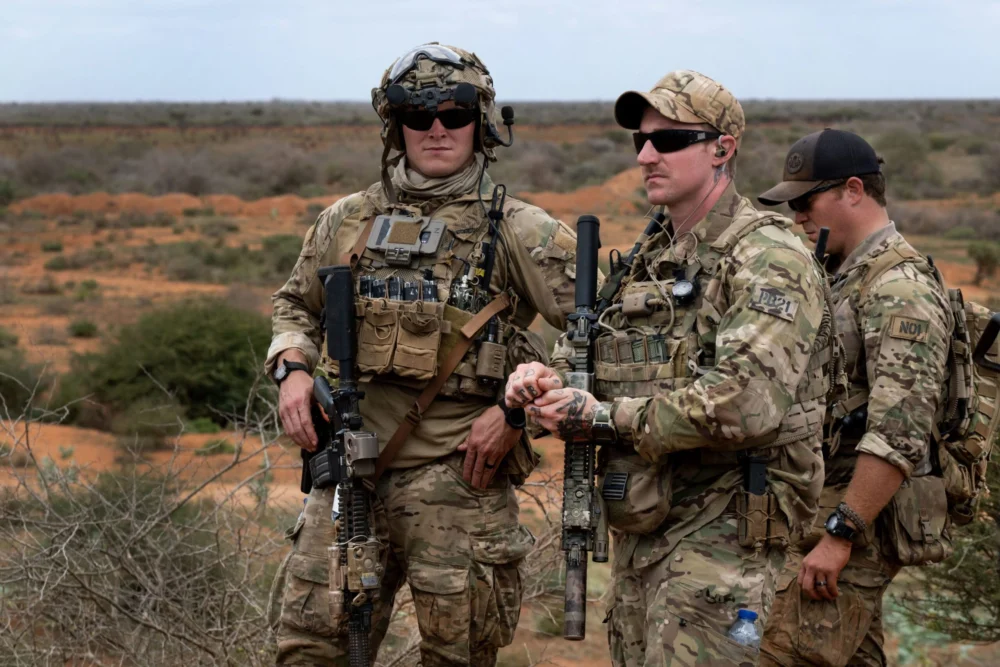
The uncertainty surrounding Iran’s highly enriched uranium stockpile has intensified significantly since United Nations atomic inspectors last verified its location. These officials, speaking on condition of anonymity due to the sensitive nature of the deliberations, indicated that the absence of regular International Atomic Energy Agency (IAEA) oversight has created a dangerous intelligence vacuum. The strikes conducted last year, while aiming to cripple Iran’s nuclear infrastructure, paradoxically complicated the critical task of tracking the enriched uranium, pushing military planners into a fresh, urgent assessment of contingencies, including potential ground operations.
President Trump, speaking late Saturday aboard Air Force One, acknowledged the gravity of the situation, stating, “They haven’t been able to get to it and at some point, maybe we will. We haven’t gone after it, but it’s something we can do later on. We wouldn’t do it now.” This statement, while deferring immediate action, underscored the administration’s consideration of a highly aggressive and potentially destabilizing military option. The mere contemplation of such a mission signals a profound shift in strategy, moving beyond aerial bombardment to the prospect of direct ground intervention in Iran, a move with immense geopolitical ramifications.
The stated objective behind the US and Israeli attacks on Iran’s nuclear facilities in June 2025 was to eliminate the Islamic Republic’s capability to produce nuclear weapons. However, the subsequent cessation of IAEA monitoring has left a critical gap in international verification efforts. Before the conflict, Iran operated the world’s most heavily inspected nuclear program, with IAEA monitors conducting over 365 visits annually to declared facilities, including enrichment plants at Fordow and Natanz, and the uranium processing center in Isfahan. The strikes effectively ended this unprecedented access, plunging the international community into a state of heightened anxiety regarding Iran’s nuclear intentions and capabilities.
Publicly, US officials have maintained a facade of confidence regarding their intelligence on the uranium’s storage location. Privately, however, there is a palpable sense of unease and diminished certainty. Reports indicate that in the weeks preceding the US and Israeli strikes, IAEA monitors observed sustained, unusual activity outside tunnels built into a hillside near Isfahan. This site was where the near-bomb-grade material was last officially documented before the outbreak of hostilities. A diplomat in Vienna, familiar with the IAEA’s internal assessments, revealed that this activity strongly suggests that at least some of the 441 kilograms (972 pounds) of highly enriched uranium stored at the complex has likely been moved.
To put this quantity into perspective, 441 kilograms of highly enriched uranium, if further refined to weapons-grade levels (typically above 90% uranium-235), is sufficient for approximately a dozen nuclear warheads. The US intelligence community specifically estimates it could yield 11 bombs. This near-bomb-grade material, believed to be enriched to levels around 60%, significantly reduces the "breakout time" Iran would need to produce weapon-grade uranium, potentially shortening it to a matter of weeks or even days once a decision is made. Beyond this immediate threat, Iran also possesses over 8,000 kilograms of uranium enriched to lower levels. While not immediately usable for weapons, this material could be upgraded if Iran’s enrichment capacity were to be fully restored, presenting a long-term proliferation risk.
US and Israeli officials are reportedly engaged in an intensive search for the highly enriched material, with contingency plans actively being developed that include the deployment of special forces should its location be confirmed. Such an operation would be fraught with extreme peril, demanding meticulous intelligence gathering, precise execution, and a willingness to accept high risks. The nature of the forces involved – elite units like the US Delta Force or SEALs, or Israel’s Sayeret Matkal – underscores the complexity and danger of such a mission.
A senior Trump administration official, speaking on March 3, outlined two primary options for rendering Iran’s enriched uranium unusable. The first involves gaining physical control of the territory where the material is located, allowing personnel to be sent in to dilute it on-site, a technically challenging and time-consuming process that would make it unsuitable for weapons. The second option entails the physical removal of the material from Iran to another location where it could be safely processed or secured. Both options present formidable logistical and security challenges, requiring extensive military and technical capabilities.
The contemplation of ground troops was first reported by Axios, which indicated that the US and Israel were exploring the deployment of ground forces to seize Iran’s nuclear stockpile. The White House declined to comment on these specific plans, maintaining a veil of secrecy around potential military operations. Trump’s subsequent remarks on Saturday, while reiterating a reluctance to discuss ground troops, did not rule out the possibility. He emphasized that any such deployment would have to be "for a very good reason" and would only occur if Iran were "decimated" to the point where it "wouldn’t be able to fight at the ground level." This suggests a desire to avoid direct, protracted ground combat, hinting at a surgical strike rather than a full-scale invasion.
Historical precedents offer a glimpse into the immense undertaking such an operation would represent. The US military has previously prepared detailed plans for incursions into Iran. One notable example, "Project Honey Badger," developed decades ago in the aftermath of the 1979 US embassy hostage crisis, envisioned airlifting approximately 2,400 special operations troops into Iran using more than 100 aircraft. This audacious plan included transporting heavy excavation equipment, such as bulldozers, deemed critical for troops who might need to unearth buried uranium. While developed under different geopolitical circumstances and with vastly different capabilities, Project Honey Badger highlights the historical consideration of direct intervention and the logistical complexity of retrieving sensitive materials.
The fundamental hurdle remains the location of the material. Before the June conflict, the IAEA’s comprehensive monitoring regime provided a robust, albeit imperfect, mechanism for tracking Iran’s nuclear program. That access evaporated after the strikes hit Iran’s main enrichment plants at Fordow and Natanz, as well as its uranium processing center in Isfahan. Without on-the-ground inspectors, satellite imagery and signals intelligence provide only partial clues, making the precise whereabouts of the uranium a formidable intelligence challenge.
Even prior to the recent attacks, Tehran’s government had signaled its intention to take "special measures" to preserve its nuclear material in the face of hostilities. Reza Najafi, Iran’s envoy to the IAEA, stated, “The agency should not expect safeguard measures to be implemented under such wartime conditions as if hostilities had not occurred.” This stance effectively provided a pretext for Iran to cease cooperation and potentially move sensitive materials without international oversight, further complicating verification efforts.
The collapse of diplomacy between Iran and the international community has directly contributed to the current crisis. Tehran had previously indicated an openness to reducing or exporting its highly enriched stockpile as part of a broader diplomatic agreement, particularly under the framework of the Joint Comprehensive Plan of Action (JCPOA), which had been abandoned by the Trump administration. However, the latest round of fighting and the subsequent lack of communication halted any nascent negotiations, leaving military options as the perceived primary recourse. A European official familiar with the planning confirmed that the breakdown of diplomatic channels has compelled the US and Israel to revisit military contingencies, including the controversial possibility of using ground forces to retrieve nuclear material.
One of the most significant operational challenges is the potential for the highly enriched uranium to be dispersed and concealed indefinitely. According to US regulatory estimates, the 441 kilograms of highly enriched uranium could be stored in approximately 16 cylinders, each about 36 inches (91 centimeters) tall. Each cylinder would weigh roughly 25 kilograms, making them light enough to be transported relatively easily by vehicle or even by hand. This portability dramatically increases the difficulty of detection and seizure, as the material could be moved to multiple, hardened, or even civilian-proximate locations, creating significant operational hazards and risks of collateral damage.
The extent of the damage inflicted by the US and Israeli strikes on Iran’s enrichment infrastructure remains uncertain. Even if the damage is substantial and has set back Iran’s ability to produce new enriched uranium, the existence of the near-bomb-grade material outside monitored facilities poses an immediate and continuing risk. This existing stockpile represents a "breakout capability" that could still enable Iran to quickly produce nuclear weapons if it chooses to do so, regardless of its damaged infrastructure.
Crucially, most analysts, including those within US intelligence, continue to agree that Iran has not yet made a definitive decision to pursue nuclear weapons. The IAEA, prior to losing access, had not detected a structured weapons program. The Institute for Science and International Security estimates the probability of Iran deciding to build a nuclear weapon remains below 50%. However, this assessment is now complicated by a profound internal shift within Iran: the death of Supreme Leader Ayatollah Ali Khamenei in the opening hours of the recent war. Khamenei had famously issued a religious edict, or fatwa, against the development of nuclear weapons, a stance that provided a theological justification for Iran’s stated non-proliferation policy. His death has triggered a complex succession process that could fundamentally reshape Iran’s nuclear decision-making, as a successor might revisit or even overturn this crucial religious decree.
Despite the heightened military tensions, Iran, joined by China and Russia, recently indicated at the IAEA that "a sustainable diplomatic solution" remains possible. However, President Trump’s recent statements suggest an administration increasingly prepared to pursue its objectives militarily, signaling a dangerous crossroads for international security. The convergence of an unverified, near-bomb-grade uranium stockpile, the collapse of international oversight, a leadership transition in Tehran, and the contemplation of high-risk military intervention creates an exceptionally volatile situation, placing the world on edge over the prospect of a direct confrontation in the Middle East.
