
 By Titik Puspa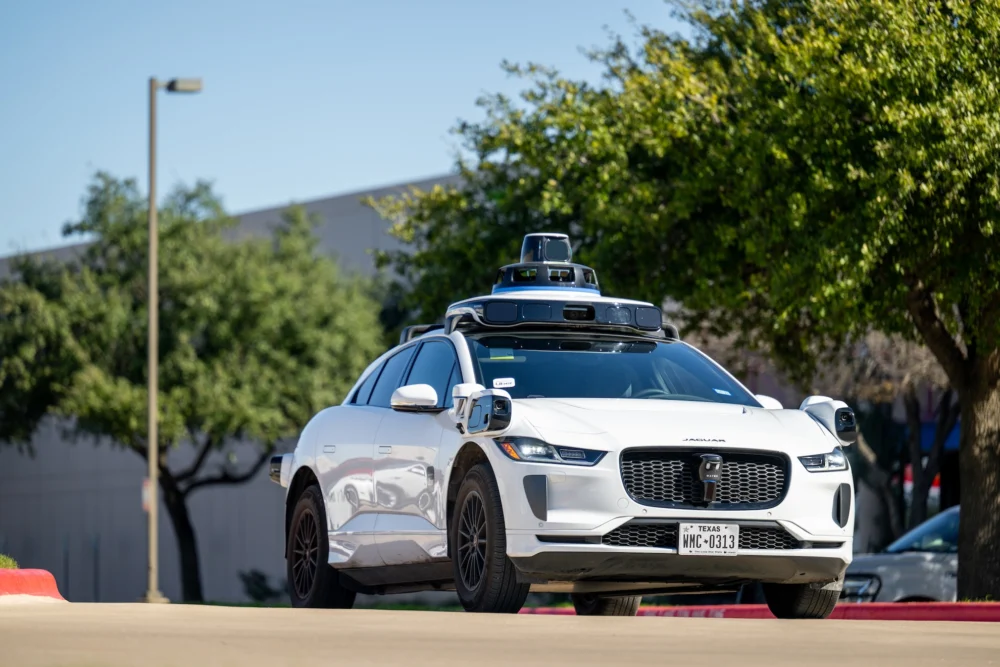
In a development that blurs the lines between futuristic technology and everyday gig work, Waymo’s fleet of autonomous vehicles, which are now a common sight transporting passengers across six major cities, has encountered an unexpected operational hurdle: an open door can bring the entire system to a standstill. This seemingly minor oversight, a passenger accidentally leaving a door ajar, has necessitated a creative, and somewhat ironic, solution that involves enlisting the services of DoorDash drivers.
The peculiar situation came to light through a Reddit post on the r/DoorDash_Dasher subreddit, where a user shared an unusual delivery request that diverged sharply from the typical food and grocery drop-offs. Instead of a culinary destination, the driver was presented with an offer of $6.25 to travel less than a mile to a Waymo vehicle and, quite literally, close its door. The incentive for completing this unconventional task was further sweetened by an additional $5 bonus upon "verified completion." The absurdity of the situation was not lost on the online community, with one commenter humorously remarking, "You actually ‘door’ dashed."
This anecdote, initially met with skepticism, has been confirmed as legitimate by both Waymo and DoorDash, highlighting a real-world challenge in the deployment of advanced autonomous vehicle (AV) technology. While Waymo’s self-driving cars represent a significant leap forward in transportation, capable of navigating complex urban environments and serving a growing customer base, they are not immune to simple mechanical or human-induced failures. The incident underscores that even the most sophisticated AI and sensor systems can be rendered inoperable by a basic physical issue like an unsecured door.
Waymo, a subsidiary of Google’s parent company Alphabet, has been at the forefront of the AV revolution. The company recently secured a substantial $16 billion in funding, signaling its aggressive expansion plans, including international ventures in cities like London and Tokyo. This significant investment underscores the immense potential and expected growth of the robotaxi market. However, this latest operational quirk suggests that the path to seamless autonomous mobility is paved with unforeseen complexities, often requiring human intervention for seemingly mundane tasks.
The partnership between Waymo and DoorDash, which includes the DoorDash driver being dispatched to close the vehicle’s door, is part of a broader pilot program initiated in Atlanta. According to a joint statement from Waymo and DoorDash, the objective of this initiative is to "enhance its AV fleet efficiency." In the rare scenario where a vehicle door is left open, preventing the car from continuing its journey, nearby Dashers are alerted. This allows Waymo to leverage the existing gig economy workforce to quickly rectify the situation and get its vehicles back on the road. This collaboration, which began earlier this year, is not entirely novel, as Waymo and DoorDash also operate an autonomous delivery service in Phoenix, where Waymo vehicles deliver food and groceries to DoorDash customers.
The economic rationale behind paying for a simple door closure is straightforward. An immobilized Waymo vehicle, unable to complete its scheduled rides, represents lost revenue and potential customer dissatisfaction. Furthermore, a stationary vehicle, especially one blocking a lane, could disrupt traffic flow and create safety hazards. Therefore, the cost of paying a gig worker to resolve the issue is significantly less than the cumulative economic and operational impact of a disabled AV.
This is not the first instance of Waymo seeking external assistance to manage its vehicle door issues. In Los Angeles, the company has partnered with Honk, a service often described as an "Uber for towing." Reports indicate that Honk users in L.A. have been compensated with up to $24 to close Waymo doors, a considerably higher rate than what Atlanta DoorDash drivers receive. This suggests that the compensation model may be adjusted based on local labor costs, demand, and the urgency of the situation. The difference in payment also highlights the varying economic landscapes and the potential for different gig work platforms to be leveraged for specialized tasks.

Looking ahead, Waymo has acknowledged this operational vulnerability and indicated that future vehicle models will incorporate automated door closure mechanisms. This proactive approach aims to mitigate the need for human intervention in such scenarios, further streamlining the autonomous driving experience. However, until these technological advancements are fully integrated and deployed, human assistance, particularly from the readily available gig economy workforce, remains a crucial, albeit unconventional, component of Waymo’s operational strategy.
The Waymo-DoorDash collaboration exemplifies a fascinating intersection of cutting-edge technology and the evolving landscape of work. It raises questions about the future of human involvement in the AV ecosystem. While the ultimate goal is full automation, the current reality demonstrates that human ingenuity and adaptability are still indispensable in navigating the practical challenges of deploying advanced technologies. This symbiotic relationship, where AV companies rely on gig workers for unexpected operational needs, could become a more common feature as autonomous systems become more integrated into our daily lives.
The implications of this partnership extend beyond mere logistical solutions. It highlights the economic opportunities that can arise from the development and deployment of new technologies. For individuals participating in the gig economy, these unconventional tasks can represent an additional stream of income, albeit one that is highly dependent on the operational quirks of autonomous fleets. It also points to the potential for future specialized services catering to the needs of AV operators, ranging from remote monitoring and diagnostics to on-site physical interventions.
The incident also serves as a reminder of the iterative nature of technological development. The path to a fully autonomous future is unlikely to be a linear progression but rather a series of advancements, adaptations, and problem-solving efforts. The "open door" issue, while seemingly minor, is a tangible example of how real-world usage can expose unforeseen limitations and necessitate creative, often unexpected, solutions. It underscores the importance of continuous feedback loops and the ability of companies to pivot and adapt their strategies in response to practical challenges.
The broader context of Waymo’s expansion and investment is significant. The company’s ambition to scale its robotaxi fleet internationally and its substantial funding round indicate a strong belief in the commercial viability and societal impact of autonomous vehicles. However, the operational challenges, like the open-door predicament, serve as a crucial reminder that scaling a complex technological system involves more than just technological prowess; it requires meticulous attention to operational details and the ability to manage a diverse set of potential failure points.
The story of Dashers closing Waymo doors is more than just a quirky news item; it’s a microcosm of the challenges and opportunities inherent in the transition to an autonomous future. It demonstrates that while technology may advance at an astonishing pace, the practical realities of deployment often require human ingenuity, adaptability, and sometimes, a simple act of closing a door. As Waymo and other AV companies continue to refine their operations, the reliance on human intervention for unexpected issues may diminish, but for now, the gig economy is playing an unexpected, yet vital, role in keeping the driverless future on the move. The joint efforts of Waymo and DoorDash in Atlanta and Phoenix offer a glimpse into how these two burgeoning sectors can complement each other, paving the way for new models of service delivery and operational efficiency in the age of autonomous mobility. The future, it seems, will still require a helping hand, even when there’s no driver at the wheel.
The author, Amanda Silberling, a senior writer at TechCrunch, covers the intersection of technology and culture. Her work has also appeared in publications such as Polygon, MTV, The Kenyon Review, NPR, and Business Insider. She co-hosts "Wow If True," a podcast focused on internet culture, with science fiction author Isabel J. Kim. Prior to her career in journalism, Silberling worked as a grassroots organizer, museum educator, and film festival coordinator. She holds a B.A. in English from the University of Pennsylvania and was a Princeton in Asia Fellow in Laos. She can be reached at [email protected] or via encrypted message at @amanda.100 on Signal.
