
 By Rifan Muazin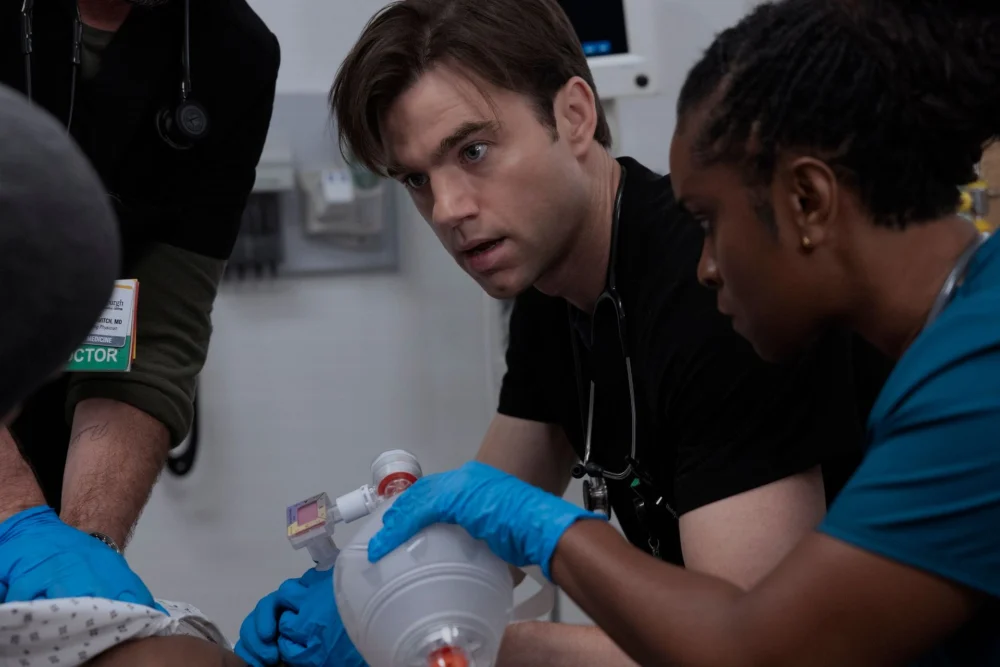
The sophomore slump is a phenomenon as old as television itself, a treacherous valley where even the most promising series can lose their footing after a stellar debut. For the faithful viewers of The Pitt, the HBO Max medical drama that took the industry by storm last year, the first five weeks of the second season felt like a period of nervous anticipation. After a robust season premiere in January, the narrative pace seemed to settle into a slow burn that left some wondering if the series—which secured major victories at the Emmys and Golden Globes for its inaugural run—was beginning to lose its sharp, clinical edge. However, the episode that released this Thursday night, titled "12:00 AM," serves as a thunderous rebuttal to those concerns. It is a timely, heart-wrenching, and masterfully executed reminder that talks of the show’s decline were not only premature but woefully misguided.
To understand why "12:00 AM" works so effectively, one must first grapple with the unique architectural design of The Pitt. Unlike its contemporaries that lean heavily on soap-operatic cliffhangers or high-octane procedural gimmicks, The Pitt thrives on the nature of real-time storytelling. By design, it is not a series built to start each season with a pyrotechnic bang. Instead, the spine of the show lies in the granular details of emergency room cases that develop and crescendo over the course of several "hours." It blends the intellectual rigor of a House-style medical mystery with the visceral, often unceremonious drama of a metropolitan trauma center. In this format, an episode ending rarely feels like a tidy conclusion; more often, it is a sudden pause in a continuous, breathing narrative, eschewing the traditional "button" on a scene in favor of a more realistic, lingering resonance.
The friction some viewers felt in the early weeks of Season 2 likely stems from a shift in consumption habits. Most of The Pitt’s massive audience arrived via word-of-mouth late in the first season or discovered it as a completed binge-watch. For those viewers, the show’s throwback embrace of the weekly release schedule is a new experience. When you can binge five episodes in a sitting, the slow build of Dr. Mohan’s administrative struggles or Dr. Santos’s surgical evolution feels like a propulsive journey. When forced to wait seven days between developments, that same deliberate pacing can create the misguided feeling that "nothing is happening." In reality, the writers have been meticulously stacking the deck, building steam across several intersecting arcs that finally collide in "12:00 AM."
The emotional anchor of this episode is the tragic conclusion of an arc involving Louie, the jovial, perennial mainstay of the Pitt’s waiting room. Louie, a character defined by his chronic alcoholism and his status as a "frequent flyer" in the ER, was introduced early in Season 1 as a bit of local color—the kind of patient who becomes a fixture in the lives of medical professionals. His return in Season 2 served a dual purpose: he was a signifier of the static nature of the inner city, a reminder that some problems are systemic and unchanging, but he also functioned as a facilitator for the evolution of the main cast.
Through the lens of the 18-month time jump between seasons, we see how the staff’s relationship with Louie has shifted. For Whittaker, Louie was a yardstick for professional growth; in their scenes together, we see a doctor who has come into his own, moving past the frantic energy of a resident into a more composed, albeit weary, veteran. Conversely, Louie served as a "living ghost" for Langdon. The weight of their history is heavy; Langdon, who recently returned from a period of exile after being caught pocketing Louie’s prescribed medications to treat his own substance-abuse issues, represents the precarious line between the healer and the afflicted.
The cliffhanger from the previous week—Louie’s collapse—is resolved early in "12:00 AM," adhering to the show’s signature "matter-of-fact brutality." There are no miracle cures or last-second saves here. The cause is lost, and the medical staff is forced to transition from the frantic rhythm of resuscitation to the quiet, somber duties of post-mortem care. It is a loss that reverberates through the entire department, hitting everyone with a personalized sting, save for the "dipshit newbie" whose detachment serves as a foil to the deep-seated empathy of the veteran staff.
In the wake of Louie’s death, the episode excels at using tragedy to galvanize character dynamics that have been simmering for weeks. For five episodes, Dr. Robby—played with a weary, masterful precision by Noah Wyle—has kept Langdon on a layer of "permafrost," maintaining a professional distance that felt like a permanent punishment. In the shared grief of losing Louie, that ice finally begins to thaw. We also see Langdon and Dana commiserating, a moment that finally provides the necessary context for why Dana returned to the high-stress environment she vowed to quit at the end of Season 1. It isn’t just a job for her; it is a community of shared trauma and mutual understanding that cannot be replicated in a private practice or a quieter life.
One of the most affecting sequences in the episode involves Dana teaching a newbie nurse how to clean and dress a body for viewing. It is a scene that epitomizes why The Pitt stands head and shoulders above other medical dramas. It focuses on the small, pivotal details: the careful tucking of a sheet, the cleaning of the skin, and the specific instruction of why it is best to leave one hand above the sheet to make the deceased appear at rest rather than clinical. These moments of "medical competence" are the show’s greatest strength, elevating the act of caregiving to a form of sacred ritual.
However, the technical brilliance of the episode reaches its zenith in the final act. The entire staff convenes for a debrief—a "send-off" for Louie that is sparked by an old photograph found among his meager possessions. The photo, depicting a woman no one recognizes, forces the realization that despite seeing Louie weekly for years, none of them truly knew his story. The revelation comes from Robby, who recalls a quiet, rare night shift where Louie, in a moment of sobriety and vulnerability, shared his past. The woman was his wife, the person who changed his mind about wanting children, only to be killed in a car crash shortly before giving birth.
This retroactive backstory is a masterstroke of narrative writing. It transforms a character who was essentially the emergency room’s "court jester" into a figure of profound, tragic depth. The delivery of this monologue by Noah Wyle, who also directed the episode, is nothing short of bracing. Wyle’s performance—defined by that classic "voice-caught-in-the-throat" quality—is a reminder of why he remains one of the most compelling actors in the genre. His direction of the hour is equally impressive, balancing the claustrophobic tension of the ER with the expansive emotional weight of the character beats. As the credits rolled, it was hard not to feel a sense of pity for Wyle’s future Best Actor competitors at next year’s Emmys; he has set a bar that few will be able to clear.
Beyond the immediate tragedy of Louie, "12:00 AM" continues to weave the complex tapestry of the season’s overarching mysteries. The subplot involving the cancer-stricken woman married to the character played by Taylor Handley (of The O.C. fame) continues to loom in the background, offering a chilling counterpoint to the episode’s main events. There is a sense of impending dread surrounding her arc, a suggestion that the staff’s competence will soon be tested by a situation that defies standard medical ethics.
We are currently just a third of the way through the season, and if The Pitt is reaching this level of emotional and narrative density this early, the "sophomore slump" talks can be officially retired. The show has proven that its real-time format is not a gimmick, but a lens through which we can view the slow, steady accumulation of human experience. It is a series that respects its audience’s intelligence and rewards their patience, offering a thoughtful meditation on life, death, and the fragile connections we forge in the most unlikely of places. "12:00 AM" isn’t just a great episode of television; it is a testament to the enduring power of the medical drama when handled with grace, grit, and an unwavering commitment to the truth of the human condition. For the fans who stuck through the "slow" start: your reward has arrived, and it is spectacular.
