
 By admin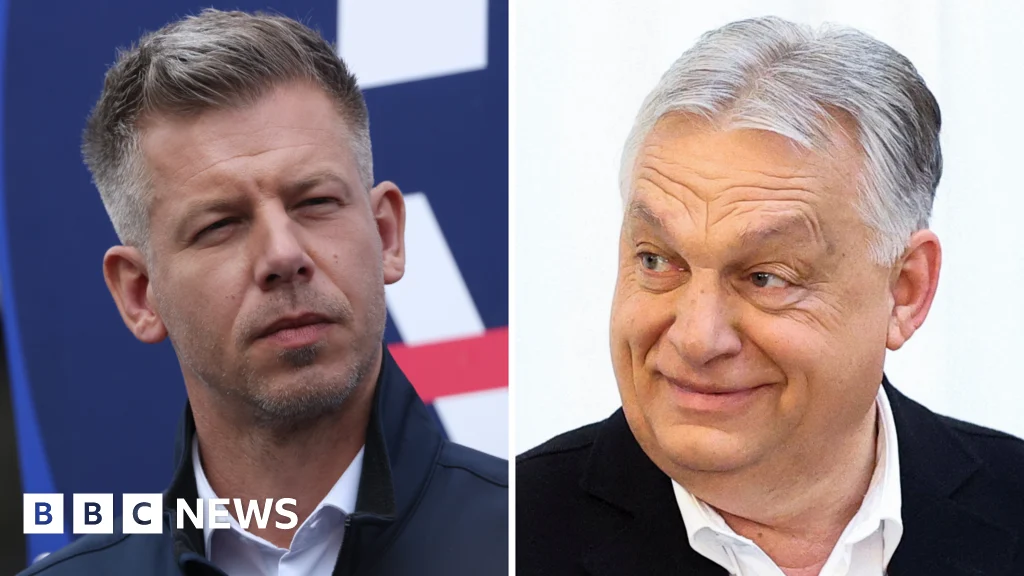
Budapest, Hungary – Hungarians are casting their ballots in a pivotal election that could mark the end of Prime Minister Viktor Orbán’s 16-year grip on power, with potential reverberations extending across Europe, the United States, and Russia. The vote, held under a cloud of heightened political tension and international scrutiny, presents a stark choice for the nation: a continuation of Orbán’s distinctive brand of nationalist populism or a significant shift in foreign policy and domestic governance under challenger Péter Magyar.
Early indications suggest a significant surge in voter turnout. After just five hours of polling, a record 37.98% of the electorate had participated, a substantial 12-point increase compared to the same period four years ago. This heightened engagement signals a deeply mobilized populace, eager to have their say in shaping Hungary’s future. Voting is scheduled to continue until 19:00 local time (17:00 GMT), with results expected to begin filtering through as the evening progresses.
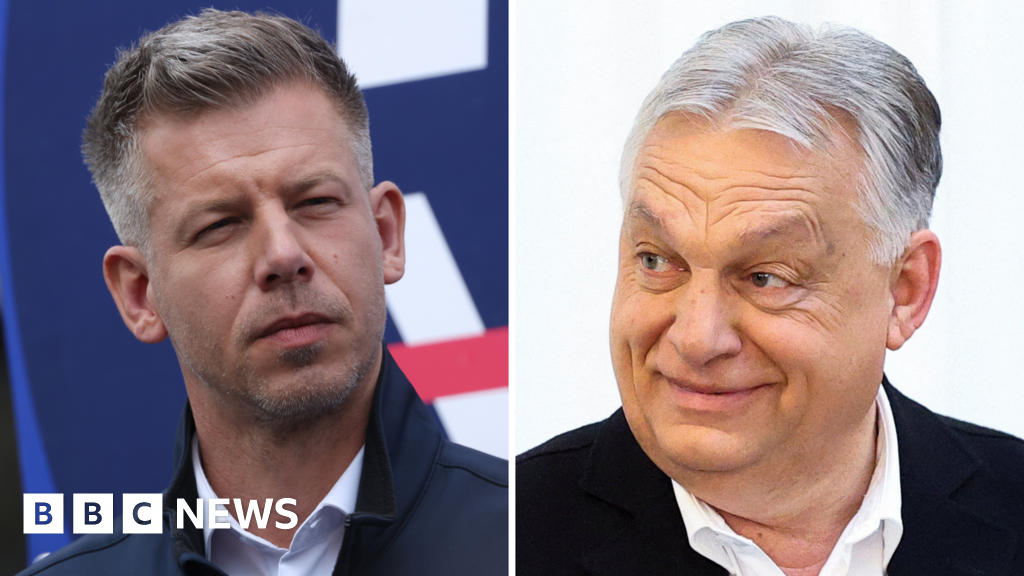
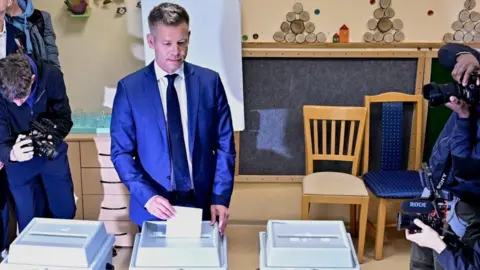
The leading contender against the long-serving Orbán is Péter Magyar, a former insider who has galvanized opposition by forming the grassroots Tisza party after a high-profile split from the ruling Fidesz party. After casting his vote in Budapest, Magyar expressed his commitment to bolstering Hungary’s standing within the European Union and NATO, while simultaneously pledging a robust crackdown on corruption. His message of change has resonated with a significant portion of the electorate, particularly younger voters and those disillusioned with the current administration.
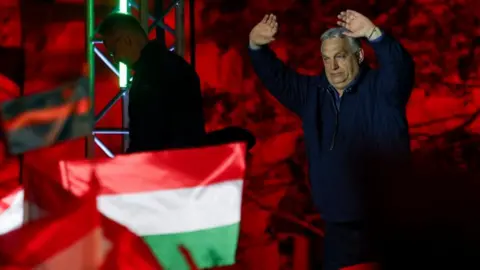
Prime Minister Orbán, projecting an air of confident defiance, told reporters after casting his ballot, "I am here to win." When pressed on whether he had underestimated his challenger, he responded with characteristic pragmatism, "I don’t underestimate anyone." Orbán has consistently framed the election as a battle against external forces, particularly targeting Brussels and Ukraine. He reiterated his core campaign themes on Saturday night, stating, "We don’t give our children, we don’t give our weapons and we don’t give our money," a sentiment that drew enthusiastic chants of "we won’t let that happen" from his supporters.
The election is taking place against a backdrop of increasing international concern over Hungary’s democratic trajectory under Orbán. The European Parliament has previously characterized Hungary’s governance under Fidesz as a "hybrid regime of electoral autocracy." Magyar and his Tisza party are campaigning on a platform of a "change of regime," advocating for a fundamental reset of Hungary’s relationship with the EU and a departure from its close ties with Russia. Magyar’s appeal has been evident in the substantial crowds that have turned out for his rallies, notably attracting larger numbers in the second city, Debrecen, than Orbán did in the capital.
However, Orbán retains a significant international ally in former US President Donald Trump, who has actively encouraged Hungarians to vote for his "true friend, fighter, and WINNER." This endorsement highlights the ideological alignment between the two leaders and underscores the broader geopolitical implications of the Hungarian election.
Economic headwinds and a series of domestic scandals have also buffeted Orbán’s government. Despite his consistent electoral successes, a fifth consecutive victory is not a foregone conclusion. The Hungarian economy has faced challenges, and recent revelations, such as Foreign Minister Péter Szijjártó’s admitted regular communications with his Russian counterpart before and after EU summits, have drawn criticism.
Hungary’s position within both the EU and NATO has been a point of contention, particularly regarding its stance on the war in Ukraine. Orbán has consistently vetoed substantial EU aid packages to Ukraine, including approximately €90 billion (£78 billion) in financial assistance, a move that has significantly strained relations with his European partners.
Polls consistently indicate a strong performance for Magyar’s Tisza party. Róbert László, an election specialist at the Budapest think tank Political Capital, notes that Hungary’s three most reliable pollsters are all forecasting a "huge lead" for Tisza. While it was anticipated that Fidesz might narrow this gap as the election approached, László observes that this has not materialized. Magyar has urged voters to secure not just an absolute majority of 100 seats in the 199-seat parliament, but a two-thirds super-majority. This threshold is crucial for him to reverse many of the constitutional changes implemented by Fidesz, which critics argue have eroded the independence of the judiciary, compromised media freedom, and impacted various aspects of public life. Hungary consistently ranks poorly on Transparency International’s Corruption Perceptions Index within the EU.
"The most likely scenario is that Tisza will have a comfortable, absolute majority, but not a two-thirds majority," László stated. "But you can’t exclude a two-thirds majority either." He also points to a recent trend of individuals from the police, military, and business sectors speaking out against Fidesz, which he interprets as a sign of a turning public mood against Orbán.
Hungary’s electoral system is complex, and Viktor Orbán himself has acknowledged that it has historically benefited his party. One of the few pollsters suggesting a potential Fidesz victory is the Nézőpont Institute. Its head, Ágoston Mráz, highlights 22 "battleground seats" out of the total 106 constituencies. He posits that if Fidesz secures these seats, a victory could still be within reach. However, with 5% of the votes in these crucial constituencies not being counted immediately, the final outcome could be delayed for several days. Mráz also suggests that Fidesz voters might be less vocal and demonstrative than their Tisza counterparts, describing them as "hidden voters" who are less inclined to engage with pollsters, with a higher percentage of blue-collar voters in the Fidesz camp compared to Tisza.
For Magyar to achieve a decisive victory, Tisza must win in several key towns and cities, including Győr, Hungary’s sixth-largest city, located near the Slovak border in the northwest. Orbán himself drew attention to Győr during the campaign, losing his temper at booing protesters and accusing them of "pushing Ukrainian interests." In contrast, Magyar held a large rally in Győr’s central square the previous Thursday, underscoring the city’s importance as a battleground.
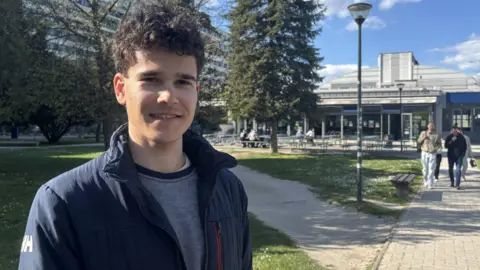
Gergely Németh, a 20-year-old student, explained his decision to vote with his mother, highlighting the financial struggles his family has faced due to government policies. While Orbán’s pro-family policies have offered tax exemptions for mothers with two or more children, Németh suggested that not everyone has benefited equally. Like many first-time voters interviewed by the BBC, Németh’s primary motivation is the ousting of Fidesz. "I think it’s not the man, Péter Magyar, who’s most important. More important is that someone changes these politicians in the parliament," he stated.
Győr has seen an independent mayor and deputy mayor elected in the past two years, though Fidesz still holds a majority on the local council. Deputy Mayor Roland Kósa expressed frustration with what he described as Fidesz’s arrogance and dismissiveness towards the new administration. "When we got elected, what we faced even before and after is that Fidesz basically looked through us and said and thought we do not exist – this is still their city, this is still their country," Kósa remarked. He believes that the most effective strategy to challenge Fidesz has been to move beyond traditional party politics.
Although Magyar’s political career began as a center-right conservative within Orbán’s Fidesz, his dramatic break from the party two years ago has allowed him to attract a broad spectrum of voters. This has enabled individuals who may not personally favor him to support him as the leader of a wider, more inclusive movement. Magyar deliberately chose not to form alliances with existing opposition parties, opting instead to build his Tisza party from the ground up by establishing "Tisza-islands" – networks of activists often situated within Fidesz strongholds. This strategy mirrors Orbán’s own approach during his years in opposition when he formed "citizen circles." These "islands" have coalesced into a national movement and form the core of his election campaign.
Magyar’s candidates are not career politicians but rather professionals such as surgeons, teachers, and business figures with deep understanding of their local communities and the pressing issues within Hungarian healthcare and education. This election campaign has unfolded unconventionally, eschewing televised debates for intense engagement on social media and in town squares.
Publicly, Fidesz officials express confidence in victory. However, Balázs Orbán, a political director within the party, has suggested that if Fidesz loses, the opposition might not accept the results. Ágoston Mráz also voiced concerns that Tisza voters might reject an Orbán victory and allege election fraud, stating, "I’m really afraid of getting violence on the streets because tension is in the air. I hope very much that every politician will be smart enough to help voters avoid violence on the street."

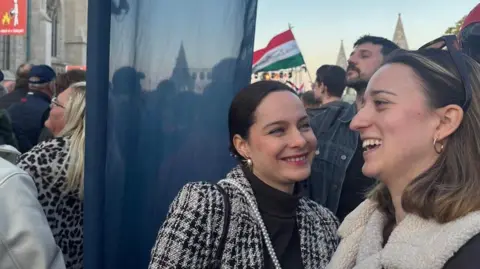
Despite the palpable tension, the atmosphere at an anti-Fidesz concert in Heroes’ Square on Friday night, attended by at least 100,000 people, was peaceful. Magyar himself cautioned attendees against falling for any provocations, emphasizing the need for calm and resolve. The outcome of this election is poised to have significant implications not only for Hungary’s domestic future but also for its role within the European Union, its commitment to NATO, and its evolving relationship with Russia, with potential ripples felt as far as Washington.
