
 By Lina Irawan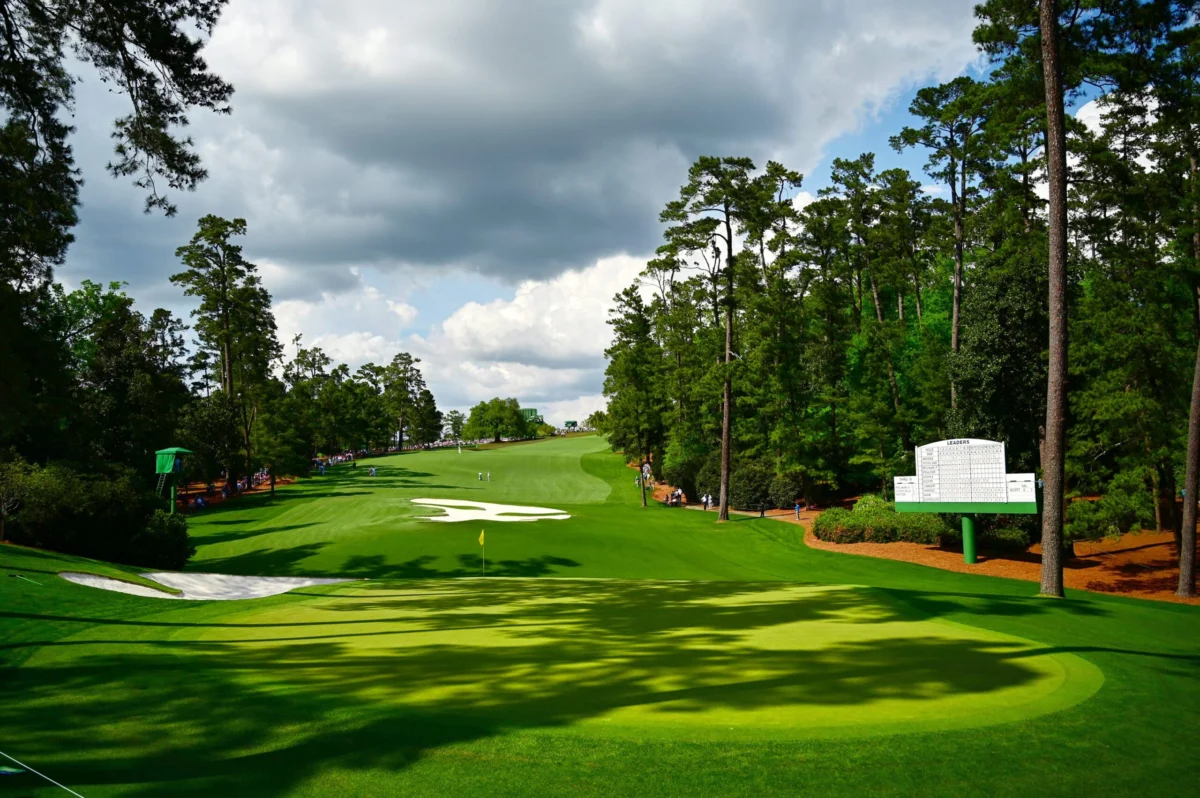
In a tale that epitomizes the clash between corporate ambition and personal conviction, Elizabeth Thacker, a spirited 93-year-old resident of Augusta, Georgia, steadfastly refused to sell her modest home to the sprawling Augusta National Golf Club until her passing in July of last year. Her three-bedroom, single-story house, built in 1956 on a 0.67-acre lot at 1112 Stanley Road, stood as an extraordinary anomaly—a bastion of private life nestled less than a mile from the revered grounds of the Masters Tournament, just outside its north gate. This quiet defiance, spanning decades and rebuffing numerous expansion overtures from one of golf’s most powerful institutions, has cemented her legacy as a symbol of unwavering resolve in the face of immense pressure.
For many years, the Thacker residence was more than just a house; it was a home imbued with generations of memories. Elizabeth and her husband, Herman Thacker, who passed away in 2019 at the age of 86, raised their children within its walls. The creaks of the floorboards, the scent of home-cooked meals, and the laughter echoing through its rooms were all woven into the fabric of their lives. Their grandson, professional golfer Scott Brown, also spent formative years in the Stanley Road home, undoubtedly dreaming of the legendary course just beyond the tree line. The Thackers’ connection to the property was deep-rooted, far surpassing any monetary valuation. As Herman Thacker famously told NJ.com in 2017, succinctly articulating their stance, "Money ain’t everything." This simple declaration became the family’s mantra, a testament to the intangible value they placed on their homestead.
The golf club, home to the iconic Masters Tournament since 1934, has long sought to expand its footprint, driven by an insatiable desire to enhance the spectator experience, streamline operations, and reinforce its exclusive aura. Over the past two decades, Augusta National has embarked on what some observers have dubbed a "land grab," spending an estimated $280 million to acquire surrounding properties, according to Golf.com, with The Wall Street Journal reporting figures exceeding $200 million by 2019. These acquisitions are often conducted discreetly through limited liability companies bearing innocuous names like BC Acquisition Co. and WSQ, masking the true buyer’s identity. The strategy is clear: consolidate control over the immediate vicinity, transform residential streets into vast parking lots, build state-of-the-art practice facilities, and create buffer zones that further isolate the club from the outside world.
Yet, amidst this relentless march of expansion, the Thacker home remained a steadfast holdout. Property records indicate the home was last valued at $338,733 in 2025, a figure already well above Augusta’s median listing price of $240,000. However, the offers from Augusta National were reportedly far more substantial, reaching into the multi-million dollar range. Elizabeth Thacker’s daughter, Robin Thacker Rinder, confirmed to Fox Business on April 9 that the family had received multiple offers significantly exceeding the property’s estimated value. For context, a neighbor, whose three-bedroom ranch home was an 11-minute walk from the Thackers’, sold her property to the club for $1.1 million in 2018. Ironically, the Thackers themselves had previously sold another home they owned to Augusta National for $1.2 million, demonstrating a willingness to engage in transactions when the emotional ties were not as profound. This highlights the unique, deeply personal connection they had to their Stanley Road residence, distinguishing it from a mere asset.
The refusal of Elizabeth Thacker and her husband Herman transcended a simple business negotiation; it became a philosophical stand. In an era where nearly everything seems to have a price, their decision to prioritize sentiment, history, and the comfort of familiarity over exorbitant financial gain resonated deeply. It served as a poignant reminder that not all value can be quantified in dollars and cents. Their home was the bedrock of their family life, a witness to countless milestones, and a sanctuary from the increasingly commercialized world around them. To abandon it, for them, would have been to sever a vital limb of their shared history.
The Masters Tournament itself is a global spectacle, drawing millions of viewers and golf enthusiasts annually. Its champions—legends like Tiger Woods, Arnold Palmer, and Jack Nicklaus—are etched into sporting lore, and the coveted green jacket is one of the most recognized symbols of athletic achievement. Last year, Northern Irish golfer Rory McIlroy famously claimed the iconic green blazer, adding another chapter to the tournament’s rich history. The club’s meticulously manicured fairways, blooming azaleas, and serene ponds project an image of perfection and tranquility, an image that the club meticulously maintains and expands. The expansion efforts, therefore, are not merely about acquiring land; they are about curating the ultimate, unblemished experience for patrons and players alike, ensuring nothing detracts from the mystique of Augusta National.
This drive for perfection has seen entire residential blocks vanish, replaced by pristine turf or expansive, unpaved parking lots that emerge like temporary cities during tournament week. Steps away from the Thacker home, such a parking area now greets visitors entering near the north gate, a stark visual contrast to the enduring family dwelling. During the Masters, thousands of attendees walk right past the Thacker home, oblivious to the decades-long battle of wills that played out on that very street, often heading towards the clubhouse and tournament practice area that now occupy what were once other homes. The Thacker home, therefore, became an unwitting monument to resistance, a quiet defiance standing against the tide of progress and profit.
Elizabeth Thacker’s passing last July marked a new chapter in this saga. The home at 1112 Stanley Road remains, according to property records, in her name. Her daughter, Robin Thacker Rinder, has now taken up residence there, continuing the family’s stewardship of the property. "I’m taking good care of it," Rinder told Fox Business, echoing the sentiment of preservation that defined her parents’ decision. Interestingly, Rinder noted that Augusta National has not approached the family with new offers since her mother’s death. This pause could signify a strategic recalculation on the club’s part or perhaps a temporary halt in their relentless acquisition efforts.
However, Robin Thacker Rinder’s perspective introduces a slightly different nuance to the family’s future stance. While deeply committed to maintaining the home, she stated she would consider selling "if the price is right." This pragmatic acknowledgment hints at the immense financial leverage Augusta National holds, even as it respects the emotional weight of the property. The question now becomes: what constitutes "the right price" for a property so steeped in personal history and public legend? Is it a figure that merely reflects market value plus a premium for inconvenience, or does it need to account for the decades of steadfast refusal and the inherent legacy of defiance?
The story of Elizabeth Thacker is more than a local news item; it’s a microcosm of broader societal tensions. It speaks to the power dynamics between individual property rights and corporate expansion, the sentimental value of home versus the allure of immense wealth, and the quiet resilience of ordinary people in the face of powerful institutions. While Augusta National continues its quest for ultimate control over its surroundings, the enduring presence of the Thacker home, even after Elizabeth’s passing, serves as a potent reminder that some things, indeed, cannot be bought. It’s a testament to the enduring spirit of those who prioritize heritage and personal connection over the relentless march of progress, leaving behind a legacy that resonates far beyond the manicured greens of the Masters. The humble house on Stanley Road, now cared for by the next generation, continues its silent vigil, an extraordinary landmark in its own right.
