
 By Titik Puspa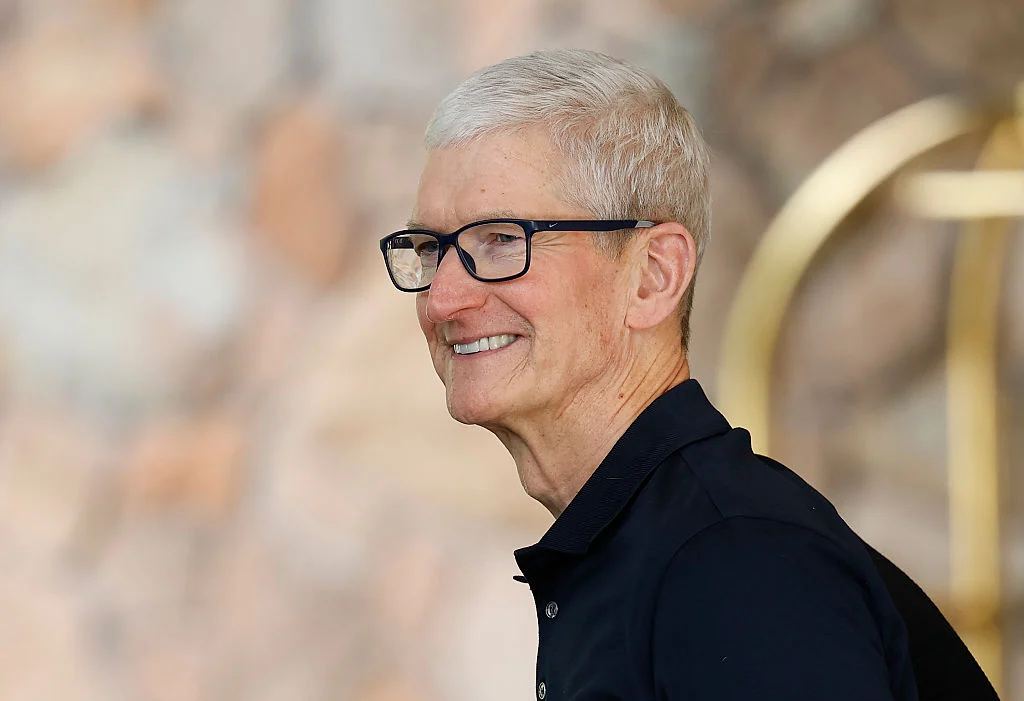
The Cupertino-based tech giant, Apple, is reportedly gearing up to enter the burgeoning smart glasses market, with an anticipated product launch slated for 2027. This ambitious move, according to insights from Bloomberg’s Mark Gurman, could see an initial unveiling of the new wearable technology as early as the end of the current year, 2026. Gurman, a consistent and respected voice in reporting on Apple’s future product roadmap, has been meticulously tracking the evolution of the company’s smart glasses strategy, and his latest disclosures provide a more granular look at the potential designs and functionalities of this next-generation device.
The forthcoming smart glasses from Apple are rumored to be available in four distinct frame designs, offering consumers a range of aesthetic choices. These designs reportedly encompass a substantial rectangular frame, a more streamlined, slimmer rectangular option that bears a resemblance to the eyewear frequently sported by Apple CEO Tim Cook, a larger, more pronounced oval or circular frame, and a more understated, smaller oval or circular iteration. This diversification in design suggests Apple’s intention to cater to a broad spectrum of user preferences, aiming to integrate the technology seamlessly into everyday fashion. Furthermore, the company is said to be exploring a palette of color options for these frames, with black, ocean blue, and light brown being among the considered choices, further enhancing their appeal as a fashion accessory.
This strategic pivot towards smart glasses signifies a potential recalibration of Apple’s augmented and mixed reality ambitions. The company’s initial grand vision for a diverse array of mixed and augmented reality devices has encountered significant hurdles, including product development delays and a less-than-stellar market reception for its flagship spatial computing headset, the Apple Vision Pro. The Vision Pro, launched to considerable fanfare, has reportedly seen its production scaled back due to disappointing demand, underscoring the challenges inherent in introducing entirely new product categories to a discerning consumer base. The smart glasses, in this context, appear to represent a more pragmatic and perhaps more accessible entry point into the wearable AR/VR landscape.
In terms of functionality, the upcoming Apple smart glasses are anticipated to adopt a design philosophy that draws parallels with Meta’s recently launched Ray-Ban smart glasses. This means the devices are unlikely to feature integrated displays directly projecting information onto the user’s field of vision. Instead, their primary focus will be on augmenting reality through the capture of visual and auditory data, and seamless integration with the broader Apple ecosystem. Users will reportedly be able to capture photos and videos, with Apple allegedly incorporating oval-shaped camera lenses into the design for this purpose. Beyond photography and videography, the glasses are expected to enable users to answer phone calls, play music, and crucially, interact with what is described as a long-promised upgrade to Siri, Apple’s virtual assistant.
The integration of an enhanced Siri is a critical component of Apple’s smart glasses strategy. For years, the capabilities of Siri have been a subject of discussion and often, criticism, with users and industry observers alike anticipating a significant leap forward in its intelligence and responsiveness. A revamped Siri, capable of more natural language processing, contextual understanding, and proactive assistance, would be instrumental in making the smart glasses a truly useful and intuitive tool. This upgrade could transform the glasses from a mere camera and communication device into a powerful, context-aware personal assistant, capable of providing information, managing tasks, and facilitating interactions with the digital world in a hands-free, heads-up manner.
The development of smart glasses represents a significant investment and strategic bet for Apple. The wearable technology market, while growing, is also intensely competitive, with established players like Meta and emerging startups vying for market share. Apple’s entry, however, is expected to carry considerable weight, leveraging its vast resources, established brand loyalty, and a deeply integrated ecosystem of hardware, software, and services. The success of these smart glasses could hinge on several factors: their ability to offer compelling and practical use cases that justify their price point, their seamless integration with existing Apple devices like iPhones and Apple Watches, and their ability to address privacy concerns associated with always-on cameras and data collection.
The broader implications of Apple’s smart glasses extend beyond immediate consumer adoption. They could herald a new era of computing, where digital information is more seamlessly interwoven with the physical world. The potential for applications in areas such as navigation, real-time translation, contextual information retrieval, and enhanced communication is vast. For professionals, such devices could offer new ways to access data, collaborate, and perform complex tasks in the field. For consumers, they could redefine social interactions, entertainment, and personal productivity.

However, the path to widespread adoption of smart glasses is fraught with challenges. Historically, wearable technology has struggled to find its killer application, with many devices proving to be niche or failing to capture the imagination of the mass market. Privacy concerns are also paramount. The presence of cameras on wearable devices raises questions about surveillance, data security, and user consent. Apple, with its strong emphasis on user privacy, will need to navigate these concerns carefully, implementing robust privacy controls and transparent data handling practices.
The reported design choices also suggest a strategic emphasis on form factor and discretion. The inclusion of frames that resemble conventional eyeglasses, rather than overtly futuristic or bulky devices, indicates a desire to minimize the "glasshole" effect – the social stigma sometimes associated with early augmented reality wearables. This focus on aesthetic integration is crucial for achieving mainstream acceptance. By offering a variety of styles and colors, Apple aims to make its smart glasses a desirable fashion statement as well as a functional technology.
The market for smart glasses is still in its nascent stages, but it holds immense potential. Companies like Google, with its past explorations into Google Glass, and Snap, with its Spectacles, have paved the way, encountering both successes and setbacks. Meta’s recent partnership with Ray-Ban has seen a more measured approach, focusing on integrating camera and audio features into stylish frames. Apple’s entry is expected to significantly accelerate the development and adoption of this technology, potentially setting new standards for performance, design, and user experience.
The success of the Apple Vision Pro, despite its initial lukewarm reception, has provided valuable insights into the challenges and opportunities in the spatial computing domain. The lessons learned from its development and market introduction will undoubtedly inform the strategy for the smart glasses. It’s possible that the smart glasses will serve as a more accessible gateway to Apple’s AR/VR ecosystem, gradually educating consumers about the potential of augmented reality before they commit to more immersive and expensive devices.
The rumored inclusion of an upgraded Siri is particularly noteworthy. The effectiveness of any smart device is heavily reliant on its intelligent assistant. If Apple can deliver a Siri that is genuinely helpful, intuitive, and capable of understanding complex commands and context, it could be a game-changer for the smart glasses. This would allow users to interact with their environment and digital information without the need for constant manual input, making the glasses a truly seamless extension of themselves.
The 2027 launch date, while seemingly distant, is a realistic timeframe for a company like Apple to refine its technology, establish manufacturing processes, and build out its software ecosystem. The potential unveiling at the end of 2026 would serve as an important early signal to developers, partners, and consumers, allowing for anticipation and preparation. This phased approach is typical of Apple’s product launches, ensuring a well-executed rollout.
In conclusion, Apple’s impending foray into the smart glasses market, as detailed by Mark Gurman, represents a significant development in wearable technology. With a focus on diverse designs, practical functionalities, and a potentially revolutionary upgrade to Siri, Apple aims to carve out a substantial presence in this emerging sector. While challenges related to consumer adoption, privacy, and market competition remain, Apple’s track record and resources suggest that its smart glasses could play a pivotal role in shaping the future of personal technology, blurring the lines between the digital and physical worlds in increasingly sophisticated ways. The coming years will be crucial in observing how Apple navigates this exciting, yet complex, frontier.
