
 By admin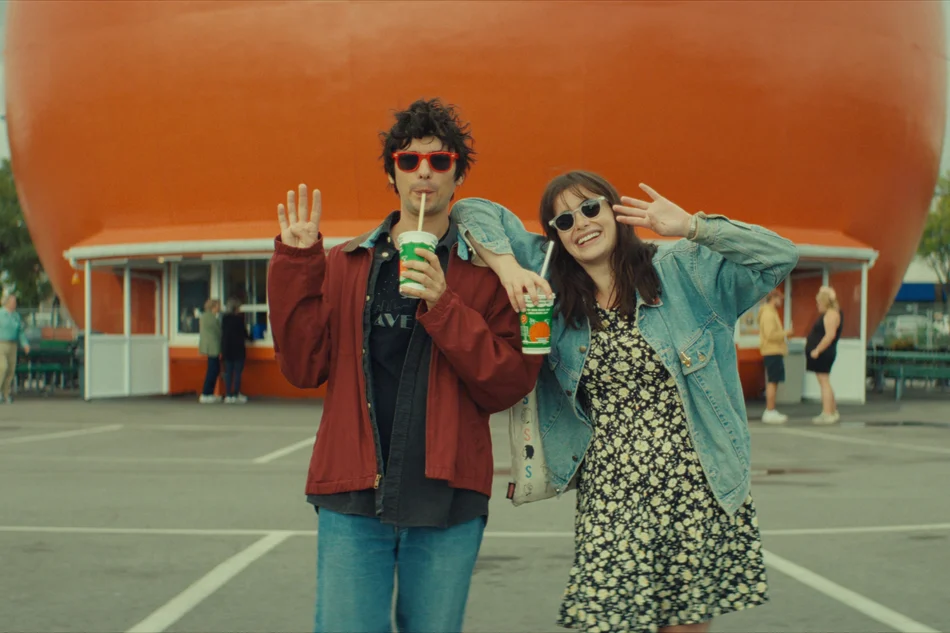
At the tender age of 27, filmmaker Chandler Levack began wrestling with a story that refused to leave her mind, a narrative born from the vibrant, yet distant, Montreal indie music scene of her youth. Now, twelve years later, at 39, with a critically acclaimed debut feature under her belt, Levack is finally introducing the world to the protagonist who has occupied her creative space for over a decade. Her most personal work yet, "Mile End Kicks," a semi-autobiographical film set to open in theaters on April 17th, delves into the complexities of artistic aspiration, gender dynamics in creative fields, and the profound ache of navigating the periphery.
The film stars Barbie Ferreira as Grace, a 24-year-old music critic who trades the familiar landscape of Toronto for a sun-drenched, bohemian summer in Montreal. Ostensibly, Grace is there to research a book on Alanis Morissette’s seminal album, "Jagged Little Pill." However, her true motivations are far more nuanced and deeply personal, revolving around a complex interplay of seeking approval, a longing for belonging, and the specific, often unspoken, challenges faced by women in male-dominated creative industries.
Levack, speaking with Variety, describes the arduous yet cathartic process of writing the script: "The longer I wrote the script — the more drafts I did, the farther I got — the more self-flagellating the movie became. It got more complex and way more personal." This introspection is vividly captured in Grace’s journey, as she grapples with questions that lie at the heart of the film: "Why do women date guys in bands? Is it because we want to be a guy in a band?" This poignant line, Levack reveals, emerged from a place of long-denied self-awareness.
"There’s this thing where so much of my life has been defined by needing male approval and validation," Levack confesses. "I’d been denying for so long what that experience was actually like for me — how much that strange sense of tokenization, of desperately parroting everyone else’s opinions about music and writing and culture, had shaped what I think the meaning of art even is. Admitting it was a dark secret I didn’t want to acknowledge." This profound reckoning culminates in a scene that Levack identifies as the most emotionally taxing to shoot: Grace standing on the outside of a semi-circle of men, hovering near a cubicle, as they engage in animated discussions about music. "Something inside of me just completely broke," Levack recounts. "I went right back to being 22. I had been denying for so long how much that experience had actually cost me."
The choice of Alanis Morissette as a thematic anchor for "Mile End Kicks" is deeply rooted in Levack’s personal history. She first encountered "Jagged Little Pill" at the age of eight, listening in her mother’s minivan. While the lyrical content of songs like "You Oughta Know" was beyond her comprehension at that young age, she felt an uncanny prescience, as if the music was foretelling her future. As Levack delved deeper into Morissette’s story, the parallels between the artist’s journey and Grace’s own experiences became increasingly striking. "I found archival footage where her music producer is patting her on the head," Levack notes. "We’d shot a scene just a few days before where Jay Baruchel’s character does the exact same thing to Grace. Exactly the same way." This resonant connection solidified Morissette’s role as a crucial through-line for the film, embodying themes of artistic expression and navigating a male-dominated industry.
The creative demands of "Mile End Kicks" were further compounded by Levack’s simultaneous work on "Roommates," a Happy Madison comedy starring Sadie Sandler and Chloe East. The opportunity to direct this project arose serendipitously after Adam Sandler witnessed Levack’s 2022 debut, "I Like Movies," and subsequently contacted her agents. The whirlwind nature of this collaboration is remarkable: the day after reading the script, Sandler personally called Levack, and within two days, she was en route to Los Angeles. "He truly believed in me," Levack states, expressing her awe at Sandler’s faith. "I don’t know how you look at ‘I Like Movies,’ a film that literally doesn’t even have lights, and think that person is capable of directing a $30 million feature." This experience highlights Sandler’s distinctive approach to nurturing talent and his commitment to empowering emerging filmmakers.
Both "Roommates" and "Mile End Kicks" are set to debut on the same day, with "Roommates" available for streaming on Netflix and "Mile End Kicks" gracing cinema screens. In a candid conversation with Variety, Levack elaborates on the genesis of "Mile End Kicks," the significance of Alanis Morissette as a narrative through-line, and the invaluable lessons learned from her collaboration with Adam Sandler.
The genesis of the "Mile End Kicks" script, Levack explains, stemmed from a decade-long desire to create a work that authentically reflected her own voice as a writer and director. Having previously worked as a music and film critic and directed music videos, she felt a void in her portfolio, a lack of projects that resonated with her personal artistic sensibilities, particularly her affinity for rom-coms and hangout movies. "So it was me trying to do my take on ‘Reality Bites,’ ‘Dazed and Confused,’ ‘Almost Famous,’" she states, citing these films as foundational influences. The vibrant summer of 2011 in Montreal, a period marked by the city’s thriving music scene, provided the perfect backdrop for this cinematic exploration. Levack meticulously layered her personal experiences onto the framework of a rom-com screenplay, a process that, as she describes, led to an increasingly introspective and emotionally charged narrative with each revision.
The delicate balance between excavating personal memory and translating it into cinematic language was a central challenge. Levack recounts a recent screening in New York where friends from her college days in Montreal remarked on the uncanny resemblance of the film to their shared experiences. "It was like an uncanny valley — ‘It’s kind of bizarre, like seeing Barbie, she has your walk, and she’s walking into the dépanneur where we all used to get beer,’" they observed. This reaction underscores the power of filmmaking to evoke a sense of lived reality while simultaneously transforming it into something new. Levack emphasizes the filmmaker’s role in this process: "you investigate your own memories, but you also ask, what’s actually cinematic about this? What makes this more painful and truthful? Is this interesting just to me, or is there something of real cinematic value here?"
Alanis Morissette’s omnipresence in "Mile End Kicks" is more than just a narrative device; it’s a deeply personal connection. "Jagged Little Pill" served as Levack’s introduction to the raw emotional power of music. The album’s resonance, even at a young age, felt prophetic, hinting at the complexities of adulthood and artistic expression. As Levack researched Morissette’s trajectory, the parallels to Grace’s own burgeoning career and personal struggles became increasingly apparent. The discovery of archival footage depicting Morissette being patronized by her producer mirrored a scene Levack had already filmed with Jay Baruchel’s character, reinforcing the idea of Morissette as a guiding force, a symbolic embodiment of the challenges and triumphs of women in the music industry.
The comparison to Cameron Crowe’s "Almost Famous" is one that Levack embraces wholeheartedly, considering it a cornerstone of her artistic development. "That movie is like the most foundational piece of art in my life," she declares. "I became a music critic because of ‘Almost Famous.’ I think I became a filmmaker because of ‘Almost Famous.’ I think I became a human being because of ‘Almost Famous.’ It means everything to me." This profound admiration highlights the film’s lasting impact on her creative vision and her understanding of storytelling.
The pivotal line uttered by Grace, "Why do women date guys in bands? Is it because we want to be a guy in a band?" encapsulates a central theme of the film: gender envy and the pervasive need for male validation within creative spaces. Levack elaborates on this sentiment, describing it as a long-held denial of the true impact of seeking external approval. "I’d been, like, denying for so long in my life what that experience was actually like for me," she admits. "How much I thought I was a peer, just like everybody else — equals — but how much that strange sense of tokenization, of desperately parroting everyone else’s opinions and feelings and instincts about music and writing and culture, had shaped what I think the meaning of art even is." This admission speaks to the arduous process of self-discovery and the internal struggle to break free from ingrained patterns of seeking validation.
The emotional weight of the film is most acutely felt in the "semi-circle scene," where Grace finds herself on the periphery of a male-dominated conversation about music. Levack describes this scene as a deeply personal and cathartic experience. "I was completely fine shooting every other scene in the movie. And then we started shooting that one, and something inside of me just completely broke," she shares. "I went right back to being 22. I had been denying for so long how much that experience had actually cost me." This moment serves as a powerful illustration of the lingering impact of feeling excluded and undervalued.
Levack’s preference for "messy protagonists" stems from a rejection of idealized cinematic characters. She advocates for characters who are flawed, complex, and relatable in their imperfections. "I don’t like the idea that a good protagonist has to be a blank slate that any audience member can identify with — somebody who’s only charming and nice, no flaws, engineered in a lab to be likable," she argues. "Those kinds of protagonists don’t deserve a movie. They’re already healed. Why do we want to go on a hero’s journey with them?" This philosophy underscores her belief in the power of authentic representation and the exploration of the human condition in all its messy, unpredictable glory.
The casting of Barbie Ferreira as Grace was a serendipitous discovery. Levack had long admired Ferreira’s work, particularly her performance in "Euphoria," recognizing her as a formidable talent and a natural leading lady. The breakthrough came when Levack’s editor, upon seeing Ferreira in the independent film "Bob Trevino Likes It," immediately texted, "Chandler, you have to see this movie. I think this is Grace. We found her. Don’t talk to anybody else." The editor’s conviction was immediate, recognizing Ferreira’s profound emotional depth in a scene where she is hysterically weeping. Levack, deeply moved after watching the film, describes a moment where Ferreira’s voice "just catches in her throat," prompting Levack to pause the movie and weep for ten minutes. A mutual connection facilitated their meeting, and within an hour-long conversation, it became evident to both that Ferreira was the perfect embodiment of Grace.
Reflecting on Grace’s trajectory beyond the film, Levack offers a realistic, albeit slightly humorous, assessment. "Realistically? Grace is probably managing the social media page for, like, a home goods company right now. She’s probably not working in journalism anymore," she speculates. However, she also expresses a desire for a sequel, envisioning a winter-set continuation that explores the characters’ lives six months later. Ultimately, Levack hopes Grace continues to embrace vulnerability, maintain an open heart, and navigate life’s inevitable mistakes. The act of filmmaking, for Levack, is a means of understanding different facets of her life, and she expresses a keen interest in exploring her thirties in a future project.
The extraordinary feat of editing "Mile End Kicks" while simultaneously directing "Roommates" for Happy Madison is a testament to Levack’s directorial prowess and adaptability. The opportunity arose from a conversation with her agents at WME, who inquired about her dream collaborators. Her unequivocal answer was Adam Sandler. The revelation that Sandler had seen and admired "I Like Movies" was a pivotal moment. The ensuing collaboration was remarkably swift: after reading the script, Levack received a call from Sandler the following day, and within two days, she was on a flight to Los Angeles. Her mother’s comparison of the experience to a "Pretty Woman" moment, while perhaps a touch hyperbolic, captures the fairy-tale-like nature of this career-defining opportunity.
Working with Adam Sandler proved to be an invaluable educational experience. "He just really helped me recognize my potential as a filmmaker," Levack states. "He truly believed in me — I don’t know how you look at ‘I Like Movies,’ a film that literally doesn’t even have lights, and think that person is capable of directing a $30 million feature." Sandler’s collaborative spirit and unwavering trust in his creative partners are, according to Levack, what make him such an exceptional producer. The experience provided her with "the best comedy education I’ve ever had in my life." Levack also commends Happy Madison’s commitment to fostering female talent, citing the studio’s involvement in Sadie Sandler’s film and an upcoming project by Julie Hart. This dedication to telling stories that resonate with young women, and to showcasing their perspectives, is, in Levack’s view, "amazing."
