
 By admin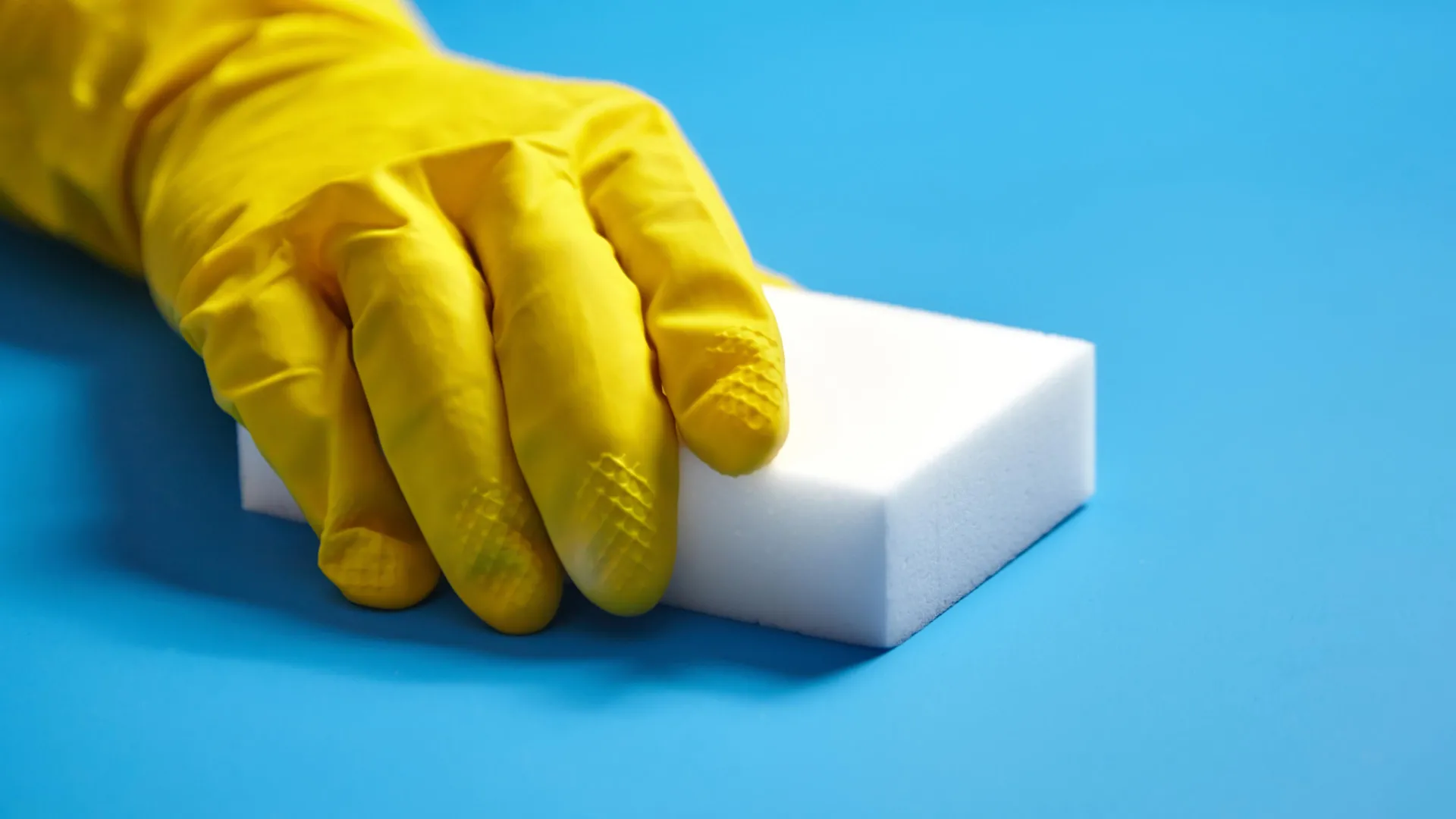
This revelation, detailed in a groundbreaking study published in ACS Environmental Science & Technology, casts a new light on a ubiquitous household item. The research suggests that melamine sponges could be a surprisingly large and previously underestimated source of microplastic pollution. Researchers estimate that an astonishing figure – more than a trillion microplastic fibers – may be released worldwide every single month as people utilize and ultimately discard these everyday cleaning tools. This finding underscores the complex and often hidden ways in which modern consumer products can impact the planet, challenging our perceptions of seemingly innocuous items.
The Ingenuity Behind Melamine Sponges: Why They Are So Effective
To understand the problem, one must first appreciate the unique chemistry and structure that makes melamine sponges so effective. These sponges are not made from conventional foam; instead, they are crafted from a material called poly(melamine-formaldehyde) polymer. This thermoset plastic, once cured, forms a remarkably rigid, web-like structure of interconnected plastic strands, creating an open-cell foam. Unlike a typical soft, squishy kitchen sponge, the internal architecture of a melamine sponge is microscopically abrasive.
Despite feeling lightweight and somewhat soft to the touch, this intricate internal structure acts like extremely fine-grade sandpaper at a microscopic level. When a melamine sponge is wetted and rubbed against a surface, these tiny, hard polymer strands – each with sharp, angular edges – physically scrape away dirt, grime, and even ingrained marks. This mechanical action is what allows the sponge to "erase" stains without the need for additional soaps, detergents, or harsh chemical cleaners. This chemical-free cleaning power is precisely why melamine sponges gained immense popularity, marketed as a safe, simple, and effective solution for everything from scuff marks on baseboards to permanent marker stains on countertops, and even brake dust on car wheels. Their widespread adoption in homes, offices, and industrial settings speaks volumes about their perceived utility and convenience.
The Unseen Environmental Cost: How Microplastics Are Released
The very mechanism that makes melamine sponges so effective is also their Achilles’ heel when it comes to environmental impact. As the sponge is used and physically abrades surfaces, its own delicate foam structure inevitably begins to break apart. Small pieces of the polymer gradually wear away, shedding from the sponge itself. These fragments can further break down into microscopic fibers, which are tiny strands of plastic often too small to be seen with the naked eye. Microplastics are generally defined as plastic particles smaller than 5 millimeters (about the size of a sesame seed), but the fibers released from melamine sponges are typically far smaller, often in the micrometer range.
Once these microscopic fibers are shed, they are typically rinsed down the drain with the cleaning water. From there, they enter municipal wastewater systems. While modern wastewater treatment plants are designed to remove many pollutants, they are often not fully equipped to capture all microplastic particles, especially those as fine and numerous as the fibers from melamine sponges. Consequently, a significant portion of these microplastic fibers can pass through treatment plants and eventually end up in rivers, lakes, and ultimately, the world’s oceans.
The environmental journey of microplastics doesn’t stop there. Once in aquatic environments, they become ubiquitous pollutants. They can be ingested by a wide array of marine life, from microscopic plankton and filter feeders to fish, birds, and marine mammals. These particles can cause physical harm, such as blockages in digestive tracts, and false satiation, leading to starvation. Furthermore, plastics are known to absorb environmental toxins, and when ingested, these chemicals can leach into an animal’s tissues, potentially moving up the food chain. This raises serious concerns about the transfer of microplastics and associated pollutants to apex predators, and eventually, to humans through the consumption of contaminated seafood. Beyond aquatic ecosystems, microplastics can also be deposited on land through wastewater sludge used as fertilizer, or become airborne, traveling great distances before settling. The release from melamine sponges thus contributes to a complex, global web of plastic pollution, whose full ecological and human health consequences are still being rigorously investigated.
Inside the Groundbreaking Study: Quantifying the Release
To better understand the scale of plastic release from these popular cleaning tools, the research team – led by Yu Su, Baoshan Xing, Rong Ji, and their colleagues – embarked on a meticulous investigation. Their work, published in ACS Environmental Science & Technology, involved testing several commercial melamine sponge products from three well-known brands, aiming to simulate real-world usage conditions in a controlled laboratory setting.
The methodology was designed to mimic the abrasive action inherent in cleaning. Researchers repeatedly scrubbed the sponges against rough metal surfaces, carefully controlling factors such as pressure, duration, and the amount of water used. After each simulated cleaning session, the water containing the shed particles was collected and analyzed. Advanced microscopic techniques, coupled with spectroscopic analysis (such as Fourier-transform infrared spectroscopy, FTIR), were employed to identify the chemical composition of the particles, confirming they were indeed poly(melamine-formaldehyde) microplastic fibers. This rigorous approach ensured that the collected data accurately reflected the release rates under typical use.
The results yielded several crucial insights. One significant finding was the role of sponge density. The study revealed that denser sponges exhibited greater durability over time and, consequently, released significantly fewer microplastic fibers. This suggests that the structural integrity of the polymer foam directly impacts its shedding potential. Less dense versions, with a more open and fragile matrix, broke down more quickly under the same abrasive conditions, contributing a greater quantity of microplastics to the environment. This finding offers a clear pathway for manufacturers to potentially mitigate the problem.
The team also meticulously quantified the fiber release per unit of material lost. They found that a single gram of melamine sponge material lost during cleaning can release an astounding average of approximately 6.5 million individual microplastic fibers. To put this into perspective, even a small amount of sponge wear—barely noticeable to the user—translates into millions of microscopic plastic pollutants.
Leveraging this crucial data, the researchers then undertook the challenging task of estimating the global impact. They made a conservative assumption that, on average, a typical melamine sponge is worn down by about 10% during its useful life before being discarded. Combining this estimated wear rate with global sales data proved complex, but they utilized Amazon sales figures from August 2023 as a reference point for online retail, a significant segment of the market. Based on this, they calculated that approximately 1.55 trillion microplastic fibers could be released into the environment each month from this single sales channel alone. The researchers were careful to highlight that because this estimate is derived from just one major online retailer and doesn’t account for sales through brick-and-mortar stores, other online platforms, or markets outside Amazon’s primary reach, the true global number could be significantly, even exponentially, higher. This makes melamine sponges a potentially colossal, yet largely overlooked, contributor to the global microplastic burden.
Environmental and Health Implications: A Pervasive Threat
The widespread release of trillions of melamine microplastic fibers monthly adds a substantial new dimension to the already complex and pervasive issue of microplastic pollution. These tiny, persistent plastic fragments pose multifaceted threats to ecosystems and potentially to human health.
In aquatic environments, melamine microplastics can mimic food particles, leading to ingestion by a wide range of organisms across trophic levels. Plankton, the base of the marine food web, can consume them, thereby introducing plastics into the food chain from its lowest rung. Fish, shellfish, and other invertebrates are also known to ingest microplastics, which can accumulate in their digestive tracts and other tissues. This ingestion can lead to reduced feeding, false satiation, physical damage to organs, and impaired reproductive success. Furthermore, plastics are hydrophobic, meaning they attract and absorb persistent organic pollutants (POPs) such as PCBs and DDTs, as well as heavy metals, from the surrounding water. When ingested, these absorbed toxins can desorb and leach into the tissues of marine organisms, potentially causing chemical toxicity and bioaccumulation up the food chain. This phenomenon is particularly concerning as it means microplastics act as vectors for other harmful pollutants.
The concern extends beyond marine ecosystems. Microplastics are now found in freshwater systems, soils, and even the atmosphere. They are carried by winds and deposited far from their sources, contaminating remote wilderness areas. Their persistence means they do not biodegrade quickly, accumulating in the environment for hundreds to thousands of years.
For human health, the implications are still being actively researched, but the presence of microplastics in our food, drinking water, and even the air we breathe is undeniable. Studies have detected microplastics in tap water, bottled water, sea salt, beer, and a variety of food products. They have also been found in human stool samples, lungs, and even the placenta, indicating systemic exposure. While the precise long-term health impacts are not yet fully understood, potential concerns include inflammation, oxidative stress, disruption of the gut microbiome, and the leaching of plastic additives or absorbed environmental contaminants into human tissues. The very chemicals that make up poly(melamine-formaldehyde) polymer, including formaldehyde, are also of concern, though the specific risks associated with ingesting the polymer itself are still being evaluated. The sheer volume of melamine microplastics entering the environment thus adds another layer of complexity to an already critical global health and environmental challenge.
Pathways to Mitigation: Reducing Pollution from Sponges
The findings of this study suggest several actionable strategies to limit the environmental impact of these popular cleaning tools, requiring a multi-pronged approach involving manufacturers, consumers, and policymakers.
One primary option lies with manufacturers. Designing sponges that are inherently denser and more durable would significantly slow down their wear rate and consequently reduce the number of fibers released. This could involve innovations in polymer formulation, changes in the foam structure, or the incorporation of strengthening agents. Manufacturers could also explore alternative, more sustainable materials. While completely biodegradable alternatives that offer the same abrasive power are challenging to develop, research into bio-based polymers or natural fibers that can safely break down in the environment is crucial. Lifecycle assessments of products, from raw material sourcing to end-of-life disposal, should become standard practice to identify and minimize environmental footprints. Clear labeling about material composition and responsible disposal instructions could also empower consumers.
Consumers also play a vital role through informed choices and behavioral changes. The most straightforward approach is to switch to natural cleaning materials that do not contain plastic. Options include cellulose sponges, loofah sponges, natural fiber cloths (like cotton or bamboo), and brushes made from plant-based bristles. While these alternatives may have different abrasive qualities or lifespans, their environmental impact regarding microplastic shedding is negligible. For those who continue to use melamine sponges, mindful use—applying less aggressive scrubbing pressure, using them only when necessary for tough stains, and extending their lifespan—can help reduce the rate of wear and fiber release.
Furthermore, improving filtration, either at the household level or in municipal wastewater treatment systems, is a critical area for intervention. At home, while melamine sponges are not typically laundered, the concept of capturing microplastics at the source is relevant. Devices like drain filters can physically block larger particles, but finer microplastic fibers require more advanced solutions. Wastewater treatment plants represent a crucial bottleneck where significant quantities of microplastics can potentially be removed. Investing in and implementing advanced tertiary filtration techniques, such as membrane bioreactors, sand filtration, or dissolved air flotation, can significantly improve the capture rate of microplastics before treated water is discharged into natural environments. However, these technologies are often expensive to install and operate, posing a challenge for many municipalities.
A Hidden Source of Everyday Pollution: The Broader Picture
The revelation about melamine sponges underscores a critical aspect of the global plastic crisis: it’s not just about visible plastic waste like bottles and bags. It’s about the pervasive, often unseen, release of microplastics from a vast array of everyday products we interact with constantly. What seems like a simple, convenient household cleaning product contributes to a much larger, insidious global issue. The cumulative impact of countless small sources—from synthetic textiles shedding fibers in washing machines, to tire wear on roads, to paint erosion, and now, to "magic erasers"—adds up to an overwhelming deluge of microplastics entering our planet’s ecosystems.
This study serves as a powerful reminder that our consumption patterns and product designs have far-reaching consequences. Addressing the microplastic crisis requires a holistic approach that transcends single-use plastics and delves into the material science and lifecycle of almost everything we produce and consume. It demands innovation from industry, responsible choices from consumers, and proactive policies from governments to minimize plastic pollution at every stage, from production to disposal.
The authors acknowledge the essential funding that supported this important research, which was provided by the National Natural Science Foundation of China and the Key-Area Research and Development Program of Guangdong Province. Their work not only identifies a significant new source of pollution but also provides a scientific foundation for developing strategies to mitigate its impact, urging a collective reevaluation of our cleaning habits and product choices for the health of our planet.
