
 By admin
A seismic shift is underway in the minivan segment, primarily driven by electrification. After years of anticipation and several delays, the groundbreaking 2025 Volkswagen ID.Buzz electric van is poised to dramatically revitalize the minivan landscape with its battery-electric powertrain. This isn’t a solitary revolution; the segment is already embracing greener alternatives. Today, three of the leading minivans offer hybrid or plug-in hybrid options, leaving the venerable Honda Odyssey as the sole holdout in the gas-only era. The ID.Buzz, however, stands alone as the only battery-electric model currently on the horizon, signaling a bold step into a fully electrified future for family transport. It masterfully capitalizes on the burgeoning "retromod" trend, resurrecting the iconic spirit of the bygone VW Bus, but its practical, power-sliding side doors underscore its commitment to modern minivan functionality, making it a distinctive and highly anticipated contender.

This evolving landscape presents a compelling question for consumers: which of these minivans truly offers the best ownership experience? Is it the long-standing, combustion-powered stalwarts, or the innovative, electrified newcomers? Our comprehensive rankings delve beyond mere sticker price, meticulously factoring in the total cost of ownership, which inherently gives an advantage to hybrid and electric models due to their fuel savings and potential incentives. However, the ultimate family vehicle must excel in more than just economics. Safety is paramount, as is interior roominess and the ingenious flexibility of seating arrangements – especially how easily those large seats can be manipulated by small hands, empowering children to navigate their own space. Advanced connectivity features and intuitive, user-friendly controls also weigh heavily in our evaluation, recognizing the demands of modern family life.
From the seamless convenience of power-sliding side doors to the confidence-inspiring traction of all-wheel drive, often paired with an efficient electric charge, these modern family haulers are making all the right moves. They are adapting, innovating, and in many cases, exceeding expectations. Here’s our definitive ranking, with all prices inclusive of destination charges, guiding you through the best minivans available today.
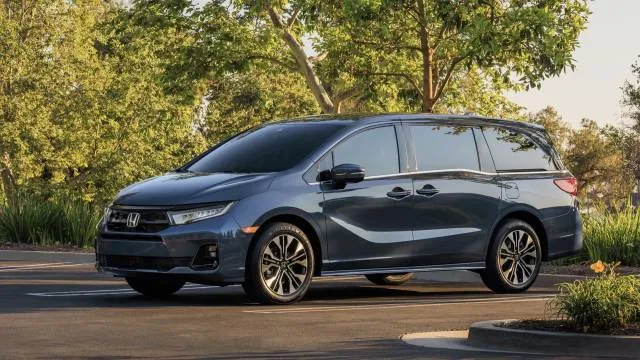
5. Honda Odyssey
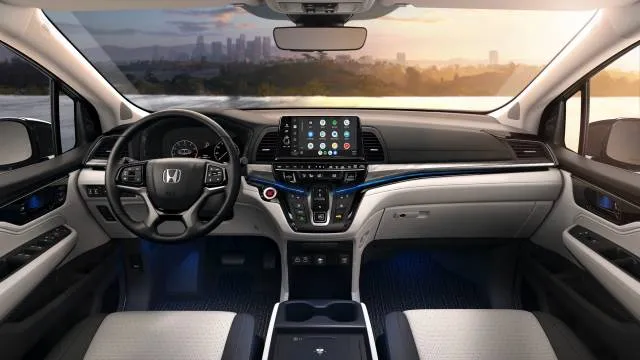
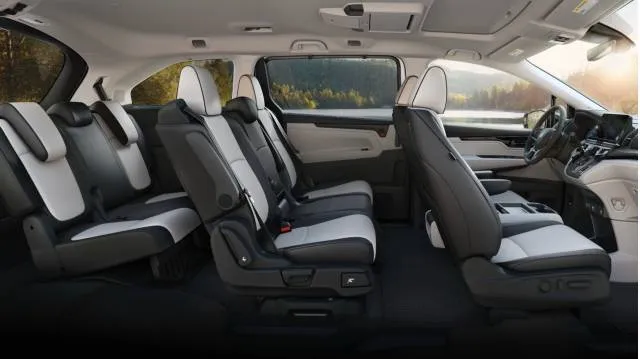
The Honda Odyssey, a nameplate synonymous with family transport for nearly three decades, finds itself at a crossroads. The fifth-generation model, last significantly redesigned in 2018, has begun to show its age in a rapidly evolving segment. Its most glaring omission is the absence of any hybrid powertrain option, making it the sole gasoline-only minivan among its primary competitors. Furthermore, it is exclusively available with front-wheel drive, lacking the all-weather versatility that rivals now offer with all-wheel drive. This steadfast adherence to its established formula, while contributing to a reputation for reliability, also means its infotainment and overall technological suite lag behind the more cutting-edge systems found in newer models.
Despite these perceived shortcomings, the Odyssey retains several compelling virtues. It is widely regarded as one of the better-handling minivans, offering a more engaging driving experience than many of its competitors, thanks to well-tuned steering and a refined chassis. Honda’s reputation for exceptional reliability, a direct benefit of its relatively unchanged design over recent years, remains a significant draw for many families. Its powerful V6 engine provides robust acceleration, a stark contrast to the less potent four-cylinder hybrid systems in some rivals. However, the lack of innovation fuels speculation about its future. Industry whispers suggest Honda might either discontinue the Odyssey after a distinguished 30-year run or, more likely, integrate a hybrid powertrain within the next year or two to bring it in line with Honda’s broader electrification strategy. Honda’s recent push towards electrification is evident in the CR-V Hybrid and Accord Hybrid becoming top sellers for their respective models, and the company has ambitious plans for an electric three-row crossover due in 2027. The question remains whether the Odyssey will embark on a new electrified chapter, or if its journey, like Homer’s, will eventually reach its end. For families prioritizing traditional V6 power, proven reliability, and a solid driving experience over cutting-edge tech and fuel economy, the Odyssey still makes a strong, albeit traditional, case.

3. Chrysler Pacifica (tie)
The Chrysler Pacifica stands out as a fascinating "tale of two minivans," offering unparalleled flexibility that caters to diverse family needs. Introduced in 2017 as a replacement for the long-running Town & Country, the Pacifica quickly distinguished itself, especially with the launch of its plug-in hybrid (PHEV) variant in 2018. The gasoline-powered Pacifica continues to feature the revolutionary Stow ‘N Go seats, a Chrysler innovation that allows both the second and third rows to fold completely flat into the floor, transforming the minivan into a cavernous cargo hauler with remarkable ease. It also offers the confidence of available all-wheel drive (AWD), a crucial feature for families in varied climates.
The Pacifica Hybrid, however, presents a different, yet equally compelling, proposition. As the only PHEV minivan on the market, it boasts an impressive 32 miles of all-electric range, perfect for daily errands, school drop-offs, and urban commuting without consuming a drop of gasoline. This electric capability, combined with its total hybrid range, makes it incredibly fuel-efficient. The trade-off for this advanced powertrain, however, is the absence of second-row Stow ‘N Go seats and all-wheel drive, as the battery pack occupies the space beneath the floor where the seats would typically fold. This necessitates a decision for buyers: ultimate seating flexibility and AWD with the gas model, or pioneering electric range and efficiency with the PHEV.
Chrysler further complicates, or perhaps enriches, the Pacifica lineup by reintroducing the Voyager as a budget-friendly base model. While initially aimed primarily at fleet customers, the Voyager is now available to a broader consumer market. Priced at nearly $42,000, its "value" proposition is debatable, but it offers a more accessible entry point to the Pacifica platform. The Voyager wears the Pacifica’s previous exterior styling but benefits from modern interior content, including a standard 10.1-inch touchscreen with wireless smartphone compatibility (Apple CarPlay and Android Auto), and crucially, Stow ‘N Go seating in both rear rows. It foregoes the more luxurious options available on higher Pacifica trims, which can push the minivan’s price tag close to the $60,000 mark. A significant advantage for the Pacifica PHEV is its qualification for the full $7,500 federal EV tax credit, which, depending on individual income eligibility, can substantially reduce its effective cost, potentially making it comparable in price to the gasoline-only models and offering an even stronger value proposition for eco-conscious families. The Pacifica, in its various forms, offers a compelling blend of innovation, practicality, and versatility, making it a strong contender for families seeking a modern minivan experience.
3. Toyota Sienna (tie)
The Toyota Sienna distinguishes itself by embracing a singular, highly efficient vision: it is offered exclusively as a hybrid. This strategic decision by Toyota positions the Sienna as the segment leader in fuel economy, boasting an impressive 36 mpg combined with front-wheel drive (FWD) and a still excellent 35 mpg with all-wheel drive (AWD). This standard hybridization ensures that every Sienna buyer benefits from significant fuel savings, a major draw for budget-conscious families. The AWD option, powered by an additional electric motor on the rear axle, provides enhanced traction and confidence in adverse weather conditions without a significant penalty to efficiency, further cementing its practicality.
The Sienna’s powertrain combines a 2.5-liter inline-4 engine with a two-motor hybrid system (three motors with AWD), producing a respectable 245 horsepower. While this setup offers smooth and efficient operation, it admittedly lacks the robust grunt and immediate acceleration of the V-6 engines found in some competitors, such as the Honda Odyssey or the gas-powered Chrysler Pacifica. However, Toyota has meticulously tuned the Sienna’s suspension to deliver a remarkably stable and composed ride, particularly on highways, making it an excellent long-distance cruiser. It exhibits less of the "wobbly" sensation that can sometimes plague large family vehicles, contributing to passenger comfort.
Interior versatility, however, presents a notable compromise in the Sienna. Unlike the innovative Stow ‘N Go seats in the Pacifica or the removable seats in the Carnival, the Sienna’s second-row seats are bolted down. While they slide far back to offer exceptional legroom, and some higher trims even include ottoman-style footrests, their inability to be easily removed or folded into the floor significantly limits the Sienna’s maximum cargo capacity and flexibility for hauling large items. This is a crucial consideration for buyers who frequently need to transform their minivan into a cargo van.

With six distinct trims and an extensive list of options, the Sienna can be configured to suit a wide range of tastes and budgets. From practical base models to luxurious Platinum trims that offer premium features like a built-in vacuum cleaner, a small cooler, and elaborate infotainment systems, the Sienna can get quite expensive at the top end. Despite these premium offerings, the Sienna maintains a fundamentally practical character across its lineup. Its strengths lie in its unwavering reliability, exceptional fuel economy, available AWD, and a comfortable, stable ride, making it a highly rational choice for families who prioritize efficiency and dependability, even if it means sacrificing some interior seating flexibility. Toyota’s decades of expertise in hybrid technology shine through in the Sienna’s polished and efficient performance.
2. Kia Carnival
The Kia Carnival, which boldly refers to itself as an "MPV" (Multi-Purpose Vehicle) rather than a traditional minivan, successfully blurs the lines between a family hauler and an SUV. Its striking, SUV-inspired exterior design, characterized by a bold grille, prominent wheel arches, and a more upright stance than its competitors, gives it a distinct and contemporary presence on the road. This design language is a deliberate effort by Kia to appeal to buyers who might be hesitant about the traditional minivan aesthetic but still require its unparalleled practicality.

The recent introduction of a hybrid option has significantly elevated the Carnival’s appeal, making it much more than just a stylish family vehicle. This new powertrain enhances both efficiency and refinement, providing a smoother, quieter, and more economical driving experience compared to the standard V6 engine. The refreshed Carnival boasts a comprehensive suite of features, a testament to Kia’s commitment to delivering high value. It comes exceptionally well-equipped across its trim levels, often providing more standard amenities than similarly priced rivals. Its infotainment interface is lauded for being intuitive and easy to use, featuring large, clear displays and responsive controls that minimize driver distraction – a critical factor for busy parents.
While the Carnival excels in many areas, it does have a few limitations. It currently lacks an all-wheel-drive option, which might deter buyers in regions with harsh winter weather or those who frequently navigate challenging terrains. Additionally, unlike the Chrysler Pacifica’s revolutionary Stow ‘N Go seats, the Carnival does not offer second-row seats that fold completely into the floor. However, its second-row seats are highly versatile, offering various configurations, including "VIP Lounge Seating" in higher trims with power recline, leg extensions, and heating/ventilation, providing a luxurious experience for middle-row passengers. The removable second-row seats, while not as seamless as Stow ‘N Go, do allow for a significant increase in cargo space when needed.

One of the Carnival’s most compelling attributes is its exceptional warranty, which is among the best in the automotive industry, providing long-term peace of mind for owners. This, combined with its stylish design, generous features, and now, the efficiency of a hybrid powertrain, positions the Kia Carnival as an outstanding value play in the class. It manages to deliver a premium feel without the premium price tag, never feeling like a "budget car." For families seeking a modern, well-appointed, efficient, and stylish vehicle that breaks free from traditional minivan stereotypes, the Kia Carnival is a formidable and highly recommended choice.
1. Volkswagen ID. Buzz
Our TCC Rating system, while rigorously objective, might appear to harbor a slight preference for shiny new things, especially those with zero tailpipe emissions. However, the top-ranked Volkswagen ID. Buzz earns its position not merely for its novelty, but for its profound impact on the minivan segment. The triumphant return of the iconic Volkswagen Bus in its fully electric ID. Buzz form is more than just a nostalgic revival; it fundamentally revitalizes the minivan category while unequivocally pointing it towards a sustainable, electrified future.

Visually, the ID. Buzz is an instant head-turner. Its two-tone paint schemes, long wheelbase, and charmingly snubbed front and rear ends perfectly capture the beloved "retromod" trend, evoking warm memories of the original Microbus. Yet, beneath this retro-chic exterior lies a thoroughly modern and capable electric vehicle. The ID. Buzz excels in modern power delivery, featuring a substantial 91-kWh battery pack that feeds either a single-motor rear-wheel-drive setup or a more powerful dual-motor all-wheel-drive configuration.
While its estimated range of up to 234 miles might seem modest compared to some long-range EVs, it’s important to contextualize this for a minivan. The ID. Buzz is one of the roomiest and heaviest minivans on sale, and for typical family duties and urban commuting, this range is more than adequate. The instant torque characteristic of electric vehicles lends the ID. Buzz a surprisingly sprightly launch from a stop, making urban driving remarkably effortless. Furthermore, the strategic placement of the battery pack low in the floor, between the axles, contributes to a very low center of gravity. This design ensures the ID. Buzz feels remarkably planted and stable on the road, delivering a refined and composed ride quality.

The interior of the ID. Buzz is a masterclass in clever design and functionality. Echoing the original Bus, the "cockpit" offers expansive views without a traditional long hood obstructing the driver’s sightline. It’s packed with ingenious storage options, including a practical dash shelf for the front passenger, a dedicated smartphone charging recess, and an overall clean, minimalist aesthetic. However, not all modern touches are universally applauded. The integration of climate controls primarily within the 12.9-inch touchscreen, along with touch-sensitive temperature sliders, can be less intuitive and precise than physical buttons, requiring a brief learning curve.
A significant consideration for potential buyers is the ID. Buzz’s pricing and incentive eligibility. Since it is manufactured in Germany, it does not currently qualify for the full $7,500 federal EV tax credit in the United States. This means it is relatively expensive compared to other minivans, especially those that benefit from such incentives. However, for those seeking a truly unique, environmentally conscious, and forward-thinking family vehicle that combines iconic style with modern electric performance and unparalleled personality, the cost is often justified. The ID. Buzz isn’t just a new minivan; it’s a statement, a testament to the enduring appeal of clever design and the undeniable momentum of electrification, ushering in a new era for family mobility.

Conclusion
The minivan segment, despite its diminished market share, is undeniably in a period of renaissance. Far from fading into obsolescence, these family haulers are demonstrating remarkable resilience and innovation. The landscape has fundamentally shifted from one dominated by conventional gasoline engines to a vibrant array of electrified options, ranging from efficient hybrids to pioneering plug-in hybrids and, now, a truly revolutionary battery-electric vehicle.

The Honda Odyssey, while a stalwart of reliability and V6 performance, finds itself in a challenging position, needing to adapt to the electrification trend its rivals have embraced. The Chrysler Pacifica stands out with its dual personality, offering the ingenious Stow ‘N Go seats and AWD in its gas variant, or groundbreaking PHEV efficiency with a significant electric range and federal tax credit eligibility. The Toyota Sienna commits entirely to hybrid power, delivering segment-leading fuel economy and available AWD, albeit with some compromises in interior flexibility. The Kia Carnival, with its SUV-inspired styling and newly added hybrid option, offers a compelling blend of value, modern design, and refinement, challenging traditional minivan perceptions.
And then there’s the Volkswagen ID. Buzz, a charismatic game-changer that not only taps into deep-seated nostalgia but also spearheads the segment’s fully electric future. Its bold design, innovative electric powertrain, and clever interior solutions redefine what a minivan can be, albeit at a premium.

What ties these diverse offerings together is a collective commitment to safety, practicality, and the unique demands of family life. From power-sliding doors that simplify entry and exit, to advanced infotainment systems that keep everyone connected and entertained, and versatile seating arrangements that adapt to countless scenarios, these minivans are engineered to make life easier for parents and more comfortable for children. The evolution towards electrification not only enhances their environmental credentials but also significantly improves their running costs and driving experience.
Ultimately, the notion that "minivans have never been better" is not just a marketing slogan; it’s a testament to the segment’s current state. While sales figures may tell one story, the quality, innovation, and breadth of choice available to families today paint a picture of a category that, against all odds, is thriving. For those who prioritize space, versatility, safety, and increasingly, efficiency, the modern minivan offers a compelling and unmatched solution for family transportation, now more diverse and capable than ever before.
