
 By admin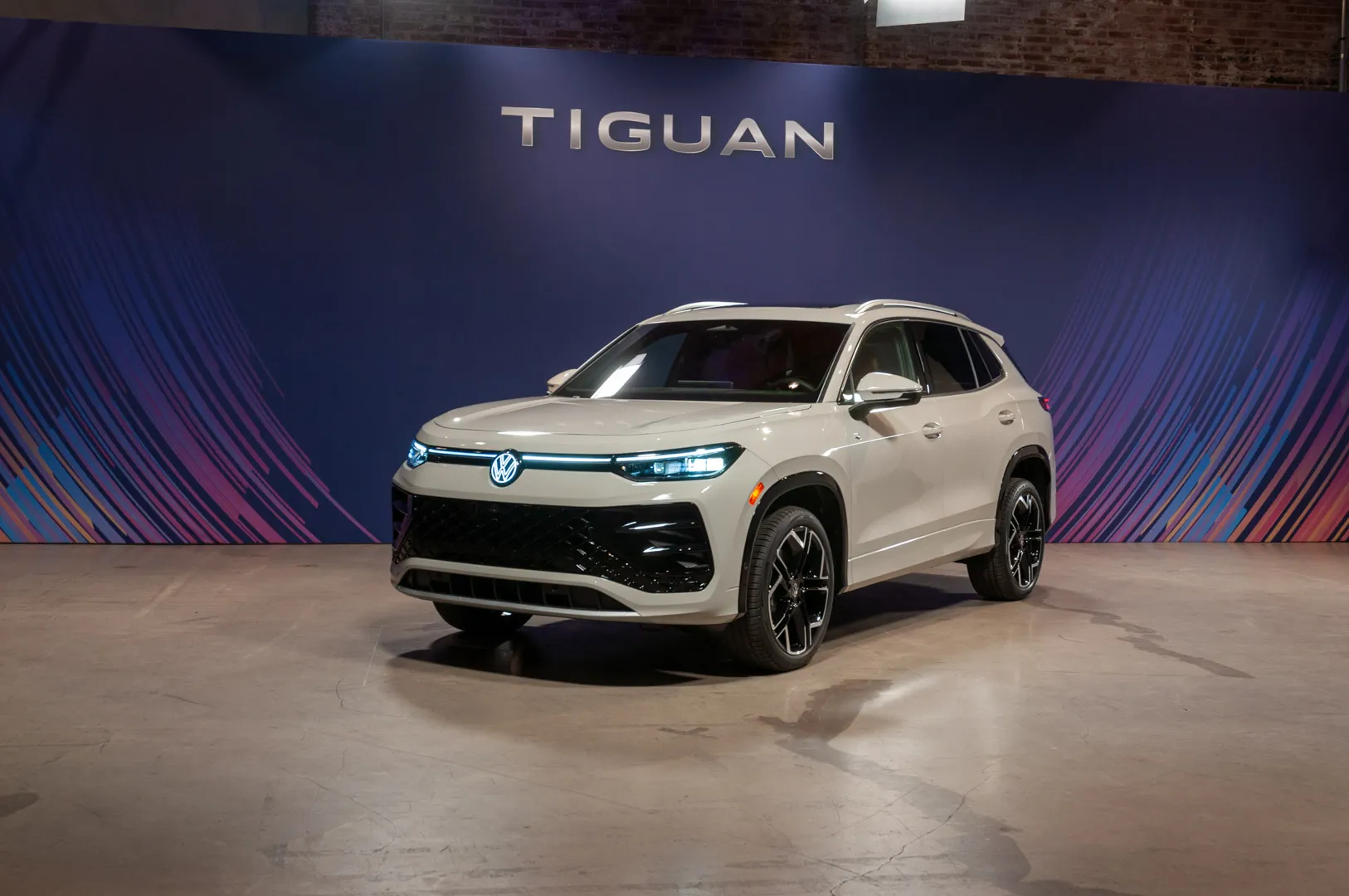
A pivotal strategic shift for the 2025 Tiguan is the decision to remove the third-row seat option, a feature that distinguished its predecessor in a segment where seven-seater configurations are rare. This move streamlines the Tiguan’s identity, allowing it to focus squarely on excelling as a spacious and premium two-row, five-passenger vehicle. Concurrently, the new Tiguan boasts a more powerful engine, delivering an additional 17 horsepower, and sheds a notable 170 pounds, promising improved driving dynamics and efficiency. These changes collectively aim to sharpen the Tiguan’s appeal, aligning it more closely with core compact crossover expectations while elevating its overall performance and technological sophistication.
The pricing structure for the 2025 Volkswagen Tiguan unfolds across four distinct trim levels, each designed to cater to varying customer preferences and budgets, while offering a clear progression in luxury and features.
Tiguan S (Starting at $30,920 FWD):
The entry-level Tiguan S sets a strong foundation for the lineup. For $30,920 (including destination), buyers receive a well-equipped vehicle. Standard features are notably generous for a base model in this class, including 17-inch alloy wheels, which provide a balanced ride and contemporary aesthetic. Inside, the cabin introduces Volkswagen’s latest digital interface with a 10.2-inch digital instrument cluster, offering crisp, customizable driver information. This is complemented by a prominent 12.9-inch touchscreen infotainment system, a significant upgrade that serves as the central hub for connectivity and entertainment. Wireless Apple CarPlay and Android Auto are standard, ensuring seamless smartphone integration. Comfort is addressed with cloth upholstery, which is durable and practical, and the interior design reflects a minimalist yet functional approach that has become characteristic of modern Volkswagen vehicles. The $615 price increase over the previous generation’s base model is justified by these substantial upgrades, particularly in the realm of digital technology and infotainment, which are increasingly critical for new car buyers. This slight bump in price is also in line with broader industry trends where inflation and advanced features contribute to rising vehicle costs.
Tiguan SE (Starting at $34,420 FWD):
Stepping up to the Tiguan SE, priced at $34,420 (including destination), introduces a suite of comfort and convenience enhancements that elevate the daily driving experience. Visually, the SE grade features larger 19-inch wheels, contributing to a more assertive stance and improved road presence. Practical additions include remote start, a highly coveted feature, and a power tailgate, simplifying loading and unloading. The interior ambiance is enhanced with ambient lighting, allowing occupants to customize the cabin’s mood. An auto-dimming rearview mirror adds to driver convenience, reducing glare during night driving. The driver’s comfort is prioritized with a power-adjustable driver’s seat, offering better ergonomics, and the upholstery is upgraded to leatherette, providing a more premium feel that is also easy to maintain. This trim level strikes an excellent balance between added luxury and affordability, making it a popular choice for many compact crossover buyers.
Tiguan SEL R-Line Black (Starting at $36,880 FWD):
For those seeking a more distinctive and sporty aesthetic, the Tiguan SEL R-Line Black grade enters at $36,880. This trim capitalizes on the popular "blackout" trend in automotive design, featuring a bespoke body kit that lends a more aggressive and aerodynamic profile. It rides on larger 20-inch wheels, which further amplify its athletic appeal. The exterior and interior benefit from a curated mix of dark and chrome trim elements, creating a sophisticated yet edgy look. A standard sunroof is included, allowing for an open-air experience and brightening the cabin. The R-Line Black trim is designed to appeal to buyers who want to stand out from the crowd and appreciate a visually sportier package without necessarily opting for the absolute top-tier performance-oriented features. Its combination of unique styling cues and desirable amenities offers a compelling value proposition within the lineup.
Tiguan SEL R-Line (Starting at $41,180 AWD):
Crowning the lineup is the Tiguan SEL R-Line, priced at $41,180. This flagship model embodies the pinnacle of the Tiguan’s luxury, technology, and design. It shares similar visual upgrades with the R-Line Black, including the sporty body kit and larger wheels, but distinguishes itself with an even more opulent interior. A standout feature is the expansive 15.0-inch touchscreen infotainment system, one of the largest in its class, offering an immersive user experience. Audiophiles will appreciate the premium 12-speaker Harman Kardon audio system, delivering rich and clear sound. Comfort is paramount with three-zone climate control, ensuring optimal temperatures for all occupants, and the front seats come with memory and massage functions, providing unparalleled comfort on long journeys. The passenger seat also benefits from power adjustment, and the entire cabin is swathed in luxurious leather upholstery. Crucially, the SEL R-Line comes standard with all-wheel drive, reinforcing its position as the ultimate, all-weather capable, and feature-rich Tiguan. This trim is designed to compete with premium offerings from other brands, showcasing Volkswagen’s ability to deliver a sophisticated and technologically advanced product.
Under the hood, all 2025 Tiguan models are powered by a refined 2.0-liter turbocharged inline-four engine. While the engine architecture remains familiar from the previous generation, Volkswagen engineers have meticulously optimized it, boosting output by 17 horsepower to a robust 201 hp. This increase, combined with a healthy torque figure (expected to be around 221 lb-ft based on previous iterations and VW’s 2.0T engines), promises more spirited acceleration and improved responsiveness. The engine is once again paired with an 8-speed automatic transmission, known for its smooth shifts and efficient operation. This powertrain combination, already a proven performer, benefits significantly from the new Tiguan’s weight reduction. By shedding 170 pounds, the crossover is expected to feel more agile, handle with greater precision, and potentially deliver better fuel economy figures, though official EPA ratings are yet to be released. This lighter, more powerful setup underscores Volkswagen’s commitment to dynamic driving experiences, a hallmark of its European engineering heritage.

The underlying architecture likely utilizes an evolution of Volkswagen’s highly versatile MQB platform, often referred to as MQB Evo. This modular transverse matrix allows for greater flexibility in design, packaging, and technology integration. Its inherent rigidity contributes to improved crash safety and better handling characteristics, while its modularity facilitates the integration of advanced driver-assistance systems and modern infotainment technologies. The optimization of this platform is a key factor in the Tiguan’s weight reduction and enhanced structural integrity, translating directly to a more refined and safer ride.
All-wheel drive (4Motion in Volkswagen parlance) remains a crucial option for the Tiguan, enhancing traction and stability in adverse weather conditions or light off-road excursions. It is available as a $1,500 option on the S and SEL R-Line Black grades, with late availability noted for the latter. On the SE grade, the 4Motion system is a more accessible $980 option, reflecting a strategic pricing decision to make AWD more appealing to a broader range of buyers. As mentioned, the top-tier SEL R-Line comes with all-wheel drive as standard, reinforcing its premium and all-weather capability.
The most notable structural change for the 2025 Tiguan is the elimination of the third-row seat. This decision is a calculated strategic move by Volkswagen. While the previous generation offered a compact third row, it was often criticized for being cramped and primarily suitable for small children or very short distances. By removing it, Volkswagen is sharpening the Tiguan’s focus as a true compact five-seater, allowing for more generous second-row legroom, increased cargo capacity behind the second row, and potentially a more streamlined exterior design. This aligns the Tiguan more closely with segment leaders like the Toyota RAV4 and Honda CR-V, which are exclusively five-seaters. Furthermore, Volkswagen’s lineup already includes the larger Atlas and Atlas Cross Sport for customers requiring genuine three-row seating, thus preventing internal cannibalization and clarifying each model’s market position. This refocus allows the Tiguan to excel at what it does best: providing a stylish, comfortable, and practical compact SUV experience for individuals and small families.
Technological advancements are at the forefront of the new Tiguan’s interior. The digital instrument cluster and large central touchscreens are part of Volkswagen’s latest "Digital Cockpit" philosophy, aiming for a cleaner, more intuitive user interface. The wireless Apple CarPlay and Android Auto are standard across all trims, reflecting a commitment to modern connectivity. Volkswagen has also addressed past criticisms regarding haptic controls, indicating a move towards a more balanced approach that might reintroduce some physical buttons for critical functions, or at least improve the haptic feedback and user experience. The integration of features like a 12-speaker Harman Kardon sound system and massage seats in higher trims showcases a clear push towards offering a near-luxury experience, a strategy increasingly employed by mainstream brands to differentiate themselves.
In the highly competitive compact crossover segment, the 2025 Volkswagen Tiguan faces formidable rivals. While the article specifically mentions the Subaru Forester and Toyota RAV4, the landscape also includes perennial bestsellers like the Honda CR-V, Hyundai Tucson, Kia Sportage, Mazda CX-5, and Nissan Rogue. To stand out, the Tiguan will leverage its distinct European driving dynamics, a sophisticated and minimalist design aesthetic, and a robust suite of technology. Volkswagen’s reputation for solid build quality and refined ride comfort will also be key differentiators. The redesigned Tiguan aims to offer a compelling blend of practicality, style, and driving enjoyment, carving out its niche by appealing to buyers who value a more premium feel and advanced technology in their compact SUV.
While not explicitly detailed in the provided information, it’s safe to assume the 2025 Tiguan will come equipped with Volkswagen’s comprehensive IQ.DRIVE suite of advanced driver-assistance systems. This typically includes features such as adaptive cruise control, lane-keeping assist, blind-spot monitoring, rear cross-traffic alert, and forward collision warning with automatic emergency braking. These safety features are increasingly standard in the segment and crucial for achieving top safety ratings and instilling confidence in buyers.
With sales slated to begin in early summer, the 2025 Volkswagen Tiguan is poised to make a significant impact. Its combination of a more powerful yet efficient engine, a lighter and more agile platform, a refined and technology-rich interior, and a clearer focus as a premium five-seater, positions it as a strong contender. Volkswagen has clearly listened to market feedback and invested heavily in this redesign, signaling its intent to capture a larger share of one of the automotive industry’s most vital segments. The success of the 2025 Tiguan will hinge on its ability to deliver on the promise of a sophisticated, enjoyable, and value-packed compact crossover experience that truly stands out in a crowded field.
