
 By Isnaini Azizah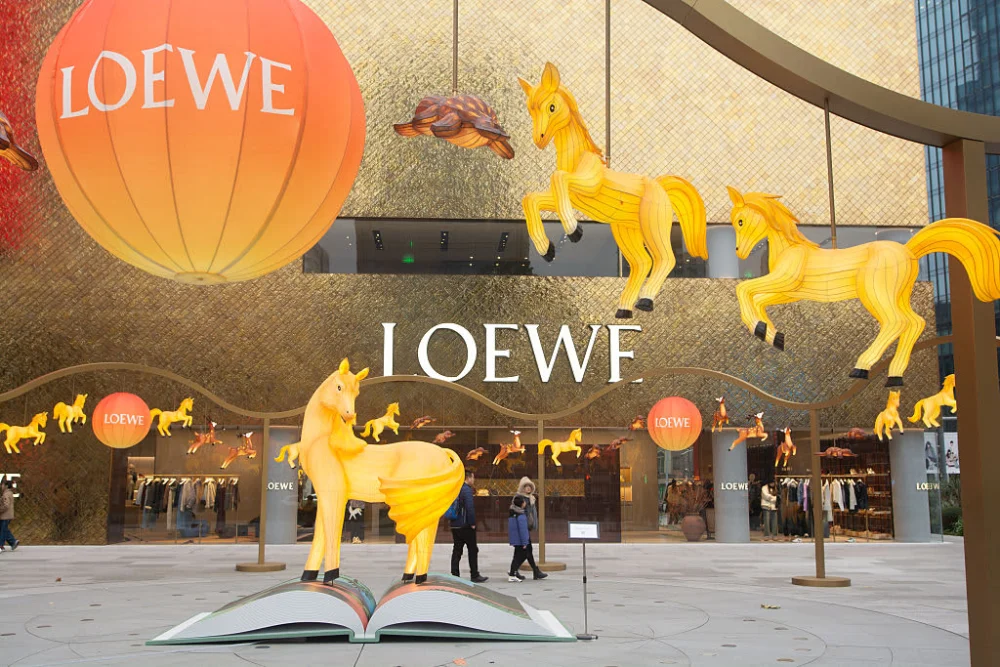
As the global fashion industry pivots toward the start of a new lunar cycle, the stakes for Western luxury houses have rarely been higher. From the high-jewelry salons of Place Vendôme to the leather goods workshops of Madrid and Florence, the world’s most prestigious brands are mobilizing for the Year of the Horse, which officially gallops into the cultural zeitgeist this coming Tuesday. This year’s collections, ranging from $80,000 timepieces to artisanal bag charms, represent more than just seasonal marketing; they are a calculated gamble on the resilience of the Chinese consumer and a signal that the luxury sector may finally be turning a corner after several years of economic turbulence.
Leading the charge is Harry Winston, the "King of Diamonds," which recently unveiled a limited-edition rose gold timepiece that epitomizes the "high-jewelry" approach to the zodiac. Retailing for $81,500, the watch features a red lacquer horse set against a backdrop of diamond bezels—a literal and lavish interpretation of the holiday’s traditional color palette. Meanwhile, Chloé, under the creative direction of Chemena Kamali, has leaned into a more versatile "capsule" strategy. Their collection spans the price spectrum, offering entry-level luxury in the form of $250 silk scarves while catering to the "VIC" (Very Important Client) segment with a $5,300 snakeskin and leather shoulder bag. The bag is a masterclass in thematic branding, featuring a horse head and tail connected by a signature horsebit chain, blending the brand’s equestrian heritage with the specific demands of the 2026 zodiac. Other heavyweights, including Loewe, Gucci, and Loro Piana, have flooded the market with horse-themed bag charms and accessories, hoping to capture the "gift-giving" market that defines the Lunar New Year period.
However, the backdrop for these launches is one of "cautious optimism" rather than the unbridled exuberance seen in the previous decade. For years, the Chinese luxury market was the undisputed engine of global growth, at one point contributing nearly one-third of all luxury sales worldwide. That momentum stalled significantly as China’s economy grappled with a protracted real estate crisis, fluctuating stock market performance, and a general cooling of consumer confidence. According to data from Bain & Company, the Chinese luxury market stood at approximately 350 billion RMB (roughly $50 billion) in 2024. However, the consultancy estimates that the market contracted by 3% to 5% in 2025, reflecting a "belt-tightening" phase among even the wealthy middle class.
The silver lining appeared in the latter half of 2025. Analysts noted a discernible shift in sentiment, bolstered by government stimulus measures and a stabilization of the domestic stock market. This late-year momentum is expected to carry into 2026, making the Year of the Horse a potential inflection point. Luca Solca, a senior analyst at Bernstein and one of the industry’s most respected voices, predicts that Chinese luxury spending will stabilize this year, with a forecasted mid-single-digit percentage growth. While this is a far cry from the double-digit "hyper-growth" of the 2010s, it represents a sustainable path forward in a market that has become increasingly mature and competitive.
The structural reality of the market has also shifted. Solca points out that while Chinese consumers once accounted for 33% of the global luxury market pre-pandemic, that figure has now settled around 23%. This contraction is not just a result of local economic headwinds, but also a fundamental change in where and how the Chinese elite spend their money. "The luxury market’s fortunes do not solely rest on Lunar New Year, but it is an opportunity for Western brands to show respect for Chinese culture," Solca noted. He emphasizes that the era of "easy growth" is over. To succeed in 2026, brands must navigate a landscape where the consumer is more educated, more demanding, and less impressed by Western heritage alone.
This evolution of the consumer profile is perhaps the most significant challenge for heritage brands. In the early 2010s, simply placing a red dragon or a gold tiger on a t-shirt was enough to drive sales. Today, such "perfunctory interpretations" are often met with derision or, worse, indifference. Veronique Yang, who leads BCG’s consumer practice in Greater China, argues that literal interpretations can appear "lazy" or even "disrespectful" to a younger generation that values authenticity and modern storytelling. "Chinese young people respect the old culture, but they want it to be reinterpreted in a modern way," Yang said. "It’s important to weave a narrative that connects the heritage with a contemporary vision."
This sentiment is echoed by Daniel Langer, a professor of luxury strategy at Pepperdine University and a leading consultant for high-end brands. Langer notes that in the 12 years since the last Year of the Horse (2014), the Chinese high-income consumer has undergone a total transformation. "They’ve been to the best places in the world. They’ve dined in the best restaurants… Their expectations towards brands are significantly higher," Langer remarked. He describes China’s transition from a country of "pent-up demand" to one of "the highest sophistication." This sophistication has led to a rise in "quiet luxury"—where craftsmanship and brand values outweigh loud logos—and a growing preference for domestic high-end labels that better understand local nuances.
Furthermore, the "where" of luxury shopping has been permanently altered. In 2019, two-thirds of Chinese luxury spending happened overseas, as travelers flocked to Paris, Milan, and Tokyo to take advantage of price differentials and a wider selection. Pandemic-era travel restrictions forced a "repatriation" of luxury spending, and the habit stuck. By last year, overseas spending accounted for only one-third of the total, with the remaining two-thirds happening within mainland China. This shift has forced brands to invest heavily in domestic infrastructure, from flagship stores in Shanghai’s West Bund to elaborate pop-up installations in "New Tier 1" cities like Chengdu and Hangzhou.
To combat the risk of "zodiac fatigue," brands are increasingly turning to immersive experiences rather than just product drops. This Year of the Horse, the focus is on cultural integration. Valentino, for instance, bypassed a simple product launch in favor of a three-day lantern festival at the historic Tianhou Palace in Shanghai. By associating the brand with a site of cultural heritage and a traditional festival, Valentino aimed to build "emotional equity" with the local community. Burberry took a similar approach, launching an extensive campaign in mid-December that featured brand ambassadors in a festive pop-up boutique and an ice rink in Beijing. These experiential activations serve two purposes: they generate high-quality social media content for platforms like WeChat and Douyin, and they provide the "fresher takes" that younger consumers crave.
Even the product designs are becoming more nuanced. Loewe’s approach to the Year of the Horse involved adorning its signature "Puzzle" bags with fringes and tassels, evoking a "cowboy aesthetic" that subtly nods to the animal without resorting to cartoonish graphics. This "less is more" strategy is often more effective, as it allows the product to remain relevant long after the holiday concludes. Veronique Yang also noted a specific cultural risk: the zodiac animal is traditionally considered a "good luck" symbol primarily for those born in that specific year (their "Ben Ming Nian"). For others, the horse motif might be less personal, which is why brands are diversifying their narratives to include broader themes of spring, renewal, and family reunion.
As 2026 unfolds, the luxury industry will be watching the Chinese consumer with bated breath. The Year of the Horse symbolizes speed, strength, and persistence—qualities the market will need if it is to return to its former glory. While the days of explosive, effortless growth are likely a relic of the past, the current stabilization suggests a more resilient and sophisticated future. For Western brands, the message is clear: the Chinese market remains the ultimate prize, but winning it now requires more than just a red box and a gold ribbon. It requires a deep, authentic commitment to a culture that no longer looks to the West for validation, but rather for a partnership in luxury. If the 2026 Lunar New Year collections are any indication, the industry is finally learning how to speak that language.
