
 By admin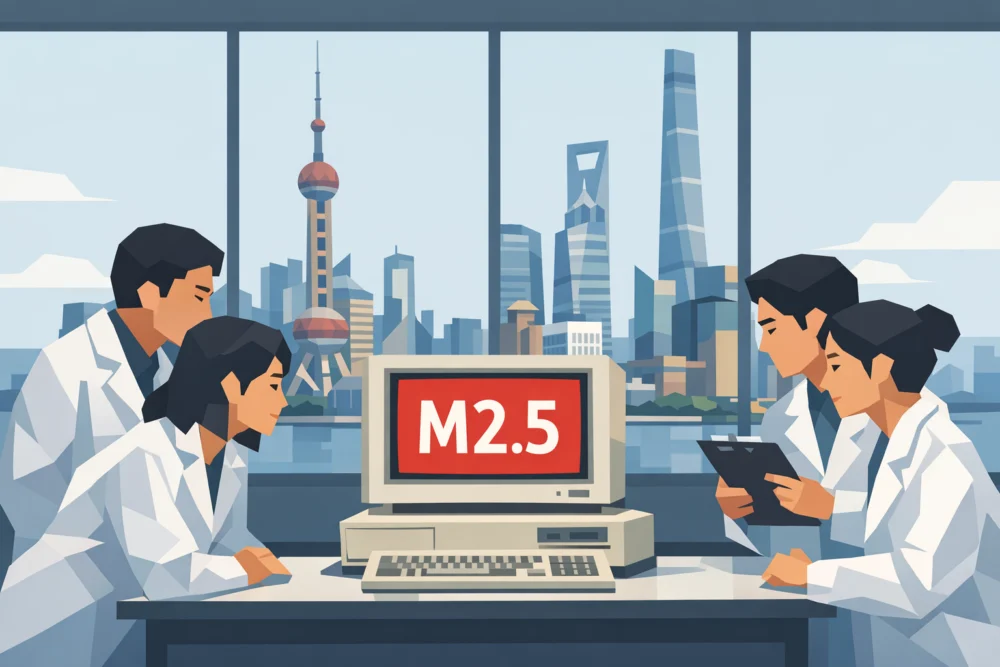
Chinese AI startup MiniMax, a Shanghai-based innovator, has sent seismic waves across the global artificial intelligence landscape with the unveiling of its groundbreaking M2.5 language model. This new offering, presented in two distinct variants, promises to democratize access to cutting-edge AI, making sophisticated artificial intelligence so economically viable that the concern of escalating costs may soon become a relic of the past. The M2.5 model has been strategically released as open-source on the Hugging Face platform under a modified MIT License. This license mandates that any commercial utilization of the model, or custom variants derived from it, must prominently display "MiniMax M2.5" on the user interface of the respective product or service. However, this attribution requirement almost pales in comparison to the sheer affordability MiniMax is offering through its API and those of its strategic partners.
For years, engaging with the world’s most advanced AI systems felt akin to retaining the services of an elite, yet prohibitively expensive, consultant. While undeniably brilliant, the constant awareness of the ticking clock and the burgeoning token count loomed large. The M2.5 model fundamentally alters this economic equation, achieving a remarkable reduction in the cost of accessing frontier AI capabilities, slashing expenses by as much as a staggering 95%. By delivering performance benchmarks that directly rival the top-tier models from industry giants like Google and Anthropic, but at a fraction of the price, MiniMax is making a bold declaration: the future of AI is not solely defined by its intelligence quotient, but critically, by its accessibility and the frequency with which it can be deployed. This is particularly evident in its prowess for agentic tool use in enterprise environments, encompassing the creation of essential Microsoft Office documents such as Word, Excel, and PowerPoint files.
To ensure M2.5’s practical utility in demanding professional contexts, MiniMax claims to have collaborated closely with senior professionals across diverse fields, including finance, law, and social sciences. This rigorous vetting process was designed to guarantee that the model could perform real-world tasks to exacting specifications and adhere to professional standards. This release signifies a pivotal paradigm shift in the AI industry, moving beyond the perception of AI as a mere "chatbot" and firmly establishing it as an indispensable "worker." When artificial intelligence becomes "too cheap to meter," developers are liberated from the constraints of building rudimentary question-and-answer tools. Instead, they can focus on creating sophisticated "agents" – autonomous software entities capable of undertaking complex, time-consuming tasks like coding, in-depth research, and intricate project organization, all without incurring prohibitive financial burdens.
The impact of this shift is already being felt within MiniMax itself. The company reports that an impressive 30% of all operational tasks at its headquarters are currently handled by the M2.5 model. Even more remarkably, a staggering 80% of their newly committed code is generated by M2.5, underscoring the model’s efficacy and reliability in critical development workflows. As the MiniMax team articulated in their official release blog post, "we believe that M2.5 provides virtually limitless possibilities for the development and operation of agents in the economy." This sentiment highlights the transformative potential of affordable, high-performance AI agents in reshaping economic activities.
Technology: Sparse Power and the CISPO Breakthrough
The secret sauce behind M2.5’s remarkable efficiency and cost-effectiveness lies in its innovative Mixture of Experts (MoE) architecture. Unlike traditional models that engage all their parameters for every single output, M2.5 selectively activates only 10 billion of its 230 billion parameters. This ingenious approach allows the model to retain the profound reasoning capabilities of a significantly larger model while operating with the agility and speed of a much smaller one. This dynamic parameter activation is a key driver of its reduced computational load and, consequently, its lower operational costs.
The development of this sophisticated system was underpinned by MiniMax’s proprietary Reinforcement Learning (RL) framework, dubbed "Forge." Olive Song, an engineer at MiniMax, elaborated on the significance of this technique during an appearance on the ThursdAI podcast. She explained that Forge was instrumental in scaling the model’s performance, particularly in achieving high output with a comparatively modest number of active parameters. The training process for M2.5, utilizing Forge, spanned approximately two months. Forge is specifically engineered to enable the AI to learn from "real-world environments," effectively providing the model with extensive practice in coding and tool utilization across thousands of simulated workspaces.
"What we realized is that there’s a lot of potential with a small model like this if we train reinforcement learning on it with a large amount of environments and agents," Song stated. She further acknowledged the inherent complexity of this endeavor, noting that it was an area where the team invested "a lot of time." To maintain stability during this intensive training regimen, MiniMax employed a sophisticated mathematical approach known as CISPO (Clipping Importance Sampling Policy Optimization). The company has openly shared the underlying formula for CISPO on its blog, offering transparency into its innovative training methodology.
The CISPO formula is designed to prevent the model from making excessive or detrimental adjustments during training, thereby fostering what MiniMax terms an "Architect Mindset." Instead of immediately generating code, M2.5 has been trained to proactively plan the structural framework, define features, and conceptualize the user interface of a project before embarking on detailed implementation. This strategic, planning-first approach contributes to more robust and well-designed outputs.
State-of-the-Art (and Near) Benchmarks
The tangible results of this advanced architecture are vividly demonstrated in the latest industry leaderboards. M2.5 has not merely improved; it has catapulted itself into the elite tier of coding models, now closely challenging Anthropic’s Claude Opus 4.6, a model released just a week prior. This rapid advancement underscores the accelerating pace at which Chinese AI companies are closing the gap with their U.S. counterparts, who have historically benefited from significantly greater access to computational resources like GPUs.
On the ThursdAI podcast, host Alex Volkov highlighted a critical aspect of M2.5’s performance: its exceptional speed. This speed translates directly into reduced token usage for task completion. Volkov noted that M2.5 can complete tasks at an astonishing cost of approximately $0.15 per task, a stark contrast to the $3.00 cost associated with Claude Opus 4.6 for comparable operations. This dramatic cost reduction for task execution is a significant differentiator.
The benchmark data presented by MiniMax further illustrates M2.5’s competitive edge. For instance, on the SWE (Software Engineering) benchmark, M2.5 demonstrates a performance trajectory that places it neck-and-neck with leading proprietary models, showcasing its proficiency in complex coding tasks. Additional bar chart comparisons reveal M2.5’s strong performance across a variety of benchmarks, suggesting its versatility and robust capabilities in diverse AI applications. These results indicate that MiniMax is not only achieving parity with established leaders but in some aspects, like cost-efficiency per task, is setting new industry standards.
Breaking the Cost Barrier
MiniMax is making the M2.5 model available through its API in two distinct versions, both meticulously optimized for high-volume production use. The first variant, M2.5, is positioned for general-purpose advanced agentic tasks, offering a balance of performance and cost. The second, M2.5-Lightning, is specifically engineered for maximum speed and efficiency, catering to applications where rapid response times are paramount.
To put these figures into perspective, MiniMax claims that enterprises can operate four "agents" – essentially AI workers – continuously for an entire year for an estimated cost of around $10,000. This pricing structure represents a seismic shift in the AI landscape. For enterprise users, this translates to costs that are approximately one-tenth to one-twentieth of comparable proprietary models such as OpenAI’s GPT-5 or Anthropic’s Claude 4.6 Opus. This level of cost reduction is unprecedented and has the potential to unlock widespread adoption of advanced AI agents across a multitude of industries.
A detailed comparison of API pricing further solidifies MiniMax’s disruptive market entry. While models like Alibaba Cloud’s Qwen 3 Turbo offer competitive input costs, their output costs lead to a higher total cost per token. Similarly, DeepSeek’s models present reasonable pricing, but M2.5’s combined input and output costs make it significantly more economical. Even models from emerging players like xAI’s Grok 4.1 Fast, while aiming for efficiency, do not match the overall cost-effectiveness of M2.5. As the table illustrates, M2.5 offers an input cost of $0.15 and an output cost of $1.20, totaling $1.35, a figure that significantly undercuts offerings from Google’s Gemini 3 Flash Preview ($3.50 total), Moonshot’s Kimi-k2.5 ($3.60 total), and even Anthropic’s Claude Haiku 4.5 ($6.00 total). The M2.5-Lightning variant, while priced slightly higher at $0.30 for input and $2.40 for output, still remains highly competitive. Notably, top-tier models like Anthropic’s Claude Opus 4.6 command $30.00 per million tokens, and OpenAI’s GPT-5.2 Pro reaches an astonishing $189.00 per million tokens, highlighting the immense cost savings offered by MiniMax.
Strategic Implications for Enterprises and Leaders
For technical leaders and decision-makers, the advent of M2.5 signifies far more than just a more affordable API; it represents a fundamental recalibration of the operational playbook for enterprises. The pervasive pressure to meticulously "optimize" prompts – a laborious and time-consuming process aimed at minimizing costs – is now significantly alleviated. This liberation allows organizations to deploy high-context, high-reasoning AI models for routine tasks that were previously deemed cost-prohibitive, thereby unlocking new avenues for automation and efficiency.
Furthermore, the reported 37% improvement in end-to-end task completion speed is a critical factor for the burgeoning field of "agentic" pipelines. These pipelines, where AI models communicate and collaborate with each other, are central to advanced AI orchestration. The increased speed enabled by M2.5 ensures that these agentic workflows can operate with the responsiveness required for real-time user applications, bridging the gap between theoretical AI capabilities and practical, user-facing solutions.
The model’s exceptional performance in financial modeling, evidenced by its 74.4% score on the MEWC benchmark, suggests a sophisticated ability to grasp and process the nuanced "tacit knowledge" inherent in specialized industries such as law and finance. This capability implies that M2.5 can handle complex tasks within these domains with minimal human oversight, further augmenting its value proposition for enterprise adoption.
The strategic decision by MiniMax to position M2.5 as an open-source model carries significant implications for enterprises. Organizations can now leverage this powerful model to conduct intensive, automated code audits at a scale that was previously unattainable without substantial human capital investment. This capability not only enhances security and efficiency but also allows for greater control over data privacy, as sensitive codebases can be analyzed internally without necessarily relying on third-party proprietary services.
In essence, MiniMax M2.5 serves as a potent signal that the vanguard of AI innovation is no longer solely focused on the pursuit of ever-larger and more complex models. Instead, the industry is pivoting towards making artificial intelligence the most useful, accessible, and economically viable "worker" in the modern economy, empowering businesses and individuals alike to harness its transformative potential.
