
 By Rifan Muazin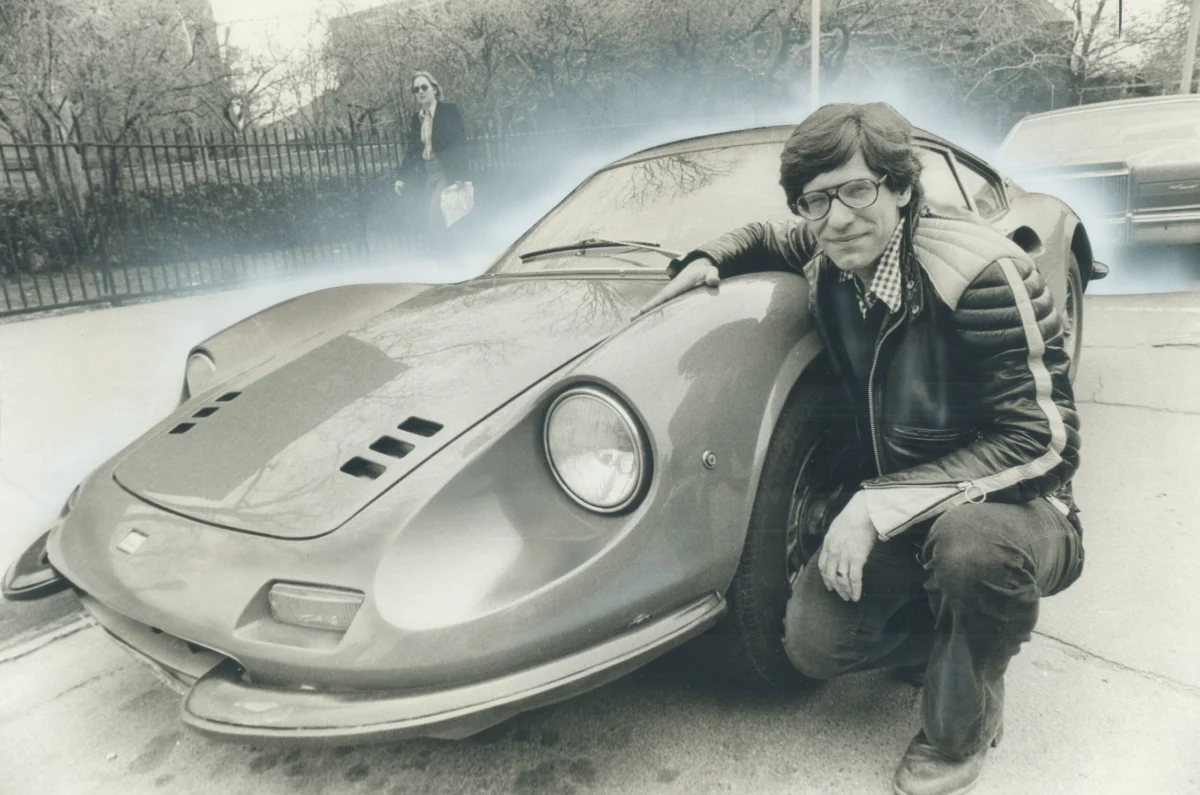
Over the last few years, Charli XCX has emerged as the music world’s most high-profile Letterboxd power user, a title that serves as a testament to her deep-seated obsession with the visual medium. This development comes as no surprise to anyone who maintains even a passing interest in online movie culture or has taken a cursory scan of the genre-bending pop titan’s social media feeds, where she often trades in the currency of niche cinematic references and high-concept aesthetics. Yet, despite her well-documented cinephilia, plenty of eyebrows shot up when David Cronenberg, the legendary body-horror auteur behind gnarly, visceral hits like Crash, was revealed to feature on the closing track for her new album, Music, Fashion, Film. The connection between the two is not merely incidental; Crash, the 1996 film exploring the dark intersection of car crashes and sexual arousal, served as the primary aesthetic and thematic inspiration for the title of Charli’s fifth studio album, also titled Crash. This collaboration, therefore, represents a full-circle moment for an artist who has spent her career blurring the lines between mainstream pop and avant-garde art.
Perhaps the last part of her new album’s title, Music, Fashion, Film, should have provided some clues regarding the ambitious scope of this project. The album artwork further cements this multidisciplinary approach, featuring Charli alongside a trio of seminal cultural titans: the legendary filmmaker Martin Scorsese, Velvet Underground co-founder and experimental pioneer John Cale, and the influential fashion designer Marc Jacobs. When the cover was first revealed, it seemed to reflect two distinct but intersecting narratives. Firstly, it signaled Charli’s full-throttle embrace of film and fashion as new modes of expression, whether through her aforementioned reinvention as an active online cinephile or her recent turn toward acting as a serious side-hustle. But more importantly, these three men are figures who cast long, indelible shadows over the art forms they represent. They are cultural icons with god-like reputations—men who have created, and will eventually leave behind, seismic artistic contributions that define their respective eras. Perhaps then, in the shadow of Brat—that all-consuming pop cultural moment that launched Charli XCX into the celebrity stratosphere in the space of a single summer—legacy would be top of her mind, and she began to wonder what her own might eventually be.
The album itself is chock-full of ironic, sometimes self-effacing lyrics about her post-Brat mega-fame, a status that has brought her both unprecedented power and a new level of personal exhaustion. Many critics have already noted how deliberately "un-Brat" the record feels. While Brat was an exercise in neon-green hyper-visibility and club-ready maximalism, Music, Fashion, Film takes a sharper, more jagged turn. Many of the songs carry an atypically rocky, guitar-driven sound, though it is hardly the total rejection of club music that some fans had feared it might be. Instead, it feels like the "morning after" the club—a sonic landscape that is self-conscious, self-aware, and deeply self-interested. It is a record that wrestles with the concept of authenticity in the wake of an identity-breaking event. When a persona becomes as large as Brat did, the artist behind it often feels a desperate need to reclaim their humanity from the brand. And then comes that final track, “No One Lasts Forever,” and the Cronenberg cameo, which might just be the key to unlocking the entire thematic puzzle of Charli’s current era.
The song centers on Charli, seemingly in the aftermath of a long, grueling night in Paris, chatting about "philosophy" with a "French girl." The lyrics evoke the very specific, often uncomfortable "6 a.m. afters" vibes—that moment when the chemical highs are wearing off, the sun is beginning to cut cruelly through the window blinds, and the sound of birds chirping signals the arrival of a reality that no one in the room is ready to face. This state of being is often described by seasoned party-goers as "hell," a liminal space where the fun has ended but the sleep hasn’t yet arrived. Once again, Charli uses this setting to grapple with her public persona amid the dizzying highs and crushing lows of the Brat phenomenon. She acknowledges that while the parties might be more exclusive and the guest lists more prestigious, the scrutiny toward her character has intensified to a point of toxicity. She notes how people frequently misread her as "irresponsible and rude," or assume she is constantly "off her nut" on various substances. Through the haze of the Parisian morning, she reaches a sobering conclusion: all of this is ephemeral. If "nothing’s gonna last forever," as the soaring yet melancholic chorus suggests, then why should she care about the fickle opinions of the public?
This is the precise moment where David Cronenberg enters the fray. Sadly for those hoping for a dark-synth vocal performance, the director does not get to flex his singing chops. Instead, the feature takes the form of a spoken-word interlude, an excerpt taken from an hour-long conversation he and Charli recorded together in Toronto last year. Charli recently explained the origins of this meeting to the music station Triple J, stating, "I went to Toronto to sit down with him and record him. We chose the parts that felt most related to the song, but the entire conversation itself is so interesting." In the selected excerpt, Cronenberg’s voice—calm, clinical, and hauntingly steady—describes what appears to be a near-death experience. It is a moment of profound vulnerability from a man whose filmography is defined by the grotesque and the indestructible.
"As I was lying there on the sidewalk, I did not think about art at all," Cronenberg says, his voice cutting through the atmospheric production of the track. "I thought about people, I thought about life." This admission is staggering coming from a man of his stature. Even as a legend of the game, a pioneer of the "New Flesh" whose work is studied in universities worldwide, the things that mattered when confronted with his own mortality were much smaller and more personal: family, friends, and the quiet intimacy of loved ones. "Yes, some artists have created art that has survived thousands of years… But experientially, for them, they are dead, they are gone," he continues, dismantling the very idea of artistic immortality that so many celebrities chase. "Oblivion is freedom." The track then arrives at a haunting end note that closes out Music, Fashion, Film, a refrain that echoes into the darkness: "They are dead, they are gone, no one lasts forever."
It is a deceptively simple point, yet one that carries the weight of a lifetime of observation. Once you are dead and gone, and our collective physical forms are reduced to atoms floating around in the infinite cosmos, none of the trappings of fame—the chart positions, the "it-girl" status, the critical acclaim—will matter anymore. One might read this perspective as purely nihilistic, or, in the parlance of the internet, "spooky as fuck." However, Cronenberg, through his soothing, grandfatherly tones, implies something much more radical: liberation. By extension, Charli adopts this philosophy as her own. What we leave behind matters to the living, certainly, but the dead have no control over their defining legacies, nor do they have to carry the burden of what people think of them.
For Charli XCX, this realization seems to be the final step in her evolution away from the Brat persona. There have already been several high-profile attempts to close the door on that era: she famously burned the acid-green Brat flag during her headline-grabbing set at Glastonbury, and she collaborated on the meta-satire documentary The Moment, which deconstructed the very machinery of her fame. But those were external actions—performances of letting go. The collaboration with Cronenberg on "No One Lasts Forever" feels like an internal shift. It is the moment she finally accepts that the "stratospheric celebrity" she achieved in the summer of 2024 is just another fleeting flicker in the grand timeline of the universe.
By placing herself alongside Scorsese, Cale, and Jacobs, Charli is not just claiming a seat at the table of icons; she is acknowledging that even the tallest chairs eventually crumble. Music, Fashion, Film is an album that uses the aesthetics of high art to argue for the importance of the human experience over the artistic product. It suggests that while Charli XCX the brand might be scrutinized, dissected, and eventually forgotten, Charli the person is finding freedom in that eventual oblivion. As the final notes of the album fade into silence, the listener is left not with the ringing of a club anthem, but with the quiet, chilling, yet strangely comforting wisdom of a man who has looked at the end and found peace in the fact that no one, not even a pop star, lasts forever. This story, which explores the intersection of pop stardom and existential philosophy, originally appeared in British GQ, marking a significant moment in the ongoing cultural discourse surrounding one of modern music’s most provocative figures.
