
 By Rifan Muazin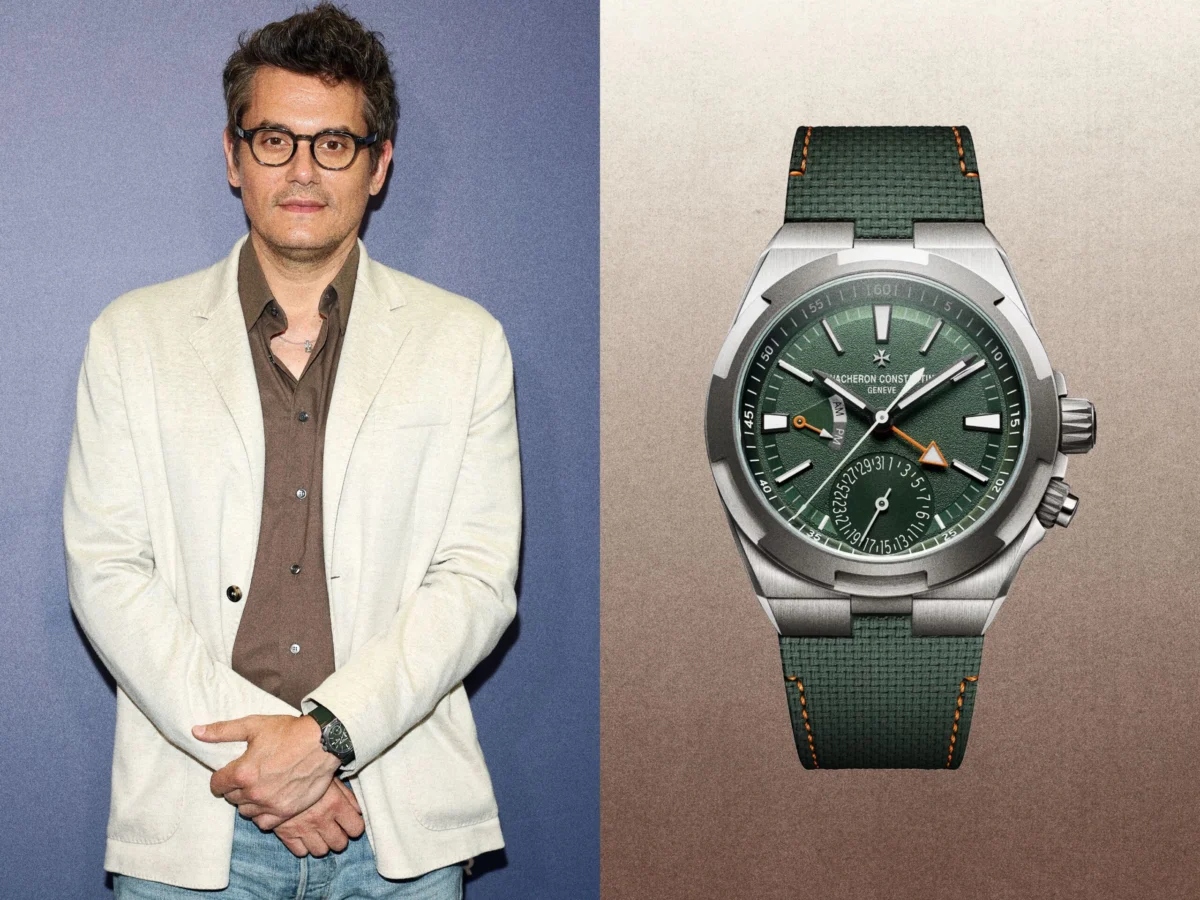
In the rarefied air of high-end watch collecting, few names carry as much weight or market-moving gravity as John Mayer. Often credited with igniting the modern obsession with vintage Rolex and Patek Philippe through his landmark appearances on "Talking Watches," Mayer has transitioned from a mere enthusiast to a tastemaker whose wrist choices can shift secondary market prices overnight. His influence is so pervasive that it has become a rite of passage for other artists; as Ed Sheeran famously remarked to GQ, the journey for many singer-songwriters begins the moment they meet Mayer and are introduced to the mechanical soul of a timepiece. This week, however, Mayer bypassed his usual rotation of "grail" vintage pieces to spotlight a modern masterpiece that underscores a shifting trend in the industry: the rise of the high-concept, technically proficient tool watch.
While Mayer’s collection is legendary for its deep bench of rare "Jigsaw" Rolex Day-Dates and unreleased Audemars Piguet Royal Oaks, his choice for the Hollywood Reporter’s Philanthropist of the Year ceremony was the Vacheron Constantin Overseas Dual Time in a striking new green configuration. This specific model, part of the "Cardinal Points" sub-collection, represents more than just a luxury accessory; it is a nod to the spirit of exploration and the intersection of horology and altruism. The Overseas line, Vacheron Constantin’s answer to the integrated-bracelet sports watch craze, has spent decades in the shadow of the Patek Philippe Nautilus and the Audemars Piguet Royal Oak. However, under the stewardship of collectors like Mayer, it is finally claiming its rightful place as a member of the "Holy Trinity" of sports watches.

The Overseas Dual Time "Green" is the western anchor of a four-piece collection released during the Watches and Wonders 2026 exhibition in Geneva. Each dial color in the series corresponds to a cardinal direction—brown for south, white for north, blue for east, and green for west—a thematic choice that ties the watch to the history of global navigation. The lineage of this specific model can be traced back to the 2019 "Everest" prototype worn by National Geographic photographer Cory Richards during his ascent of the world’s highest peak. That watch, a rugged titanium and tantalum beast, eventually spawned a limited production run that became an instant cult classic. When Richards’ prototype was auctioned at Phillips’ Game Changers for over $106,000, it proved that there was a massive appetite for Vacheron watches that prioritized utility and ruggedness alongside haute horlogerie finishing.
Mayer’s decision to wear this watch while being honored for his work with the Heart and Armor Foundation was a masterstroke of symbolic alignment. Heart and Armor, which Mayer co-founded, focuses on veterans’ health, particularly PTSD and civilian-veteran engagement, and has funded over $13 million in scientific research. Wearing a watch born from the extremes of Everest—a tool designed for those who push the limits of human endurance—complemented the gravity of the occasion. Technically, the Overseas Dual Time is powered by the Calibre 5110 DT, a movement that allows for the simultaneous reading of two time zones with a day/night indicator and a date sub-dial synchronized with local time. It is a "true" GMT, meaning the local hour hand can be adjusted independently, making it the quintessential companion for a global traveler.
While Mayer occupied the philanthropic spotlight, the world of sports and entertainment provided equally compelling horological narratives this week. In the realm of unique commissions, Shohei Ohtani, the Los Angeles Dodgers’ dual-threat phenom, has elevated the concept of the "celebrity watch" to a level of personalization rarely seen. Seiko, a brand deeply entwined with Japanese pride and Ohtani’s own career, gifted him the Seiko Startime—a piece unique that defies conventional timekeeping.

The Startime is not designed to track the minutes of a game or the seconds of a pitch; rather, it is a mechanical monument to Ohtani’s work ethic. The watch features a movement architecture designed to track the passage of one million hours. To put that in perspective, one million hours is approximately 114 years—a timeframe that exceeds a human lifespan and speaks to the "10,000-hour rule" of mastery taken to a supernatural extreme. The dial consists of successive rotating rings that track 1,000, 10,000, 100,000, and finally 1,000,000 hours. As the scale increases, the motion of the rings becomes nearly imperceptible, a poetic representation of how great legacies are built through tiny, invisible increments of daily effort. Encased in high-intensity titanium with a sapphire crown, the Startime is a testament to Seiko’s "Micro Artist Studio" capabilities, proving that they can compete with the most avant-garde Swiss maisons when the occasion demands it.
The week also saw a resurgence of "Big Watch Energy" courtesy of NFL legend Drew Brees. Appearing on "The Tonight Show Starring Jimmy Fallon," the former Saints quarterback opted for the Panerai Radiomir California 3 Days (PAM 424). In an era where watch diameters have been trending downward toward the 36mm to 39mm range, Brees’ choice of a 47mm stainless steel powerhouse was a refreshing reminder of Panerai’s military DNA. The "California Dial"—a mix of Roman numerals on the top half and Arabic numerals on the bottom—is one of the most debated and beloved designs in horology.
Originally developed by Rolex for Panerai in the 1940s to provide high visibility for Italian Navy frogmen, the design was dubbed "error-proof" by Rolex. The name "California" didn’t come from the Navy, however; it emerged in the 1980s when a Los Angeles-based dial refinisher named Kirk Rich became famous for restoring these specific dials. Brees’ Radiomir, with its wire lugs and onion crown, is a direct aesthetic descendant of those early military instruments. Powered by the hand-wound P.3000 calibre, it offers a three-day power reserve, making it a robust, historically significant piece that fits the stature of a Super Bowl-winning quarterback.

In contrast to Brees’ rugged Panerai, comedian Kevin Hart brought a touch of ultra-thin elegance to the same late-night set. Hart, a known Patek Philippe loyalist with a collection that rivals the world’s top private collectors, was spotted wearing the new Nautilus Ref. 5810/1G-001. This watch is the crown jewel of the Nautilus’s 50th-anniversary celebrations (1976-2026). Limited to just 2,000 pieces, the 5810/1G is rendered in 18k white gold and measures a slim 41mm.
What makes the 5810 particularly special is the movement—the legendary Calibre 240. This ultra-thin, self-winding movement utilizes an off-center 22k gold micro-rotor, allowing the watch to maintain a profile of just 6.9mm. For a sports watch with 100 meters of water resistance, this level of thinness is an engineering marvel. The sunburst blue dial retains the classic horizontal embossing that Gérald Genta envisioned half a century ago, but the removal of the seconds hand gives this anniversary edition a minimalist, almost "tuxedo-ready" aesthetic. On Hart’s wrist, it served as a reminder that while the Nautilus remains one of the most "hyped" watches on the planet, its foundations are built on genuine horological sophistication.
Finally, no discussion of elite watch collecting is complete without Tom Brady. At Fanatics Fest NYC, the seven-time champion wore what many consider the pinnacle of modern Audemars Piguet: the Royal Oak Extra-Thin Self-Winding Flying Tourbillon Chronograph RD#5. The "RD" designation stands for Research and Development, a series reserved for AP’s most experimental and technically advanced prototypes that eventually make it to limited production.

The RD#5, released to celebrate AP’s 150th anniversary, is a tour de force of material science. It features a case made of titanium and Bulk Metallic Glass (BMG). BMG is an amorphous alloy that lacks the crystalline structure of traditional metals, making it incredibly resistant to wear and corrosion while offering a unique luster. The watch combines a flying tourbillon at 6 o’clock with a flyback chronograph, all while maintaining an "extra-thin" profile that defies the complexity of its complications. Perhaps most impressive is the new pusher system, which has been engineered to provide a haptic response similar to a high-end smartphone—a bridge between the mechanical world and modern technology.
This week’s celebrity sightings reveal a maturing market. The "flex" is no longer just about the price tag; it is about the story, the technical achievement, and the historical context. Whether it is John Mayer using a green Vacheron to signal his philanthropic journey or Shohei Ohtani wearing a million-hour Seiko to symbolize his dedication, the watches on these famous wrists are more than just jewelry. They are mechanical biographies, reflecting the values and the ambitions of the men who wear them. As we move toward the second half of the decade, the integration of cutting-edge materials like BMG and the celebration of half-century milestones like the Nautilus’s 50th anniversary suggest that the golden age of watch collecting is far from over—it is simply becoming more sophisticated.
