
 By Isnaini Azizah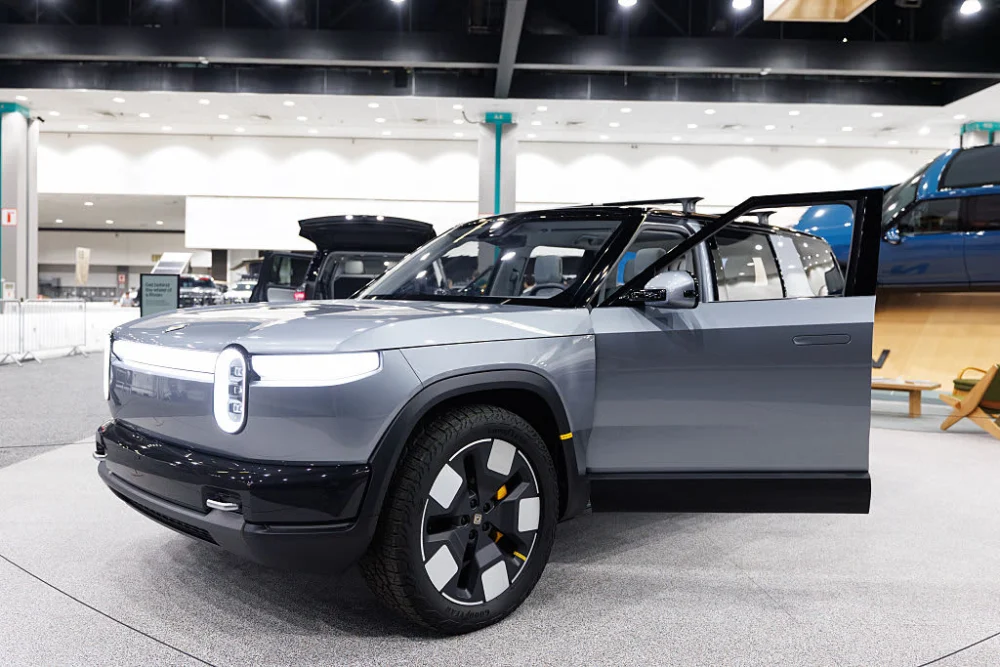
Rivian’s 2026 guidance includes increasing vehicle deliveries to between 62,000 and 67,000 units, which would be up by 47% to 59% compared with 2025. This aggressive growth trajectory is not merely an ambitious target but a structural necessity for a company that has spent years burning through billions of dollars in cash to establish its manufacturing footprint. That increase is expected to be assisted by the launch of the R2 SUV during the second quarter, a vehicle that represents the cornerstone of Rivian’s long-term survival strategy. While the R1T pickup and R1S SUV established the brand’s identity as a rugged, high-tech outdoorsman’s companion, their high price tags—starting in the $70,000 range—limited their total addressable market. The R2, with an expected starting price of approximately $45,000, aims to compete directly with the Tesla Model Y and other midsize electric crossovers that currently dominate the global EV landscape.
Rivian CEO RJ Scaringe told CNBC’s Phil LeBeau on Thursday that the R2 is expected to be the "majority of the volume" of the business by the end of 2027, as it ramps up production at its sole factory in Normal, Illinois. The transition to the R2 involves more than just a new body style; it represents a fundamental overhaul of Rivian’s engineering philosophy. Scaringe noted that the R2 is designed for manufacturability in a way the R1 series was not. By utilizing a simplified electrical architecture and a more efficient bill of materials, Rivian expects to cut production costs significantly. The company is betting that the lessons learned from the "production hell" of the R1 launch will allow for a smoother, faster ramp-up for the R2.
Despite the optimistic delivery outlook, the financial road ahead remains paved with red ink. The electric vehicle maker said it expects adjusted pre-tax losses for 2026 of between $1.8 billion and $2.1 billion and capital expenditures between $1.95 billion and $2.05 billion. That compares with nearly $2.1 billion in adjusted pre-tax losses and $1.7 billion in capital expenditures last year. These figures underscore the "J-curve" of automotive manufacturing: the company must spend heavily on tooling, labor, and supply chain logistics for the R2 before a single dollar of revenue from those units is realized. Scaringe described 2025 to investors Thursday as a "foundational year" for Rivian, while saying 2026 will mark "an inflection point" for the company. This inflection point refers to the moment when the company’s volume production finally begins to outpace its fixed costs, leading toward the elusive goal of net profitability.

The market responded with cautious exuberance to the news. Shares of Rivian were up more than 20% during premarket trading Friday after closing at $14, down roughly 5%. Investors appeared to find solace in the company’s narrowing losses and its ability to achieve a positive gross profit, a milestone that has eluded many of its peers in the "EV startup" space. Rivian’s full-year 2025 revenue, including $1.7 billion during the fourth quarter, was up 8% compared with $4.97 billion in 2024. This growth, while steady, reflects the cooling demand for high-end electric trucks as early adopters are satiated and the broader consumer base remains wary of high interest rates and charging infrastructure gaps.
Perhaps the most significant financial highlight of the report was Rivian’s achievement of its first annual gross profit. The company reported a gross profit of $144 million in 2025, including $120 million during the fourth quarter. This metric is closely watched by analysts because it indicates that the company is finally making more money on the sale of its vehicles than it costs to physically build them, excluding the overhead of corporate staff and research. However, this profit was not solely the result of vehicle sales. It was driven largely by Rivian’s software and services joint venture with Volkswagen, which provided a high-margin revenue stream that offset $432 million in losses for its automotive business last year. The partnership with Volkswagen is a multi-billion dollar lifeline that allows the German auto giant to utilize Rivian’s advanced zonal electrical architecture and software stack in its own future models.
This year’s gross profit may not be as fruitful, with Rivian CFO Claire McDonough describing it as a "transition year" as it ramps up R2 production. McDonough warned that the costs associated with retooling the Normal factory and the initial inefficiencies of the R2 assembly line would likely weigh on margins in the short term. Investors view gross profit as a key indicator of a business’s health before operating expenses, interest, and taxes are factored in. Achieving sustained gross profitability is the prerequisite for convincing the market that Rivian can eventually stand on its own without further dilutive capital raises.
The company’s net loss last year was $3.6 billion, an improvement from a loss of $4.75 billion in 2024. That includes an $804 million loss during the fourth quarter, accelerated by a decrease in earnings from the sale of regulatory credits. This dip in credit revenue was largely expected following changes by the Trump administration to federal fuel economy and emissions standards. In previous years, Rivian and other EV makers could sell their excess zero-emission credits to traditional manufacturers who failed to meet environmental mandates. With the loosening of these standards, the market value of such credits has softened, forcing Rivian to rely more heavily on its core business operations.

To weather this period of high spending and regulatory shifts, Rivian has maintained a robust war chest. The company ended the fourth quarter with $6.59 billion in total liquidity, including nearly $6.1 billion in cash, cash equivalents, and short-term investments. While this provides a substantial runway, the projected capital expenditures of $2 billion for 2026 mean that Rivian must maintain strict fiscal discipline. This year is a crucial one for the automaker as it attempts to deliver on promises of technological advancements and improved profitability with the R2. The roughly $45,000 midsize vehicle, per Rivian, is expected to cut build material costs in half, reduce production complexity, and significantly grow demand and sales.
The R2 launch is also a test of Rivian’s manufacturing agility. The company said the R2 is expected to initially be produced by one plant shift, followed by a second shift by the end of this year. This phased approach is intended to ensure quality control while managing the burn rate of labor costs. Additional R2 details by model, such as pricing, options, and performance specifications, will be available on March 12, a date that has become a major catalyst for the company’s stock.
While the R2 is the future, the present still relies on the R1 platform and the company’s commercial division. Rivian has made important strides with its first-generation R1 pickup and SUV, but the market for such pricey EVs has slowed across the entire industry. Competitors like Ford and General Motors have scaled back their EV ambitions in response to this slowdown, but Rivian, as a pure-play EV maker, does not have the luxury of falling back on internal combustion engine sales. It also continues to produce an all-electric delivery van (EDV), historically purchased by its largest shareholder, Amazon. The relationship with Amazon remains a vital pillar of the business, providing a steady, predictable demand for vehicles even as the consumer market fluctuates.
The broader industry context remains challenging. High interest rates have made the monthly payments on a $75,000 R1S prohibitive for many families, and the lack of a comprehensive, reliable charging network continues to be the primary hurdle for EV adoption. Rivian’s decision to adopt Tesla’s North American Charging Standard (NACS) and its ongoing build-out of the Rivian Adventure Network are attempts to mitigate these concerns. However, the ultimate solution is the R2—a vehicle that hits the pricing sweet spot of the American consumer. As RJ Scaringe and his team look toward 2026, the goal is clear: survive the "foundational" transition of 2025 to emerge as a profitable, high-volume leader in the next generation of the global automotive industry.
