
 By Rifan Muazin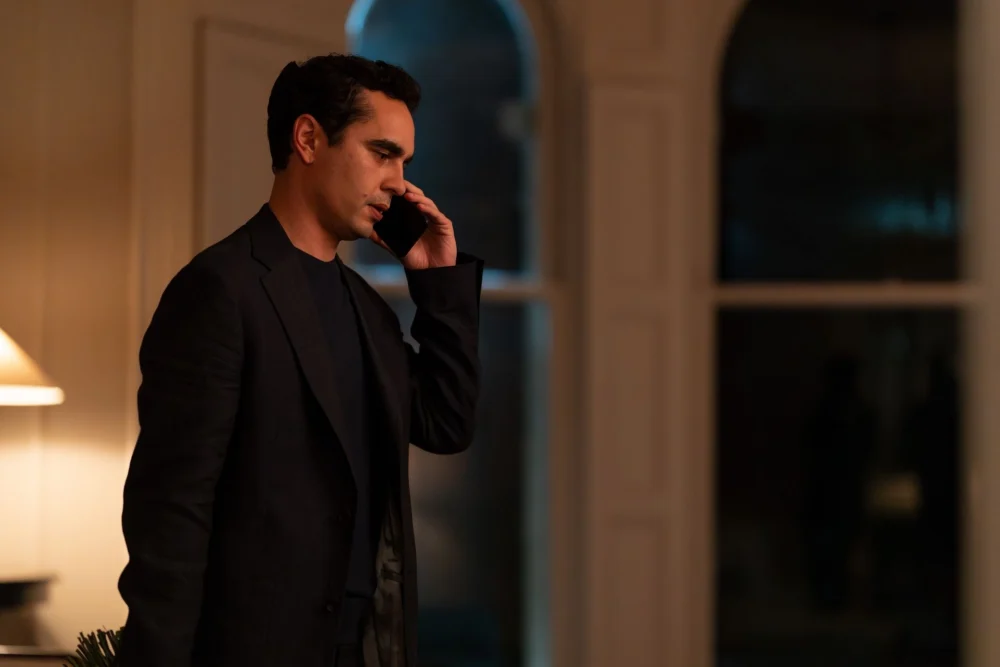
The fourth season of HBO’s high-stakes finance drama Industry has functioned as a "soft reboot," shedding the familiar, sterile hallways of the Pierpoint & Co. trading floor for the volatile, high-gloss world of London’s fintech and venture capital sectors. At the center of this metamorphosis is Max Minghella, an actor whose career has spanned Oscar-winning prestige films like The Social Network and long-running Emmy-winning juggernauts like The Handmaid’s Tale. Despite this storied resume, Minghella identifies his current tenure as Whitney Halberstram, the enigmatic and ethically flexible co-founder of the neo-bank Tender, as the most creatively fulfilling chapter of his professional life. Through six episodes, Whitney has emerged not just as a corporate antagonist, but as a complex avatar for the intersection of American tech-bro aggression and British institutional decay.
In the season’s pivotal sixth episode, titled “Dear Henry,” Whitney’s carefully constructed house of cards begins to tremble under the weight of a public short-selling campaign led by the relentless Harper Stern (Myha’la). As the pressure mounts, the episode delivers a moment of surrealist brilliance that Minghella describes as a “miracle moment” of television. During a tense, high-stakes phone call with Harper, Whitney begins to croon Whitney Houston’s iconic 1987 hit, “I Wanna Dance with Somebody.” The scene serves as a masterclass in characterization, blending the sociopathic detachment of American Psycho’s Patrick Bateman with the desperate showmanship of a founder whose valuation is evaporating in real-time. Minghella notes that the script’s fusion of the "Whitney" name connection, the lyrics’ yearning for intimacy, and the cold reality of the financial war room created a "genius" confluence that he felt immensely grateful to perform.
The evolution of Industry in Season 4 has been marked by the introduction of Tender, a platform that serves as a narrative surrogate for the real-world complexities of the fintech industry. Originally conceived as a specialized payment processor for adult content—a "porn bank" designed to reroute payments that traditional institutions find too risky—Tender has been aggressively refashioned by Whitney into a "neo-bank" aimed at the elite. This transition mirrors real-world financial shifts where digital-first banks attempt to disrupt traditional banking by targeting specific demographics or bypassing legacy regulations. Whitney’s ambition, however, transcends mere banking; he is a man who deals in the currency of influence. Early in the season, we saw him ruthlessly oust his best friend and co-founder, Jonah (played by Kal Penn), in a cold-blooded pivot toward Henry Muck (Kit Harington), the aristocratic scion of a powerful media family.
In “Dear Henry,” the consequences of Whitney’s machinations arrive in full force. Harper Stern, having identified the rot at the core of Tender, goes public with her short position, declaring that "the emperor’s clothes were shed some time ago." As the market reacts and Tender’s viability is questioned, Whitney shifts from visionary founder to scorched-earth cleaner. His methods are as dark as they are effective, involving a web of escorts, blackmail, and deep-seated manipulation. It is revealed that Hayley (Kiernan Shipka), a character previously seen orbiting the central group, is an escort hired by Whitney specifically to exploit the vulnerabilities of figures like Henry and Yasmin (Marisa Abela). Furthermore, Whitney secures his position by blackmailing Eric Tao (Ken Leung), using a recording of a sexual encounter to silence the veteran banker. This act of cruelty marks a turning point for the show, as it threatens to remove one of its foundational characters from the board.
The relationship between Whitney and Henry Muck provides the episode with its emotional and psychological backbone. The "Dear Henry" of the title refers to a series of voiceovers and a physical letter that Whitney writes to Henry, framing their partnership as an unbreakable bond of shared culpability. Throughout the episode, the nature of Whitney’s interest in Henry remains tantalizingly ambiguous. While Henry is a perfect "fall guy" for Tender’s legal troubles due to his family’s political shield, the show hints at a genuine, perhaps unrequited, affection. A haunting early scene shows Whitney approaching a showering Henry with roses, only to retreat in silence when Yasmin enters. Later, the two share a night in London’s underground scene, featuring moments of intimacy that challenge the typical "finance bro" archetype. Minghella acknowledges this ambiguity, noting that while the initial intention was for Whitney to have authentic feelings, the performance evolved into something more opaque—a dance between genuine desire and the use of sexuality as a tool for control.
Minghella’s portrayal of Whitney is particularly striking given his own background. A British actor playing an American in a show that obsessively deconstructs the relationship between the two cultures, Minghella brings a unique perspective to Whitney’s disdain for the United Kingdom. In one of the episode’s most biting lines, Whitney laments ever bringing his business to "this history project of a fucking island." This sentiment captures the friction between the American "move fast and break things" ethos and the rigid, class-bound structures of British society. Minghella explains that his personal experience living between the two countries allowed him to tap into the "duology" of the show’s setting, finding the American accent to be a useful tool in portraying a character who is "not totally authentic."
The creative architecture of Season 4, overseen by creators Mickey Down and Konrad Kay, draws from a rich well of cinematic influences. While many viewers have noted the Social Network vibes—unsurprising given Minghella’s presence—the creators have cited the corporate thriller Michael Clayton and the Aaron Sorkin-penned Steve Jobs as primary inspirations. The Whitney and Jonah dynamic, in particular, mirrors the fractured friendships found in the origin stories of Silicon Valley giants. However, the confrontation between Whitney and Harper in Episode 6 takes on a different cinematic quality. Minghella viewed their phone call as a "Clarice and Hannibal" moment from The Silence of the Lambs, or a high-stakes dialogue between Clint Eastwood and John Malkovich in In the Line of Fire. He sees Whitney and Harper as "mirror images"—two hyper-ambitious outsiders who lack traditional empathy and are driven solely by the personification of their goals. This "Batman-Joker" dynamic provides the show with a legendary antagonistic energy that elevates it beyond a mere procedural about stocks and bonds.
The fallout of Whitney’s actions also leaves the future of Eric Tao in a precarious state. For many fans, Eric has been the moral (if deeply flawed) compass of Industry. Whitney’s decision to blackmail him represents a level of depravity that Minghella himself found difficult to reconcile. "For me, what he did to Eric was the hardest thing in the whole show," the actor admits, highlighting the emotional weight of destroying a character who has survived countless previous battles. This act of betrayal ensures that as the season approaches its final two episodes, the stakes are no longer just financial; they are existential.
As Industry heads toward its Season 4 conclusion, the landscape has been irrevocably altered. The "Dear Henry" device—initially appearing as a romantic overture—is revealed to be a suicide pact of sorts, as Whitney informs Henry that they are now "stronger together" because they are both implicated in Tender’s fraudulent activities. The show, which began as a story about hungry graduates trying to find their footing at Pierpoint, has matured into a sprawling epic about the corruption of the soul in the pursuit of capital.
Minghella’s contribution to this evolution cannot be overstated. By bringing a sense of "naturalistic" human complexity to a character who could easily have been a one-dimensional villain, he has helped the show navigate its most ambitious season yet. Whether Whitney Halberstram is a man in love, a man in fear, or simply a man who wants to watch the world burn while singing Whitney Houston, remains to be seen. What is certain is that Industry has successfully reinvented itself, proving that even when the "emperor" is naked and afraid, the spectacle of his downfall is impossible to turn away from. The final episodes promise to recenter the narrative on the core quartet of Yasmin, Harper, Eric, and Robert, but the shadow of Whitney’s "history project" will undoubtedly loom large over whatever remains of their careers and lives.
