
 By Lina Irawan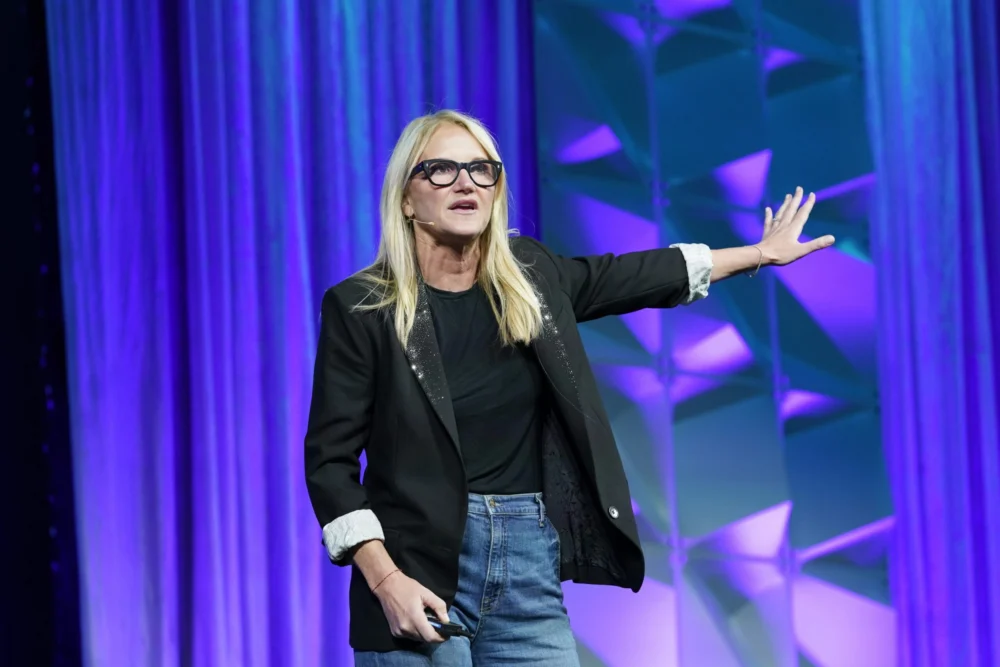
Across America, a pervasive sentiment of career stagnation grips the workforce, manifesting differently across generations but stemming from a common root: a feeling of being trapped. Young Gen Z professionals, fresh into the labor market, find themselves navigating an unprecedented landscape, often compelled to accept any available "gig," even if it means compromising on salary or career aspirations, as highlighted by reports from early 2026 detailing instances of job seekers accepting significant pay cuts. Meanwhile, their mid-career counterparts, grappling with a sluggish hiring market and economic uncertainties, are largely "keeping their heads down," prioritizing job security over ambition or change. This widespread disillusionment paints a stark picture of a workforce yearning for progress but feeling constrained by external forces. However, millionaire podcast personality and motivational speaker Mel Robbins offers a compelling counter-narrative, positing that this feeling of being irrevocably trapped is often an illusion, a symptom rather than an inherent state of being.
Robbins, a figure synonymous with self-improvement and actionable advice, recently articulated her philosophy in a candid interview with CBS News Sunday Morning. "If you feel stuck in your life, it doesn’t mean you’re broken. It means that what’s missing in your life is growth," she asserted. This powerful statement reframes a common personal struggle from a deficit model—where one perceives oneself as fundamentally flawed or incapable—to an opportunity model, where the solution lies in actively seeking expansion and development. Robbins candidly shared her own past experiences, recalling moments when she felt stuck and resisted the simplistic advice of "taking a class," feeling it implied a deeper brokenness. "No, what’s missing is you are stagnant," she clarified. Her core belief is that the human spirit thrives on progression, and when that element is absent, a sense of inertia sets in. "And if I can get you to grow and learn in any area of your life, you start to change, things start to loosen up and you start to see different things," she explained, emphasizing that even incremental growth in one aspect of life can create a ripple effect, unlocking new perspectives and opportunities across one’s entire existence. This perspective aligns with psychological theories that link personal growth to overall well-being and resilience, suggesting that continuous learning and adaptation are not just career strategies but fundamental human needs.
The creator and host of The Mel Robbins Podcast and a former CNN legal analyst, Robbins herself embodies the principles of continuous growth and strategic adaptation she advocates. Her successful two-decade career transformation from a legal professional to a best-selling author, highly sought-after motivational speaker, and influential podcast host is a testament to her philosophy. Robbins attributes her sustained success and ability to pivot effectively to a keen sense of observation and a willingness to "lean in" to change. She identifies the key to being exceptional as honing in on "all the details that most people ignore" and dismissing as unimportant. This involves not just noticing surface-level trends but delving into their underlying mechanisms and potential implications. Catching a nascent trend that initially flies under the radar, she argues, can be the defining factor in a career trajectory, particularly in an era increasingly defined by rapid technological advancements, most notably the rise of artificial intelligence.
Robbins specifically highlighted the critical importance of technological literacy, particularly for older generations, lamenting a common pitfall she observes among her peers. "If there’s anything that I’m really proud of as a businesswoman, because I see too many of my friends in their late 40s and 50s making a mistake, which is when technology starts to change, people tend to lean back because they’re afraid," Robbins explained. This natural human inclination towards caution in the face of the unknown can, in a rapidly evolving digital landscape, become a significant professional detriment. In stark contrast, Robbins has consistently adopted a proactive stance: "I have always leaned in." This approach, she argues, is no longer merely advantageous but essential. As major employers worldwide accelerate the integration of AI into virtually every corner of their organizations, from automated customer service to data analysis and content generation, tech mastery has transitioned from being a desirable attribute to a fundamental candidate prerequisite. The ability to understand, utilize, and even critically assess new technologies is no longer a "plus" but a baseline expectation. Robbins implores individuals across all demographics, but especially older generations who might feel intimidated by the pace of change, to actively familiarize themselves with new technologies. Her warning is stark and pragmatic: neglecting this crucial aspect of professional development can lead to severe career consequences. "I understand the tech and the nuances, because if you don’t, people who do will run you over," she cautioned, underscoring the competitive imperative of digital fluency in the modern workforce. This isn’t just about learning to use a new app; it’s about understanding the strategic implications of AI, recognizing its potential to automate routine tasks, and developing complementary skills that leverage AI rather than being replaced by it.
While Robbins champions growth and adaptation for all, she reserves a profound sense of empathy for Gen Z, recognizing the unprecedented challenges they face in their early careers. This generation, she notes, is under immense scrutiny and often unfairly criticized. Reports from early 2026 indicate a tightening job market for entry-level roles, with a significant number of junior positions now susceptible to automation by AI. Furthermore, the traditional merit-based pay bumps are reportedly falling flat, with employers favoring more generalized, often smaller, "peanut butter raises," leaving young professionals struggling to keep pace with inflation and build financial stability. Robbins acknowledges that Gen Zers are frequently lambasted as "weak," overly reliant on social media, and prone to anxiety. However, she asserts that these labels fail to capture the immense external pressures they contend with—career hurdles that their older coworkers simply weren’t forced to navigate.
"The average 20-year-old today is under so much stress and pressure and chaos right now," Robbins continued, emphasizing the unique historical context of their entry into adulthood. "And it’s not stress and pressure and chaos that existed five or six years ago." She elaborates on a multitude of economic and societal shifts that have fundamentally altered the landscape for young adults. Homeownership, once a foundational milestone of adulthood, now feels "out of reach" for many, burdened by soaring housing costs and stagnant real wages relative to previous generations. The generational wealth gap continues to balloon, exacerbated by the economic aftershocks of multiple crises, leaving Gen Z with fewer safety nets and pathways to accumulation. Compounding these issues is the colossal student loan debt, a burden significantly heavier than what previous generations faced, hindering financial freedom and major life decisions.
Moreover, Gen Z is coming of age amidst a volatile global economy, characterized by persistent recession fears, high inflation, and a fundamental restructuring of work itself, with hybrid models becoming the norm. "They’re now in the middle of a recession, in hybrid work. The world is shifting, the landscape is shifting," Robbins observed. This confluence of factors creates an environment of profound uncertainty, making traditional career planning difficult and fostering a sense of being adrift. Her message to this generation is one of profound validation: "If you feel lost, I’m not surprised. This is exactly how you should feel." It’s a powerful acknowledgment that their struggles are not indicative of personal failing but a rational response to an objectively challenging environment.
Data unequivocally supports Robbins’ compassionate assessment of Gen Z’s predicament. They are, by far, the most downtrodden when it comes to their work lives. A comprehensive 2025 survey from MetLife revealed that only 62% of young professionals report being happy in their jobs—the lowest figure across any generational cohort. This lack of job satisfaction has significant implications, affecting productivity, mental well-being, and long-term career engagement. Beyond the immediate dissatisfaction at the office, Gen Z employees are contending with profound economic disarray outside of work. A sobering 2025 analysis by Glassdoor further underscored this anxiety, indicating that only about 43% of entry-level workers felt positive about their employer’s six-month business outlook. This figure represents the lowest level of confidence Glassdoor has recorded since its data collection began in 2016, reflecting deep-seated fears about job security, economic stability, and the overall trajectory of their careers. This pervasive lack of optimism is not merely a transient mood but a reflection of systemic economic pressures that make long-term planning and financial security feel increasingly precarious. In light of these formidable headwinds, Robbins’ concluding affirmation to Gen Z is both comforting and empowering: "You’re doing your twenties correctly—there’s nothing wrong with you." It’s a message that seeks to alleviate the self-blame often associated with feeling stuck and instead encourages resilience, self-compassion, and the pursuit of growth, even in the most challenging of times.
