
 By admin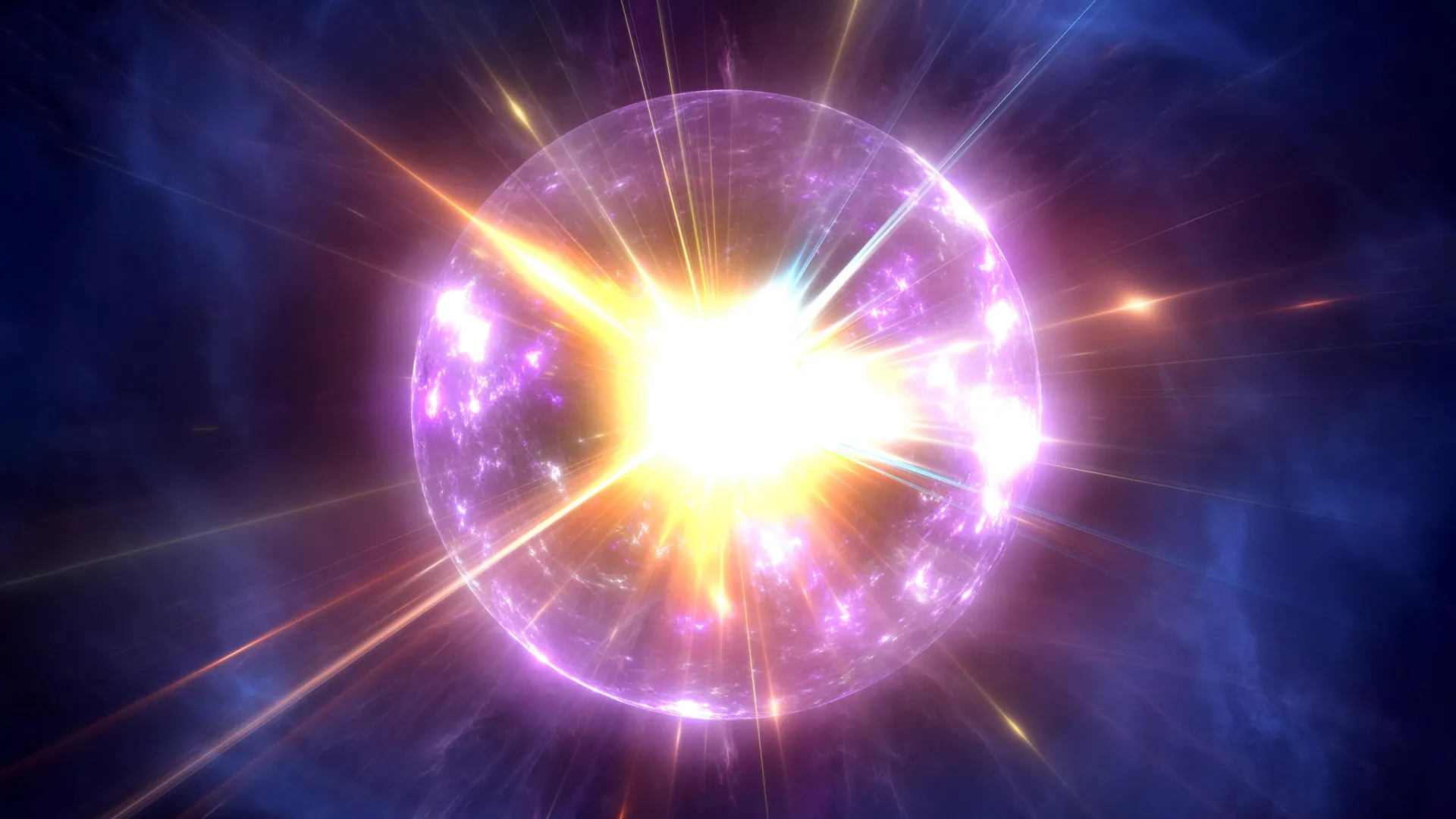
This paradigm-altering conclusion comes from Henry Tye, the Horace White Professor of Physics Emeritus in the College of Arts and Sciences at Cornell University. Professor Tye’s work updates a long-standing cosmological model, specifically one built around the enigmatic "cosmological constant." This concept, initially introduced by Albert Einstein over a century ago, has been a cornerstone of modern predictions regarding the universe’s evolution. Its value and sign dictate whether the universe expands forever or eventually collapses.
For decades, the prevailing scientific consensus, supported by observations of accelerating cosmic expansion, leaned towards a positive cosmological constant, implying an eternal, ever-expanding universe destined for a "Big Freeze" or "Heat Death." However, Professor Tye’s re-evaluation of the latest observational data presents a dramatically different picture. "For the last 20 years, people believed that the cosmological constant is positive, and the universe will expand forever," Tye remarked. "The new data seem to indicate that the cosmological constant is negative, and that the universe will end in a big crunch." This finding, detailed in his paper "The Lifespan of our Universe," published in the Journal of Cosmology and Astroparticle Physics, challenges the very foundation of cosmic fate.
The Cosmological Constant: A Century of Cosmic Debate
The concept of the cosmological constant (often denoted by the Greek letter Lambda, Λ) has a storied and often controversial history in cosmology. It was first introduced by Albert Einstein in 1917 as an ad hoc term in his equations of general relativity. At the time, Einstein, like most scientists, believed the universe was static and eternal. His original equations, however, predicted an expanding or contracting universe. To counterbalance gravity and achieve a static universe, Einstein added Λ.
The discovery of cosmic expansion by Edwin Hubble in 1929, which showed galaxies receding from each other, famously led Einstein to abandon the cosmological constant, reportedly calling it his "biggest blunder." For many years, Λ was largely ignored, with cosmologists favoring models where the universe’s expansion was either slowing down due to gravity or was precisely balanced to expand forever but at an ever-decreasing rate.
The 1990s brought a stunning revelation that revitalized the cosmological constant. Observations of distant Type Ia supernovae indicated that the universe’s expansion was not merely continuing, but was accelerating. This acceleration could not be explained by ordinary matter and energy, whose gravitational pull should slow expansion. To account for this mysterious cosmic push, scientists reintroduced a positive cosmological constant, interpreting it as a form of "dark energy"—an intrinsic energy density of space itself, exerting a repulsive gravitational force. This led to the widely accepted Lambda-CDM (ΛCDM) model, which posits that the universe is composed of roughly 5% ordinary matter, 27% dark matter, and 68% dark energy, with dark energy being equivalent to a positive cosmological constant. Under this model, the universe would expand indefinitely, growing colder and emptier until all stars die out and even black holes eventually evaporate, leading to a "Big Freeze."
Big Crunch Versus Endless Expansion: A Cosmic Dichotomy
Standard cosmology has traditionally outlined two primary fates for the universe, largely dictated by the overall density of matter and energy, and critically, the nature of dark energy or the cosmological constant.
-
Endless Expansion (Big Freeze/Heat Death): If the cosmological constant is positive (or dark energy behaves like one), its repulsive force dominates gravity. The universe would continue expanding forever, with galaxies growing ever more distant, eventually passing beyond each other’s observable horizons. Stars would exhaust their fuel, black holes would form and eventually evaporate, and the universe would descend into a state of maximum entropy—a cold, dark, and empty void. This has been the dominant prediction for the past two decades.
-
Big Crunch: If the cosmological constant is negative, or if the density of matter and dark matter is sufficiently high to overcome dark energy’s push, the expansion would eventually halt. Gravity would then reassert its dominance, causing the universe to reverse course and begin contracting. This contraction would accelerate, leading to galaxies colliding, stars being ripped apart, and all matter being compressed into an increasingly hot and dense state, ultimately collapsing back into a singularity—a "Big Crunch" analogous to the Big Bang in reverse.
Professor Tye’s updated model unequivocally supports the second outcome, the Big Crunch, thereby challenging the prevailing "endless expansion" narrative. His calculations suggest this ultimate collapse would occur in approximately 20 billion years from the present day.
Dark Energy Data from DES and DESI: The Crucial Evidence
The pivotal evidence underpinning Professor Tye’s revised cosmic timeline stems from fresh findings released this year by two of the world’s leading dark energy observatories: the Dark Energy Survey (DES) in Chile and the Dark Energy Spectroscopic Instrument (DESI) in Arizona. A crucial aspect of these findings is the remarkable agreement between the results from these two observatories, situated in opposite hemispheres, lending significant credibility to their measurements.
The Dark Energy Survey (DES), operating from the Víctor M. Blanco Telescope at Cerro Tololo Inter-American Observatory in Chile, spent six years mapping hundreds of millions of galaxies and thousands of supernovae. Its primary goal was to precisely measure the expansion history of the universe and probe the nature of dark energy through four distinct methods: galaxy clusters, weak gravitational lensing, baryon acoustic oscillations, and Type Ia supernovae. The sheer volume and precision of DES data have provided some of the tightest constraints on cosmological parameters to date.
The Dark Energy Spectroscopic Instrument (DESI), situated at Kitt Peak National Observatory in Arizona, is an even more ambitious project. It uses 5,000 robotic fiber optics to simultaneously collect light from 5,000 distant galaxies and quasars, allowing it to create the most detailed 3D map of the universe ever attempted. By measuring the redshifts of tens of millions of galaxies over five years, DESI aims to chart the universe’s expansion history with unprecedented accuracy, particularly focusing on the imprint of baryon acoustic oscillations (BAO) to measure cosmic distances.
Both DES and DESI are designed to delve deeper into the mystery of dark energy, which, at approximately 68% of the universe’s total mass-energy content, dictates its large-scale structure and evolution. Their core objective is to test whether dark energy is truly a simple, constant property of space itself, as represented by Einstein’s original cosmological constant, or if its behavior is more complex and dynamic. The new data, Tye notes, suggest the latter. The universe does not appear to be governed solely by a pure cosmological constant. Instead, the observations hint that something additional or more complex may be influencing how dark energy behaves over cosmic time.
Tye’s Innovative Model: A Hypothetical Particle and a Negative Constant
To reconcile the latest observations with cosmological theory, Professor Tye and his collaborators, former Hong Kong University of Science and Technology doctoral students Hoang Nhan Luu and Yu-Cheng Qiu, proposed an innovative theoretical adjustment. They introduced the concept of a hypothetical particle with an extremely low mass. This particle, in the early stages of cosmic history, would have acted indistinguishably from a conventional cosmological constant, driving the initial acceleration of the universe. However, as the universe evolved, the effects of this particle would have subtly changed, leading to a dynamic dark energy component. This evolving influence is what allows the model to fit the latest observational data more precisely than a static cosmological constant.
Crucially, this dynamic dark energy component effectively pushes the underlying, fundamental cosmological constant into negative territory. While the effective dark energy observed today might still have a positive influence, the intrinsic cosmological constant in Tye’s model is negative. This is a profound distinction. If the fundamental cosmological constant is negative, it implies that gravity, or a force analogous to it, will ultimately dominate the universe’s destiny. "People have said before that if the cosmological constant is negative, then the universe will collapse eventually. That’s not new," Tye explained. "However, here the model tells you when the universe collapses and how it collapses." This specificity—providing a concrete timeline and mechanism for the Big Crunch—is what sets Tye’s work apart.
The Mechanics of the Big Crunch: When and How
Based on Professor Tye’s calculations, the universe, currently 13.8 billion years old, has approximately 11 billion years of expansion remaining. During this period, galaxies will continue to drift apart, and the cosmic microwave background will cool further. After reaching its maximum size at roughly 24.8 billion years from the Big Bang, the universe’s expansion will halt. From that point, gravity, now unopposed by a sufficiently strong repulsive dark energy, will begin to pull everything back together.
This contraction phase is projected to last for about 20 billion years. Initially, the reversal might be subtle, but it would steadily accelerate. Galaxies, which are currently moving away from each other, would begin to approach and eventually collide. As the universe shrinks, the density of matter and radiation would increase dramatically. The cosmic microwave background would reheat, gradually transforming from a cold whisper to a scorching roar. Stars and planets would be subjected to immense gravitational forces, eventually being ripped apart. The very fabric of spacetime would become increasingly warped and compressed, culminating in a singularity—a point of infinite density and temperature, mirroring the conditions of the Big Bang. This "Big Crunch" would mark the definitive end of the universe as we know it, completing a cosmic cycle that began with an explosion and ends with an implosion.
Ongoing Observations and Future Tests: Refining Cosmic Destiny
The scientific community is not resting on these laurels. The quest to precisely understand dark energy and the universe’s fate is a global endeavor, with hundreds of researchers diligently analyzing millions of galaxies and meticulously measuring the distances between them. DESI is set to continue collecting observations for another year, further refining its already impressive dataset. Beyond DESI, a suite of advanced projects is already contributing or preparing to begin, promising an even deeper insight into cosmic evolution:
- Zwicky Transient Facility (ZTF): Located at Palomar Observatory in San Diego, ZTF is an astronomical survey that scans the entire northern sky every two nights. It specializes in discovering transient astronomical events, such as supernovae (including Type Ia, crucial for distance measurements and dark energy studies), variable stars, and asteroids. Its rapid cadence and wide field of view provide essential data points for understanding cosmic distances and expansion rates.
- European Euclid Space Telescope: Launched by the European Space Agency (ESA), Euclid is designed to map the large-scale structure of the universe over the past 10 billion years. By observing billions of galaxies up to 10 billion light-years away, Euclid will create a 3D map to precisely measure the acceleration of the universe and shed light on the nature of dark energy and dark matter. Its high-precision measurements will be critical in testing models like Tye’s.
- NASA’s Recently Launched SPHEREx Mission: The Spectro-Photometer for the History of the Universe, Epoch of Reionization, and Ices Explorer (SPHEREx) is an all-sky infrared survey mission. It aims to create a spectral map of the entire sky in 96 different color bands, providing unprecedented detail on the universe’s composition and evolution. SPHEREx will search for signatures of the Big Bang, trace the history of galaxy formation, and detect water and organic molecules in star-forming regions. Its data will contribute to a more comprehensive understanding of the cosmic inventory.
- Vera C. Rubin Observatory: Named after Vera Rubin, M.S. ’51, a pioneering astronomer who provided compelling evidence for dark matter, this observatory in Chile will host the Legacy Survey of Space and Time (LSST). The LSST will survey the entire southern sky every few nights for a decade, producing a petabyte of data nightly. It will create an unprecedented deep and wide cosmic movie, providing invaluable data for studying dark energy, dark matter, transient phenomena, and mapping the Milky Way. Its comprehensive dataset will be a definitive testbed for current and future cosmological models.
These forthcoming observations will provide crucial tests for Professor Tye’s model. Should they further corroborate the deviations from a pure cosmological constant, and support the dynamic behavior of dark energy, the case for a Big Crunch will grow stronger.
Understanding the Beginning and the End: A Complete Cosmic Narrative
Professor Tye emphasizes the profound significance of being able to calculate the total lifespan of the universe in measurable terms. For any scientific endeavor, and indeed for humanity’s innate curiosity, identifying both the starting point and the eventual conclusion provides a more complete and satisfying narrative. This quest for cosmic bookends helps cosmologists better understand the full story of cosmic history.
"For any life, you want to know how life begins and how life ends — the end points," Tye articulated. "For our universe, it’s also interesting to know, does it have a beginning? In the 1960s, we learned that it has a beginning. Then the next question is, ‘Does it have an end?’ For many years, many people thought it would just go on forever. It’s good to know that, if the data holds up, the universe will have an end."
The discovery of the Big Bang in the 1960s, largely through the detection of the cosmic microwave background radiation, provided a robust scientific framework for the universe’s origin. Now, Tye’s work offers a compelling, data-driven scenario for its ultimate demise. This potential closing of the cosmic loop—from a singular beginning to a singular end—provides a comprehensive framework for understanding the universe’s entire existence, offering a tantalizing glimpse into the ultimate fate of all that is. While the universe’s ultimate destiny remains an active area of research, Professor Tye’s calculations, driven by the latest observations, represent a significant leap forward in our understanding of this grand cosmic narrative.
