
 By admin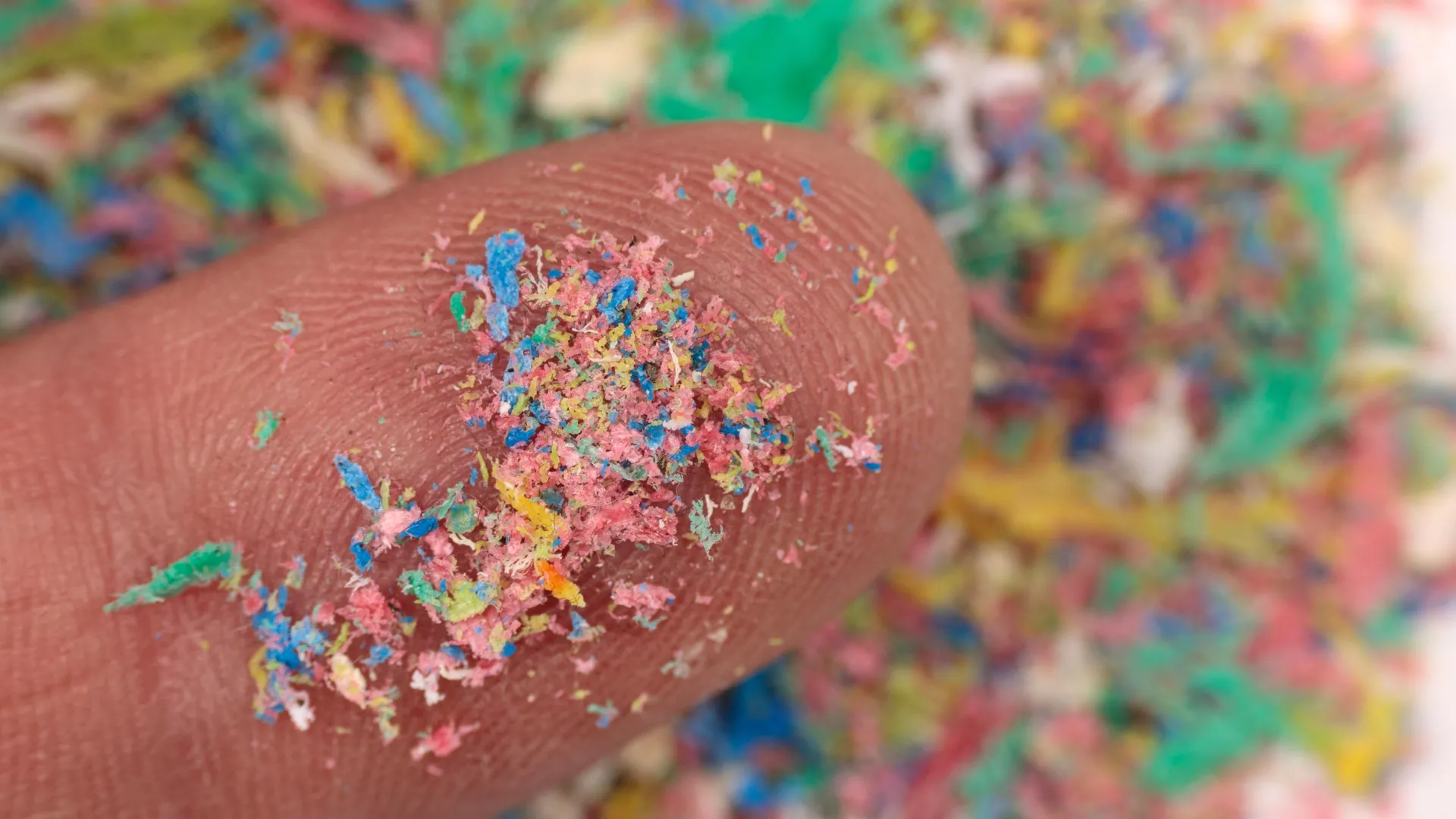
The genesis of this significant project dates back to 2020, when Jack Devlin, then a burgeoning Ph.D. student with a keen interest in environmental science, experienced a profound awakening. He recounts being deeply affected by a documentary that starkly portrayed the global crisis of plastic pollution, its devastating reach across oceans and landmasses. The visual evidence of plastic choking marine life and contaminating pristine beaches left an indelible impression. This experience resonated strongly with him, shaping his subsequent academic and professional trajectory. After completing his doctoral studies, Devlin moved to Scotland, transitioning into a role as a marine ornithologist, further immersing himself in the study of ecosystems under anthropogenic pressure. Yet, the initial question sparked by that documentary lingered: "Watching that film just blew my mind," Devlin recalls. "I started reading about plastic’s effects on insects and thought, ‘If plastic is turning up everywhere else, what about rare places like Antarctica?’" This seemingly simple question laid the foundation for a complex scientific inquiry into the planet’s least explored continent.
At the heart of this pivotal study is Belgica antarctica, a species that embodies the spirit of survival in one of Earth’s most unforgiving environments. This nonbiting midge, a small fly no larger than a grain of rice, holds the distinction of being the southernmost insect on the planet and the sole insect species native exclusively to the Antarctic continent. Its diminutive size belies its immense ecological importance and extraordinary physiological adaptations. The larval stage of Belgica antarctica thrives in the damp, often saturated mats of moss and algae that cling to the rocky outcrops along the Antarctic Peninsula. These seemingly desolate habitats support an astonishing density of life, with populations of the midge larvae sometimes reaching nearly 40,000 individuals per square meter. In this fragile, nutrient-poor ecosystem, these larvae play an indispensable role. By feeding on decaying plant matter, they act as vital decomposers, facilitating the recycling of essential nutrients and thus helping to maintain the delicate balance and functioning of the Antarctic soil ecosystem. Without them, the nutrient cycle would slow dramatically, impacting the entire terrestrial food web.
Devlin eloquently describes Belgica antarctica as a "poly-extremophile," a term that perfectly encapsulates its remarkable capacity to endure multiple, simultaneous environmental extremes. These insects routinely confront intense cold, surviving temperatures well below freezing by producing cryoprotectants that prevent ice formation within their cells and by undergoing periods of anhydrobiosis, a state of suspended animation in response to desiccation. They are also highly tolerant of drying out, capable of losing a significant portion of their body water and later rehydrating without harm. Furthermore, they cope with high salt concentrations in their environment, drastic swings in temperature, and the punishing levels of ultraviolet (UV) radiation that penetrate the thin Antarctic ozone layer. Their physiological toolkit for survival is truly extraordinary, representing millions of years of evolutionary adaptation to a uniquely harsh world. "So, the big question was: Does that toughness protect them from a new stress like microplastics, or does it make them vulnerable to something they’ve never seen before?" Devlin pondered, setting the stage for the experimental phase of their research. This question underscored a fundamental dilemma in environmental science: can organisms adapted to natural extremes cope with novel anthropogenic stressors?
While Antarctica is frequently romanticized as an untouched wilderness, a bastion of purity against the tide of human impact, scientific reality paints a more nuanced picture. Previous research has increasingly chipped away at this myth, consistently detecting plastic fragments in seemingly pristine environments across the continent, from freshly fallen snow to the depths of nearby seawater. Though the concentrations of plastics in Antarctica remain commendably lower than in most other parts of the world, their presence is undeniable and deeply concerning. These insidious pollutants arrive through a complex interplay of natural and anthropogenic pathways. Ocean currents, particularly the powerful Antarctic Circumpolar Current, act as global conveyor belts, transporting plastic debris from distant continents. Wind transport plays a significant role in distributing microscopic plastic fibers and fragments over vast distances, depositing them even in remote inland areas. Furthermore, human activity directly linked to the burgeoning network of research stations and the increasing volume of tourist and supply ships contributes to the local plastic burden through accidental spills, waste disposal practices, and the general presence of human-made materials. The discovery of microplastics in Antarctic snow, for example, highlighted the atmospheric pathway, demonstrating that even the air itself carries these ubiquitous contaminants.
To systematically investigate the potential effects of plastic exposure on Belgica antarctica, the research team meticulously designed and conducted a series of controlled laboratory experiments. Larvae were exposed to varying concentrations of microplastics in their controlled environment, mimicking potential exposure scenarios in their natural habitat. The initial results gleaned from these experiments were, surprisingly, not immediately alarming. "Even at the highest plastic concentrations, survival didn’t drop," Devlin reported, indicating that acute exposure to microplastics did not lead to immediate mortality. "Their basic metabolism didn’t change either. On the surface, they seemed to be doing fine." Parameters such as respiration rates, often a sensitive indicator of physiological stress, remained stable. This initial observation might have led some to conclude that the resilient midge was unaffected.
However, a more profound and granular analysis of the experimental data uncovered a subtle yet potentially critical hidden impact. Larvae that had been exposed to higher levels of microplastics exhibited a measurable reduction in their fat reserves. This was a particularly concerning finding, especially given that their carbohydrate and protein levels remained consistent. In the context of Antarctica’s exceptionally harsh and unpredictable climate, fat reserves are not merely an optional energy source; they are absolutely essential for survival. Fat serves as a crucial long-term energy store, vital for enduring prolonged periods of intense cold, desiccation, and food scarcity, especially during the long Antarctic winter. A reduction in these reserves could severely compromise the midge’s ability to overwinter, reproduce successfully, or cope with additional environmental stressors. This suggests that while microplastics might not immediately kill the insect, they could insidiously undermine its long-term viability and resilience. The mechanism behind this fat reduction could involve an energetic cost associated with ingesting and processing non-nutritive particles, or a reduction in nutrient assimilation due to physical interference in the gut, leading to a reallocation of energy away from fat storage.
Devlin offered several hypotheses to explain why the impacts observed were subtle rather than catastrophic in the lab. He suspected that the slow feeding rates characteristic of organisms in cold conditions, coupled with the inherent complexity of natural soils, might limit the total amount of plastic the larvae actually ingest in a given period. The challenges inherent in conducting research in Antarctica also meant that the initial exposure experiment was limited to a relatively short duration of 10 days. Devlin sagely noted that "longer-term studies will be necessary to determine how ongoing exposure might affect the insects over time." This acknowledgment highlights the cumulative nature of microplastic pollution and the need for chronic exposure studies to truly understand its ecological ramifications.
The second, and arguably most critical, phase of the project shifted focus from controlled laboratory conditions to the harsh realities of the Antarctic wilderness. This phase addressed a straightforward yet fundamentally important question: Are wild Belgica antarctica larvae already ingesting microplastics in their natural environment? To answer this, the research team embarked on a dedicated research cruise in 2023, navigating the icy waters along the western Antarctic Peninsula. From 20 distinct sites spread across 13 islands, the team meticulously gathered Belgica antarctica larvae. To prevent any post-collection feeding that could contaminate the samples, the specimens were preserved immediately upon collection, ensuring an accurate snapshot of their gut contents at the time of sampling.
To detect the minute plastic particles potentially lodged within the insects, Devlin collaborated with two leading experts in their respective fields: Elisa Bergami, a renowned microplastics specialist from the University of Modena and Reggio Emilia, and Giovanni Birarda, an imaging expert based at Elettra Sincrotrone Trieste. This interdisciplinary collaboration was crucial for employing state-of-the-art analytical techniques. The researchers carefully dissected the five-millimeter larvae, extracting their gut contents for detailed examination. Using advanced imaging tools, specifically Fourier-transform infrared (FTIR) spectroscopy, which is capable of identifying the unique chemical "fingerprints" of particles, they could detect contaminants as small as four micrometers – a size far below the threshold of human vision and even smaller than a typical red blood cell.
Out of the 40 wild-caught larvae analyzed with this high-resolution technique, researchers positively identified two distinct microplastic fragments. At first glance, finding only two pieces might appear insignificant, especially when considering the vastness of the problem globally. However, Devlin views this discovery not as negligible, but as a crucial early warning signal. "Antarctica still has much lower plastic levels than most of the planet, and that’s good news," Devlin acknowledged, emphasizing the continent’s relative purity. "Our study suggests that, right now, microplastics are not flooding these soil communities. But we can now say they are getting into the system, and at high enough levels they start to change the insect’s energy balance." This connection back to the lab findings—the reduced fat reserves—underscores that even infrequent ingestion of microplastics in the wild could have subtle, yet cumulatively significant, physiological consequences for these delicate organisms. It signals a breach in the ecological defenses of one of Earth’s last bastions.
Considering the broader ecological implications, the fact that Belgica antarctica has no known land-based predators means that any plastic it consumes is unlikely to move far up the terrestrial food chain directly. However, the long-term effects on the midge itself remain a significant concern. The larvae develop over a two-year period, meaning they are exposed to their environment, and thus potentially to microplastics, for an extended duration. This prolonged exposure could lead to cumulative effects that were not fully captured in the short-term lab experiments. Furthermore, Devlin is particularly worried about how microplastic ingestion might interact with other escalating environmental pressures, most notably climate change. As Antarctica experiences warmer and drier conditions, these changes will add new layers of stress to an already extremophile organism. Reduced fat reserves, caused by microplastic ingestion, could diminish the midge’s capacity to cope with increased temperatures, greater desiccation stress, or altered food availability, potentially pushing this resilient species beyond its physiological limits. The cumulative impact of multiple stressors, often termed "multi-stressor effects," is a growing area of concern in ecological research, and the Antarctic midge provides a stark example of this complex interplay.
For Jack Devlin, this discovery transcends mere scientific data; it is a powerful, visceral testament to the ubiquitous nature of plastic pollution. "This started because I watched a documentary and thought, ‘Surely Antarctica is one of the last places not dealing with this,’" Devlin reflected, his voice conveying a sense of profound realization. "Then you go there, you work with this incredible little insect that lives where there are no trees, barely any plants, and you still find plastic in its gut. That really brings home how widespread the problem is." This experience underscores the critical message: no corner of the Earth, no matter how remote or extreme, is immune to the pervasive reach of human activity. Antarctica, often seen as a bellwether for global environmental health, is now unequivocally part of the global plastic pollution crisis.
Looking ahead, future research endeavors will focus on continuous monitoring of microplastic levels in Antarctic soils, establishing long-term trends to understand the evolving nature of this contamination. Crucially, researchers plan to conduct more extensive, multi-stress experiments on Belgica antarctica and other Antarctic soil organisms. These experiments will aim to unravel the complex interactions between microplastic exposure and other environmental stressors like temperature fluctuations, desiccation, and altered nutrient availability. "Antarctica gives us a simpler ecosystem to ask very focused questions," Devlin explained, highlighting the continent’s utility as a natural laboratory. "If we pay attention now, we might learn lessons that apply far beyond the polar regions." The insights gained from studying this unique ecosystem could offer invaluable guidance for understanding and mitigating the global microplastic crisis, informing conservation strategies and policy decisions worldwide. The resilience of Belgica antarctica has been tested by millennia of natural extremes; now, humanity presents it with a novel challenge, and the world watches to see if its extraordinary adaptations will be enough.
This pivotal work was made possible through the generous support of several key organizations, including the Antarctic Science International Bursary, the U.S. National Science Foundation, and the National Institute of Food and Agriculture.
Research reported in this publication was supported by the U.S. National Science Foundation under Award No. 1850988. The opinions, findings, and conclusions or recommendations expressed are those of the author(s) and do not necessarily reflect the views of the U.S. National Science Foundation.
This material is based upon work that is supported by the National Institute of Food and Agriculture, U.S. Department of Agriculture, Hatch Project under award number 7000545. Any opinions, findings, conclusions or recommendations expressed in this publication are those of the author(s) and do not necessarily reflect the view of the Department of Agriculture.
