
 By Rifan Muazin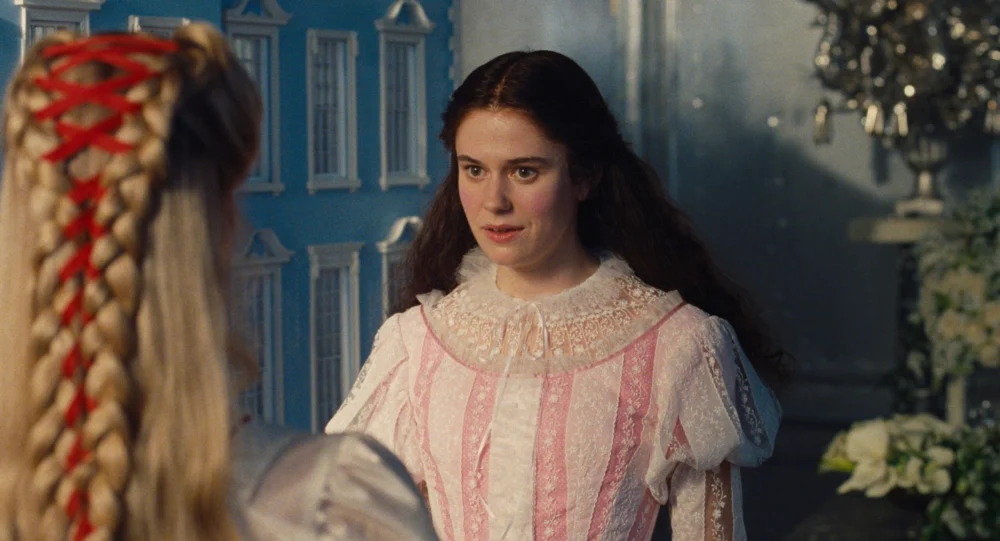
Emerald Fennell’s latest, fluid-spattered endeavor is a Technicolor take on Wuthering Heights, arguably the greatest and most influential gothic novel of all time, reimagined through a lens of saturated surrealism and modern provocations. The audience is expected to know the main beats of the original intellectual property: Cathy Earnshaw and Heathcliff grow up under the same eerie roof of the Yorkshire moors, bonding with a feral, metaphysical intensity that transcends social class and common decency. Their myriad mistakes, vengeful streaks, and vicious dispositions eventually drive them apart, making everyone in their orbit miserable until death offers a dubious reprieve. In the classic text, Cathy dies giving birth to her daughter, also named Catherine, while Heathcliff transforms into a singularly abusive landlord, consumed by a necrophiliac longing and a desire to dismantle the lineages of those who wronged him.
To this foundational gloom, Fennell adds her unmistakable signatures—the same campy, horny details and sharp-edged subversions that defined Promising Young Woman and Saltburn. As Tina Fey pointed out, almost clairvoyantly, in a recent appearance on the Las Culturistas podcast, Fennell’s work often builds toward a third act that takes a sexually violent or shocking turn designed to catch the audience off guard. In this adaptation, Fennell layers on bombastic visual flourishes that border on the psychedelic: baseball-sized strawberries that bleed juice like wounds and a river that runs a literal, viscous blood-red. Yet, beneath this sensory bombardment, the film ruthlessly scales down the most genius elements of Emily Brontë’s 1847 epic horror-romance. The abstract, ineffable qualities of the novel—the sense of cosmic doom and the blurring of two souls into one—seem to have been traded for a more tactile, pop-inflected aesthetic. Put another way, this is Wuthering Heights for a generation of silly, semi-culturally literate people who prioritize bright colors and "vibes" over the crushing weight of Victorian existentialism.
The film’s aesthetic choices are perhaps best encapsulated in a singular, unsettling scene. Bored, lonely, and aching for her moody childhood love interest, Cathy Linton—played by Margot Robbie, who appears distractingly dolled-up in ribbons that seem intended to infantilize her rather than garnish her natural beauty—leans forward during a stultifying dinner party. She sticks her pointer finger slowly through a quivering brick of clear gelatin until her digit broaches the gaping mouth of a dead fish encased within. It is a moment of pure Fennell: gross, erotic, and deeply weird. Cathy, much like the trout, has been embalmed in a Damien Hirst-style existence, trapped within a candy-hued manse packed with freaky architectural details. Her environment is a curated nightmare: a fireplace bedecked with white plaster hands that seem to reach for the inhabitants, red-lacquered floors that mirror the aforementioned bloody river, and a bedroom upholstered by her adoring but unfulfilling husband, Edgar, in an uncanny material that precisely mimics the tone and texture of his wife’s skin. Meanwhile, the connection between Cathy and Heathcliff is reduced to a series of juvenile, visceral pranks; as eternal children, they keep slipping raw eggs into each other’s beds, leaving the sheets perpetually squelching with yolk.
Visually, the most obvious stylistic comparison is Sofia Coppola’s 2006 masterpiece Marie Antoinette. However, where Coppola’s pop-scored biopic was as fevered at its emotional core as its trappings were frivolous, Fennell’s work struggles to find that same heartbeat. When Kirsten Dunst’s doomed monarch fled down a Versailles hallway to the post-punk sounds of The Strokes, the audience believed in her isolation and anguish. When she lolled on a lush hill with Axel Fersen, the chemistry was palpable—a necessary release for a woman stifled by the geeky, distant Louis XVI. In contrast, Fennell’s Cathy and Heathcliff (Jacob Elordi) fail to generate the same kind of heat. Whether they are "going at it" in the cramped backseat of a horse-drawn carriage, grappling in the garden amidst a heavy downpour, or wandering the moors, the passion feels performative rather than primal.
In terms of cinematography and character blocking, Fennell seems to have drawn far more inspiration from Yorgos Lanthimos’s 2023 perverted girl-power Bildungsroman, Poor Things. In that film, Emma Stone’s Bella Baxter made mincemeat of the phantasmagorical steampunk sets, her unfettered lust and burgeoning consciousness bleeding through the screen with such conviction that the surreal world felt lived-in. Fennell’s universe is no less beautifully shot, but Robbie’s Cathy merely flounces through it. She is pouty, blandly impetuous, and indistinct against the grandeur of the production design. Even in moments of intended extremity—such as a scene where Ms. Earnshaw masturbates furiously with her back against a jagged boulder—the performance lacks the grit required to make the audience "buy" her desperation.
As Heathcliff, Jacob Elordi brings a 6’5” stature that fits the film’s larger-than-life theme, yet his portrayal feels hamstrung by stylistic choices. He spends the first act hidden behind a scraggly, unconvincing wig that obscures his features. Once he emerges from this chrysalis of hair, he strides through the mists outfitted with a single, trendy earring to signal the passage of time and his newfound worldliness. While Elordi swoons over Cathy’s corpse in the finale with a concentrated anguish that almost manages to elicit a tear, there is a sense that he is holding back. Given his ability to project pure, terrifying evil as the villainous Nate Jacobs in Euphoria, his Heathcliff feels surprisingly sanitized. Heathcliff is, in the canon of literature, an actual monster—a man driven by a singular, destructive malice. Elordi fails to fully put the pedal to the metal, opting for a brooding romanticism that feels too safe for a character defined by his "ghastly" nature.
One of the film’s most successful elements, however, is its auditory landscape. The key moments are set to a superlative soundtrack curated and performed by Charli XCX. As an innovative pop artist who consistently "understands the assignment," Charli has tapped into the elemental agonies and frantic pulses of the original text with far more lucidity than the film’s visual direction. Her involvement elevates the material, providing a sonic depth that the script occasionally lacks. There is a convincing argument to be made that the film might have reached its full potential if Charli XCX—whose Brontë-worthy real name is Charlotte Aitchison—had simply donned a corset and played Cathy herself, bringing her signature "Brat" energy to the Yorkshire moors.
Ultimately, Fennell clearly set out to create something massive, infectious, and unapologetically overblown—a romantic confection so high on sex and its own audacity that the viewer has no choice but to succumb. However, by unfettering Cathy and Heathcliff from the "restrictions" of their canonical chastity, the film loses its tension. In the original novel, the pair never actually consummate their tortured relationship; their bond is something far more terrifying because it remains unfulfilled and metaphysical. By transforming their connection into a standard, albeit torrid, affair that is eventually broken off due to conventional guilt, Fennell has shrunk her protagonists. An unfathomably dark and toxic lifelong connection between two genuinely depraved souls is reduced to a pedestrian melodrama.
The void left by the lead performances is, fortunately, filled by the supporting cast. Heathcliff’s eventual rebound—a vaguely icky, dom-sub dalliance with Cathy’s sister-in-law—is a highlight of the film. Allison Oliver’s portrayal of the singularly pathetic Isabella Linton is arguably the best thing about the movie. During screenings, audiences have been noted to ripple with uproarious laughter at Isabella’s every squeaky-voiced utterance. Oliver leans into the absurdity of the character; she gifts Cathy a doll adorned with her own real hair and openly lusts after Heathcliff, eventually crawling around on the floor like a dog at his behest. It is a performance that understands the "camp" assignment perfectly.
Oliver definitively plants her flag in her introductory scene. Having fled the oppressive atmosphere of Wuthering Heights, Cathy listens at the Lintons’ garden wall as a goofily over-earnest Isabella regales her brother with a breathless, beat-by-beat breakdown of Romeo and Juliet. This monologue functions as a succinct meta-summary of Fennell’s Wuthering Heights as a whole. The film feels like a quirky, shallow friend whispering the broad strokes of a classic story into your ear at a party. Sure, she’s getting several plot points wrong, she’s leaving out the thematic soul of the work, and she’s inventing bodice-heaving sex scenes where previously there were none. But the sound of her voice is musical, the visuals are lovely, and you find yourself enjoying the scent of her perfume as it washes over you. In other words, you’re having enough fun that perhaps the finer details and the source material’s gravity don’t really matter in the end. It is a triumph of style over substance, a neon-lit tombstone for the Brontë legacy that manages to be entertaining even as it misses the point.
