
 By admin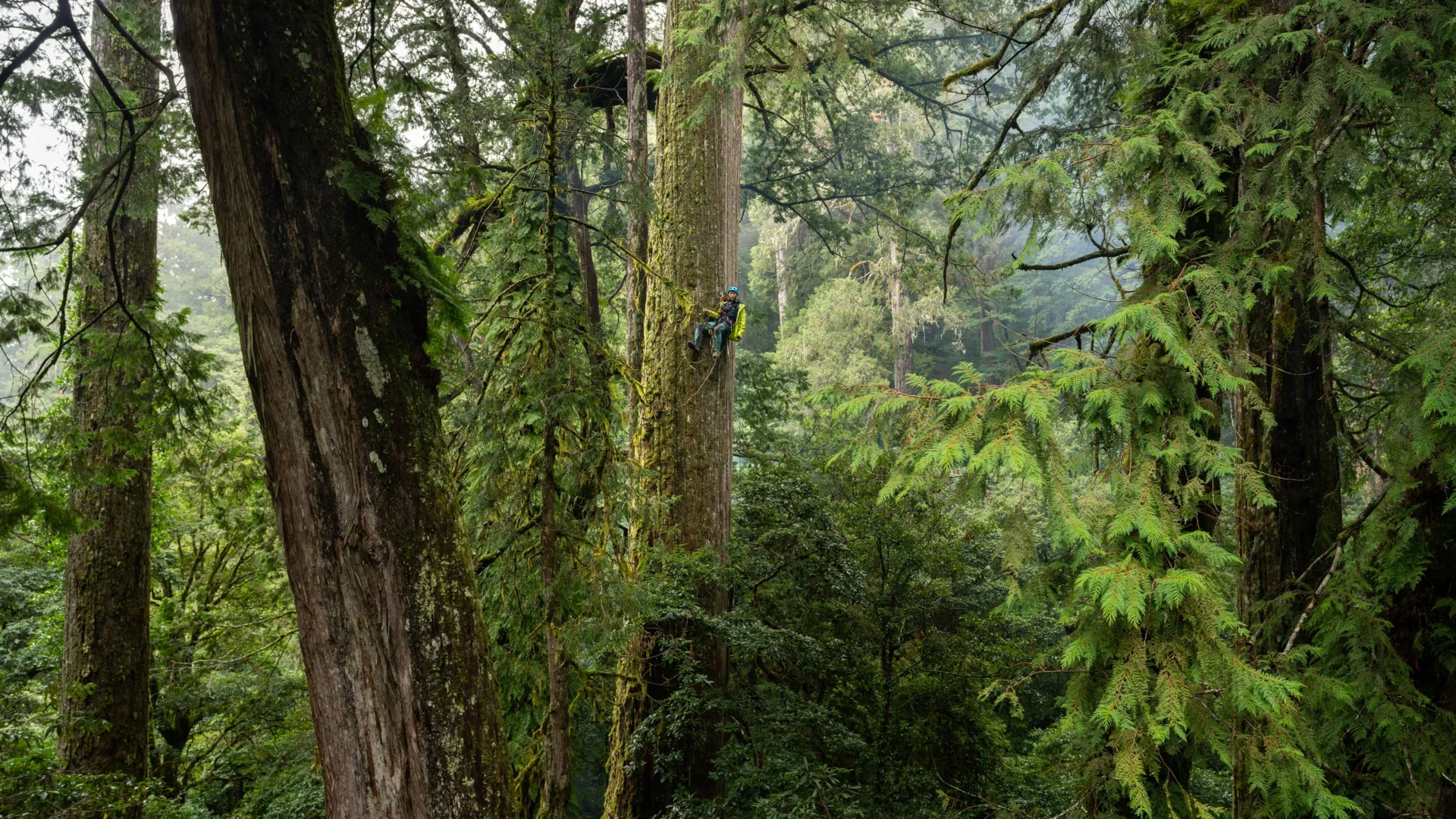
Since 2014, a dedicated consortium known as the ‘Taiwan tree seekers’ has embarked on an ambitious and often perilous quest to locate, precisely measure, and meticulously document these extraordinary trees. This pioneering group embodies a unique blend of expertise, bringing together the unparalleled agility and specialized knowledge of professional tree climbers, the rigorous analytical skills of ecologists, the foundational understanding of geologists regarding the island’s formation, and the cutting-edge capabilities of remote sensing specialists. Their collective mission extends beyond mere discovery; it aims to create a comprehensive scientific inventory, understand the ecological context that allows such giants to flourish, and ultimately champion their conservation.
This long and arduous search culminated in a monumental achievement in 2023, with the identification of an 84.1-meter-tall (276-foot-tall) Taiwania fir (Taiwania cryptomerioides). This magnificent specimen, a true living skyscraper, has since been officially recognized as the tallest tree not only in Taiwan but across the entirety of East Asia. Its sheer scale evokes a sense of awe, a sentiment beautifully encapsulated by the Indigenous Rukai people, who have bestowed upon these immense firs the poetic and evocative name: ‘The tree that hits the moon’. This name reflects a deep cultural connection to nature, acknowledging the trees’ immense stature that seems to brush against the celestial sphere, connecting earth and sky.
Taiwan’s Mountainous Landscape: A Cradle for Giants
Taiwan’s extraordinary geography provides the fundamental explanation for why trees of such colossal dimensions can thrive here. The island, covering an area of roughly 36,000 square kilometers – a size comparable to that of Switzerland – is predominantly defined by its dramatic mountainous terrain. A staggering 258 peaks pierce the clouds, soaring above 3,000 meters, with the majestic Mt. Jade (Yushan) reaching an apex of 3,952 meters. This rugged topography is a direct consequence of the ongoing collision between the Eurasian and Philippine Sea tectonic plates, a geological process that has uplifted and folded the landscape over millions of years, creating steep slopes, deep valleys, and a complex network of microclimates.
This wide and abrupt range in elevation, from subtropical coastlines to frigid alpine summits, fosters an exceptional level of biodiversity. An estimated 5,000 plant species flourish across Taiwan, inhabiting a spectrum of environments that extends from lush, humid tropical rainforests near sea level to cold, wind-swept alpine tundra at the highest elevations. This ecological diversity is further amplified by the island’s isolation, leading to a high rate of endemism, where many species are found nowhere else on Earth. The varied climatic zones—tropical, subtropical, temperate, and alpine—each contribute to distinct forest types, providing specific niches for a multitude of life forms.
Approximately 60% of Taiwan’s landmass remains cloaked in forest, hosting an estimated 950 million trees across the island. However, this verdant cover belies a complex history. Industrial logging, spanning a period from 1912 to 1991, during both the Japanese colonial era and subsequent post-WWII development, systematically removed much of the original primary forest, particularly the economically valuable camphor, cypress, and fir species. Vast swaths of ancient woodlands were felled to fuel industries and drive economic growth. Nevertheless, the island’s most formidable natural defenses—its steepest, most rugged, and most inaccessible terrain—acted as a de facto natural barrier. These challenging landscapes protected significant pockets of old-growth forest, preserving ancient stands that logging crews, despite their technological advancements, simply could not easily reach or exploit economically. These untouched enclaves would later become the focus of intense scientific scrutiny and conservation efforts.
The First Expeditions: Unveiling the Chilan Three Sisters
The organized scientific search for Taiwan’s arboreal giants officially commenced in August 2014, when researchers from the Taiwan Forestry Research Institute (TFRI) launched a major expedition into the Cilan conservation area. This protected region, renowned for its pristine forests, was chosen as the initial focal point due to persistent local reports of exceptionally large Taiwania firs. The primary goal was to thoroughly investigate a famous trio of these giants, affectionately known to local communities as the ‘Chilan Three Sisters.’
For many years, these magnificent trees had been a subject of local lore and admiration, yet they had never undergone rigorous scientific measurement or precise documentation. The ‘Taiwan tree seekers’ first comprehensive survey of the ‘Three Sisters’ revealed their impressive dimensions: the tallest among them stood at a verified 69.3 meters high, boasting a trunk nearly three meters in diameter. This initial scientific validation ignited broader interest.
The ‘Three Sisters’ garnered international acclaim in 2017 when professional tree climbers from ‘The Tree Projects’ in Australia traveled to Taiwan. These highly specialized arborists, equipped with ropes, harnesses, and custom camera gear, undertook the monumental task of photographing the ‘Three Sisters’ in their entirety, from the forest floor to the uppermost canopy. Their breathtaking imagery, captured through a series of daring ascents and intricate rigging, provided an unprecedented visual narrative, helping to introduce the remarkable scale and ecological grandeur of Taiwan’s ancient forests to a wider global audience, highlighting the island’s hidden natural wonders.
A Difficult Search Near Great Ghost Lake: The Limits of Ground Surveys
Encouraged by the successful documentation of the Chilan giants, the ‘Taiwan tree seekers’ turned their attention to a more remote and isolated wilderness area situated near Mt. Benya. Local accounts and preliminary surveys suggested that this region might harbor Taiwan’s largest concentration of Taiwania firs. Adding to its mystique, the area lies in close proximity to Great Ghost Lake, a site steeped in spiritual significance and considered sacred by Indigenous peoples, further underscoring the untouched nature of its surroundings.
Reaching this formidable location was an expedition in itself, demanding four days of grueling, uphill hiking, with team members carrying heavy scientific equipment, climbing gear, and provisions through dense, often pathless, forest. This arduous journey inadvertently illuminated a significant challenge inherent in searching for giant trees exclusively from the ground. In an ancient, old-growth forest characterized by a dense, multi-layered canopy, visual estimates of tree height from below can be profoundly misleading. The sheer verticality, combined with the obscuring foliage, creates optical illusions that make accurate assessment virtually impossible without direct measurement.
During that particular trip, the team successfully climbed and measured a tree reaching 71.7 meters. While an impressive achievement, it became increasingly evident that traditional ground-based surveys, reliant on visual assessment and even individual climbs, would be insufficient to systematically explore the vast, complex terrain of Taiwan’s mountain forests. A more efficient and reliable methodology was desperately needed to examine extensive areas of remote forest.
Using LiDAR to Map Giant Trees: A Technological Breakthrough
The task of finding individual giant trees amidst an estimated 950 million trees scattered across Taiwan’s intricate tapestry of mountains and deep valleys was, quite literally, like searching for a needle in an immense haystack. To transform this monumental challenge into a manageable scientific endeavor, the ‘Taiwan tree seekers’ forged a crucial partnership with remote sensing specialists at National Cheng Kung University. This collaboration marked a pivotal technological leap, as the team began integrating LiDAR (Light Detection and Ranging) technology into their search methodology.
LiDAR is an advanced 3D scanning method that revolutionized topographical mapping and vegetation analysis. The technology operates by deploying laser pulses from an aircraft, typically a helicopter or drone, towards the landscape below. These pulses rapidly scan the terrain, and by precisely recording the time it takes for each laser pulse to return to the sensor, the system can generate an exceptionally detailed three-dimensional model of the ground surface and, crucially, the overlying vegetation. This highly accurate point cloud data allows researchers to estimate the height of individual trees with remarkable precision over vast areas, offering an unprecedented aerial perspective into the forest canopy. This non-invasive approach drastically reduced the need for laborious ground expeditions to identify potential giants, streamlining the initial phase of the search.
Citizen Scientists Join the Search: The Human Element in Data Analysis
Despite the transformative power of LiDAR, Taiwan’s uniquely steep and irregular terrain presented a new set of challenges. Automated software algorithms, while powerful, often miscalculated tree heights, frequently reporting trees as being much taller than their actual stature. This was particularly prevalent when trees stood on the edges of cliffs, precipitous slopes, or alongside sharp, sudden changes in elevation. The algorithms struggled to differentiate between the true height of a tree and the dramatic drop in ground elevation beside it, leading to numerous false positives.
It became apparent that the human eye and cognitive ability were superior to the algorithm in recognizing and interpreting these geological ‘tricks’ within the complex LiDAR profile images. In response to this challenge, the project ingeniously expanded in 2020, evolving into a large-scale community effort. Hundreds of enthusiastic Taiwanese citizens, trained in interpreting LiDAR data, began examining the intricate profile images, dedicating countless hours to scrutinizing potential candidates and, most importantly, helping researchers eliminate tens of thousands of incorrectly identified ‘giant’ trees.
The scale of this problem, and thus the citizen scientists’ contribution, was substantial. The automated system had incorrectly measured an astonishing 93% of the trees it initially identified as giants. Without the meticulous review and contextual understanding provided by these dedicated citizen scientists, researchers could have spent years traveling to remote locations, only to find trees that were significantly shorter than the maps suggested, wasting invaluable resources and time. By the end of 2022, this extraordinary collaboration between scientists and the public culminated in the creation of the ‘Taiwan Giant Tree Map,’ an invaluable digital resource that meticulously documented 941 individual trees confirmed to be taller than 65 meters. This map became the definitive guide for future expeditions.
Finding the ‘Heaven Sword’: The Crowning Achievement
Armed with the meticulously curated ‘Taiwan Giant Tree Map,’ the ‘tree seekers’ were finally able to embark on highly targeted expeditions. In January 2023, during the Lunar New Year holiday, a team set out to investigate the strongest candidate for the title of ‘tallest tree.’ The journey to this potential record-breaker was a testament to the team’s unwavering dedication: it required tracing a river for a grueling 20 kilometers, often wading through icy water and navigating treacherous terrain, followed by two days of relentless, steep uphill hiking through dense, untamed wilderness.
Upon reaching the designated location, professional tree climbers meticulously ascended the colossal trunk, navigating the complex architecture of its branches until they reached the uppermost crown. From this dizzying height, they carefully lowered a precisely calibrated measuring tape all the way to the ground, ensuring an accurate and scientifically verifiable measurement. The final, exhilarating reading confirmed its true height: 84.1 meters.
This newly discovered titan was bestowed with the evocative name, the ‘Heaven Sword of the Da’an River,’ a fitting moniker for a tree that seemed to pierce the heavens. Its height was officially recognized as the tallest known tree in both Taiwan and, by extension, all of East Asia, placing it among the world’s truly exceptional arboreal specimens, though still distinct from the even taller coastal redwoods of California. The discovery was not an isolated event; by early 2026, the team’s continued surveys and climbs had identified ten Taiwania trees exceeding 70 meters in height, with two of these magnificent giants surpassing the 80-meter mark, underscoring the rich potential that still exists within Taiwan’s hidden forests.
Hidden ‘Temples of Giants’: Clusters of Colossal Life
The utility of the ‘Taiwan Giant Tree Map’ extended beyond identifying individual record-holders; it also guided the ‘tree seekers’ towards exceptional concentrations of massive trees, what they have reverently termed ‘temples of giants.’ These are not just isolated behemoths, but entire communities of towering trees, creating ecosystems of unparalleled grandeur. Near Mt. Benya, for instance, the map revealed a single hectare of forest containing an astonishing 11 trees, each standing more than 65 meters tall, forming a dense canopy that profoundly shapes the local environment.
A decade after their initial arduous journey to the Great Ghost Lake region, the team returned, this time with the aid of the detailed map, and encountered an even more astonishing sight. They discovered a pristine, ancient ‘pure forest’ where roughly 30 giant Taiwania firs were growing together in an incredibly dense cluster. The sheer scale and magnificence of this concentration of colossal trees left the experienced team speechless. Such "pure forests," dominated by a single species of ancient, towering trees, are ecologically significant, representing a highly stable and mature ecosystem that has persisted undisturbed for centuries, if not millennia. They are rare examples of primeval forest structure, offering unique insights into forest dynamics and resilience.
Giant Forests as Carbon Vaults and Essential Environmental Guardians
These remarkable forests are important not solely for their breathtaking beauty or their awe-inspiring size. They play a profoundly critical role in the global ecosystem, serving as vital carbon sinks and supporting the overall health of the planet, particularly in the face of escalating climate change.
In 2024, the ‘Taiwan tree seekers’ further expanded their research, collaborating with 15 citizen scientists to conduct a detailed study of the ‘Tao Tree’ valley, a region that is home to Taiwan’s third-tallest tree. The primary objective of this intensive investigation was to quantify the forest’s capacity for carbon sequestration – specifically, to determine how much atmospheric carbon dioxide this ancient forest removes from the atmosphere and stores within its vast biomass, particularly in its woody tissues.
The findings of this study were nothing short of remarkable. The forest’s total carbon density, even excluding the massive and complex root systems (which also store substantial carbon), reached an astounding 1,384.5 Mg/ha (megagrams per hectare). To put this figure into perspective, it places Taiwan’s giant forests among the most carbon-dense terrestrial ecosystems in the entire world, a status comparable to some of Earth’s most celebrated old-growth forests, such as the redwood forests of North America or the ancient temperate rainforests of the Pacific Northwest.
Therefore, the ‘trees that hit the moon’ are far more than merely towering natural monuments or subjects of scientific curiosity. They are living, breathing, and fundamentally essential guardians of the environment, performing an indispensable service in mitigating climate change, preserving biodiversity, regulating water cycles, and stabilizing mountain soils. Their continued existence and protection are not just a matter of national pride, but a global imperative for ecological sustainability and the well-being of future generations. The ongoing efforts of the ‘Taiwan tree seekers’ and their citizen science collaborators continue to uncover and highlight these invaluable contributions, reinforcing the urgent need for their lasting preservation.
