
 By Lina Irawan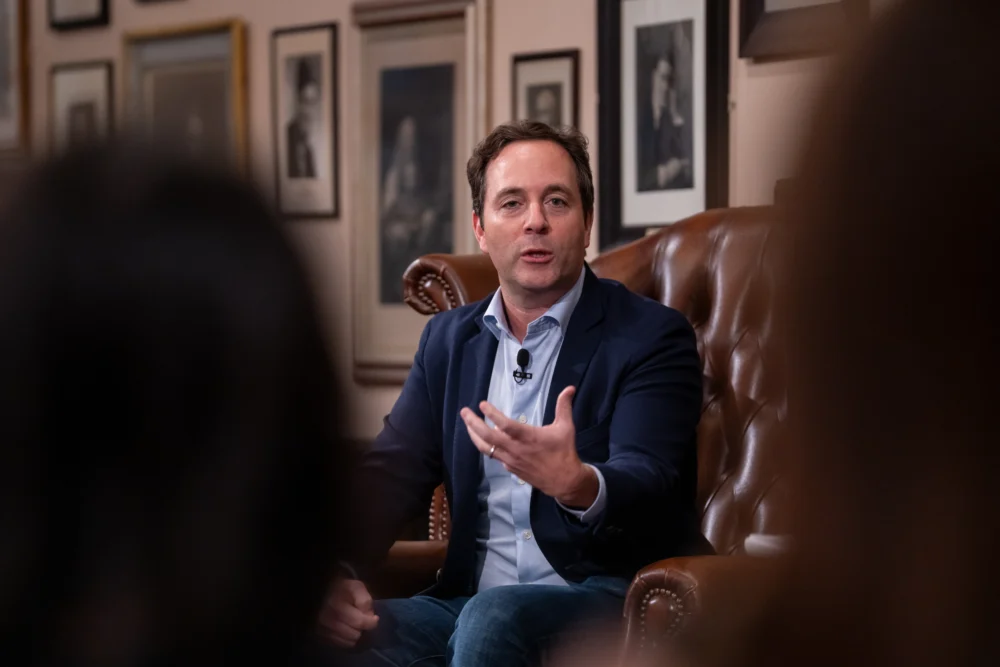
New data from Spencer Stuart, a leading global executive search and leadership consulting firm, unequivocally highlights this profound shift. Their analysis reveals that of the 168 new S&P 1500 chief executives appointed in 2025 – a figure representing the highest annual total since 2010 – a significant 19 were drawn directly from their own company boards. This marks the most board-to-CEO appointments since 2020, signaling a clear acceleration of the trend. Spencer Stuart, in its rigorous methodology, classifies these directors as "outsiders" because they typically lack direct, day-to-day operating responsibility within the company prior to their appointment. This classification underscores the critical distinction: while they possess deep familiarity with the organization’s strategic direction and challenges, they are not entrenched in its operational bureaucracy, offering a valuable degree of detachment. Even with this "outsider" label, the undeniable reality is that more boards are consciously and deliberately turning to their own members to fill the most critical leadership role.
This increase in board-to-CEO transitions unfolds against a backdrop of persistently elevated executive churn across the corporate world. CEO departures in the S&P 500, a benchmark of America’s largest publicly traded companies, reached approximately 13% in 2025, according to governance trackers such as The Conference Board. This significant turnover rate leaves corporate boards grappling with a dual challenge: managing intense performance pressure from investors and stakeholders, while simultaneously navigating complex and often urgent succession gaps. The confluence of these factors – market volatility, rapid technological advancement, increased shareholder activism, and a heightened focus on ESG (Environmental, Social, and Governance) factors – has made the CEO role more demanding and precarious than ever.
Traditionally, the vast majority of CEO appointments have come from within the company’s executive ranks, with chief operating officers, division heads, and other senior functional leaders representing the most common succession paths. This model is often favored for its promise of continuity, deep operational expertise, and cultural alignment. However, in moments demanding a fundamental strategic reset, a significant pivot, or a rapid turnaround, boards are increasingly finding that the very executives associated with the existing strategic plan may not be best suited to spearhead a radical new direction. Their deep immersion in current operations, while valuable for execution, can sometimes be a hindrance to truly disruptive innovation or a dispassionate re-evaluation of core business models.
Furthermore, the corporate landscape has been littered with cautionary tales stemming from high-profile, expensive external CEO searches. These often-protracted processes promise radical reinvention and a fresh perspective, but frequently deliver disruption, cultural clashes, and a steep learning curve that can take years to overcome. The perceived "silver bullet" of an external star CEO can sometimes backfire, leading to significant financial costs, erosion of employee morale, and ultimately, a failure to deliver on the promised transformation. The integration of an entirely new leader from outside the company can be fraught with risks, from misalignment with corporate culture to a lack of understanding of nuanced internal dynamics and stakeholder relationships. The recent past is replete with examples where such external hires, despite impressive résumés, failed to gain traction, leading to further instability and renewed leadership searches.
It is against this complex and challenging backdrop that directors offer what board advisors and executive search consultants increasingly describe as an invaluable "insider-outsider" balance. Unlike a purely external hire, a board director already possesses a comprehensive understanding of the company’s foundational strategy, its capital allocation framework, and its inherent risk profile. They have participated in numerous strategy sessions, reviewed financial performance, engaged in crisis deliberations, and often interacted with key executives, investors, and regulators. This intimate knowledge base significantly reduces the onboarding time and the risk of missteps that often plague truly external appointments.
Yet, critically, these directors are not embedded in a single operating silo or deeply enmeshed in the day-to-day political dynamics of the executive team. This relative distance provides them with a crucial objectivity. It allows them to reset priorities, make tough decisions, and challenge long-held assumptions without the burden of having been directly responsible for their creation. This detachment can make it considerably easier to pivot the company’s direction, streamline operations, or reallocate resources without discarding the broader, fundamentally sound elements of the existing plan. They can act as both stewards of the company’s legacy and architects of its future, a rare and potent combination.
Recent high-profile moves across various sectors vividly illustrate how this model is successfully playing out. At Constellation Brands, a leading producer of beer, wine, and spirits, Nicholas Fink was named chief executive in February 2026, having served on the company’s board since 2021. His tenure as a director would have afforded him a deep understanding of the company’s brand portfolio, market dynamics, and strategic growth initiatives, positioning him to lead with informed perspective. Similarly, Match Group, the digital dating behemoth, elevated director Spencer Rascoff to chief executive in 2025. Rascoff, co-founder and former CEO of Zillow Group, brought a wealth of tech and platform experience to Match Group’s board, and his appointment was specifically aimed at accelerating crucial product development and artificial intelligence initiatives – areas where his strategic oversight as a director would have been invaluable.
Other examples reinforce this emerging pattern. Bed Bath & Beyond, following its arduous emergence from bankruptcy, appointed Marcus Lemonis, its executive chairman, as permanent chief executive in January 2026. Lemonis, a well-known turnaround specialist and TV personality, had already been deeply involved in the company’s restructuring efforts from his executive chairman role, making his transition to CEO a natural, albeit challenging, progression requiring both strategic vision and hands-on operational acumen. His unique background and established credibility as a restructuring expert provided the company with a sense of stability and a clear path forward during a critical juncture. In the government services and technology sector, Science Applications International Corp. (SAIC) named James Regan permanent chief executive in February 2026, after he had served on the board since 2023. Regan’s experience as a director would have given him insight into SAIC’s complex contracts, client relationships, and technological capabilities, enabling a seamless transition into the top leadership role.
It is crucial to emphasize that these appointments do not signal a collapse in traditional succession planning. Internal promotions remain, and will likely continue to be, the dominant route to the corner office. The vast majority of companies still prioritize nurturing talent from within, building robust leadership pipelines, and providing clear career progression paths for their high-potential executives. Instead, this trend reflects a more nuanced and sophisticated evolution in corporate governance. Boards are not abandoning internal development; rather, they are actively broadening the pipeline of potential CEO candidates and building greater optionality into their leadership plans, especially amid the aforementioned elevated executive churn and market volatility. This strategic diversification recognizes that the optimal leader for a company might not always be the next person in the traditional line of succession, but rather someone who possesses a unique combination of internal insight and external perspective.
The shift also profoundly reflects who now occupies board seats. Over the past decade, there has been a significant transformation in board composition. A growing share of directors are not merely financial experts or legal advisors but active or recently retired chief executives themselves, bringing with them substantial operating experience from diverse industries. This evolution has created a viable and highly experienced "bench" within the boardroom itself. These directors have already navigated complex corporate challenges, led large organizations, and managed significant P&L responsibilities. Consequently, they can be evaluated over years of direct observation during strategy sessions, financial reviews, and crisis deliberations – a far more comprehensive and insightful assessment than any external search process could provide. Governance advisers frequently describe this approach as "succession by design," emphasizing a deliberate, long-term strategy to cultivate and identify potential leaders from within the board itself, rather than a reactive "break glass" measure. This proactive approach minimizes risk and maximizes the likelihood of a successful leadership transition.
What it Means for C-suite Contenders
For aspiring chief executives, the competitive landscape has fundamentally changed. The traditional climb up the corporate ladder now involves new considerations and demands.
Firstly, the bar for readiness is significantly higher. Internal candidates are no longer competing solely against peers down the hall or executives in rival organizations. They may now also be measured against directors who have already successfully run public companies, managed multi-billion dollar enterprises, and established formidable credibility with investors and the market. In volatile periods, the proven track record and inherent understanding of a director can appear as a lower-risk proposition to a board eager to minimize disruption and maximize investor confidence. This means internal candidates must demonstrate not just operational excellence, but also a strategic acumen and leadership presence that rivals that of seasoned CEOs.
Secondly, timelines are compressing. If boards are informally cultivating and evaluating potential successors within their own ranks over several years, waiting for a formal succession process to begin may be too late for internal C-suite executives hoping for the top job. The window for making an impression and demonstrating CEO-level capabilities is opening earlier in their careers. Executives who aspire to the corner office now need to proactively seek visibility in board discussions, demonstrate a comprehensive understanding of enterprise-level risk, and articulate a clear, compelling long-term strategy for the entire organization, not just their specific function or division. This requires a proactive engagement with board members, a willingness to tackle cross-functional challenges, and a strategic mindset that extends far beyond their current remit.
However, there is also a significant opportunity embedded within this shift. Boards that elevate directors to the CEO role are often looking for leaders who possess a rare and powerful combination: deep operational depth coupled with sophisticated governance understanding. This implies a strategic advantage for C-suite executives who actively engage with directors, demonstrating their ability to think holistically about the business. Executives who serve on external boards – even non-profit ones – gain invaluable experience in governance, strategy, and stakeholder management that can make them more attractive CEO candidates. Broadening their scope beyond a single functional silo, taking on cross-functional leadership roles, and gaining P&L responsibility for diverse business units can also significantly strengthen their case. The more an executive already operates like a chief executive – demonstrating strategic foresight, investor relations savvy, cultural leadership, and a robust understanding of market dynamics – the harder it becomes for a board to choose someone else, even one of its own esteemed directors. The ultimate goal for any aspiring CEO remains to make themselves the undeniable choice, by embodying the comprehensive leadership qualities required for the role, irrespective of where the board ultimately decides to look.
Join us at the Fortune Workplace Innovation Summit May 19–20, 2026, in Atlanta. The next era of workplace innovation is here—and the old playbook is being rewritten. At this exclusive, high-energy event, the world’s most innovative leaders will convene to explore how AI, humanity, and strategy converge to redefine, again, the future of work. Register now.
