
 By Lina Irawan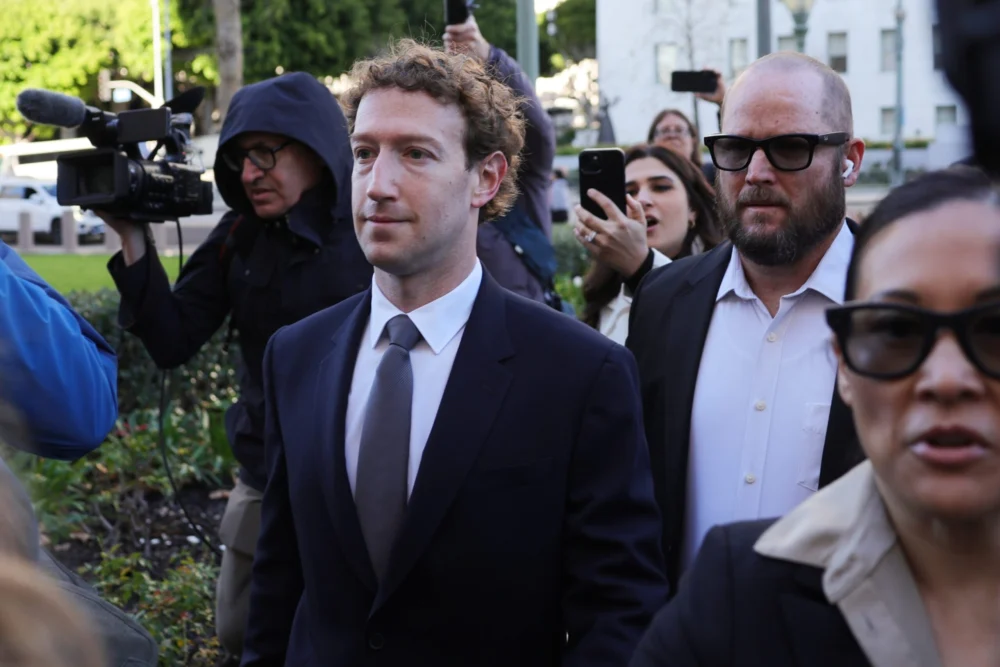
Mark Zuckerberg, the co-founder and CEO of Meta Platforms, found himself locked in a high-stakes legal duel in a Los Angeles courtroom on Wednesday, confronting opposing lawyers over the profound impact of Instagram on young users. His testimony forms a critical component of an unprecedented social media trial that seeks to determine whether Meta’s platforms are deliberately engineered to addict and harm children, a legal battle with far-reaching implications for the entire tech industry.
The courtroom drama unfolded as Zuckerberg fielded questions concerning young people’s engagement with Instagram, past congressional testimonies, and even internal guidance he received on cultivating an "authentic" rather than "robotic" public persona. Central to the plaintiffs’ argument is the contentious claim that social media platforms are designed with features that foster addictive behaviors, leading to severe mental health repercussions for adolescents.
Throughout the early afternoon session, Zuckerberg notably sidestepped directly answering the core accusation: whether Instagram is addictive. When pressed by plaintiff’s attorney Mark Lanier on whether people tend to use something more if it’s addictive, Zuckerberg responded cautiously, "I’m not sure what to say to that. I don’t think that applies here." This evasiveness underscored the strategic tightrope Meta’s CEO is walking, balancing corporate defense with public perception. His reluctance to concede even a hypothetical link between increased usage and addiction highlights the industry’s consistent denial of social media as a clinical addiction, a position often at odds with growing scientific research and public concern.
The lawsuit centers on the claims of a now 20-year-old woman, identified by the initials KGM, whose attorneys argue that her early and extensive use of social media platforms led to technological addiction, significantly exacerbating her pre-existing depression and suicidal thoughts. This case is one of many consolidated under a multidistrict litigation, spotlighting the mounting legal pressure on tech giants. While TikTok and Snap have opted to settle similar claims, Meta Platforms (Instagram) and Google (YouTube) remain the key defendants, poised to establish a significant legal precedent.
Opening his line of questioning, Lanier presented Zuckerberg with a stark ethical framework concerning vulnerable populations: companies can choose to help them, ignore them, or "prey upon them and use them for our own ends." Zuckerberg readily agreed that preying upon users is not the conduct of a reasonable company, affirming, "I think a reasonable company should try to help the people that use its services." This exchange set a moral tone, attempting to frame Meta’s actions within a broader ethical context rather than purely technical terms.
The line of inquiry soon veered into Zuckerberg’s personal wealth and philanthropic endeavors. When questioned about his substantial compensation, Zuckerberg reiterated his long-standing pledge to donate "almost all" of his fortune to charity, primarily focusing on scientific research. However, the atmosphere in the courtroom palpably shifted when Lanier directly asked how much money he had pledged to victims impacted by social media. Zuckerberg, visibly guarded, retorted, "I disagree with the characterization of your question." This response, while legally prudent, risks reinforcing a public perception of corporate detachment from the alleged human cost of their products.
Lanier then delved into a specific comment Zuckerberg made during a past congressional hearing, where he stated that Instagram employees are not given goals to increase the amount of time people spend on the platform. To contradict this, Lanier presented internal documents that appeared to suggest otherwise. Zuckerberg acknowledged that the company had previously set goals associated with user time but asserted that he and Meta made a conscious decision to shift away from such metrics, opting instead to focus on "utility." He articulated his belief in the "basic assumption" that "if something is valuable, people will use it more because it’s useful to them." This explanation attempts to reframe engagement as a natural outcome of product value rather than an engineered pursuit of screen time, a distinction crucial to Meta’s defense.
The plaintiff’s attorney also probed Zuckerberg about what he characterized as extensive media training, specifically tailored for high-profile appearances like his court testimony. Lanier cited an internal document offering feedback on Zuckerberg’s public communication style, imploring him to come across as "authentic, direct, human, insightful and real," and explicitly advising against appearing "hard, fake, robotic, corporate or cheesy." Zuckerberg, however, downplayed the impact of such coaching, suggesting those offering advice were "just giving feedback." He even candidly admitted, regarding his public speaking and media appearances, "I think I’m actually well known to be sort of bad at this." This self-deprecating remark, while potentially disarming, implicitly acknowledges the long-standing public perception of his somewhat awkward public persona, famously highlighted by a 2010 interview with tech journalists Kara Swisher and Walt Mossberg, where he perspired so noticeably Swisher offered for him to remove his signature hoodie.
A significant portion of Lanier’s limited time with Zuckerberg was dedicated to the company’s age verification policies. After a lengthy back-and-forth, Zuckerberg expressed frustration, stating, "I don’t see why this is so complicated," while reiterating Meta’s policy restricting users under 13 and their ongoing efforts to detect and remove underage users who falsify their age. The effectiveness of these policies is a critical point of contention, as plaintiffs argue that Meta’s safeguards are insufficient, allowing millions of underage users to access platforms allegedly designed to be harmful.
Throughout his testimony, Zuckerberg largely adhered to established talking points, consistently referencing his overarching goal of building valuable platforms for users. On multiple occasions, he firmly stated his disagreement with Lanier’s "characterization" of his questions or his own past comments, a common legal tactic to avoid affirming potentially damaging premises.
This trial marks a significant moment for Zuckerberg, as it is the first time he has faced a jury in such a capacity. While he has previously testified before Congress on youth safety and apologized to families in 2024 whose lives were "upended by tragedies they believed were caused by social media," he has consistently stopped short of taking direct responsibility for those outcomes. The presence of bereaved parents in the courtroom audience served as a poignant reminder of the real-world stakes beyond legal arguments and corporate defenses.
This particular lawsuit, along with two others, has been designated as a bellwether trial. This means its outcome could profoundly influence the trajectory of thousands of similar lawsuits filed against social media companies across the country. A favorable verdict for the plaintiffs could embolden other litigants and trigger a wave of multi-billion dollar settlements or judgments, forcing a fundamental reassessment of product design and corporate responsibility within the tech industry.
A Meta spokesperson, in a statement outside the courtroom, reiterated the company’s strong disagreement with the allegations, expressing confidence that "the evidence will show our longstanding commitment to supporting young people." Paul Schmidt, one of Meta’s attorneys, in his opening statement, conceded that KGM experienced mental health struggles but disputed that Instagram was a "substantial factor" in those struggles. He pointed to medical records indicating a turbulent home life for KGM, arguing that she, like many, may have turned to platforms like Instagram and YouTube as coping mechanisms or a means of escape from her existing mental health challenges, rather than the platforms being the primary cause. This defense strategy attempts to shift the narrative from causation to correlation, a complex legal and psychological challenge.
Zuckerberg’s testimony followed that of Adam Mosseri, the head of Instagram, who appeared in court a week prior. Mosseri similarly disagreed with the notion that people can be clinically addicted to social media platforms. He maintained that Instagram is committed to protecting young users, asserting that it is "not good for the company, over the long run, to make decisions that profit for us but are poor for people’s well-being." Much of Mosseri’s cross-examination focused on the psychological impact of cosmetic filters on Instagram, which alter users’ appearance—a topic Lanier is expected to revisit with Zuckerberg. Furthermore, Zuckerberg is anticipated to face rigorous questioning regarding Instagram’s algorithmic design, the "infinite scroll" nature of Meta’s feeds, and other features that plaintiffs contend are meticulously crafted to maximize user engagement and foster addictive patterns.
Beyond this landmark trial, Meta is concurrently facing a separate trial in New Mexico that began last week, addressing allegations related to child exploitation on its platforms. These converging legal challenges underscore a growing global scrutiny of social media’s impact on vulnerable populations, pushing tech giants to confront the ethical and societal ramifications of their pervasive digital ecosystems. The outcomes of these trials are poised to reshape the landscape of digital responsibility, potentially compelling significant changes in how social media platforms are designed, regulated, and integrated into the lives of young people worldwide.
