
 By admin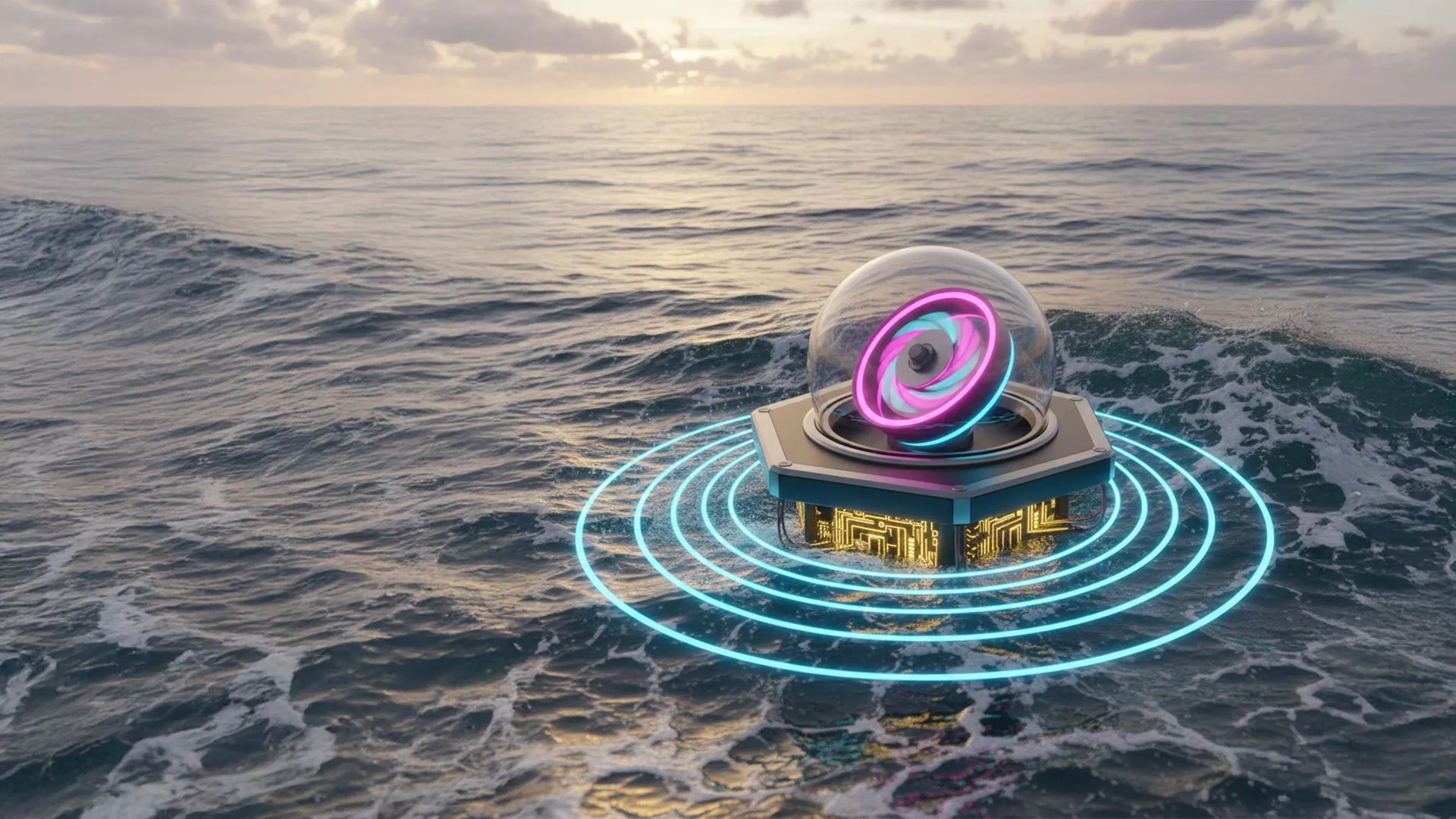
The vast and largely untapped energy potential residing in the world’s oceans is a tantalizing prospect for a planet grappling with climate change and an ever-increasing demand for clean power. Conservative estimates suggest that the total theoretical wave energy potential globally could be as high as 2 terawatts (TW), a figure comparable to the world’s current electricity consumption. However, harnessing this colossal force is fraught with engineering complexities. Unlike the relatively predictable flow of wind or the consistent presence of sunlight, ocean waves are dynamic, exhibiting significant variations in height, period, and direction within minutes, let alone across seasons. This inherent variability poses a formidable hurdle for wave energy converters (WECs), many of which are designed to resonate, or operate most efficiently, only within a narrow band of wave frequencies. When ocean conditions deviate from this optimal range, their energy capture efficiency plummets, rendering them less economically viable and often unreliable. Moreover, the harsh marine environment demands devices capable of extreme durability and survivability against powerful storms and corrosive saltwater, adding layers of complexity to design, installation, and maintenance.
Addressing these critical limitations, a groundbreaking study from The University of Osaka has introduced a novel approach that promises to revolutionize wave energy capture. Dr. Takahito Iida, a distinguished researcher at the university, has meticulously investigated a new paradigm in WEC design: the gyroscopic wave energy converter (GWEC). His comprehensive evaluation, published this month in the esteemed Journal of Fluid Mechanics, assesses the realistic potential of this innovative design to support large-scale electricity generation, offering a compelling vision for the future of ocean power. The Journal of Fluid Mechanics is renowned for publishing seminal research in fluid dynamics, lending significant weight and credibility to Dr. Iida’s findings within the scientific community. Osaka University itself has a rich history of pioneering research in engineering and renewable energy, positioning it at the forefront of global efforts to develop sustainable power solutions.
Unlike conventional wave energy systems that typically rely on buoyant bodies, oscillating water columns, or attenuators to directly convert wave motion into mechanical energy, the GWEC operates on a fundamentally different principle. At its core, the device houses a rapidly spinning flywheel within a floating platform. As the ocean waves interact with and move the floating structure – causing it to pitch, heave, and roll – the internal rotating flywheel harnesses this motion and transforms it into usable electrical power. The critical distinction lies in the flywheel’s operation as a gyroscope. A gyroscope, a device that uses a rotating wheel or disc whose axis of spin is free to turn in any direction, exhibits a peculiar but highly advantageous property: its resistance to changes in its orientation. This inertial stability, coupled with its ability to precess (a slow wobble or rotation of its axis when a torque is applied), allows the GWEC to dynamically adjust its behavior. This adaptability means it can capture energy efficiently across a broad spectrum of wave frequencies, rather than being constrained to a narrow, pre-tuned band like many existing resonant WECs. This broadband capability is a game-changer, addressing one of the most significant challenges in wave energy conversion.
The ingenious mechanism by which the GWEC generates electricity hinges on the principle of gyroscopic precession. Precession occurs when a spinning object, such as the flywheel within the GWEC, reacts to an external force or torque by changing the orientation of its rotational axis. Imagine a child’s spinning top: when it’s perfectly upright, it spins stably. But as it begins to tilt under the influence of gravity, its axis slowly rotates around the vertical, a phenomenon known as precession. In the context of the GWEC, when ocean waves impart motion to the floating platform, causing it to pitch (move up and down along an axis, like a boat rocking front-to-back), this external force acts upon the spinning flywheel. Instead of simply tilting, the flywheel’s inherent gyroscopic properties cause its axis of rotation to shift its orientation through a controlled precessional movement. This precise and predictable precessional motion is then mechanically coupled to a generator. As the flywheel’s axis changes direction, it drives the generator, converting the kinetic energy of the waves, via the gyroscopic system, directly into electrical power. This indirect conversion method offers a robust and resilient pathway to energy generation, less susceptible to direct impacts and stresses from wave forces.
Dr. Takahito Iida eloquently articulates the core advantage of this design, stating, "Wave energy devices often struggle because ocean conditions are constantly changing." He emphasizes the breakthrough, adding, "However, a gyroscopic system can be controlled in a way that maintains high energy absorption, even as wave frequencies vary." This "control" aspect is paramount. Unlike passive resonant systems that are optimized for a specific frequency and lose efficiency when waves deviate, the GWEC incorporates an active control system. This system can dynamically adjust parameters such as the flywheel’s rotational speed, its tilt angle, or the damping applied by the generator in real-time, responding to incoming wave conditions. By continuously tuning the system’s response to match the prevailing wave climate, the GWEC can effectively "chase" the optimal energy absorption point, maximizing power output regardless of whether the waves are short and choppy or long and rolling. This adaptability translates directly into higher annual energy yields and, consequently, improved economic viability, a critical factor for the commercial deployment of any renewable energy technology.
To rigorously understand and predict the behavior of this complex system, Dr. Iida employed sophisticated analytical techniques. He utilized linear wave theory to develop a comprehensive model that meticulously described the intricate interactions among three key components: the dynamic forces of the ocean waves, the hydrodynamic response of the floating structure, and the inertial characteristics of the internal gyroscope. Linear wave theory, while making certain simplifying assumptions (such as small wave amplitudes relative to wavelength), provides a robust foundation for analyzing wave-structure interactions and is widely accepted in initial design phases for its analytical tractability. By carefully analyzing these linked dynamics, Dr. Iida’s team was able to identify the ideal operational settings for the flywheel’s rotational speed and, crucially, the generator’s control parameters. This detailed analysis yielded a remarkable discovery: when properly tuned and actively controlled, the GWEC possesses the theoretical capability to reach the fundamental maximum energy absorption efficiency of one half. This "one half" limit is a cornerstone of wave energy theory, analogous to the Betz limit for wind turbines, representing the maximum fraction of incident wave power that can theoretically be extracted by a single device. The groundbreaking aspect of this finding is not just reaching this limit, but achieving it across any wave frequency, not just at a single, narrow resonant condition.
"This efficiency limit is a fundamental constraint in wave energy theory," explains Iida, highlighting the universal nature of the theoretical maximum. He then underscores the significance of his team’s achievement: "What is exciting is that we now know that it can be reached across broadband frequencies, not just at a single resonant condition." This distinction is pivotal. Conventional WECs, often designed as resonant systems, are highly efficient only when their natural frequency of oscillation perfectly matches the frequency of the incoming waves. Any deviation from this precise match leads to a drastic drop in efficiency. In the highly variable ocean environment, such a narrow operational window severely limits their overall performance and average power output. The GWEC, by contrast, demonstrates the potential for consistent high efficiency across a wide range of wave conditions, effectively overcoming this inherent limitation of many existing designs. This broadband efficiency ensures that the device can continuously extract significant power, maximizing its utility and economic return over its operational lifetime.
To further validate these compelling theoretical findings and bridge the gap between idealized models and real-world performance, the research team conducted extensive numerical simulations. These simulations were performed in both the frequency domain (analyzing the system’s steady-state response to different wave frequencies) and the time domain (modeling the system’s dynamic behavior over time in response to irregular, realistic wave conditions). A crucial addition to the time domain simulations was the incorporation of nonlinear gyroscopic behavior. While linear models provide valuable initial insights, real-world systems exhibit complex nonlinearities that can significantly impact performance, especially under extreme conditions. By including these nonlinearities, Dr. Iida’s team could explore potential performance limits and gain a more accurate understanding of the device’s robustness. The results from these comprehensive simulations consistently confirmed the theoretical predictions, demonstrating that the device maintains strong efficiency, particularly near its dynamically adjusted resonance frequency. This means that while the GWEC can operate efficiently across a broad range, it still performs optimally when its controlled motion aligns with the natural rhythm of the prevailing waves, showcasing its ability to adapt and maintain peak performance.
The profound implications of this research extend far beyond academic circles. By clarifying the intricate dynamics of the GWEC and detailing how to precisely fine-tune the gyroscope’s operating parameters, Dr. Iida’s study offers invaluable practical guidance for the next generation of wave energy system designers. This research paves the way for the construction of more flexible, resilient, and, critically, more efficient wave energy converters. As the global community intensifies its search for dependable and scalable renewable energy solutions to meet ambitious climate goals and achieve energy independence, innovations like the GWEC are indispensable. The enormous, largely unused energy stored in the oceans, estimated to be capable of meeting a significant portion of global electricity demand, represents a colossal untapped resource. Developing technologies that can reliably and cost-effectively harness this power is not merely an engineering challenge but a strategic imperative for a sustainable future.
The path from theoretical proof to widespread commercial deployment is, of course, long and arduous. Future steps for the GWEC concept will undoubtedly involve the development of scaled prototypes for laboratory testing, followed by rigorous field trials in real ocean environments. These stages will be crucial for validating the models, identifying unforeseen challenges, and refining the design for manufacturability, durability, and cost-effectiveness. Challenges such as survivability in extreme weather, robust mooring systems, efficient power transmission to the grid, and minimizing environmental impact will need to be meticulously addressed. However, Dr. Iida’s work provides a compelling scientific foundation, demonstrating a viable pathway to unlock the vast potential of wave energy. By offering a solution that can adapt to the ocean’s capricious nature, the gyroscopic wave energy converter stands as a beacon of hope, moving humanity closer to a future powered by the relentless, yet often elusive, rhythm of the waves.
