
 By admin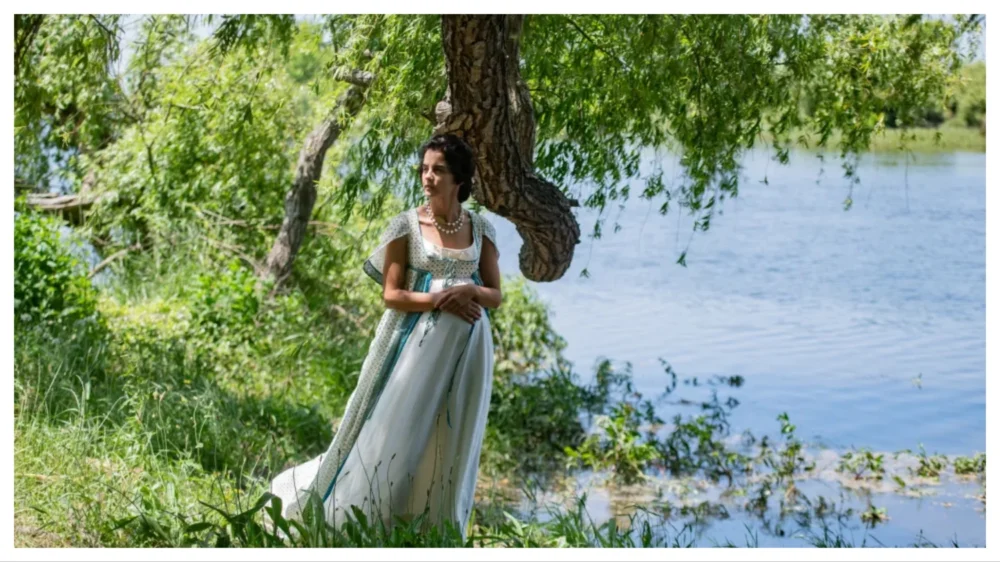
The burgeoning television landscape is often a mirror reflecting societal anxieties and aspirations, but sometimes, the reflection is distorted, fueling frustration and a deep-seated desire for narrative correction. This was the genesis of "All Heroes Are Bastards," a new series that reimagines the immigrant experience through the lens of superpowers and vigilante justice. Directors and producers Esra and Patrick Phul, helming the project for Picture Me Rollin, stated that the series emerged directly from a feeling of powerlessness, a yearning to construct a fictional universe where agency and the capacity for change were paramount.
"We made this series because we felt very powerless. We wanted to build a world where we had the power," Esra Phul explained, underscoring the personal impetus behind the ambitious undertaking. This sentiment is echoed in her broader critique of mainstream media and its role in shaping public perception, particularly concerning minority communities. "If we don’t tell these stories, no one will," she asserted. "As people from a minority, we can no longer rely on politics, the police or the press, which should challenge institutions but instead acts as their PR machine. So what’s left? This industry, because that’s where we get a chance to speak up." This profound disillusionment with established channels of communication and representation is a central theme that permeates the creators’ motivations.
The Phuls highlighted a particularly galling experience at the Berlinale Series Market panel "Up Next: Germany." They described witnessing HBO Max present two series focusing on criminal immigrants, one of which was a prequel to "4 Blocks." This particular series, they contend, has had a demonstrably damaging impact on their community, even being allegedly used by the Berlin police as training material to identify individuals on the streets. "It was really hard, and we left the room," Esra Phul recalled, her voice laden with the lingering pain of that encounter. "I can’t stand it anymore and that’s how this series came to life: because of our anger. We suffer because of these shows. We’re good producers, we’re successful, and it’s important that we tell them what they’re making." This visceral reaction underscores the deep-seated harm caused by stereotypical and negative portrayals, motivating a proactive and transformative approach to storytelling.
During the same Berlinale Series Market panel, "Rebel Rebel: Series Battling the Status Quo," Esra Phul directly challenged the narrative perpetuated by established production houses. "Wiedemann & Berg Film and HBO Max portray my people as criminals," she stated, drawing a stark contrast to their own vision. "We chose to show them as they are: as superheroes." This powerful declaration encapsulates the series’ core mission: to reclaim agency, celebrate resilience, and redefine the image of marginalized communities through a genre that often glorifies power and heroism.
The discussion around "All Heroes Are Bastards" at Berlinale also brought to light other compelling narratives challenging the status quo. Philipp Kreuzer, CEO of Maze Pictures, discussed the development of their eco-thriller "Phoenix," a project that took four years to realize. The meticulous process involved extensive interviews with activists, legal experts, and political observers to ensure a nuanced and responsible portrayal of young climate activists. Kreuzer emphasized that the series is not an endorsement of radicalism but rather an exploration of the complex moral dilemmas faced by individuals who believe they are acting for the greater good, even when crossing ethical lines. "We’re not trying to excuse radicalism, and we’re certainly not celebrating it," Kreuzer clarified. "What interested us was the moral dilemma: the moment when people who believe they’re doing the right thing cross a line. This inner conflict hasn’t often been explored in depth."

Kreuzer, himself a lawyer, drew on his experiences observing the legal team during large-scale protests at the International Automobile Fair in Munich. He noted the intellectual caliber and deep commitment of many activists, juxtaposed with a palpable sense of helplessness when systemic change appears elusive. "When you meet many of the activists, you realize they’re educated, committed, and often deeply thoughtful people," he observed. "At the same time, you sense a certain helplessness. When political or economic systems don’t seem to respond, frustration can intensify. Understanding that dynamic doesn’t mean endorsing radicalization, but if we want to prevent it, we have to understand how it develops." This perspective highlights the importance of fiction in fostering empathy and understanding, even for actions that may be controversial.
The power of entertainment to reach broader audiences and engage them with complex social and political issues was a recurring theme. Patrick Phul drew a parallel to his own formative viewing experiences, citing "The Fresh Prince of Bel-Air" as a show that, while humorous, tackled significant themes of Black history, identity, and injustice. "When I was growing up, one of my favorite shows was ‘The Fresh Prince of Bel-Air.’ It made me laugh, but it talked about important topics like Black history, identity and injustice," he said. "With ‘All Heroes Are Bastards,’ on the surface, it’s about action and superheroes, but it talks about real-life issues. We want to reach people who don’t deal with these topics every day." This strategy leverages the inherent appeal of genre entertainment to introduce nuanced social commentary to viewers who might not otherwise seek it out.
The superhero genre itself, while often associated with aspirational figures, can also be a vehicle for subversion and re-examination of power structures. Patrick Phul pointed out the common trope of billionaire superheroes like Iron Man and Batman, noting the irony that in reality, billionaires are often perceived as the antagonists. "There are some exceptions, like ‘Black Panther,’ but when you think about ‘Iron Man’ or ‘Batman,’ these heroes are billionaires. In real life, billionaires are usually the bad guys," he commented. "In ‘All Heroes Are Bastards’ we try a different approach, but you still know who the villains are. To reach people, you can’t be too abstract." This intentional departure from conventional superhero archetypes allows for a more direct engagement with contemporary socio-economic realities.
Pandora da Cunha Telles, creator of "The Marquise," also contributed to the conversation, emphasizing the necessity of characters who challenge the status quo, particularly for women. Her series, set in the 18th century, features a protagonist trapped in a convent, symbolizing the societal constraints faced by women. "It’s obvious that there needs to be a rebellion," da Cunha Telles stated, highlighting the ongoing struggle against "small violences" that many women endure. "The message for someone trapped in her life is that she has the power to be a rebel and a leader. It’s not just the politicians – each one of us can change something in our lives. Creating female characters that are not black-and-white helps contemporary viewers understand that." This underscores the series’ commitment to portraying complex, multi-dimensional female characters who inspire agency and self-determination.
The imperative to ensure female representation both in front of and behind the camera was another critical point raised. Da Cunha Telles shared the challenges faced in Portugal, where it remains difficult to place female creators in leadership roles. She spoke about the effort to empower scriptwriters and creators, noting the subtle biases that can arise even in creative processes. "In our show, we depict women enjoying cakes and long erotic scenes. In the editing room, we heard: ‘Aren’t they too long?’ Would you ask the same thing if a man was leading these scenes?" she questioned, illustrating how ingrained gendered expectations can influence creative decisions. "It was one of the shows I worked on with more women, and it was a whole new ballgame." This emphasis on diverse creative teams is crucial for fostering authentic and representative storytelling.
The inclusion of "All Heroes Are Bastards," "Phoenix," and "The Marquise" in the Berlinale Series Market Selects highlights a growing trend of content that tackles challenging social and political themes. However, the creators acknowledged that rebellious narratives can sometimes elicit resistance from decision-makers. Kreuzer shared that "Phoenix" even became a subject of public inquiry in France, a testament to its provocative nature. "It was striking to see our series discussed in parliament. In a country with such a strong tradition of political art and debate, that shows how sensitive these topics have become," he remarked. "But perhaps that’s not a bad thing. If a story doesn’t create discomfort, maybe it isn’t engaging deeply enough." This sentiment suggests that art that provokes thought and even discomfort is often the most impactful.

In an increasingly polarized global climate, the responsibility of content creators to represent a diverse spectrum of society, including those who feel marginalized or unheard, is paramount. "Ignoring that frustration won’t make it disappear," Kreuzer asserted. "Fiction can create space for understanding without necessarily agreeing." This points to the potential of storytelling to bridge divides and foster empathy, even in the face of differing viewpoints.
The role of national broadcasters in championing such narratives was also underscored. Da Cunha Telles highlighted their responsibility in inspiring change, while Kreuzer lauded Europe’s public broadcasting model as "worth defending." He explained that this model provides essential space for fiction to engage deeply with political and social questions, a space often constrained by the market-driven pressures of commercial systems. "It allows fiction to engage seriously with political and social questions. Commercial systems often prioritize different pressures, but our model provides space for stories that aren’t purely market-driven, and that space is valuable," Kreuzer stated.
The Phul siblings shared their personal journey into the industry, acknowledging the significant hurdles they faced as newcomers with YouTube backgrounds and immigrant heritage. They credited ARD Degeto Film for encouraging them to "be real" but emphasized the difficulty of gaining access. "We come from YouTube and we didn’t know anyone in this industry," Esra Phul admitted. "We were lucky because someone with an immigration background opened the door for us." Their previous work, including the series "Hype" and their independently created awards show "Talent Over Privilege," reflects their commitment to creating opportunities and breaking down barriers for underrepresented voices. "It’s very, very difficult for people like us to enter these rooms."
Despite the challenges, their success serves as an inspiration, and they offered a message of perseverance to aspiring creators. "There are those in the industry who recognize good stories and give people a chance," Patrick Phul offered, concluding with a powerful encouragement: "Don’t give up." This sentiment resonates throughout the discussions, highlighting the enduring power of storytelling to challenge norms, provoke dialogue, and ultimately, create a more inclusive and understanding world.
