
 By admin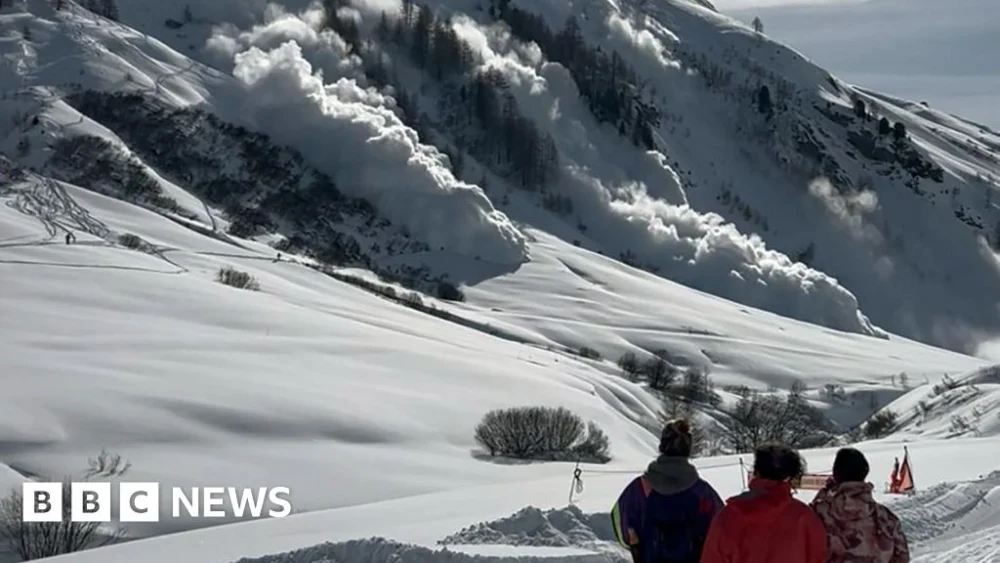
The winter sports season, typically a period of news coverage for avalanches in the Northern Hemisphere, has been marked by a concerning rise in fatalities, prompting a closer look at the underlying causes and preparedness levels. Recent tragic events, including a devastating avalanche in California that claimed the lives of eight skiers and left one missing, alongside a difficult situation in the Alps with an unusually high number of deaths, have thrust the issue of avalanche risk into the spotlight.
The circumstances in California and the Alps, while both involving deadly avalanches, present distinct scenarios. California, having recently emerged from a period of reduced snowfall, did not experience an exceptional volume of new snow. However, experts note that a transition from snow drought to intense snowfall can create unstable conditions. When fresh snow falls onto a poorly bonded or absent older snow base, it remains loose and prone to detachment. This phenomenon, where new snow fails to adequately adhere to the underlying layers, can lead to significant avalanche potential, even with snowfall that isn’t record-breaking. The incident in Nevada County, California, where rescuers navigated blizzard conditions to search for a missing skier, underscored the inherent dangers of rapidly changing winter environments.
In stark contrast, much of the Alps has been battered by two major storms within a week, dumping substantial amounts of heavy snow accompanied by strong winds. This has resulted in elevated avalanche warning levels across a remarkably widespread area of the mountain range. Tragically, three Britons were among the dozens who have lost their lives to avalanches this season. Some Alpine resorts have described the current conditions as the worst they have witnessed this century, highlighting the severity of the situation. The heavy snowfall has not only led to increased avalanche risk but has also necessitated the evacuation of several communities in Switzerland and northern Italy. Furthermore, the extreme weather has caused widespread power outages and even a train derailment in Goppenstein, within the Swiss canton of Valais.
The question arises whether there is a discernible link between the severe avalanche events in Europe and the incident in California. While climate change is often a presumed culprit for extreme weather, its direct role in this season’s avalanche activity is complex. Dr. Simon Mason, a senior scientist at SEI US, suggests that climate change is expected to lead to more intense precipitation events interspersed with prolonged dry spells. This pattern aligns with some observations in Europe, which has experienced seasons with below-average snowfall and dry periods earlier in the current season. However, Dr. Mason cautions against drawing definitive conclusions, stating, "since many factors control avalanche risk and precipitation is only one controlling influence, it is difficult to conclude how risks may evolve with future climate change."
Adding another layer to the discussion, climatologist Christoph Marthy pointed out to Swiss outlet SRF that the recent Alpine winter, characterized by dominant high-pressure systems and extended dry periods until recently, appears to be the antithesis of what a typical climate change-influenced winter might entail. Benjamin Zweifel, from the Swiss Federal Institute for Snow and Avalanche Research, emphasized that the recent storms are "only one piece of the puzzle." He elaborated that the primary challenge this winter has been a fundamentally weak snowpack, characterized by persistent weak layers. This weakness, he explained, was a consequence of extended periods of little new snow and low temperatures, which prevented the snow layers from consolidating effectively.
The interplay of rising global temperatures and snowpack dynamics is a critical area of research. The US Northern Rocky Mountain Science Center highlights that wet snow avalanches, which are anticipated to increase in frequency with rising temperatures, pose a particularly significant threat. These avalanches are notoriously dangerous, difficult to predict, and less understood than their dry snow counterparts. Wet snow avalanches are typically triggered by factors that weaken the snowpack’s structural integrity, such as rain, intense sunshine, or elevated temperatures. Research published in the journal Frontiers in Physiology in 2021 suggests that warmer and wetter snow conditions could also diminish a person’s chances of survival in an avalanche. Moreover, thinner snow cover might increase the risk of blunt trauma injuries from impacts. Broadly, four destabilizing factors appear to be altering avalanche dynamics: the oscillation between droughts and heavy precipitation, the intensity of the precipitation itself, the increasing prevalence of wet snow, and the phenomenon of snow melt.
The question of how ski resorts are mitigating these evolving risks is paramount. Blaise Agresti, a high-mountain guide in Chamonix, cited a significant contributing factor to the rise in avalanche fatalities in Europe: a shift in skier behavior and an increased appetite for risk-taking. "People are increasingly practising off-piste skiing. Among skiers, 25% go off-piste," he observed. Ski resorts typically employ a range of measures to manage avalanche risk on designated pistes. These include pre-emptive avalanche blasting, snow grooming, and compaction to create a more stable snowpack. Pistes can also be closed during periods of heightened risk, as has occurred during recent avalanche warnings. While forecasting and blasting techniques have advanced considerably, even declared safe pistes are not entirely immune to avalanches. The inherent risk underscores the importance of caution, particularly on slopes beneath potentially unstable snowfields.
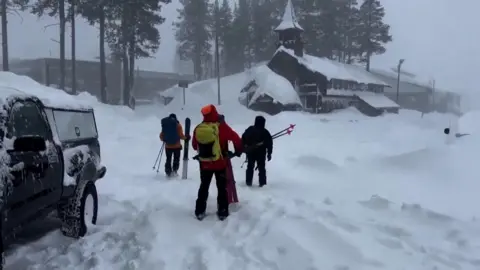
In some instances, resorts have taken more drastic measures. The French resorts of Tignes and Val d’Isère imposed temporary lockdowns, restricting residents and tourists to their accommodations due to the severe avalanche threat. More commonly, resorts focus on providing guidance to visitors. La Plagne, for example, advises skiers to stay informed about current conditions, ensure they possess and know how to use essential safety equipment—including avalanche transceivers, shovels, and probes—and always ski with a professional guide, never alone. This resort, boasting one of the world’s largest off-piste areas, hosts weekly safety clinics during peak season and has recently invested in a drone equipped with a thermal camera to aid in avalanche detection and rescue operations.
Thomas Hager, a ski guide in the Austrian Alps, echoed the sentiment of complacency, drawing an analogy between snow and water. "Snow looks so calm. It’s comparable to water," he stated. "In an ocean you don’t see undercurrents but local people know where the undercurrents are and where avalanches go off frequently. So please always talk with local people and listen to the avalanche forecast." He also stressed the vital importance of carrying an avalanche airbag, a device not legally mandated but which can significantly increase a victim’s chances of remaining near the surface of the snow.
While the recent surge in European avalanche fatalities is alarming, it is not unprecedented. European Avalanche Warning Services report that over 90 deaths have occurred this season, a figure comparable to or slightly higher than previous seasons. For instance, 70 deaths were recorded in the entire 2023-24 season, and 87 in 2022-23. The 2020-21 season saw 131 fatalities, and the 2017-18 season recorded a staggering 147 deaths, indicating that such high casualty figures are not entirely outside historical norms.
However, from the perspective of meteorologists, the current conditions present a distinct concern. Meteo France’s team in Bourg-Saint-Maurice, near the Italian border, reported a rapid shift from below-average snowfall to "remarkable" above-average accumulation in less than ten days. They estimate that such a scenario occurs statistically only once every eight years, signifying a very substantial avalanche risk. Similarly, the Val d’Isère resort, in its weather bulletin, warned that a third wave of 30-50 cm (12-20 inches) of snow, following two previous storms, demanded serious attention and precautionary measures. The resort noted that such conditions had not been witnessed for a significant period, possibly not since February 1999.
This raises the crucial question: have modern avalanche warning systems and the safety measures implemented by resorts in recent years succeeded in mitigating casualty figures? Benjamin Zweifel believes that these factors have played a substantial role in preventing an even worse outcome, particularly in Switzerland, where he observes a "big effect." He does acknowledge, however, that France and Italy have experienced higher fatality rates (25 in each country, compared to Switzerland’s 13), which he attributes to potentially "even more challenging conditions" in the western and southern Alps.
There is a glimmer of hope, as weather forecasts suggest an improvement from Friday onwards. This shift in weather patterns will allow resorts to conduct more extensive safety work and provide the snowpack with an opportunity to settle. Nevertheless, sunny, south-facing slopes may experience some snow loss, potentially increasing risks for off-piste skiers who venture into these areas. The evolving nature of winter weather, influenced by a complex interplay of climatic factors and human activity, necessitates continuous vigilance and adaptation in managing avalanche risks.
