
 By admin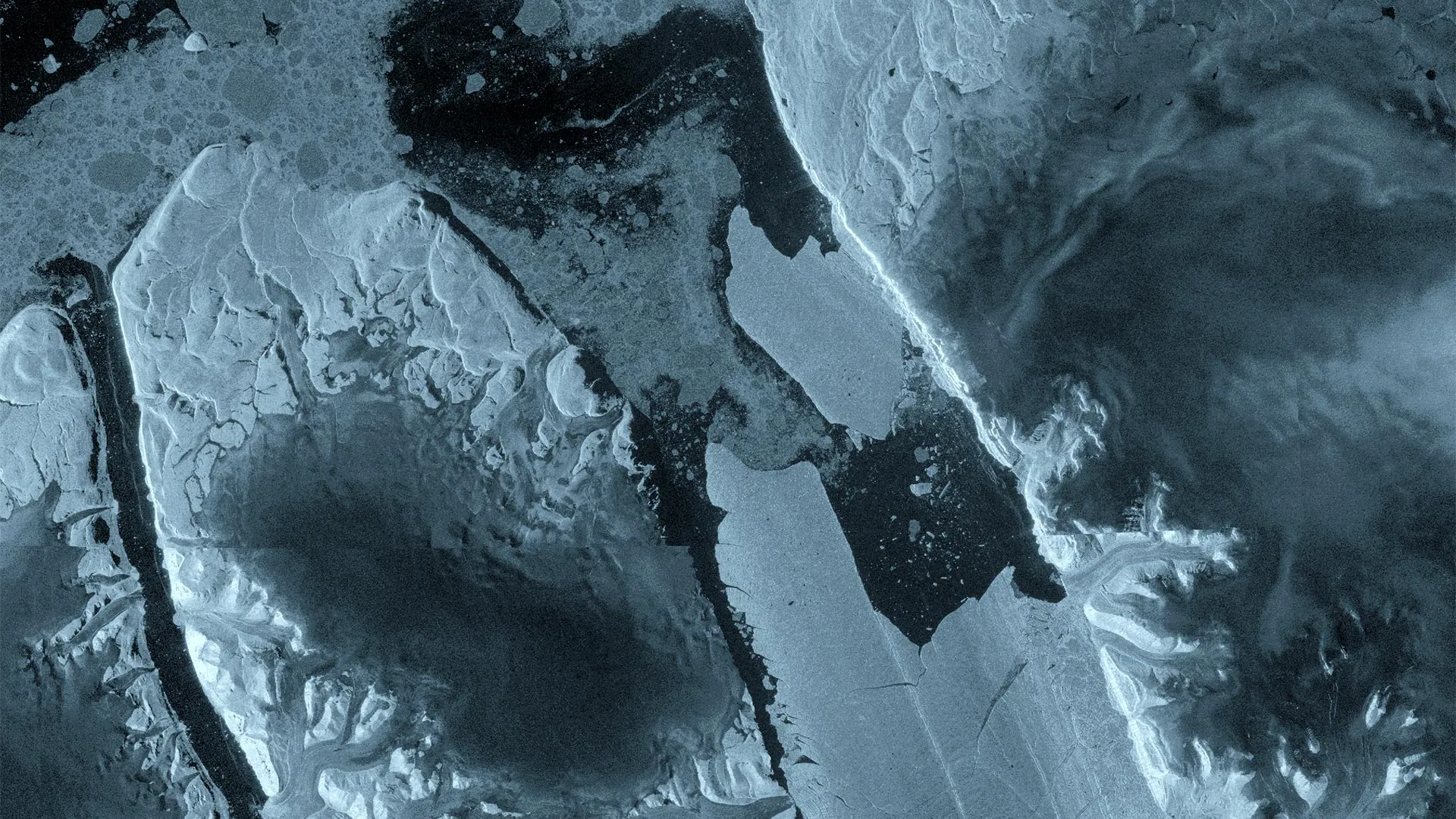
The dramatic breakup was meticulously captured by the sophisticated radar instruments aboard the Sentinel-1 mission. Images from Sentinel-1 taken on August 3, 2026, already revealed significant deterioration and fracturing developing along the central axis of the glacier’s floating ice tongue. Merely 24 hours later, the colossal ice island had fully separated from the eastern flank of the glacier, a rapid progression that underscores the dynamic and often sudden nature of these glacial processes. Sentinel-1’s capabilities are particularly invaluable for monitoring remote and often cloud-shrouded regions like Greenland’s glaciers, as its radar instruments can penetrate cloud cover and collect observations irrespective of daylight or darkness, providing a consistent, all-weather view of these critical environments. This constant vigilance is crucial for tracking changes that might otherwise go unnoticed for extended periods.
An international consortium of researchers has been diligently monitoring Petermann Glacier since 2019, leveraging the consistent data stream from Sentinel-1. This vital work receives partial funding through ESA’s FutureEO ARCTEX project, an initiative focused on advancing Earth observation capabilities in the Arctic. The collaborative team comprises leading experts from the University of Ottawa in Canada, alongside researchers from the Universities of Stirling, Lancaster, and Leeds in the United Kingdom, and the Canadian Ice Service of Environment and Climate Change Canada. Over several years, this multidisciplinary team has painstakingly tracked the expansion of fractures and accumulated growing evidence indicating that the glacier’s expansive floating ice tongue was progressing towards an increasingly unstable state. Their long-term observations provided critical context for understanding the recent, rapid changes.
Indeed, the signs of impending change were visible months in advance. Interferometric observations collected over Petermann Glacier as early as April 2026 revealed subtle yet significant deformation and nascent fractures within the floating ice tongue. These highly precise measurements offered researchers an unprecedented, detailed view of the structural changes that had been developing for months, slowly but inexorably weakening the ice front before the eventual, spectacular calving event. This foresight allowed scientists to anticipate the general trajectory of the glacier’s instability, even if the exact timing remained unpredictable.
Adam Garbo, a PhD student from the University of Ottawa and a key member of the monitoring team, articulated the sentiment within the scientific community: "Petermann Glacier has long been recognized as one of Greenland’s largest remaining and most significant ice tongues. We’ve anticipated this kind of major break for years, given the increasing instability we’ve observed. Seeing it finally happen is both remarkable from a scientific perspective and a powerful reminder of how quickly these complex systems can change and respond to environmental pressures." His statement highlights the blend of scientific expectation and awe that accompanies such large-scale natural phenomena.
Petermann Glacier has a well-documented history of major calving events, producing substantial ice islands in 2008, 2010, and 2012. These earlier events served as crucial case studies for understanding Arctic glacier dynamics. However, since the 2012 event, the floating ice tongue had, by comparison, maintained a period of relative stability, punctuated only by several smaller calving events that did not significantly alter its overall structure. The latest 76 sq km detachment thus marks a significant return to a more active, dynamic phase for the glacier, suggesting a fundamental shift in its equilibrium. Worryingly, this latest break may not be the final major alteration. The researchers’ ongoing analysis indicates the potential for two additional, substantial ice islands, with estimated areas of approximately 97 and 87 sq km respectively, to eventually detach as existing rifts and fracture networks continue to spread and deepen across the remaining floating ice tongue. This suggests a continued period of instability and ice loss for Petermann Glacier.
Anna Crawford, a researcher from the University of Stirling involved in the project, provided crucial context regarding the uniqueness of this event in the Arctic: "While large, tabular icebergs are relatively common in the Southern Ocean around Antarctica, Arctic ice islands are far rarer and thus present a unique opportunity for study. By studying these Arctic ice islands, we will gain invaluable knowledge that can be transferred across both polar regions. This is critical for understanding the intricate ways in which the calving and subsequent deterioration of ice islands impact broader glacier dynamics, global sea-level rise projections, and the delicate polar ocean environment." Her comments underscore the broader scientific implications beyond just the immediate event.
The ability to observe such rapid fracture growth with unprecedented detail was made possible by an advanced application of Sentinel-1 data. A detailed Sentinel-1 interferogram, precisely illustrating where fractures formed and how they rapidly expanded across Petermann Glacier, was achievable due to the unique one-day repeat Sentinel-1 synthetic aperture radar (SAR) observations. These observations were gathered during the Sentinel-1C and Sentinel-1D tandem phase, a period when the newly launched Sentinel-1D satellite was undergoing its commissioning alongside the operational Sentinel-1C. This rare alignment of two satellites allowed for exceptionally frequent data acquisition. These high-frequency observations empowered scientists to make highly detailed measurements of how cracks propagated across the ice shelf and, crucially, how the surface of the ice tongue moved and flexed in response to ocean tides in the critical period leading up to the iceberg’s final separation. Such detailed kinematic data is vital for validating and improving glaciological models.
Molly Hammond, a PhD student from the University of Leeds who was instrumental in processing the complex Sentinel-1 data, shared her excitement about the observations: "The changes we observed on Petermann Glacier were occurring incredibly rapidly in the immediate lead-up to the iceberg calving event, so it was an incredibly exciting and intense period to monitor the crack propagation with interferometry in near-real time. This experience has powerfully demonstrated the incredible value and transformative potential of one-day repeat synthetic aperture radar data for understanding rapid glaciological processes." Her statement highlights the technical prowess required and the thrill of scientific discovery in real-time.
Martin Wearing, representing ESA and the Copernicus program, further emphasized the significance of the event and the mission’s role: "This type of large tabular iceberg is relatively rare in the Arctic, making this specific calving event a unique and invaluable opportunity to study the lifecycle of such a vast ice mass – how it drifts, how it evolves, and how it eventually breaks apart into smaller fragments. Satellite missions such as Sentinel-1 provide the systematic, long-term observations that are absolutely essential to track these ongoing changes. This consistent data stream helps scientists better understand the complex processes driving glacial calving and the wider impacts on the polar environment, and ultimately, on the Earth system as a whole." He further acknowledged the collaborative spirit, adding, "Alongside Europe’s excellent Earth observation missions, we are pleased to see the ARCTEX project supporting this critical work and enabling further scientific investigation of the rapidly evolving Arctic, a region that is a bellwether for global climate change."
The scientific community’s work does not conclude with the calving event itself. Researchers will continue to monitor both the Petermann Glacier and the newly formed iceberg with a multi-pronged approach, utilizing ongoing satellite imagery, potential aerial observations, and advanced tracking data. By meticulously following the ice island as it drifts through the ocean and gradually fragments, scientists hope to learn more about the specific behavior of large Arctic ice islands, their interaction with ocean currents and temperatures, and the underlying forces driving the continuing evolution and retreat of Petermann Glacier. This tracking will provide insights into the fate of such large ice masses in a warming Arctic.
Beyond the purely scientific implications, the calving event also carries significant practical consequences, particularly for navigation and offshore activity in the increasingly accessible Arctic. Environment and Climate Change Canada has already initiated tracking of the iceberg’s path, meticulously evaluating possible threats to established shipping routes and burgeoning infrastructure projects in the region. Ice masses of this colossal size can persist in the ocean for years, slowly but relentlessly fragmenting into smaller, often unpredictable pieces. As these fragments become progressively smaller, they also become significantly harder to detect and track, posing persistent and evolving hazards to maritime operations. The ongoing monitoring is therefore not just for scientific understanding but also for ensuring safety and informing policy in a rapidly changing polar environment. This event serves as a powerful reminder of the interconnectedness of climate change, Earth system science, and human activity.
