
 By Lina Irawan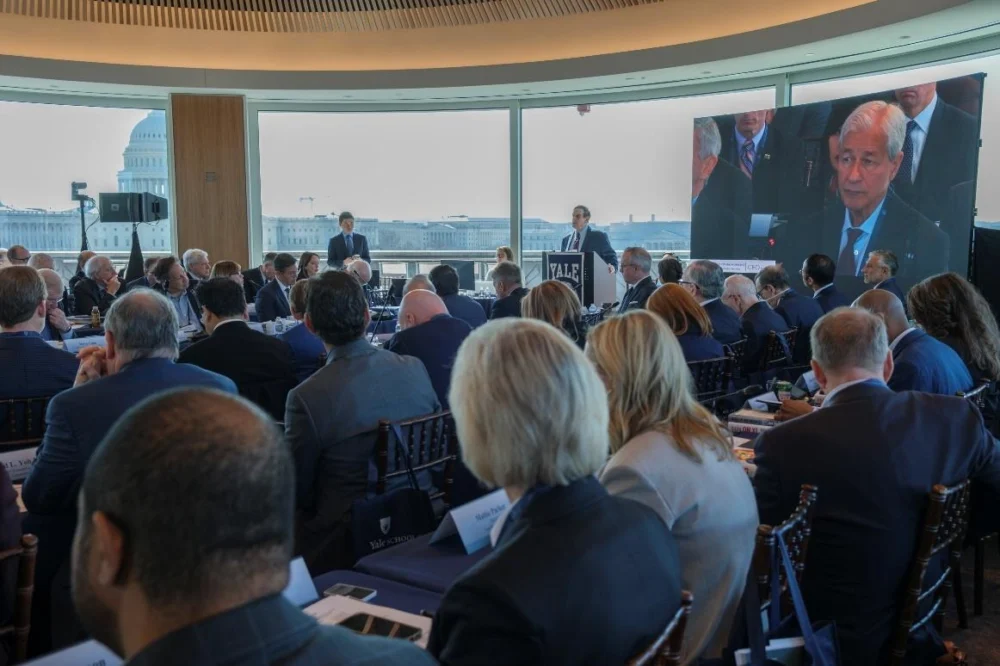
The Supreme Court’s majority opinion, widely anticipated by legal scholars and trade experts, centered on a strict interpretation of IEEPA, a statute designed to grant the President emergency powers to regulate international economic transactions in response to an “unusual and extraordinary threat” to national security, foreign policy, or the economy. While previous administrations have invoked IEEPA for targeted sanctions against specific adversaries or individuals, President Trump’s administration utilized it to impose a broad range of tariffs on imports from allies and rivals alike, arguing that trade imbalances and alleged unfair practices constituted such an emergency. Critics, including a consortium of American businesses and trade associations that filed suit, contended that this application stretched the statute far beyond its original intent, essentially transforming an emergency power into a routine tool for trade policy, thereby bypassing Congress’s constitutional authority over taxation and commerce. The Court’s majority agreed, underscoring the principle of separation of powers and reaffirming Congress’s preeminent role in setting trade policy.
This ruling fortifies what CEOs have been telling us about tariffs all along. For the better part of the last presidential term, and certainly over the past year leading up to this judicial review, America’s corporate leaders have been sounding the alarm, all but begging to be liberated from policies they perceived as economically crippling. Top businesses, across nearly every sector, have almost universally viewed these tariffs as detrimental to their operations, irrespective of the persistent public relations spin from proponents like former White House trade advisor Peter Navarro or high-profile supporters like Howard Lutnick.
At our last Yale CEO Caucus in Washington D.C., a significant 75% of participating CEOs emphatically stated their belief that the IEEPA tariffs were illegal. This sentiment wasn’t merely a legalistic one; it was deeply rooted in their lived experiences of navigating a turbulent economic landscape exacerbated by these policies. Furthermore, two-thirds of the top CEOs surveyed at our event reported that U.S. tariffs had been directly harmful to their businesses, eroding profit margins, disrupting intricate global supply chains, and creating immense operational headaches. The financial burden, they confirmed, was not being borne by foreign producers as advertised. Instead, a staggering 80% of CEOs told us that at least some of the increased costs resulting from these tariffs had been passed onto American consumers, manifesting as higher prices for everyday goods, from electronics and apparel to industrial components and raw materials. This directly contradicted the administration’s narrative that tariffs were a penalty paid by foreign adversaries.
As one major manufacturing CEO cogently explained to us at that Yale CEO Caucus, articulating a common frustration, “If the U.S. government wants to help protect certain industries, they need to help those industries be successful. It is not just putting a bunch of tariffs in place and assuming those industries are going to get moved to the U.S.” This CEO urged for "incentives" to be built into the system, emphasizing the economic reality that consumers prioritize low-cost products. He pointed out that certain items, such as power tools, hand tools, clothing, and sneakers, are produced more efficiently and affordably elsewhere due to global comparative advantages. “Does it really make sense to be manufacturing all that in the United States? I do not believe it does. I believe there are certain industries where it does make sense… but it is not realistic to expect every industry in the world to be manufacturing products in the U.S. for the U.S.” This perspective highlights the complex realities of modern global trade, where blanket protectionism often stifles innovation and raises costs rather than fostering domestic competitiveness.
The warnings that these tariffs were not penalties paid by foreign adversaries, but rather punitive taxes paid directly by American businesses and consumers, could not have been clearer. Business leaders repeatedly articulated a clear message: these policies were fundamentally bad for the economy, leading to a palpable sense of uncertainty and reluctance to invest. Indeed, at our prior Yale CEO Caucus, attendees were asked if they were planning to invest more in U.S. manufacturing and infrastructure—a key stated goal of the tariff policy. A discouraging 62% said no, underscoring the chilling effect of unpredictable trade policies on long-term capital allocation and job creation. Instead of stimulating domestic investment, the tariffs generated an environment of caution and retrenchment.
Unfortunately, despite today’s unequivocal Supreme Court ruling, businesses are not entirely out of the woods of Trump’s tariff tantrums. As the political landscape shifts and potential future administrations loom, we enter into a new era of fresh uncertainty regarding trade policy. As we reveal in our new book, Trump’s Ten Commandments, published by Worth Books and distributed by Simon & Schuster, Trump’s instincts are often surprisingly predictable; he tends to react in consistently patterned ways, particularly when confronted with perceived setbacks or humiliations.
As we warn in Trump’s Ten Commandments, there are few things that Trump despises more than being humiliated or being publicly told that he cannot do something. His fundamental instinct is to double down and lash out when such challenges arise, often thrashing about almost like a wounded animal in a corner. There is no question that the Supreme Court’s ruling serves as a highly public and profoundly humiliating rebuke to Trump’s executive authority and his signature trade policy. Indeed, in his speech immediately following today’s ruling, Trump was already signaling his intention to double down, threatening a flurry of new tariffs under different legal frameworks. Specifically, he indicated a plan to invoke Section 122 of the Trade Act of 1974 to impose a temporary 10% global tariff while his administration pursues other, more permanent trade authorities, as well as initiating new Section 301 investigations. These Section 301 investigations, often launched by the U.S. Trade Representative, typically precede the imposition of new tariffs against countries deemed to be engaging in unfair trade practices. While this gambit under Sections 122 or 301 may fall within the legal parameters of executive power, it nonetheless perpetuates the very same damaging uncertainty that paralyzed investment decisions and stifled economic growth over the past year.
The effect of this continued uncertainty will be far more damaging in the long run than moving interest rates a fraction of a point, a frequent target of Trump’s criticism of the Federal Reserve. Most responsible CEOs cannot and will not commit substantial capital to new plants, equipment, or research and development if they cannot reliably forecast their input costs, with tariffs fluctuating by the day or subject to sudden imposition. Long-term investment decisions require stability and predictability, qualities that are entirely absent in an environment of perpetual tariff threats and shifting trade policies. The chilling effect on foreign direct investment into the U.S. and domestic capital expenditures cannot be overstated.
Furthermore, as we warn in Chapter 6 of Trump’s Ten Commandments, another one of Trump’s most predictable responses to bad news is to try to drown it out with diversions, meticulously orchestrating news cycles of his own creation to deflect public and media attention. Today’s significant tariffs setback makes it more likely that Trump will seek to engage in some sort of dramatic, high-profile action in the very near future, potentially involving foreign policy or military action. For instance, the possibility of increased saber-rattling or even direct military action against Iran, a frequent target of his rhetoric, becomes a more plausible scenario, with Trump eager to reassert control and divert public attention away from domestic policy setbacks he doesn’t want the public to linger on. This pattern would follow a similar trajectory to how previous external foreign policy flashpoints of Trump’s own creation, such as the controversial proposal to buy Greenland or the attempted seizure of Nicolas Maduro in Venezuela, were timed. These events, perhaps not coincidentally, emerged amidst domestic policy setbacks, such as uproar over ICE activities in Minnesota or the deepening controversy surrounding the Epstein files. As we previously pointed out when Trump posted a racist attack on the Obamas on Truth Social, sometimes Trump will even seek to "shoot himself in the foot" with inflammatory statements to drown out other, more damaging news stories.
The Supreme Court itself is not entirely blameless for the lingering uncertainty that will plague businesses in the wake of this ruling. Justice Brett Kavanaugh’s dissenting opinion, for instance, anchored itself in the substantial complications surrounding the refunding of the massive tariff revenues collected over the last 10 months. This logistical and financial quagmire is, at least in part, the Supreme Court’s own doing. The original IEEPA tariffs lawsuit was filed nearly 10 months ago, and the protracted delay in issuing a ruling was entirely their own decision. During that period, the Supreme Court issued approximately 25 "shadow docket" decisions for emergency actions on issues that many legal observers would argue were of far lesser national economic consequence. Many analysts had expected the Court to rule on the tariffs around Thanksgiving or Christmas, providing some much-needed clarity for the end of the fiscal year. Instead, they apparently deemed it more important to issue rulings in favor of Elon Musk’s controversial DOGE firings, even though DOGE is now largely shuttered, or their ruling allowing firings of transgender military personnel. In the Court’s eyes, these were apparently far more urgent immediate national priorities than resolving the profound economic uncertainty generated by billions of dollars in tariffs over these last 10 months, a delay that cost American businesses and consumers dearly.
Today’s Supreme Court decision undeniably vindicates the wise warnings of CEOs, who have been sounding the alarm bells publicly and privately for months about the legality and economic wisdom of the Trump administration’s IEEPA tariffs. It represents a crucial reassertion of the separation of powers and a check on executive overreach in trade policy. However, far from being truly liberated from the economic instability that has characterized the "Liberation Day" from these tariffs, sadly, Trump’s predictably defiant response only exacerbates the uncertainty and chaos. This continuing, damaging effect on business confidence and investment, coupled with the potential for new trade skirmishes, means that American businesses and consumers must remain vigilant, navigating a trade landscape that remains stubbornly unpredictable and fraught with peril. The fight for stable, predictable trade policy, it seems, is far from over.
