
 By Titik Puspa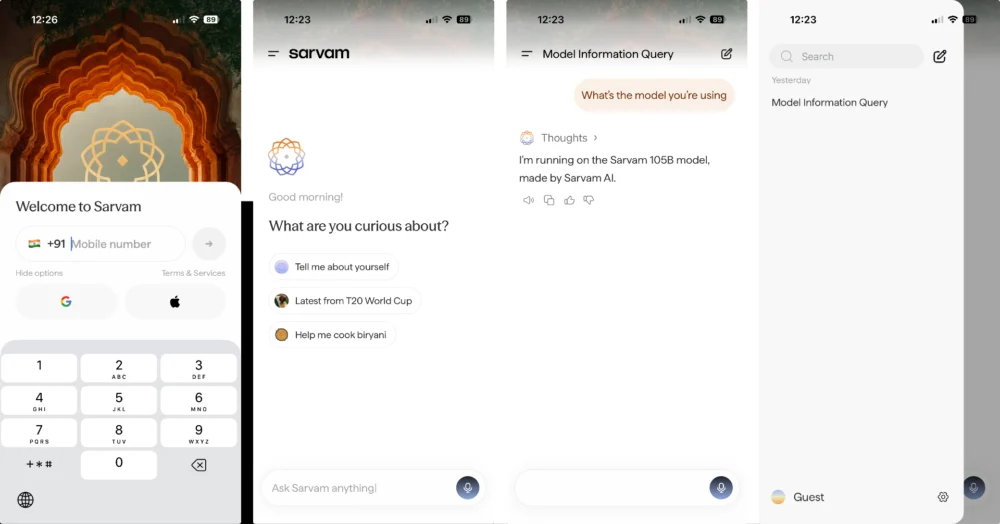
Boston, MA – June 9, 2026 – In a significant move to challenge the dominance of global artificial intelligence leaders, Indian AI startup Sarvam officially launched its Indus chat application for web and mobile users on Friday. This launch marks a pivotal moment for Sarvam, an entity dedicated to developing AI models tailored for local languages and users, as it enters India’s rapidly expanding generative AI market, a landscape currently dominated by tech behemoths like OpenAI, Anthropic, and Google. The entry of Indus signals a growing wave of domestic innovation aimed at securing India’s digital future and fostering greater autonomy in AI infrastructure.
The Indian subcontinent has emerged as a crucial battleground for the adoption and deployment of generative AI technologies. Recent revelations underscore the immense user base for these advanced tools in the country. OpenAI’s CEO, Sam Altman, disclosed that ChatGPT boasts over 100 million weekly active users in India, a testament to the nation’s fervent embrace of AI. Complementing this, Anthropic has reported that India accounts for a substantial 5.8% of its total Claude usage, positioning the nation as the second-largest market for its AI assistant, trailing only the United States. This burgeoning demand highlights a fertile ground for local players like Sarvam to carve out their niche.
The Indus application serves as the user-facing interface for Sarvam’s newly announced Sarvam 105B model. This powerful large language model boasts an impressive 105 billion parameters, positioning it as a formidable contender in the AI space. The launch of Indus comes on the heels of Sarvam’s recent unveiling of its 105B and 30B models at the India AI Impact Summit in New Delhi earlier this week. This strategic timing underscores Sarvam’s aggressive approach to market penetration and its commitment to showcasing its technological prowess on a national stage.
At the India AI Impact Summit, Sarvam not only presented its cutting-edge AI models but also outlined ambitious enterprise initiatives and hardware plans. These forward-looking strategies aim to integrate AI capabilities across a broad spectrum of Indian industries and devices. Notably, the startup announced significant partnerships with industry leaders such as HMD, with the goal of bringing AI-powered features to Nokia feature phones, and Bosch, for the development of AI-enabled automotive applications. These collaborations are crucial in democratizing AI access and embedding it into the daily lives of millions of Indians, from the most basic communication devices to sophisticated vehicles.
Currently, the Indus app is available in a beta version across multiple platforms, including iOS, Android, and the web. This multi-platform availability ensures broad accessibility for a diverse user base. The app empowers users to interact with the AI through both typed queries and voice commands, receiving responses in either text or audio format. For user authentication, Indus offers flexibility, allowing sign-ins via phone number, Google or Microsoft accounts, or Apple ID. However, the service is presently restricted to users within India, indicating a phased rollout and a strategic focus on the domestic market before potential international expansion.
While the Indus app offers a compelling user experience, it currently operates with certain limitations. Users will find that deleting chat history necessitates account deletion, a feature that may be cumbersome for those seeking to manage their conversations granularly. Furthermore, there is no option to disable the app’s reasoning feature, which, while enhancing its analytical capabilities, can occasionally lead to slower response times. Sarvam has also preemptively cautioned users about potential access restrictions as the company scales its compute capacity. This transparency regarding infrastructure limitations is a prudent measure for managing user expectations during the beta phase.
Pratyush Kumar, co-founder of Sarvam, shared insights into the rollout strategy via X (formerly Twitter), stating, "We’re gradually rolling out Indus on a limited compute capacity, so you may hit a waitlist at first. We will expand access over time." He further emphasized the company’s eagerness to gather user feedback, underscoring a user-centric development approach. This iterative process, driven by real-world user input, is critical for refining the application and ensuring it meets the nuanced needs of the Indian market.
Founded in 2023, Sarvam has rapidly garnered significant financial backing, having raised $41 million to date. This substantial funding comes from prominent investors including Lightspeed Venture Partners, Peak XV Partners, and Khosla Ventures, signaling strong confidence in Sarvam’s vision and its potential to disrupt the AI landscape. This capital infusion is instrumental in powering Sarvam’s ambitious mission to develop large language models specifically engineered for the Indian context, addressing linguistic diversity and cultural nuances that often fall outside the purview of global AI solutions.

Sarvam is part of a growing cohort of Indian startups dedicated to building indigenous alternatives to established global AI platforms. This movement is fueled by India’s strategic imperative to enhance its control over its AI infrastructure and foster a self-reliant digital ecosystem. As the nation increasingly recognizes the strategic importance of AI, there is a palpable drive to develop homegrown solutions that are not only technologically advanced but also culturally relevant and economically accessible. This domestic push is vital for ensuring that India’s digital transformation is inclusive and benefits a wide spectrum of its population.
The implications of Sarvam’s launch extend beyond mere market competition. It represents a broader trend of technological self-determination, where nations are seeking to harness the power of AI for their unique developmental goals. For India, this means creating AI that can understand and process its multitude of languages, cater to the specific needs of its diverse industries, and contribute to its economic growth without an over-reliance on foreign technology. The success of Sarvam and similar ventures could pave the way for India to become a significant player in the global AI arena, not just as a consumer but as an innovator and provider.
The development of large language models (LLMs) like Sarvam 105B is a complex undertaking, requiring vast computational resources and specialized expertise. LLMs are the foundational technology behind many generative AI applications, capable of understanding, generating, and manipulating human language. The "105B" in Sarvam 105B refers to the number of parameters – essentially, the variables the model uses to learn and make predictions. A higher number of parameters generally correlates with increased capability and accuracy, but also with greater computational demands. Sarvam’s focus on developing these models for local languages means addressing challenges such as the lack of large, standardized datasets in many Indian languages, as well as the complexities of linguistic structures and dialects.
The competitive landscape in India’s AI market is intensifying. With ChatGPT’s massive user base and Anthropic’s significant presence, the market is already vibrant. However, Sarvam’s approach, emphasizing localization and catering to specific Indian needs, offers a distinct value proposition. While global players may have the advantage of scale and established infrastructure, local companies possess an intrinsic understanding of the market, its cultural nuances, and its unique technological challenges. This localized intelligence can be a powerful differentiator.
The partnerships announced by Sarvam are particularly noteworthy. Integrating AI into feature phones, for instance, has the potential to bridge the digital divide in rural and semi-urban areas where smartphone penetration may still be limited. Similarly, AI applications in the automotive sector can enhance safety, efficiency, and user experience. These initiatives demonstrate Sarvam’s commitment to a holistic approach to AI integration, aiming to impact various facets of Indian life.
The current beta phase of Indus, with its user feedback mechanisms and gradual rollout, suggests a mature understanding of product development in a rapidly evolving field. The challenges identified, such as chat history management and reasoning feature optimization, are common in the early stages of AI product deployment. Sarvam’s proactive communication about compute capacity limitations is a testament to responsible innovation. As the company scales its operations, overcoming these hurdles will be crucial for sustained growth and user satisfaction.
The broader implications for India’s digital sovereignty are significant. By fostering domestic AI capabilities, India can reduce its dependence on foreign AI technologies, which could have geopolitical and economic implications. A strong domestic AI industry can also lead to job creation, skill development, and the nurturing of a new generation of tech talent. The government’s focus on promoting AI development through initiatives like the India AI Impact Summit further bolsters this national endeavor.
In conclusion, Sarvam’s launch of the Indus chat app represents a significant step forward in India’s quest to establish a robust and independent AI ecosystem. By focusing on local languages, user needs, and strategic partnerships, Sarvam is well-positioned to challenge the established global order and redefine the AI landscape in India. The coming months will be critical in observing how Indus evolves, how users respond, and how Sarvam navigates the complexities of scaling its operations, all while contributing to India’s ambitious vision of becoming a global AI powerhouse. The race for AI dominance in India is heating up, and Sarvam has just thrown down a formidable gauntlet.
