
 By Rifan Muazin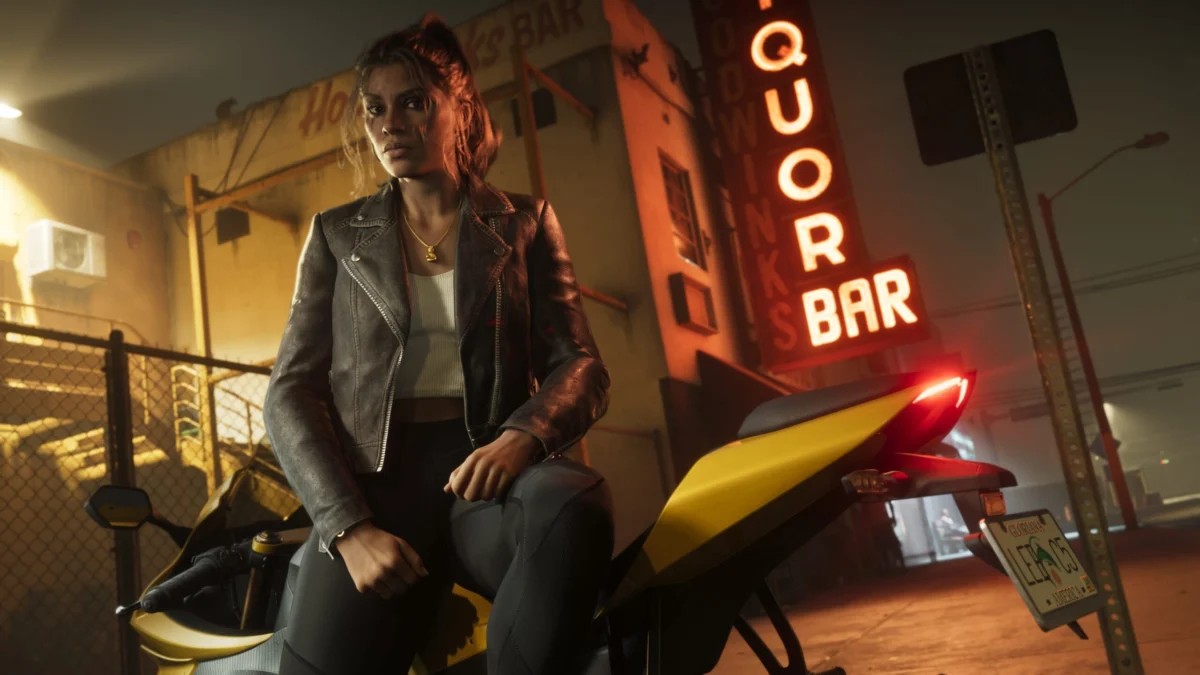
The cultural footprint of Miami has long been defined by a tension between its glittering surface and its gritty underbelly. For many, the quintessential image of the city was forged in the 1980s, a fever dream of pastel suits, white powder, and neon-lit causeways immortalized by Miami Vice and Scarface. In 2002, Rockstar Games distilled this aesthetic into Grand Theft Auto: Vice City, a digital playground that transformed the "Magic City" into a global icon of virtual mayhem. Now, more than two decades after that landmark release and thirteen years after the launch of the record-breaking Grand Theft Auto V, the industry titan is returning to its fictionalized Florida—now known as the state of Leonida—to capture a modern-day Miami that is, in many ways, stranger than fiction.
The anticipation for Grand Theft Auto VI has reached a jurisdictional fever pitch, fueled by a trailer that garnered over 90 million views in its first 24 hours, breaking YouTube records for a non-music video. This isn’t just a video game launch; it is a cultural autopsy of the 305. The new installment moves away from the 80s nostalgia of Tommy Vercetti and plunges headlong into the chaotic, influencer-driven, "Florida Man" reality of the 2020s. From the high-rises of Brickell to the muddy depths of the Everglades, Rockstar’s rendition of Vice City promises a level of fidelity that has locals doing double-takes. To gauge the accuracy of this digital mirror, we spoke with a diverse cross-section of Miamians—ranging from the "crypto bros" of the city’s burgeoning tech scene to OnlyFans creators and seasoned journalists—to see if Rockstar has truly captured the soul of the city.
The consensus among locals is one of eerie recognition. One long-time resident noted that the game seems to have mastered the fact that Miami is a city almost impossible to exaggerate. In a metropolis where a man once tried to cross the Atlantic in a giant hamster wheel and alligators are frequently found in swimming pools, the line between reality and satire is razor-thin. "You look at some of the scenes in the trailer and think, ‘There’s no way that’s real,’ but if you actually live here, you’ve probably seen something crazier on a random Tuesday," the resident remarked. This sentiment highlights the unique challenge Rockstar faces: how do you satirize a place that is already a parody of itself? The trailer leans into this by featuring recreations of real-life viral moments, such as the "Florida Joker" and a woman twerking on top of a moving car on the MacArthur Causeway.
A significant portion of the game’s realism stems from its focus on the "social media-fication" of the city. Miami has become the unofficial capital of the creator economy, a place where everyone is filming, posting, or attempting to manifest themselves into a "main character." The trailer reflects this through in-game social media feeds that mimic TikTok and Instagram, capturing the performative nature of Miami life. Whether it’s rooftop parties or "clout-chasing" stunts in traffic, the game understands that in modern Vice City, if a crime isn’t livestreamed, did it even happen?
The attention to detail extends beyond behavior and into the very wardrobe of the NPCs (non-playable characters). Fashion in Miami is a socio-economic language, and locals have observed that Rockstar has decoded it perfectly. The "yacht girls" in the trailer possess a specific aesthetic that is indistinguishable from the influencers found at the Miami Beach Marina. The men, too, fit specific archetypes: from the middle-aged yacht owners in linen shirts experiencing mid-life crises to the "dirt bike life" crews popping wheelies through the streets of Overtown and Liberty City. One observer noted that the clothing choices for the dual protagonists, Lucia and Jason, will likely be a central mechanic in their social climbing. In Miami, what you wear determines which velvet rope opens for you and which remains closed.
The economic landscape of Miami has shifted dramatically since the 2002 version of Vice City. While the 80s were defined by the cocaine trade, the modern city is defined by real estate speculation, cryptocurrency, and "side hustles." One commentator described Miami as a place of "last chances," where the neighbor hiding from tax returns is just as common as the one hiding a body. This "hustle culture" is a core pillar of the Miami experience. "People in Miami will do absolutely anything to avoid a 9-to-5 job," one local explained. "It’s the sort of place where your Uber driver is driving a Bentley, and you don’t ask any questions because you know he has three different side hustles." The trailer encapsulates this energy, showing a city that is faster, louder, and more unhinged than ever before.
For those who know the city’s geography, the trailer is a treasure trove of landmarks. Ryan Pfeffer, a senior editor at The Infatuation and a veteran of the Miami scene, pointed out several "dupes" or parodies of legendary local spots. The "Jack of Hearts" club in the trailer is a clear homage to King of Diamonds, a gentlemen’s club that has reached mythic status in hip-hop culture. Similarly, a banner plane in the trailer advertises "Nine1Nine," a nod to E11even, the 24/7 "ultraclub" that serves as the epicenter of Miami’s hedonistic nightlife. Even the culinary scene gets a shout-out; the rooftop restaurant "Effluvia" appears to be a parody of Juvia, the high-end South Beach eatery known for its panoramic views.
The geographical accuracy extends to the city’s infrastructure. The causeways—the vital arteries connecting mainland Miami to the beach—are recreated with painstaking detail. Locals noted the inclusion of the ubiquitous construction cranes that dot the skyline, a permanent fixture of a city that is constantly tearing itself down and rebuilding. This sense of "constant construction" is a meta-commentary on Miami’s identity: a city that is never finished, always reaching for a more glamorous, more expensive version of itself.
However, GTA VI isn’t just about the glitz of South Beach. Usama, a student at the University of Miami, appreciated the trailer’s inclusion of the "grungier" side of the city. Beyond the high-rises of Brickell lie neighborhoods that feel worlds away from the tourist traps. The "grungy liquor stores" and "not-safe places" of South Miami and beyond provide a necessary contrast to the luxury on display. This duality is central to the Florida experience—the proximity of extreme wealth to extreme struggle. Furthermore, the inclusion of the Everglades and the "boonies" highlights the environmental diversity of the state. The trailer shows airboats skimming through swamps and alligators wandering into convenience stores, capturing the "frontier" energy that still exists just a few miles outside the city limits.
The cultural nuances also hit home for many residents. The "Spanglish" dialogue and the presence of a "Latin American media company" called Megamundo—a clear parody of Telemundo or Univision—reflect the reality of Miami as the "Gateway to the Americas." The city’s identity is inextricably linked to its Caribbean and Latin American influences, a fact that Rockstar appears to have embraced more deeply than in previous iterations. The use of the word "bro" as a universal punctuation mark and the specific "small dress" aesthetic of the nightlife scene are small but vital details that ground the game in reality.
Ultimately, the excitement for Grand Theft Auto VI among Miami locals stems from a desire to see their chaotic home validated on a global stage. As one resident put it, "Miami is a wild place with a lot of different sides, and it’s cool to see GTA capture all of them. Whatever ridiculous stuff goes down in the game, there’s a pretty good chance it’s already happened here in real life." For those who live in the 305, the game isn’t just a piece of entertainment; it’s a digital time capsule of a city that is currently the most interesting, most controversial, and most "unhinged" place in America. When the game finally releases, locals won’t just be playing a mission; they’ll be looking for their own apartment buildings, their favorite bars, and the specific street corners where they’ve witnessed the real-life madness that Rockstar has spent over a decade trying to replicate. In the end, Grand Theft Auto VI doesn’t just look like a game—it looks like home.
