
 By admin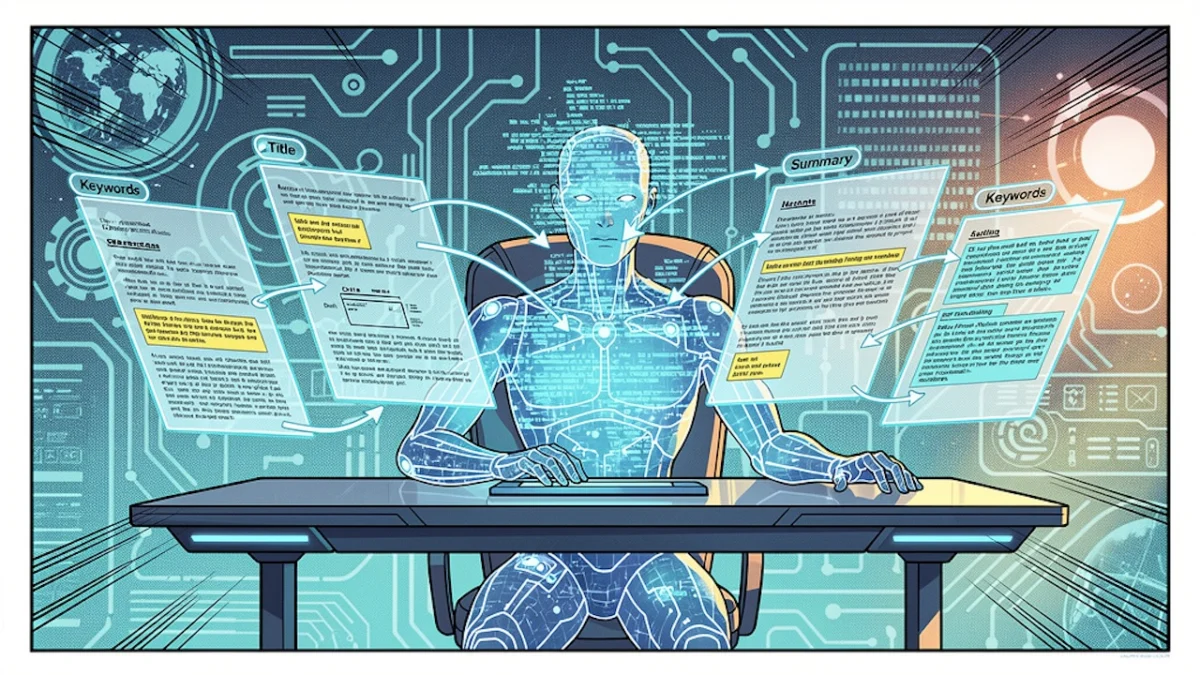
Enterprises grappling with the monumental task of integrating unstructured data—spanning PDFs, slideshows, and scanned documents—into their artificial intelligence pipelines are consistently encountering a significant bottleneck: existing tools either fail to accurately capture crucial structural elements like tables, charts, and intricate layouts, or their operational costs become prohibitive at enterprise scale. Addressing this persistent challenge, Cohere has launched Parse 5, a new vision-language model designed to bridge this gap by prioritizing a compelling price-to-performance ratio over absolute raw accuracy. This strategic positioning aims to deliver the optimal cost-capability mix necessary for large-scale enterprise deployments.
Parse 5 is a sophisticated 2.3-billion-parameter vision-language model, meticulously engineered to transform PDFs, presentation slides, and images into structured Markdown format. Its core value proposition lies in its ability to perform this conversion efficiently and economically, even when dealing with vast volumes of documents. While Cohere’s internally published benchmark comparisons place Parse 5 behind three larger, more general-purpose frontier models in terms of pure accuracy—specifically GPT-5.5, Opus 4.8, and Gemini 3.5 Flash, which all achieved higher scores on the three ParseBench dimensions reported—Cohere is not aiming for the top accuracy spot. Instead, the company is making a strong claim for the best price-to-performance ratio, offering a score that is remarkably close to the leading edge. The model is priced competitively at $1.50 per 1,000 pages through Cohere’s API. For organizations requiring higher-volume deployments with enhanced security and dedicated resources, Cohere also offers Model Vault, its secure, single-tenant platform for managed inference.
Nils Reimers, VP of AI Search at Cohere, articulated the fundamental challenge in document parsing, stating, "Document parsing isn’t solved because the hard part isn’t reading text, it’s preserving structure and meaning. Enterprise documents mix tables, diagrams, charts, and formatting that change the interpretation of the data. Most tools still drop structure or hallucinate content, and even frontier models break on layout-heavy pages." This highlights a critical distinction: raw text extraction is a relatively mature technology, but understanding and preserving the nuanced relationships between text, images, and structural elements within a document is where current AI solutions often falter. The integrity of this structure is paramount for downstream AI applications, particularly for agentic AI systems that rely on precise contextual understanding to perform complex tasks.
The Ingenious Single-Pass Architecture of Parse 5
At the heart of Parse 5’s efficiency lies its innovative single-pass architecture. Unlike traditional document parsing pipelines that often involve a multi-step process—first performing Optical Character Recognition (OCR) to extract text, followed by a separate language model to interpret and structure that text—Parse 5 streamlines this workflow. It treats an entire page as an image, processes it through a single, integrated vision-language model pass, and directly outputs structured Markdown. This consolidated approach not only reduces latency but also minimizes the potential for errors introduced by sequential processing.
Technical Specifications and Capabilities:
-
Architecture: Parse 5 is built upon Cohere Labs’ proprietary North-Micro-Vision-Instruct architecture. This 2.3-billion-parameter vision-language model is optimized for efficiency while maintaining robust capabilities. It features an impressive 8,192-token context window, allowing it to process and understand extensive page content. The model has a relatively compact footprint of approximately 4.6 gigabytes, contributing to its cost-effectiveness and ease of deployment. It accepts input in the form of a base64-encoded image of a PDF, PowerPoint, or JPEG page. The output is structured Markdown, presented in reading order. Crucially, tables are rendered as HTML, and descriptions for images are generated, along with bounding box coordinates for both tables and images. This detailed output format is essential for AI agents to accurately locate and interpret information.
-
Language Coverage: Parse 5 offers stable accuracy for a core set of nine languages: Arabic, English, French, German, Italian, Japanese, Korean, Portuguese, and Spanish. For other languages, it provides lower-accuracy zero-shot support, meaning it can attempt to process them without explicit training, though with a greater potential for errors. This broad language support is vital for global enterprises dealing with diverse document sets.
-
Output Modes: The default output mode provides a single Markdown string for each processed page. However, Parse 5 also offers a more granular "blocks mode." In this mode, the output is structured into typed elements, with each table element including its corresponding HTML representation, bounding box coordinates, and a descriptive summary. Cohere posits that this detailed output format is precisely what enables citation-level traceability for AI agents, a critical requirement for auditing and verifying AI-driven decisions.
-
Availability: Parse 5 is now generally available to enterprises through multiple channels, including the Cohere API, Cohere’s Model Vault, Microsoft Foundry, and AWS SageMaker. This multi-platform availability ensures that organizations can integrate Parse 5 into their existing cloud and on-premises AI infrastructure with relative ease.
The ParseBench Benchmark: A Strategic Trade-Off
The ParseBench benchmark, developed by Cohere, provides a standardized method for evaluating document-parsing tools against a curated set of enterprise-grade documents that have been human-verified. In Cohere’s reported results, Parse 5 achieved a score of 79.2 across three key dimensions: table extraction accuracy, content faithfulness (ensuring extracted content accurately reflects the source), and semantic formatting preservation. This score positions Parse 5 behind the leading frontier models like GPT-5.5 (84.4), Opus 4.8 (84.3), and Gemini 3.5 Flash (81.8). However, it notably outperforms specialized parsers such as LlamaParse’s Cost Effective tier (78.3), Mistral OCR 4 (74.5), Databricks AI Parse (72.4), and Azure Document Intelligence (69.3).
It is important to note that Cohere’s benchmark explicitly excludes two dimensions: Layout and Chart extraction. Cohere attributes these exclusions not to a performance deficiency in Parse 5, but rather to a deliberate product scope decision. Parse 5 is designed to output reading-order Markdown rather than providing per-element bounding boxes for all text. Furthermore, for charts, the current version focuses on providing descriptive summaries rather than extracting the underlying data. Cohere has indicated that chart data extraction is a feature slated for a future release.
Reimers explained that these design choices are aligned with the practical needs of agentic workflows. "For charts, for example, we provide a general description of the chart together with an indicator, how Agentic AI can visually inspect the chart," Reimers elaborated. "Other solutions try to extract the data from the chart, but then miss out critical information (for example, the color or the pattern of a line) that leads to hallucinations in Chat and Agentic AI applications." This perspective suggests that preserving the visual context and overall meaning of a chart might be more beneficial for certain AI applications than attempting to extract potentially incomplete or misinterpreted raw data.
The true differentiator for Cohere with Parse 5 is its cost advantage. Reimers highlighted a specific workflow modeled for a large financial services firm, illustrating the economic impact of choosing Parse 5. "We ran the numbers for a large financial services workflow that processes 750 million documents a year and showed that choosing Parse 5 over a large general-purpose model like GPT-5.5 would reduce costs by more than 98 percent." This significant cost reduction, while based on Cohere’s own estimation for a single modeled workflow and not an audited deployment, underscores the model’s potential to unlock AI adoption for cost-sensitive enterprises.
Navigating the Competitive Landscape of Document Parsing Solutions
The market for document parsing solutions is diverse, offering enterprises a range of options with varying strengths and weaknesses.
-
General-Purpose Frontier Models: Large language models like GPT-5.5, Opus 4.8, and Gemini 3.5 Flash lead in accuracy benchmarks due to their vast scale and comprehensive training. However, they come with the inherent costs and latency associated with running such powerful models on every page, which can become a significant financial burden for high-volume processing.
-
Specialized Parsers: This category includes solutions like Mistral OCR 4 and LlamaParse, as well as open-weight options such as Chandra OCR 2 and RedNote’s dots.mocr. These tools often focus on specific aspects of parsing, offering more targeted functionality, but may not provide the comprehensive structure and format preservation that Parse 5 aims for.
-
Hyperscaler Document Intelligence Services: Cloud providers offer integrated document intelligence services, including AWS Textract, Google Document AI, Azure Document Intelligence, and Databricks AI Parse. These solutions often compete on ecosystem convenience and integration within their respective cloud platforms. However, based on Cohere’s benchmark, they tend to score lower in raw parsing quality compared to specialized or advanced general-purpose models.
The strategic importance of effective document parsing in the current AI landscape cannot be overstated. Kevin Petrie, VP of Research at BARC US, emphasized this point, noting, "We’re completing a survey now that shows document analysis is by far the #1 use case for AI, with 62% adoption rates among organizations we polled. Documents and other unstructured objects, including images and so on, hold the proprietary context that organizations need to differentiate their agentic AI initiatives." This indicates that unlocking the information contained within documents is fundamental to realizing the transformative potential of AI across various industries.
Petrie further commented on Cohere’s strategic direction, stating that while only time will reveal how Cohere’s price-performance offering truly stacks up against leading frontier models in real-world deployments, the company’s focus on this critical intersection of cost and capability is strategically sound.
Stephanie Walter, Practice Leader for AI Stack at HyperFRAME Research, views Parse 5 as occupying a valuable niche. She believes it strikes an effective balance between legacy OCR technologies, which often lack advanced understanding, and the prohibitively expensive approach of applying a top-tier frontier model to every single document page. "Its potential advantage is delivering structure, spatial provenance and private deployment at a price suitable for high-volume ingestion," Walter told VentureBeat. "It does not need to win every benchmark. It needs to make reliable enterprise-scale parsing economical." This perspective highlights that success in the enterprise AI market often hinges on practicality and economic viability, not just peak performance metrics.
The True Test: Downstream Impact, Not Just Benchmark Scores
Ultimately, the effectiveness of any document parsing solution will be judged not by its performance on a synthetic benchmark, but by its impact on downstream AI applications. "Parsing is the first quality gate in the enterprise AI stack," Walter stressed. "If tables, headings, images, or reading order are lost during ingestion, better embeddings and larger models cannot recover that missing structure." This underscores the foundational role of parsing; errors or omissions at this stage can cascade and undermine the accuracy and reliability of more advanced AI processes.
Walter advises enterprises to move beyond solely relying on benchmark scores when evaluating parsers. "Enterprises should test parsers against their own most difficult documents and measure downstream retrieval and task accuracy, not how clean the extracted text looks," she recommended. The critical question for businesses should not be merely "Did it read the PDF?" but rather, "Can the agent now use the information correctly?" This client-centric approach emphasizes the end goal: enabling AI agents to perform tasks accurately and efficiently, a capability that is directly dependent on the quality and structural integrity of the data it receives from the parsing stage. Cohere’s Parse 5, with its emphasis on cost-effective structural preservation, appears to be strategically positioned to address this fundamental enterprise AI requirement.
